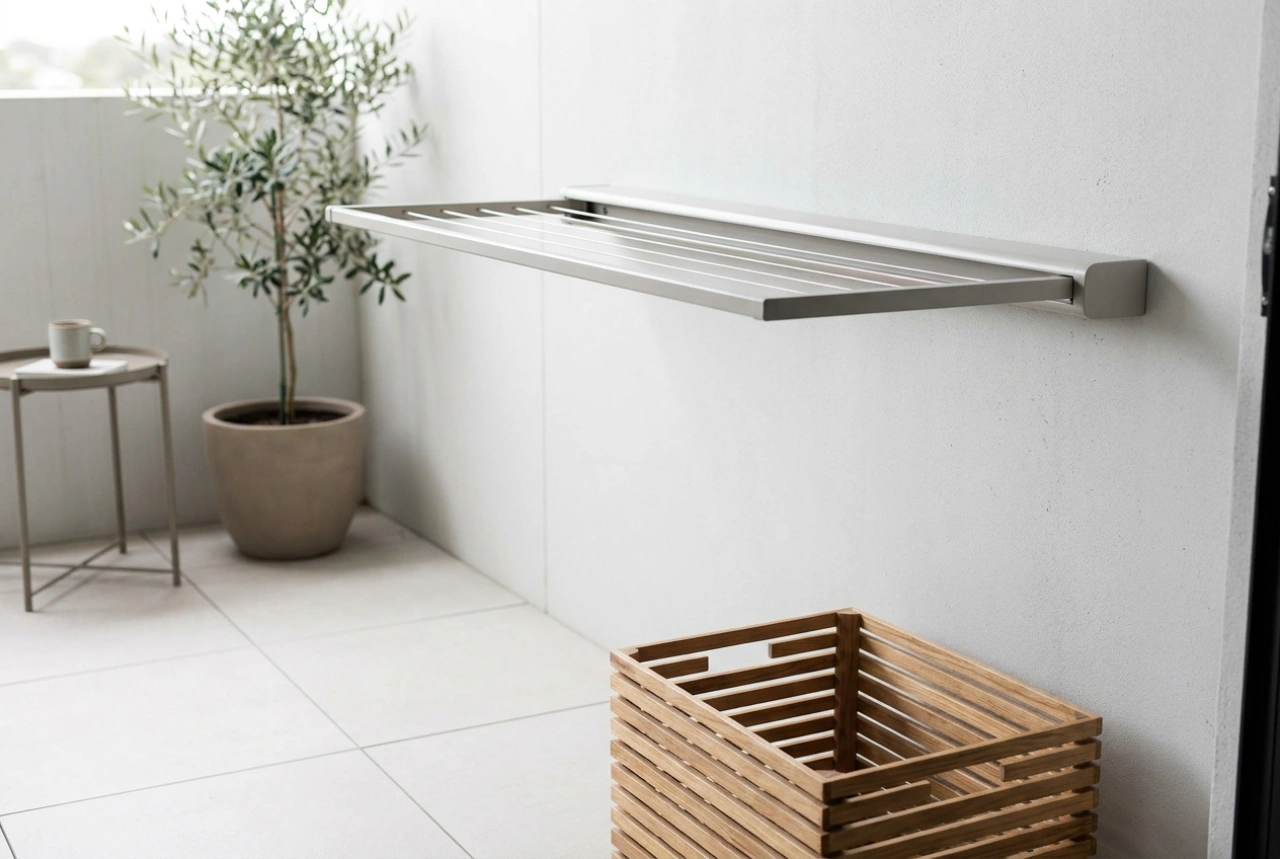


High-ceilinged rooms offer an ideal environment for drying clothes efficiently by utilising natural thermal convection and saving valuable floor space. Installing a ceiling-mounted pulley rack is the most effective way to exploit these physical dynamics without cluttering your living area.
The Physics of Warm Air and Vertical Drying
To understand why ceiling-mounted drying is superior, one must look at the thermodynamic properties of indoor air. Warm air is less dense than cold air, causing it to rise towards the ceiling in a process known as natural convection. In homes with high ceilings (typically 2.7 metres or higher), this temperature gradient is particularly pronounced. The air near the ceiling can be several degrees warmer than the air at floor level.
Additionally, relative humidity tends to be lower in these upper zones, provided there is adequate ventilation. When wet clothes are suspended near the ceiling, the increased temperature accelerates the evaporation process. Water molecules absorb thermal energy from the surrounding air, transitioning from liquid to gas more rapidly. This reduces drying time significantly and minimises the risk of the musty damp smells that occur when fabrics remain wet for extended periods.
Mechanical Advantage: The Pulley System
Lifting heavy, wet laundry above head height requires an ergonomic solution. A ceiling-mounted rack utilizes a system of simple machines—specifically, pulleys and cleat locks—to reduce the physical effort required. When choosing or assembling a system, the material science of the components is critical for longevity and safety.
- Rods and Tubes: Opt for thick-walled, anodised aluminium or powder-coated stainless steel. These metals resist the highly corrosive environment created by constant moisture exposure. Avoid untreated metals that can rust and transfer permanent stains to wet fabrics.
- Cords and Ropes: High-tensile synthetic fibres like braided polyester or nylon are preferred over natural fibres. Synthetic cords offer low friction, do not rot when exposed to damp air, and do not stretch significantly under load.
- Pulleys: Look for heavy-duty nylon or brass wheels housed in steel casings. These materials ensure smooth operation and prevent the cord from slipping out of the track.
Structural Integrity and Safe Anchorage
The transition of laundry from dry to wet involves a substantial weight increase. Cotton towels and heavy denim can retain more than 100% of their dry weight in water. Therefore, a drying rack fully loaded with wet laundry can easily weigh between 15 and 25 kilograms. This weight exerts a constant downward tensile force on the ceiling anchors.
Securing the rack directly into plasterboard or drywall using standard plugs is highly dangerous. The anchors must be fixed directly into solid structural elements, such as wooden joists, steel beams, or concrete slabs. For concrete ceilings, expansion anchors or heavy-duty nylon masonry plugs are necessary. When mounting to wooden joists, use deep-threaded wood screws that penetrate at least 50 mm into the centre of the timber. Proper load distribution across multiple anchor points is essential to prevent structural fatigue over time.
Optimising Airflow and Hanging Technique
Simply raising the clothes to the ceiling is not enough; you must also manage airflow to prevent pockets of stagnant, humid air from forming around the fabrics. For optimal results, follow these precise physical arrangements:
- Spaced Rods: Ensure the parallel rods of the rack are spaced at least 8 to 10 centimetres apart. This distance allows for laminar airflow between the garments, facilitating moisture transport.
- Ceiling Clearance: Do not pull the rack completely flush against the ceiling. Leave a gap of 20 to 30 centimetres. This space acts as an air buffer, allowing warm air to circulate over the tops of the clothes rather than trapping moisture against the ceiling surface.
- Weight and Fabric Distribution: Hang heavy, slow-drying items like denim and wool on the outermost rods. Place lighter, quick-drying synthetics in the centre. This arrangement keeps the rack balanced and ensures that the bulky items receive the maximum air movement occurring near the edges of the room.