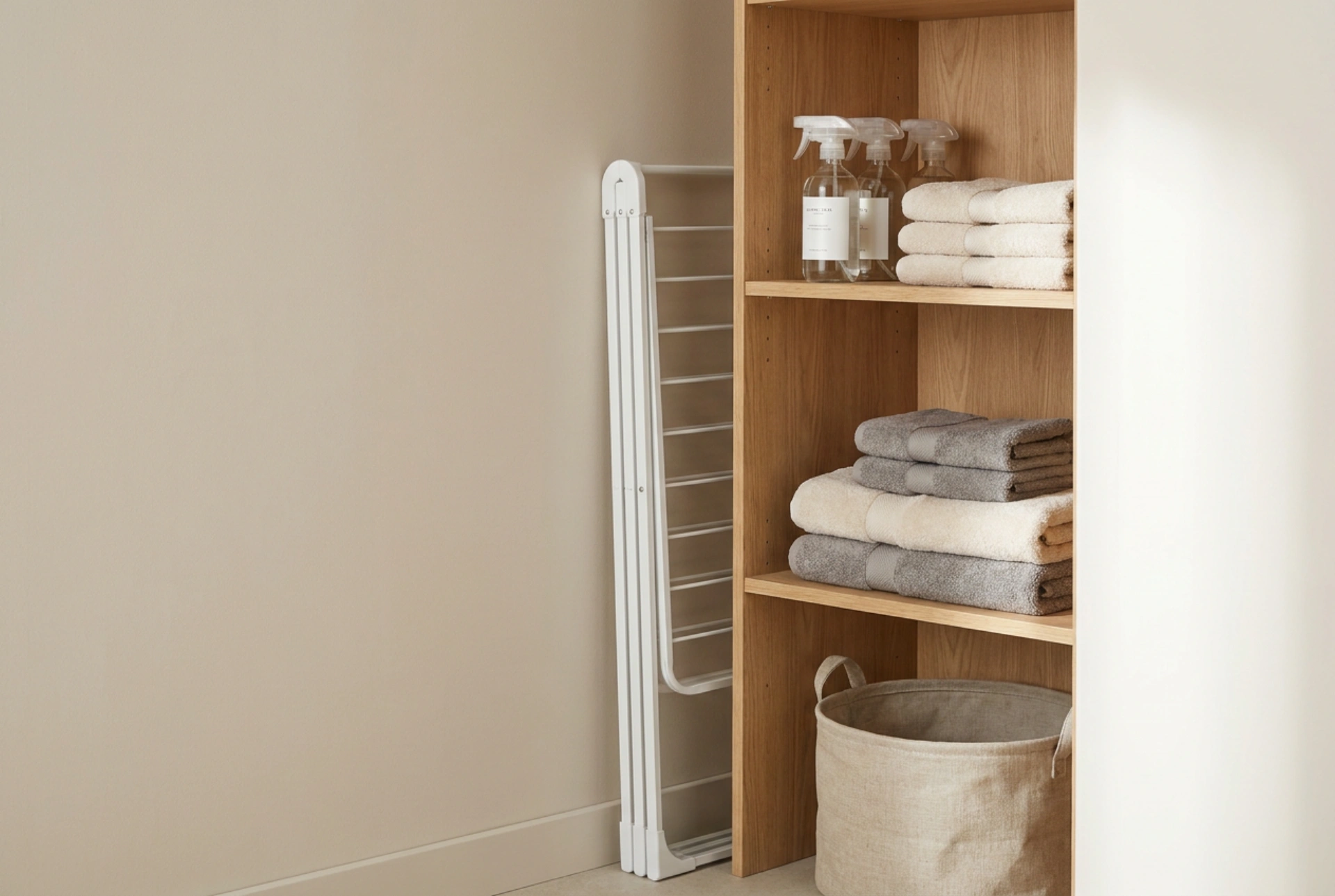


Storing a bulky folding drying rack can easily disrupt the flow of a utility room or hallway if it is not integrated systematically into your home’s layout. By understanding spatial geometry and utilizing structural dead zones, you can secure this essential household item out of sight while keeping it instantly accessible.
Analyzing the Physics of Dead Space
Every home contains underutilized vertical and horizontal crevices that are ideal for flat-profile objects. A standard folded drying rack typically requires a depth of only five to ten centimetres. To identify the perfect storage location, look for physical gaps created by appliance positioning or architectural features.
- The Appliance Gap: The space between a washing machine and an adjacent wall is often left vacant. Because washing machines vibrate during spin cycles, ensure there is a buffer, such as a thin felt pad, to prevent the metal frame of the rack from rubbing against the appliance housing.
- Behind Interior Doors: The clearance zone behind an open door is frequently wasted. Mounting low-profile brackets on the wall behind the door allows the rack to hang flat without interfering with the door’s swing radius.
- Under-Furniture Recesses: Horizontal storage beneath elevated cabinetry, sofas, or utility shelving units utilizes gravity to keep the rack flat and hidden from the direct line of sight.
Mechanical Solutions: Wall Mounts and Gravity Anchors
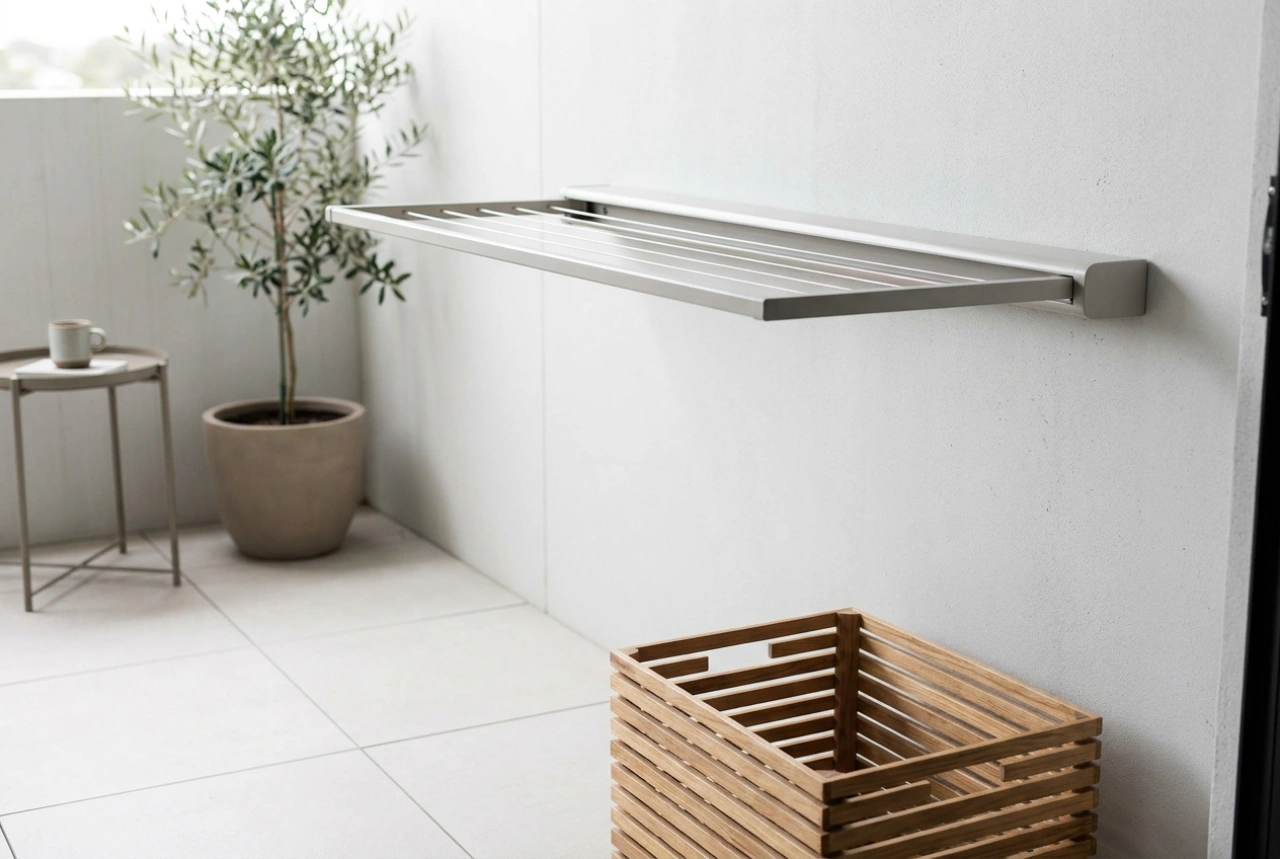
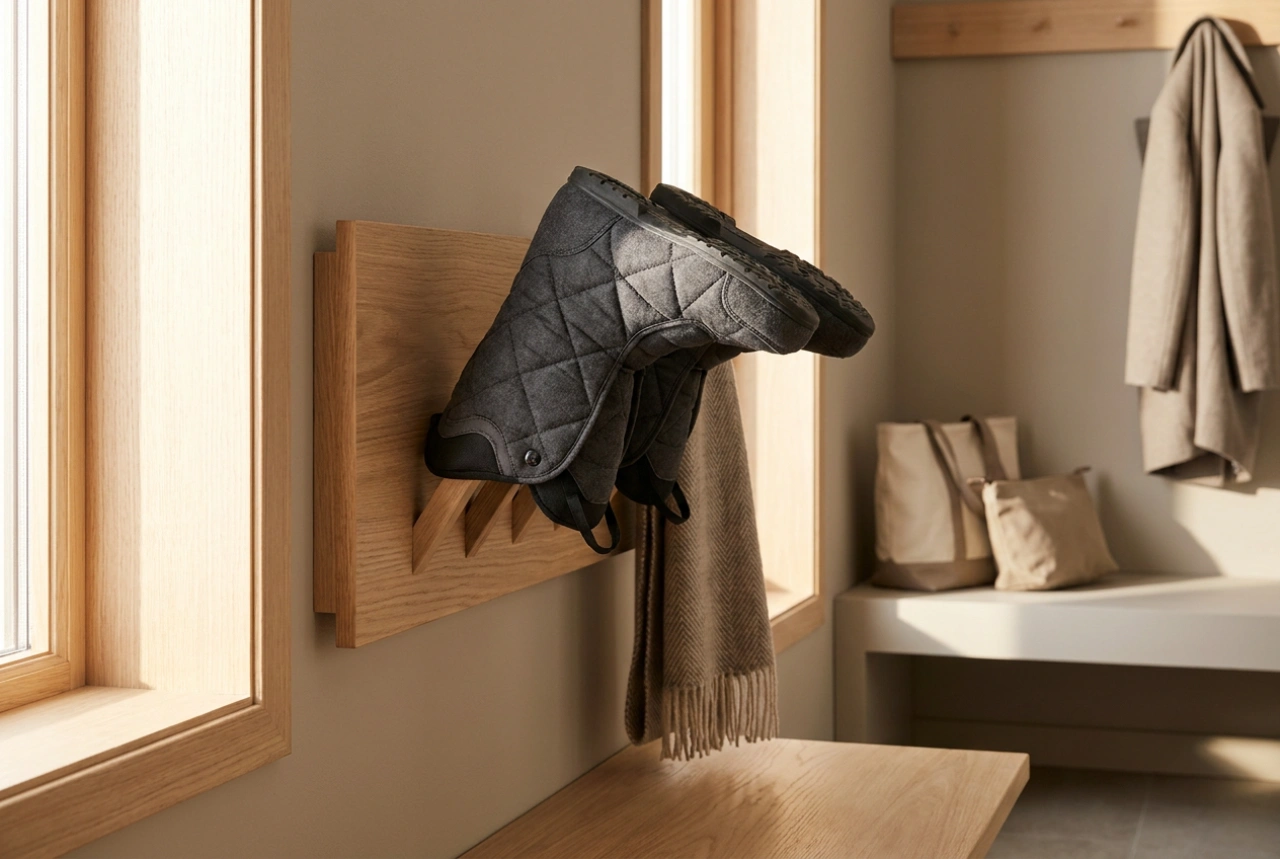
Lifting the drying rack off the floor is the most effective way to eliminate visual clutter and prevent the accumulation of dust at the base of the frame. Installing dedicated wall hooks requires a basic understanding of weight distribution and substrate materials.
When selecting hooks, choose heavy-duty, rubber-coated utility hooks. The rubber coating increases the coefficient of friction, preventing the rack from sliding or vibrating when the household is active. For drywall installation, always locate a wooden wall stud or use self-drilling toggle bolts rather than standard plastic plugs, as the leverage exerted by taking the rack on and off the hooks will loosen weaker anchors over time.
Position the hooks so that they support the rack at its strongest structural joints, typically where the main frame legs meet the top hinge. This prevents bending stress on the thinner hanging wires, preserving the structural integrity of the rack over years of use.
Sliding Cartridge Systems and Custom Dividers
For those with utility closets or deep cabinets, creating a dedicated vertical slot or cartridge is an exceptionally tidy solution. This can be achieved by installing a simple vertical divider panel inside a cabinet.
By securing a thin sheet of plywood or melamine parallel to the cabinet wall, leaving a twelve-centimetre gap, you create a sleeve where the drying rack can slide in smoothly. To prevent wood-on-metal friction and facilitate effortless retrieval, line the base of this sleeve with a slick polymer strip or ultra-high-molecular-weight polyethylene tape. This minimises resistance and eliminates the risk of scratching powder-coated frames, which can lead to localized oxidation and rust.
Material Science: Preventing Damage During Storage
How you store your rack also affects its lifespan and mechanical performance. Moisture management is critical; putting away a drying rack that is even slightly damp can trap humidity in tight spaces, leading to mildew growth or rust at the rivet joints.
- Stainless Steel Racks: Highly resistant to corrosion, but susceptible to staining if stored in high-humidity unventilated closets alongside damp cleaning cloths. Ensure consistent airflow.
- Powder-Coated Steel: If the protective polymer layer chips due to rough handling against plaster walls, exposed steel will quickly rust when exposed to laundry room humidity. Regular inspection of joint hinges is recommended.
- Wooden Racks: Wooden frames expand and contract with relative humidity. Storing them near direct heat sources, such as boilers or radiators, can cause warping of the dowels, making folding difficult.
By treating your folding drying rack as an architectural component of your utility space rather than an afterthought, you maintain both the physical longevity of your equipment and the visual harmony of your home.