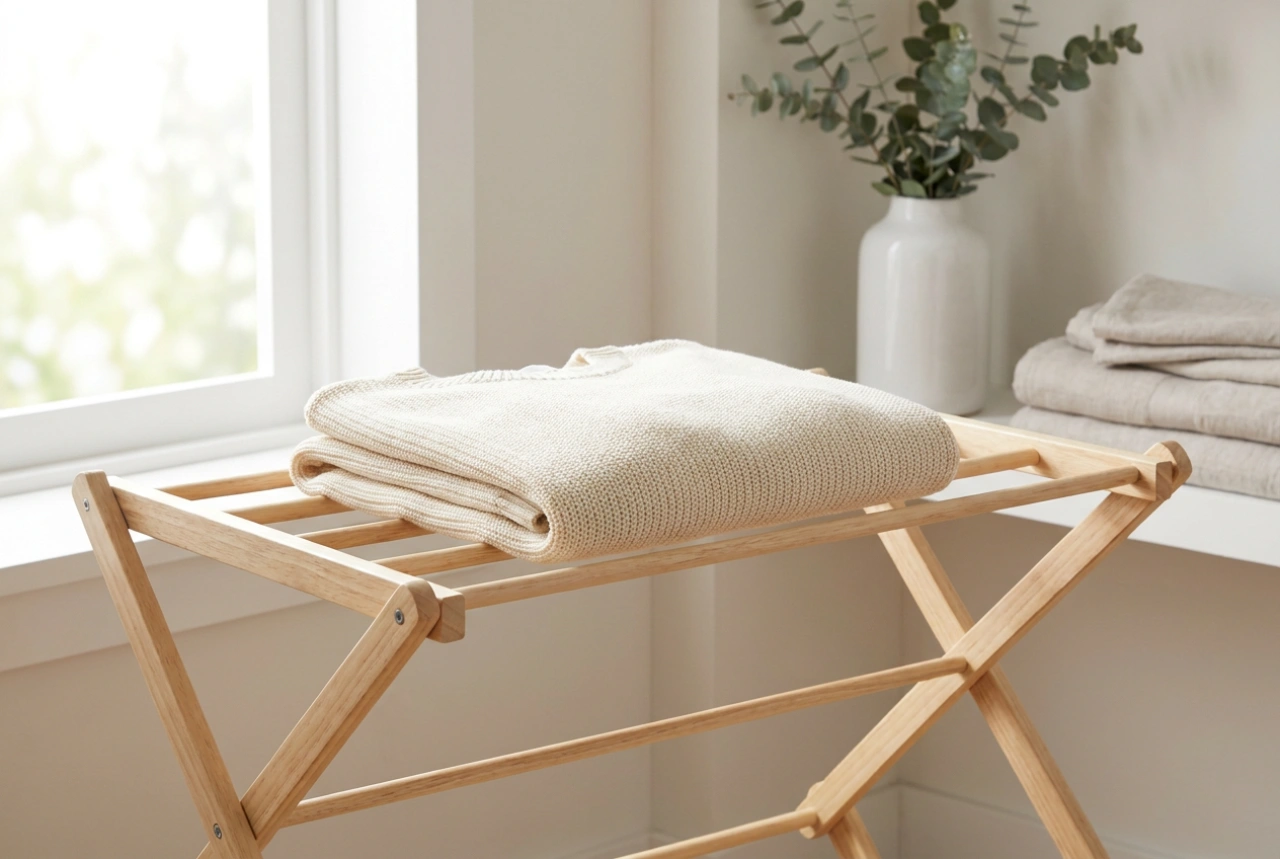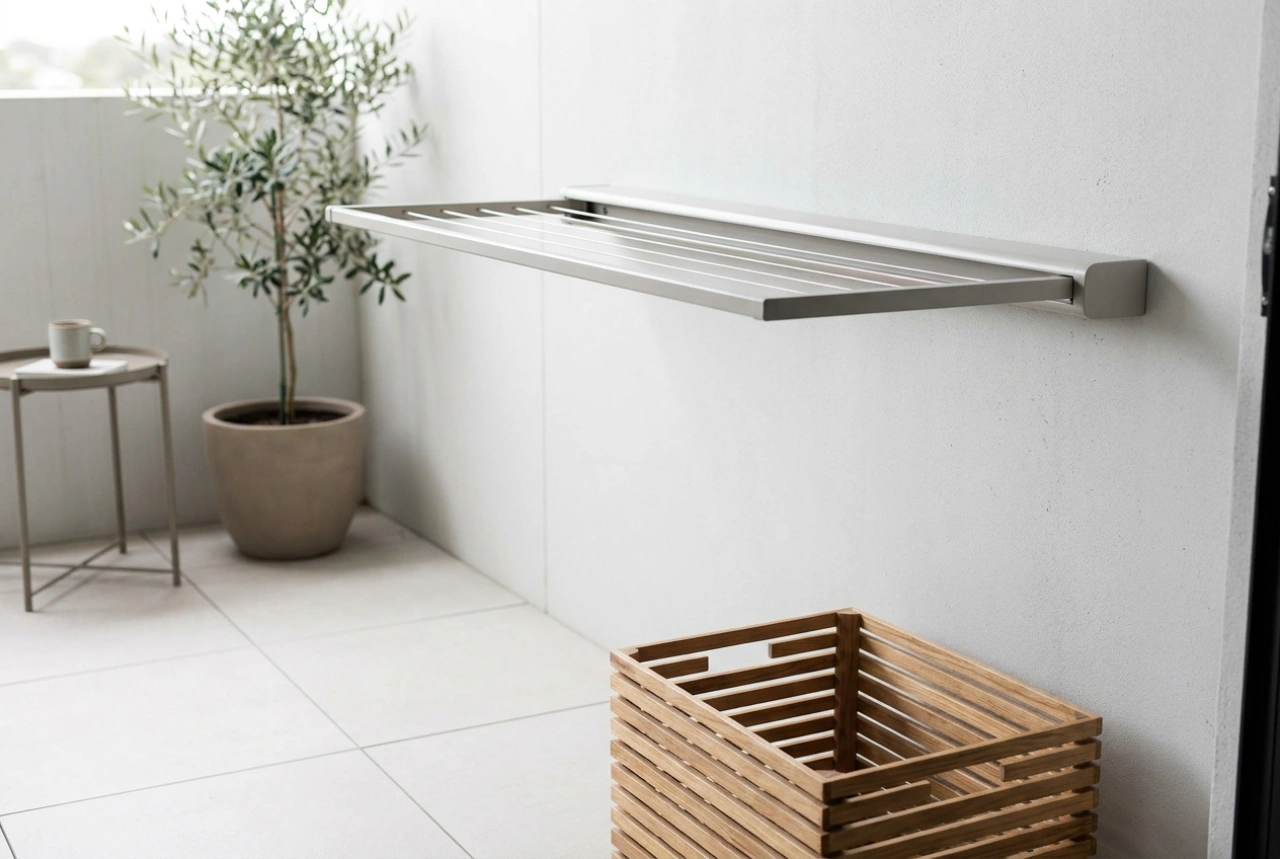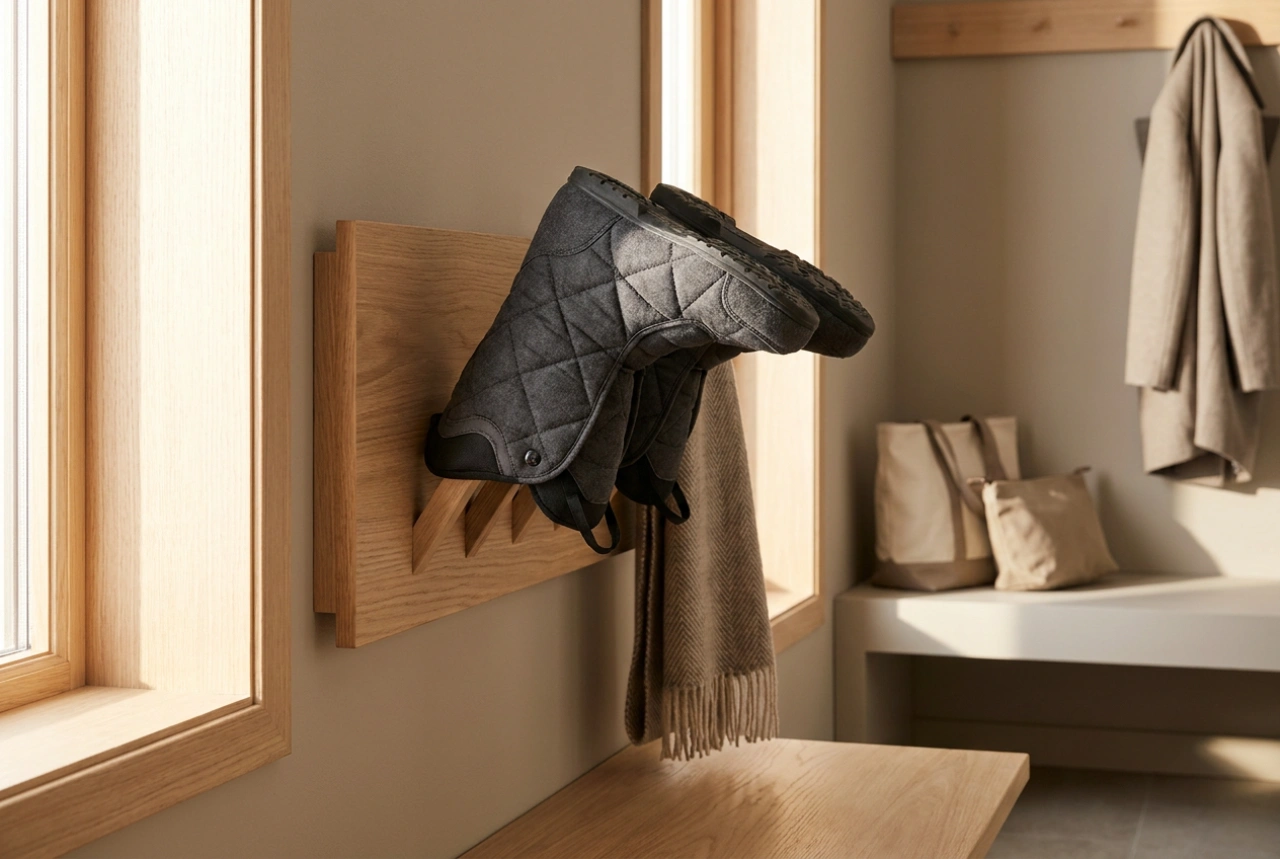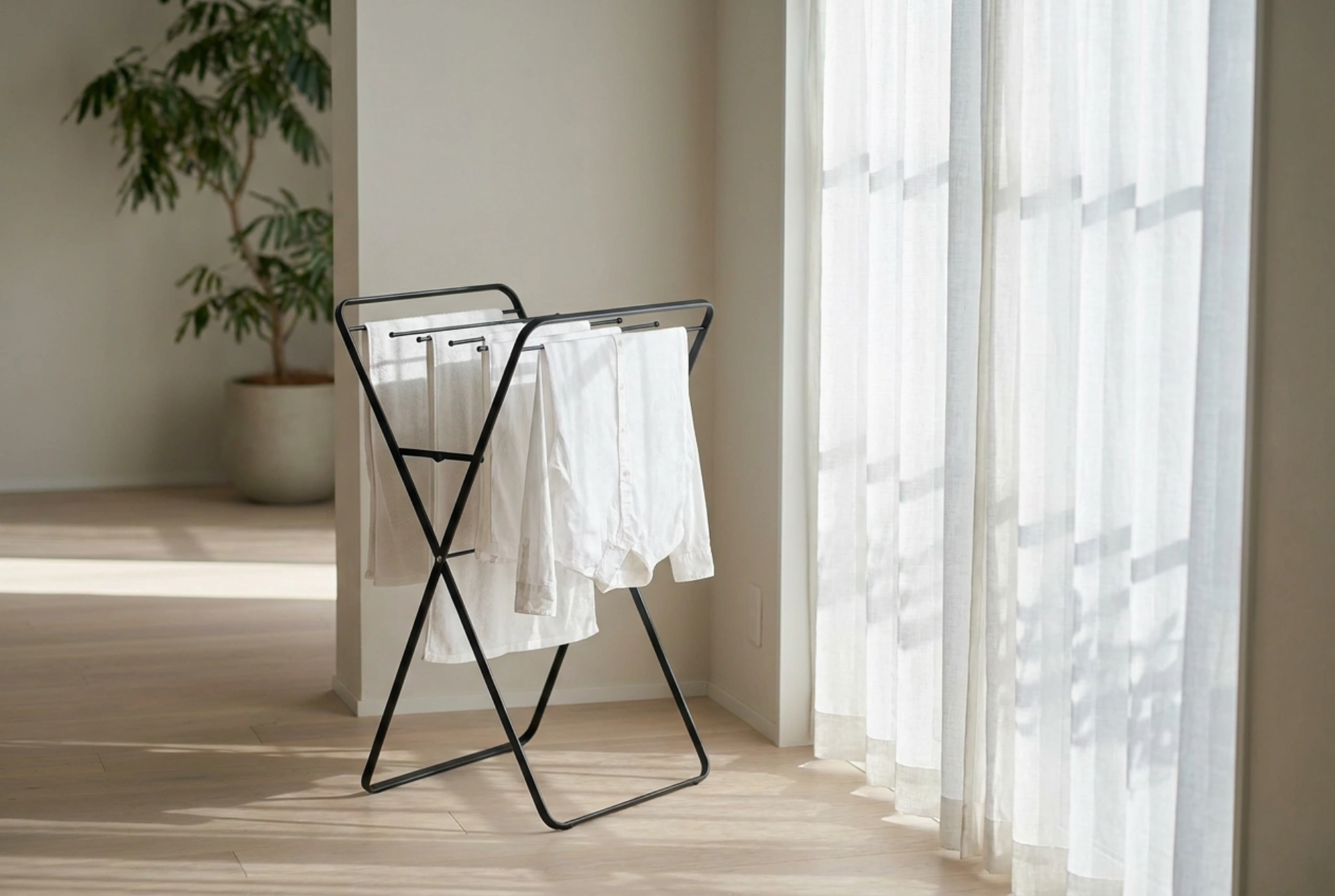


Positioning a foldable drying rack correctly relies on simple thermodynamics and fluid dynamics to accelerate evaporation without consuming electrical energy. By optimizing indoor airflow and managing relative humidity, you can significantly reduce drying times while preventing musty damp odours from developing in your fabrics.
The Physics of Evaporation and the Boundary Layer
To dry wet laundry, liquid water trapped within fabric fibres must transition into water vapour. This phase change is an endothermic reaction, meaning it absorbs thermal energy from the surrounding environment. As water evaporates, a microclimate of high relative humidity forms immediately adjacent to the wet fabric. This thin layer of stagnant, saturated air is known as the boundary layer.
If the surrounding air remains stationary, the boundary layer grows thicker, stalling further evaporation because the air directly touching the fabric cannot absorb any more moisture. To break this equilibrium, you must introduce airflow. Moving air physically strips away this saturated boundary layer, constantly replacing it with drier ambient air that has a lower partial pressure of water vapour, thereby maintaining a rapid rate of evaporation.
Strategic Positioning for Natural Airflow
Where you place your foldable drying rack within a room dictates how efficiently the air circulates through the wet garments. Placing a rack flat against a wall or tucked into a dead corner traps humid air, stalling the drying process and increasing the risk of local condensation on cold wall surfaces.
- Cross-Ventilation Pathways: The most effective position is directly in the path of a gentle draft. Placing the rack between two open windows, or a window and an open internal door, utilizes natural pressure differences to create a constant stream of fresh air.
- Distance from Vertical Surfaces: Always maintain a minimum clearance of 30 to 50 centimetres from walls and large furniture. This prevents the humid boundary layer from transferring moisture to dry surfaces, which can trigger mould growth.
- Thermal Updrafts: Position the rack near, but not directly touching, safe heat sources such as radiators. Warm air naturally rises (convection), creating a chimney effect that draws cooler air from the floor up through the hanging clothes.
Optimizing the Hanging Layout
The physical arrangement of clothes on the drying rack determines how freely air can pass through the structure. Packing items too closely blocks airflow, turning the rack into a solid barrier that traps cold, damp air in its core.
To prevent this, place heavier, denser fabrics like denim, heavy cotton, and sweaters on the outermost rails of the rack. These outer areas receive the highest volume of ambient air circulation. Lighter, quick-drying synthetic materials should be placed in the centre. Furthermore, drape bulkier items over two parallel bars rather than a single wire. This doubles the surface area exposed to air and prevents the front and back of the garment from clinging together, which halves the drying time for thick jumpers and trousers.
Managing Room Humidity and Temperature
As water leaves your clothes, it enters the room's atmosphere, steadily raising the relative humidity. If the room reaches its saturation point, drying stops completely, regardless of airflow. Therefore, maintaining the correct balance of temperature and ventilation is crucial.
Warm air has a higher moisture-carrying capacity than cold air. However, simply heating a sealed room will only create a warm, humid environment. To counter this, employ periodic venting. Opening a window fully for five to ten minutes replaces the warm, moisture-laden indoor air with drier, cooler outdoor air. Once the window is closed, this dry air warms up quickly, ready to absorb more moisture from your laundry. This cycle is far more efficient than keeping a window permanently tilted, which cools down the room's walls and wastes thermal energy.