

Optimising how you hang laundry on a wall-mounted drying rack is not just a matter of tidiness; it is an exercise in thermodynamics and fluid dynamics. By understanding how airflow, humidity gradients, and fabric properties interact, you can significantly accelerate the evaporation process without relying on mechanical heat.
The Physics of Evaporation: Airflow and the Boundary Layer
When wet fabric dries, water molecules escape from the liquid state into the surrounding air as vapour. This process creates a thin, highly saturated boundary layer of air directly hugging the fabric. If this microclimate remains stagnant, evaporation slows to a crawl because the air reaches its local saturation point (100% relative humidity). To break this barrier, you must facilitate continuous air movement, known as convection.
Wall-mounted drying racks face a unique physical challenge: proximity to the wall restricts air circulation from one side. Additionally, as water evaporates, it cools the surrounding air. Because cool, damp air is denser than warm, dry air, it naturally sinks. This creates a downward micro-draft around your drying rack. Recognising this thermal siphon effect is key to positioning your clothes strategically.
The Chimney Effect: How to Arrange Your Garments
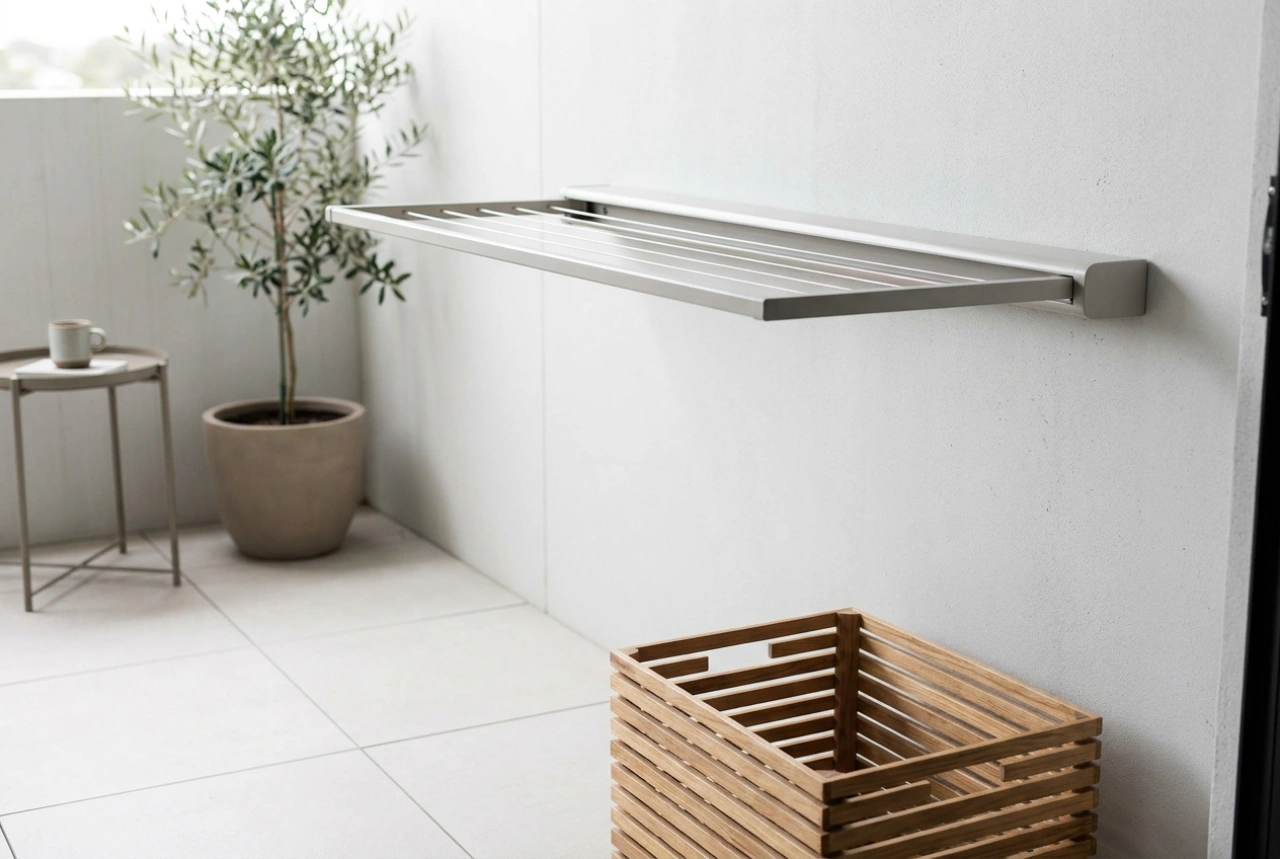
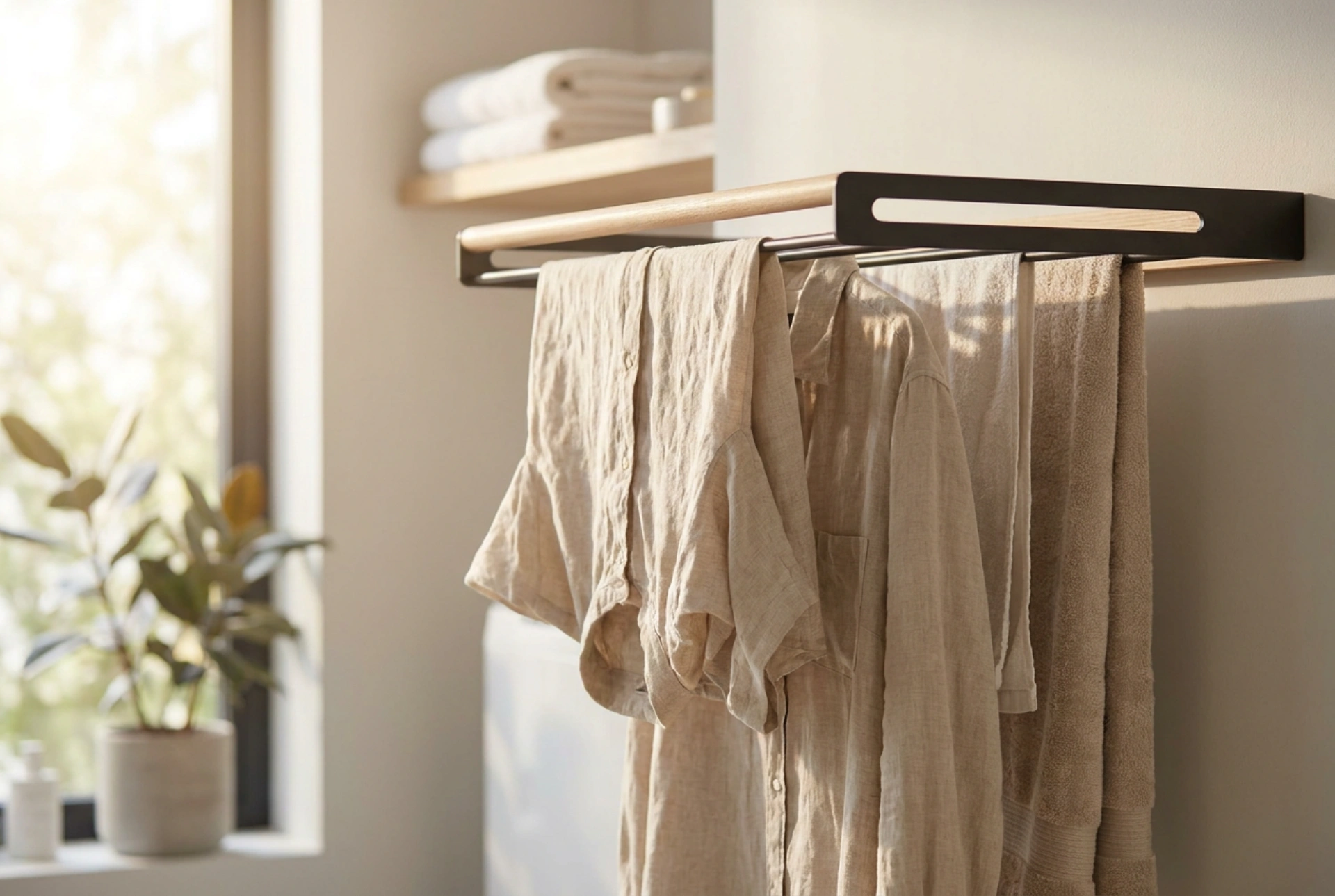
To maximise convective airflow, you should arrange your laundry to mimic a chimney, promoting an upward or downward draft depending on the ambient room temperature. Use the following geometric rules when loaded onto a multi-tiered or extendable wall rack:
- The Staggering Rule: Never hang thick, heavy items directly in front of or above other heavy items. This creates a wall of moisture. Instead, stagger garments so that air can flow diagonally through the rack.
- Heavy on the Outside, Light on the Inside: Position bulky items, such as heavy cotton sweaters or denim, on the outermost rails of the rack. These rails have the greatest exposure to the ambient room air. Lightweight synthetics and delicate cottons, which release moisture quickly, should occupy the inner rails closer to the wall.
- The V-Shape Configuration: If your wall rack has pull-out horizontal tiers, hang shorter items (like socks and underwear) on the lower and inner bars, and longer items (like trousers and towels) on the upper and outer bars. This creates an open "V" profile, preventing lower items from being trapped in the cold, humid air dripping down from above.
Maximising Surface Area and Air Channels
The rate of evaporation is directly proportional to the exposed surface area of the wet medium. Simple adjustments in how you drape fabric can double its drying speed.
- The Double-Rail Drape: Instead of hanging a thick towel or bedsheet folded flat over a single rail, drape it across two parallel rails. This creates an inverted "U" shape with a hollow air channel in the middle. The internal chimney effect allows air to flow upward inside the garment, drying it from both sides simultaneously.
- Inverting Pockets and Seams: Heavy seams, pockets, and waistbands contain multiple layers of compressed fabric that hold high volumes of water. Always turn trousers, hoodies, and thick shirts inside out. Position these dense zones at the highest point of the rack where air movement is typically greatest, or hang them using pegs from the bottom hem to let gravity draw moisture down into thinner fabric layers where it evaporates faster.
- Fibres and Tension: Do not bunch garments. Shake each item vigorously before hanging to align the textile fibres and release tension. This opens up the weave, increasing permeability and allowing air to pass through the threads rather than just over the surface.
Environmental Optimization
Even a perfectly arranged drying rack will struggle in a stagnant, humid room. Ensure your wall rack is installed at an optimal height—ideally high on the wall where ambient room temperature is warmest, but with at least 15–20 centimetres of clearance from the ceiling to allow rising warm air to escape. If possible, position the rack perpendicular to a window or door to leverage cross-flow ventilation, which continuously strips away the humid boundary layer.