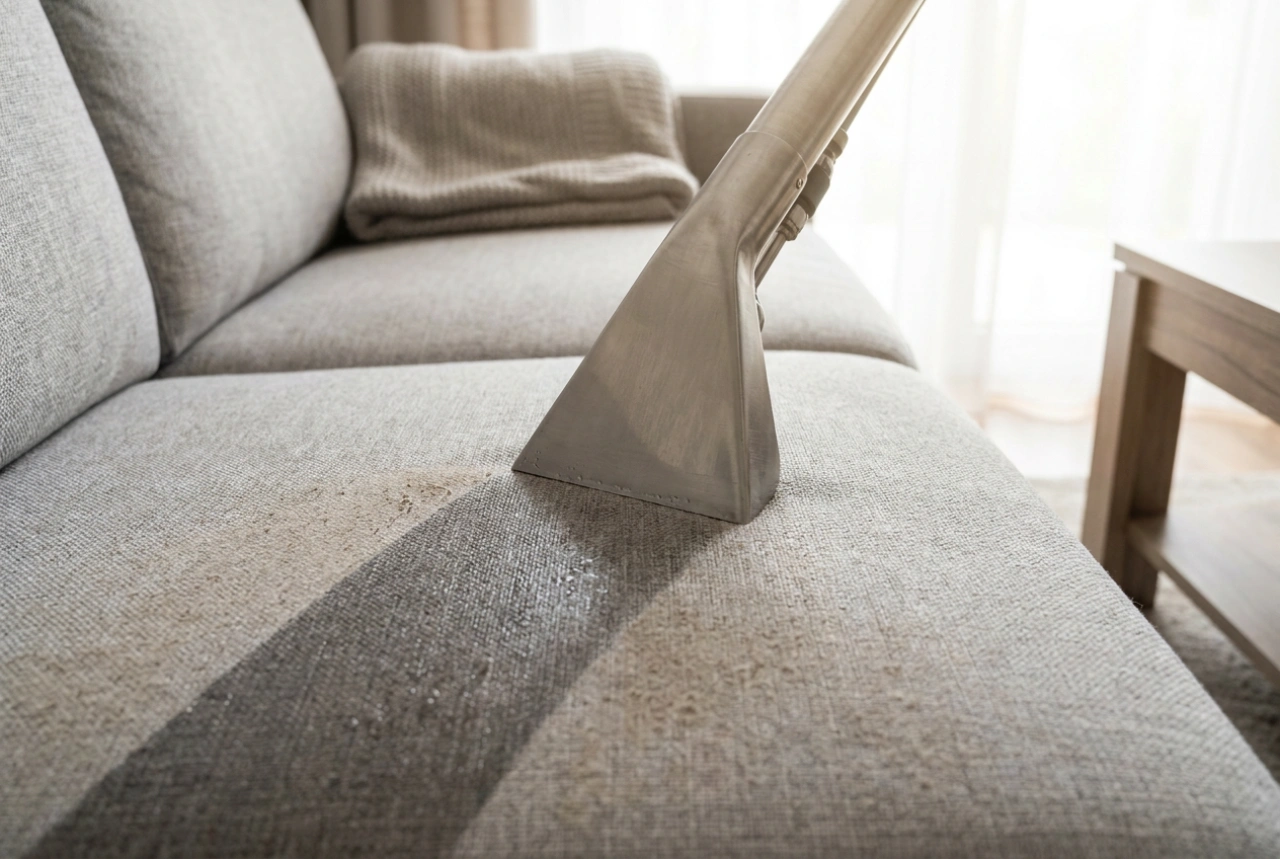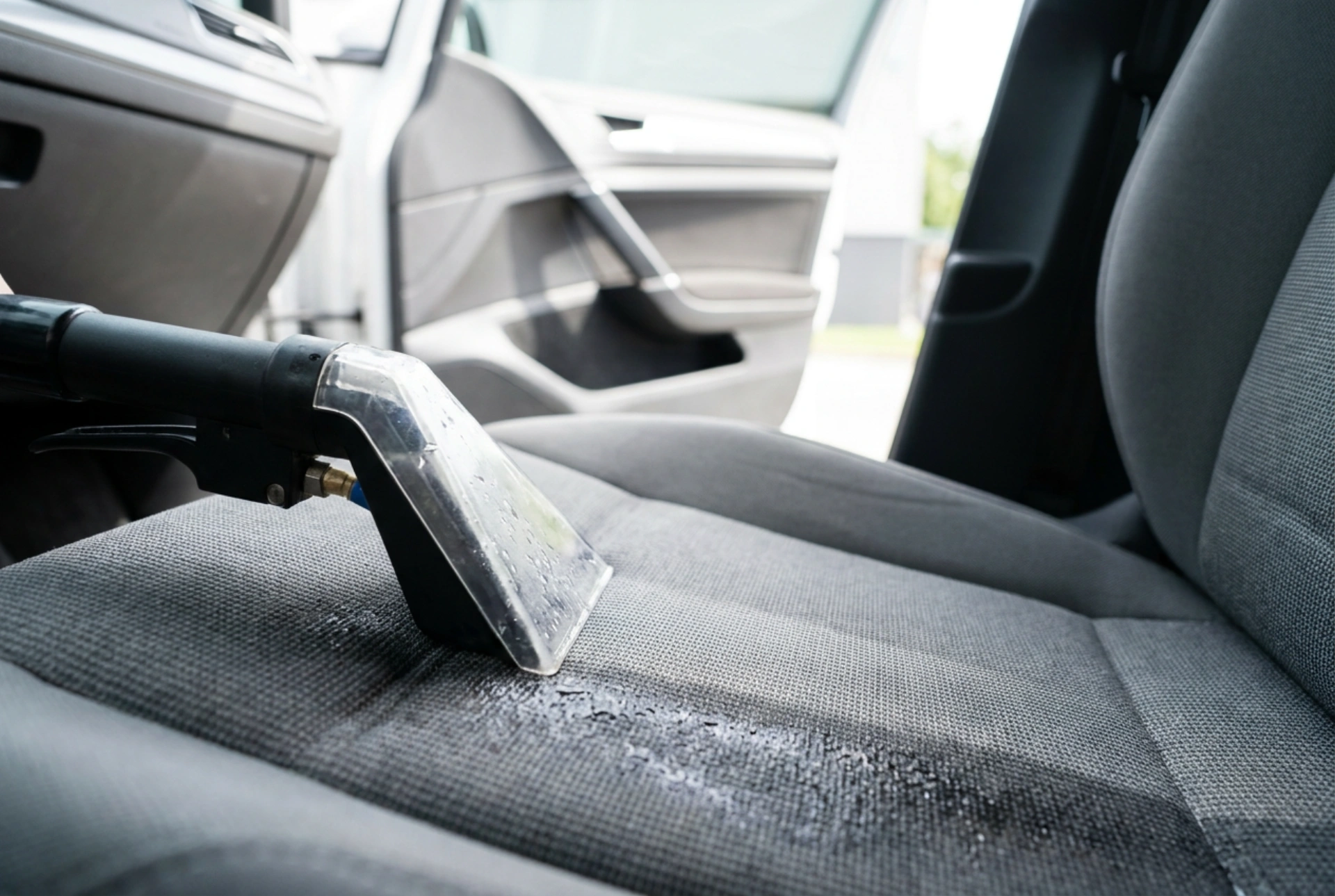


Refreshing car upholstery with a spray-extraction cleaner relies on the physical process of pressurized fluid injection combined with immediate high-vacuum recovery to draw out deeply embedded grime.
The Science of Soil Suspension and Pre-Treatment
Before introducing moisture to automotive fabrics, the physical state of the contaminants must be altered. Car seats accumulate a mixture of insoluble particles, such as quartz sand and dust, along with organic lipids from skin contact and atmospheric pollutants. Injecting water directly onto dry soil creates a muddy slurry that sinks deeper into the polyurethane foam core of the seat. Therefore, a thorough dry vacuuming phase using a high-velocity crevice tool is mandatory to remove all loose particulates.
Following dry vacuuming, chemical pre-treatment (pre-spraying) is required to break down hydrophobic oils. Water alone cannot dissolve oils due to differences in surface tension. An alkaline pre-spray solution containing surfactant molecules lowers the surface tension of water. These surfactants feature a hydrophilic head and a lipophilic tail; they surround grease molecules, lift them from the synthetic polyester or nylon fibers, and suspend them in an aqueous emulsion. For organic protein stains, using an enzymatic pre-spray helps catalyze the breakdown of complex molecules into water-soluble components. The solution must dwell on the fabric for 5 to 10 minutes to allow these chemical reactions to complete, but it must not be allowed to dry, as this redeposits the suspended soils.
The Mechanics of Spray-Extraction
The extraction phase utilizes mechanical force to rinse the emulsified grime from the fibers. The choice of water temperature in the cleaner's clean water tank is critical for both cleaning efficiency and material safety. Warm water, between 40°C and 50°C, increases the kinetic energy of the cleaning solution, accelerating chemical reactions and softening fats. However, temperatures exceeding 60°C must be avoided. Excessive heat can liquefy the polyurethane adhesives bonding the fabric face to its foam backing, causing delamination and permanent wrinkling.
Executing the Perfect Extraction Pass
- Tool Angle: Hold the extraction nozzle at a consistent 45-degree angle, pressing the clear plastic head firmly against the fabric to create a tight vacuum seal.
- The Wet Pass: Depress the spray trigger while pulling the tool backward in a slow, steady stroke. The pressurized jet forces the rinse water into the fabric pile, while the vacuum slot immediately sucks up the dissolved dirt and surfactant residue.
- The Overlap: Work in small grid sections, typically 30 by 30 centimetres, overlapping each stroke by approximately two centimetres to ensure no areas are missed.
Preventing Wicking and Moisture Damage
The most common failure in wet extraction cleaning is the occurrence of "wicking." Wicking is a capillary action that occurs during the drying process. If deep-seated dirt remains dissolved in the damp foam cushion beneath the surface fabric, the water will migrate upward toward the dry air as it evaporates. As the water evaporates from the tips of the fibers, it leaves the dissolved soils behind, creating dark, unsightly ring stains on the clean surface.
To prevent wicking, the amount of residual moisture left in the seat must be minimized through exhaustive "dry passes." A dry pass involves pulling the extraction tool over the fabric without pulling the spray trigger. The user must monitor the clear plastic window of the extraction tool; dry passes should be repeated until no more dirty water is seen flowing through the nozzle. For heavy fabric or thick bolster sections, multiple dry passes from perpendicular directions are necessary.
Post-Cleaning Ventilation and Airflow Physics
Once extraction is complete, rapid evaporation of any remaining moisture is vital to prevent the growth of mould and mildew, which thrive in dark, damp environments. Leave the vehicle windows open by several centimetres and position an axial air mover or carpet dryer inside the cabin to promote continuous air circulation. High airflow velocity lowers the relative humidity directly above the fabric surface, speeding up molecular evaporation without the need for high heat, which could damage sensitive electronics or trim adhesives inside the vehicle.