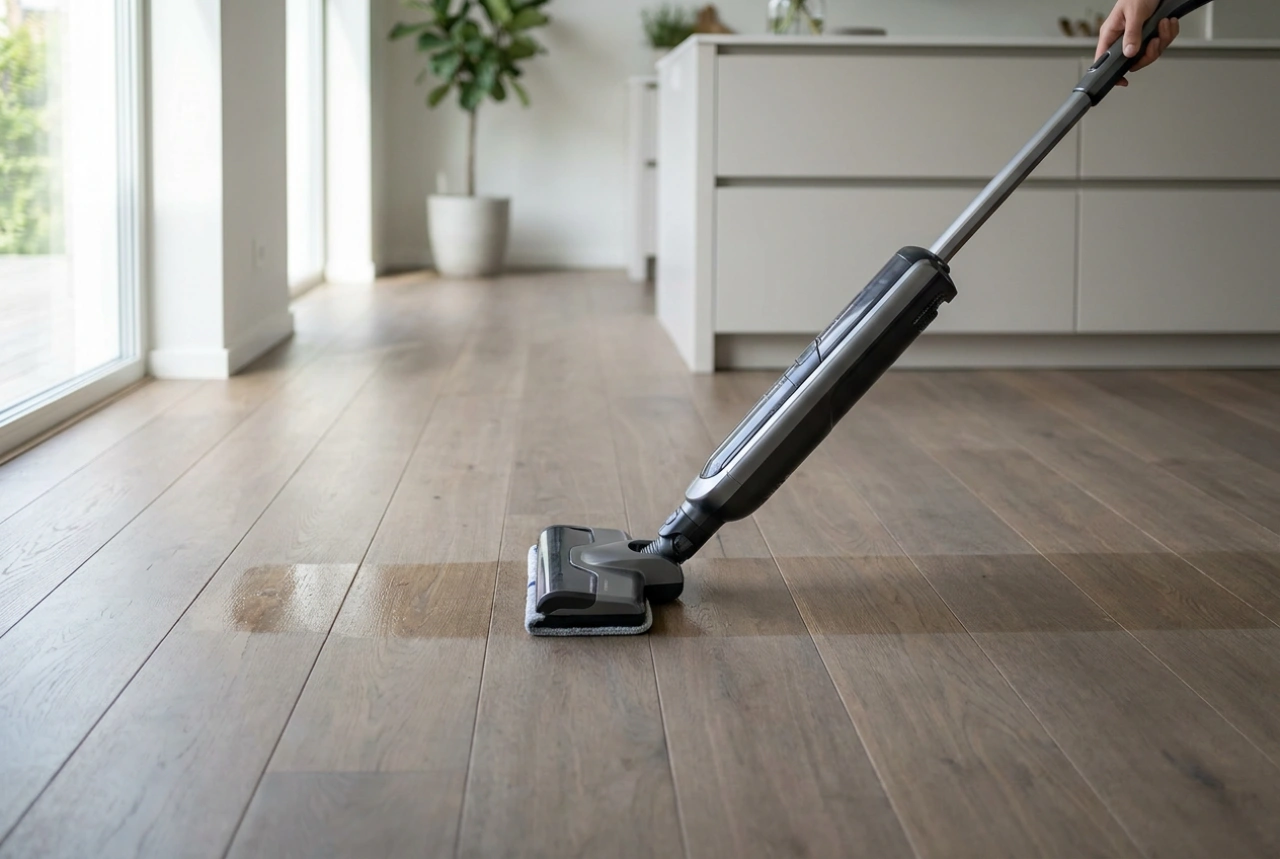


Wet-and-dry vacuum cleaners and mopping vacuums offer an efficient dual-action cleaning process, but they can quickly begin leaving unsightly streaks across hard floors if not maintained correctly. Eliminating these smudges requires a basic understanding of water chemistry, surfactant behaviour, and the mechanics of microfibre absorption.
The Chemistry of Streaks: Minerals and Surfactant Buildup
The most common cause of streaking is not dirt itself, but the microscopic residues left behind after water evaporates. Tap water contains dissolved minerals, primarily calcium and magnesium carbonate. When a wet vacuum distributes this water across a floor, the liquid evaporates, but the mineral ions remain, crystallising into tiny, visible deposits that catch the light as streaks.
This issue is exacerbated by the overuse of floor detergents. Cleaning agents rely on surfactants—molecules with a hydrophilic (water-attracting) head and a lipophilic (fat-attracting) tail. These molecules lower the surface tension of water, allowing it to penetrate grease and lift dirt. However, if the detergent concentration is too high, the excess surfactant molecules do not evaporate. Instead, they remain on the floor as a sticky, invisible film. When the damp roller of the vacuum passes over this film, it emulsifies the old residue, spreading a greasy, streaky layer across the surface. To prevent this, always dilute detergents precisely according to the manufacturer’s instructions, or swap to demineralised water combined with a tiny splash of isopropyl alcohol to encourage rapid, residue-free evaporation.
Microfibre Maintenance: Restoring Capillary Action
The cleaning pads or rollers of wet-and-dry vacuums are typically made of microfibre, a synthetic material engineered from split polyester and polyamide threads. These microscopic splits create high capillary pressure, drawing liquid and suspended dirt particles deep into the fabric channels rather than merely pushing them around.
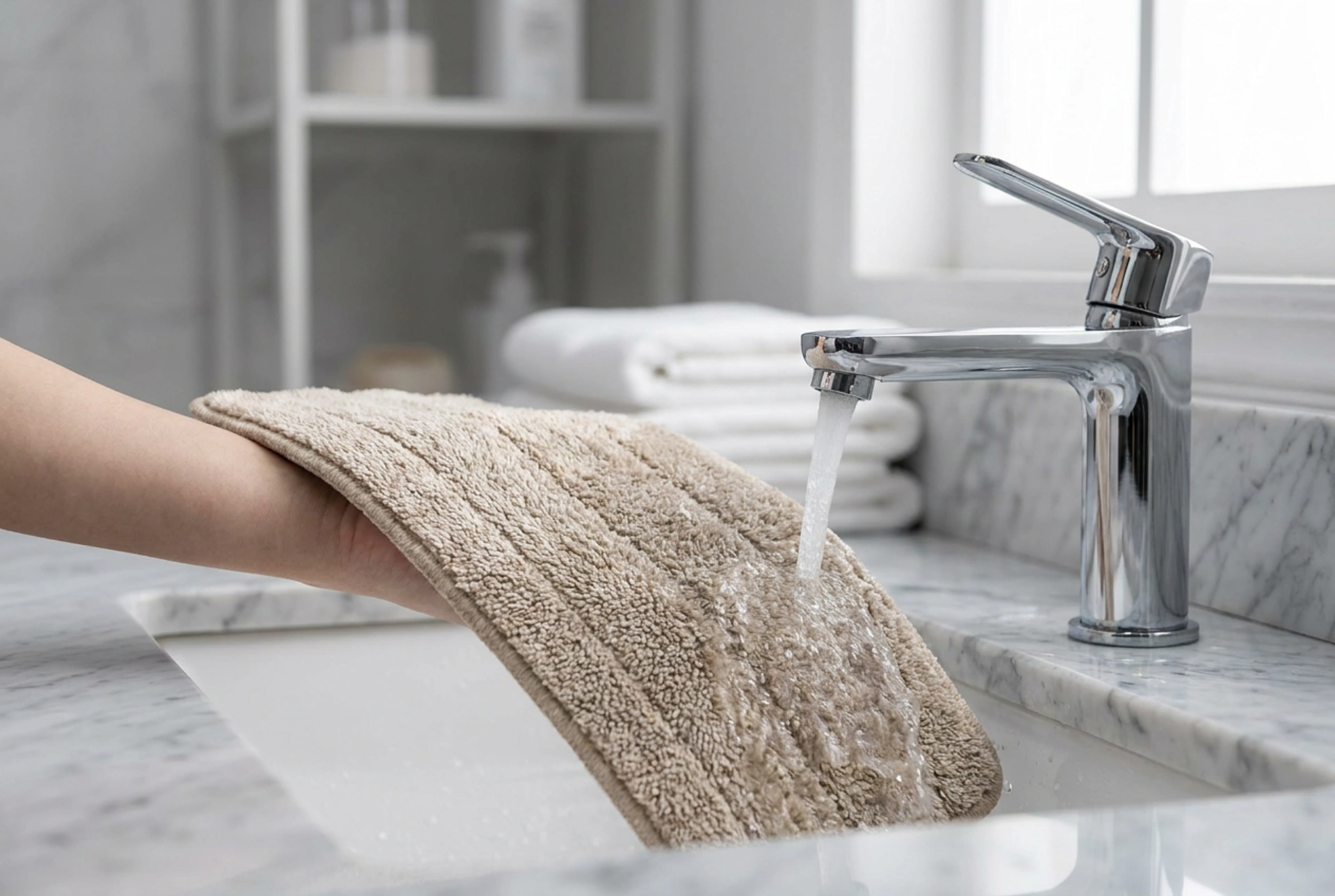
Over time, these capillaries become clogged with dried grease, mineral deposits, and soap scum. If you wash the microfibre pads with standard laundry detergent and fabric softener, the problem worsens. Fabric softeners work by coating fibres with a thin, lubricating layer of fatty compounds or silicone to make them feel soft. On a microfibre pad, this coating clogs the capillary channels, making the fabric hydrophobic. Instead of absorbing dirty water, the clogged roller simply hydroplanes over the surface, redistributing dirty water. Wash your mopping pads or rollers at 60°C using a simple, residue-free liquid detergent. Never use fabric softener or chlorine bleach, which can degrade the delicate polyamide fibres.
Preventing Biofilm in the Internal Channels
A wet vacuum is a closed, dark, and damp system—the perfect breeding ground for bacteria and mold. When dirty water is sucked into the recovery tank, organic debris such as skin cells, food particles, and pet dander are pulled with it. If this mixture is left in the machine, bacteria rapidly multiply, forming a sticky, resilient layer known as biofilm.
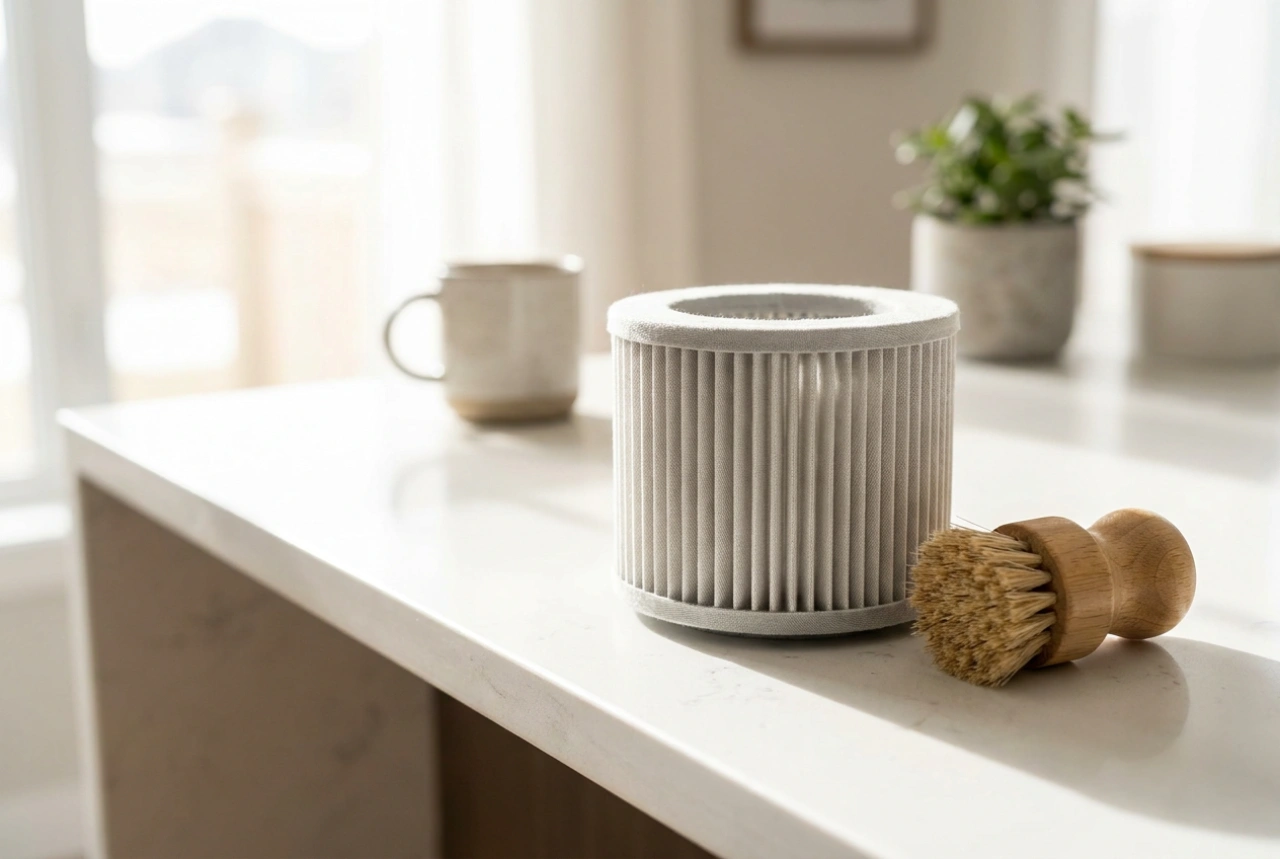
This biofilm not only emits a sour odour but also contaminates the internal plumbing, suction inlets, and squeegee blades of the vacuum. As the machine operates, this bacterial film can be smeared back onto the floor, leaving a cloudy, dull trail. To prevent biofilm formation, empty and rinse both the clean and dirty water tanks immediately after every cleaning cycle. Leave the tanks, filters, and rollers disassembled in a well-ventilated area to dry completely. Once a month, flush the system by running a mixture of warm water and oxygen-based bleach through the self-cleaning cycle to break down organic proteins and sanitise the internal pathways.
Mechanical Contact and Squeegee Care
For a streak-free finish, the physical contact between the vacuum and the floor must be perfectly uniform. Most wet vacuums utilise a rubber squeegee blade behind the roller to scrape excess water into the suction path. If this blade is nicked, warped, or coated in hair and lint, it will leave thin lines of water behind.
Inspect the squeegee blade regularly. Wipe it down with a damp microfibre cloth to remove hair and debris that prevent it from sealing against the floor. Additionally, check the roller bearings and drive shaft. Hair wrapped around the spindle lifts the roller slightly on one side, causing uneven pressure distribution and leaving damp patches that dry into streaks.