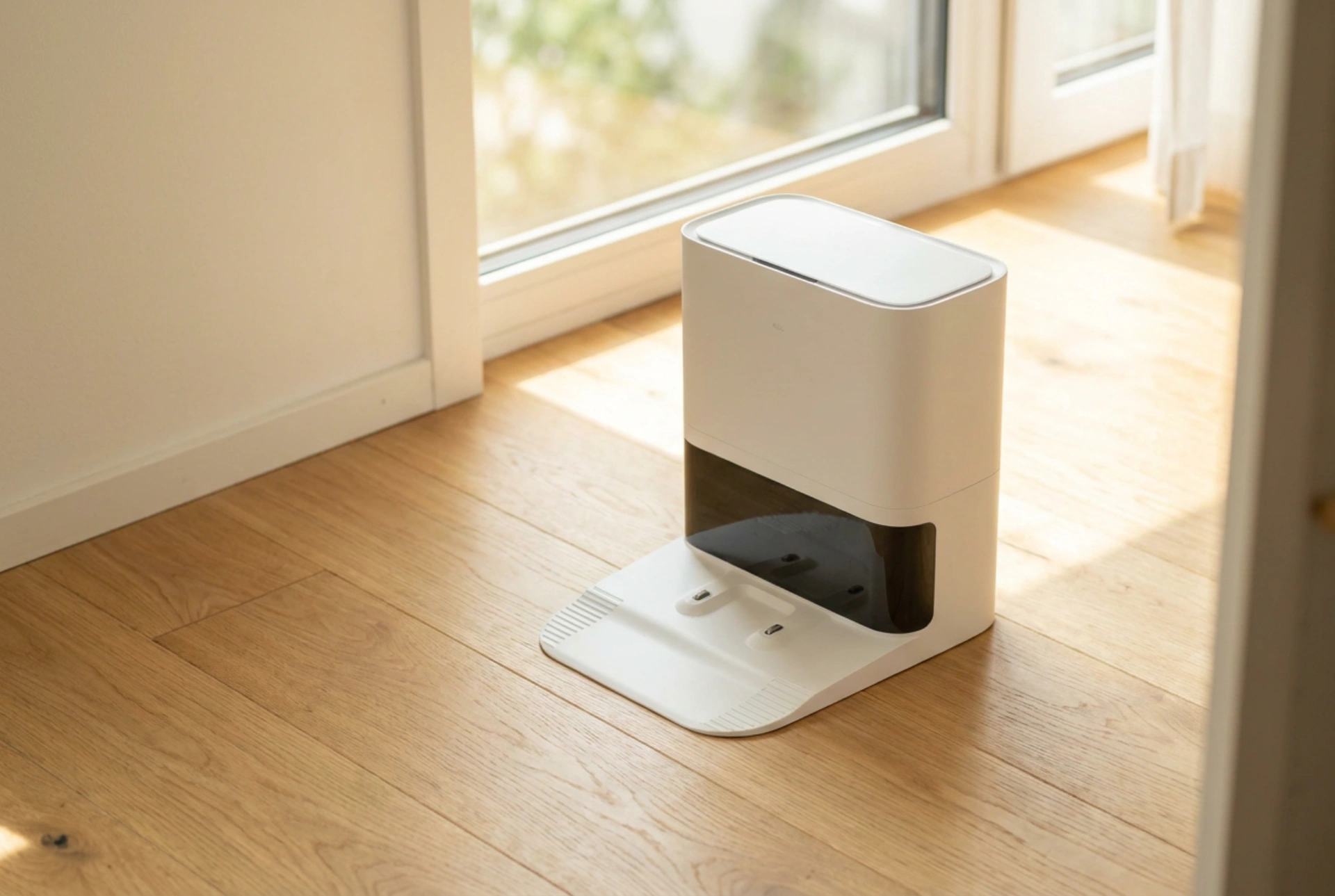


Setting up a hybrid mopping robot requires a precise understanding of how different flooring materials interact with moisture, friction, and mechanical pressure to avoid structural damage and achieve optimal cleanliness.
The Science of Flooring Materials and Moisture Sensitivity
Every floor surface responds uniquely to liquid exposure due to its molecular structure and porosity. Engineered hardwood, solid wood, and laminate are highly hygroscopic materials. When water penetrates the joints or seams of these floors, the wood fibres absorb the moisture, leading to swelling, warping, and irreversible buckling. For these sensitive surfaces, the absolute golden rule is minimising water volume and ensuring rapid evaporation.
Conversely, ceramic tiles, porcelain, and natural stone can tolerate higher moisture levels, but they present different physical challenges. Tiles have recessed grout lines that trap dirt, requiring deeper mechanical agitation and higher water flow to lift particles out of the recesses. Highly polished surfaces, like glazed porcelain, are prone to water spots and streaks if the water volume is too high or if the drying process is uneven due to high surface tension.
Optimising Water Flow Rates and Surface Tension
Modern mopping robots control water distribution using internal electronic pumps that drip fluid onto the microfibre pad at designated intervals. Adjusting these flow rates is the most critical setting for different floors:
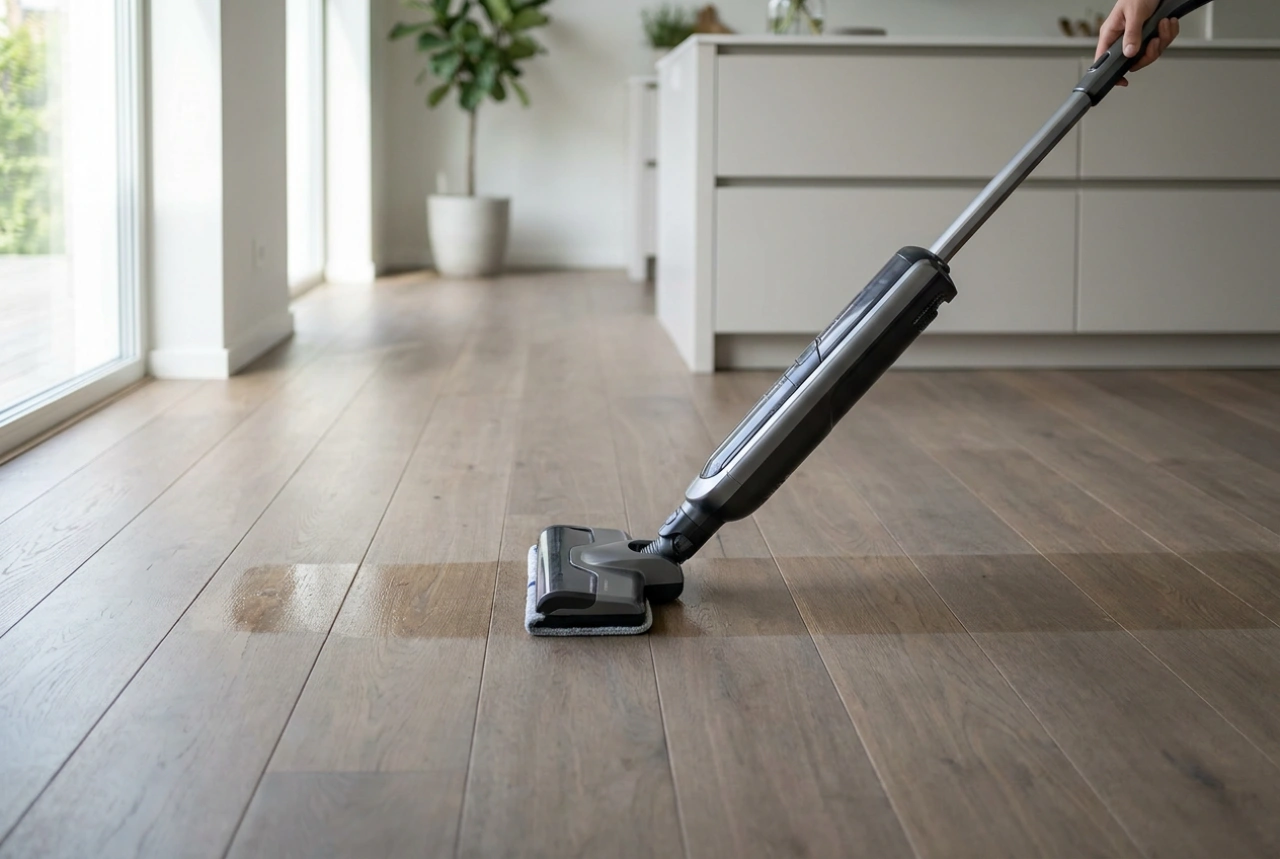
- Low Flow (Dry-Damp): Essential for wood, laminate, and cork. The robot should dispense just enough water to dampen the microfibre pad, allowing the moisture to evaporate within 30 to 60 seconds of contact. This prevents standing water from seeping into micro-cracks.
- Medium Flow: Ideal for luxury vinyl tiles (LVT) and linoleum. These materials are highly water-resistant but can still become slippery or experience adhesive breakdown if flooded.
- High Flow: Reserved for ceramic, porcelain, and sealed stone floors. The increased liquid volume helps loosen dried-on mud and grit, filling the grout lines to float debris to the surface where the pad can collect it.
Using demineralised or distilled water in the tank prevents calcium carbonate (limescale) build-up within the microscopic nozzles of the pump mechanism, ensuring a consistent spray pattern and preventing dry streaks.
Friction and Pad Selection: Microfibre Mechanics
The cleaning action of a robot mop relies on boundary friction—the physical contact between the pad fibres and the floor surface. Microfibre is the optimal material because its split polyester and polyamide fibres create millions of microscopic hooks. These hooks generate capillary action, drawing liquid and suspended dirt up into the pad rather than pushing it around.
For smooth wood and laminate, use soft, high-pile microfibre pads that glide easily, reducing drag and preventing micro-scratches from trapped grit. For textured stone or tiled floors, a denser, slightly abrasive pad provides the necessary mechanical agitation to scrub uneven surfaces. Always wash these pads at high temperatures (at least 60°C) without fabric softeners, as softeners coat the fibres in a hydrophobic silicone layer, destroying their capillary absorption capacity.
Chemical Dynamics: Avoiding Sticky Residues
Using the wrong cleaning agent can ruin both the floor finish and the robot's internal pump. Standard household detergents contain high concentrations of surfactants, which lower the surface tension of water to lift dirt. However, when these agents evaporate on a hard floor without being thoroughly rinsed, they leave behind a microscopic, sticky residue. This residue is highly hygroscopic, meaning it actively attracts dust and dirt, causing the floor to soil even faster than before.
To avoid this, use only specialised, low-foaming, pH-neutral cleaning formulas designed for robotic mops, or stick to pure demineralised water. Never use wax-based polishes or harsh chlorine bleach in the water tank, as they can corrode the silicone seals and plastic housing of the robot's fluid delivery system.
Preventing Cross-Contamination and Carpet Wicking
One of the main challenges of robotic mopping is transition management. If a damp pad passes over a carpet, it triggers a physical process called wicking. The dry, highly absorbent carpet fibres pull the dirty water out of the damp pad, transferring soil deep into the carpet pile. To prevent this, utilise the robot’s software to establish strict "no-mop zones" around all carpeted and rugged areas, ensuring the robot lifts its damp pad or bypasses these zones entirely during a wet cycle.