

Optimising your home environment for a hybrid robot vacuum and mop is essential to ensure seamless navigation, prevent mechanical stalling, and achieve streak-free floors. By understanding the physics of optical sensors, surface tension, and mechanical traction, you can configure your living space to let your automated appliance operate at peak efficiency.
Sensor Physics: Eliminating Blind Spots and Entanglements
Most modern robot cleaners navigate using LiDAR (Light Detection and Ranging) or optical camera systems. LiDAR operates by emitting rapid laser pulses and measuring the time of flight for the light to bounce back, constructing an accurate spatial map. However, highly reflective surfaces can refract the laser beams, causing positioning errors, while dark, light-absorbing materials can absorb the light pulses, causing the robot to detect a non-existent drop-off.
Physical obstacles smaller than the laser's vertical beam width are also problematic. Thin charging cables, curtain hems, and rug fringes are often missed by navigation sensors. When the rotating side brushes encounter these loose materials, they wrap around the axle, increasing motor resistance and triggering an automatic shutdown to prevent motor burnout. To mitigate this:
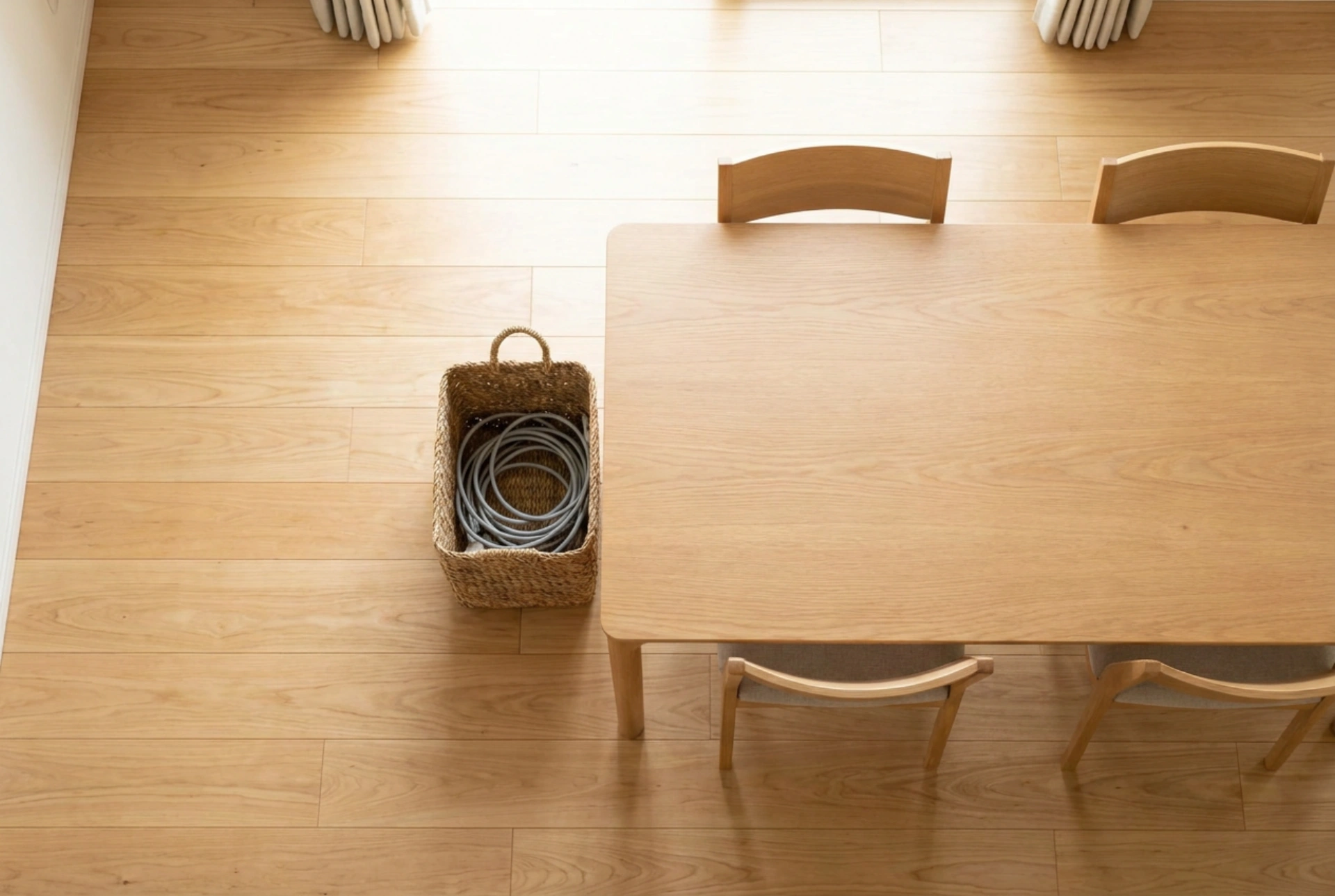
- Bundle all electrical cords and suspend them at least 10 centimetres above floor level using cable organisers.
- Tuck rug fringes securely underneath the rug base or apply double-sided non-slip tape to hold them flat against the subfloor.
- Group dining chairs or lift them onto the table before a cycle to reduce the density of vertical obstacles, allowing the robot to execute continuous, energy-efficient cleaning paths.
Surface Chemistry: Achieving Streak-Free Mopping
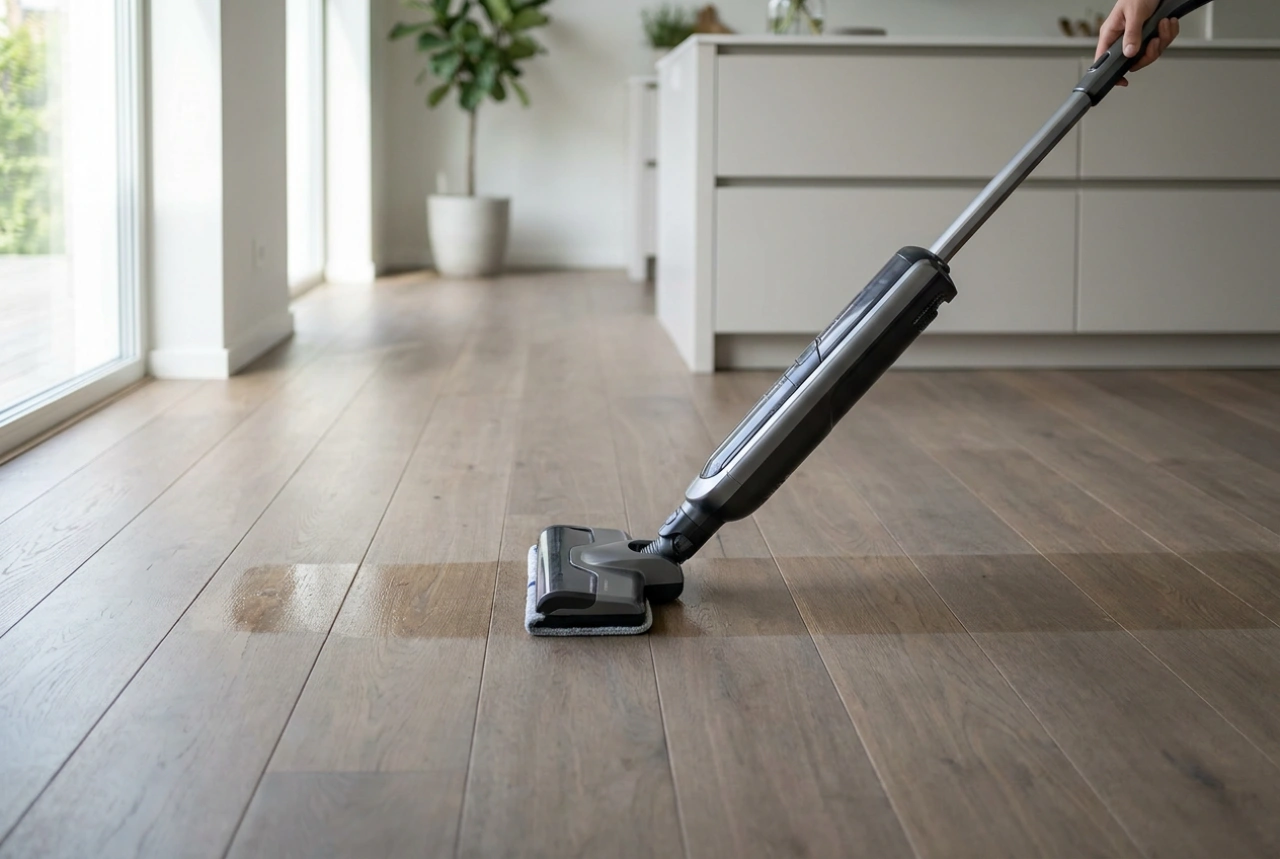
Unlike manual mopping, where high downward pressure is exerted to scrub away dirt, a hybrid robot relies on a lightweight microfibre pad, constant moisture release, and steady friction. Because the downward force is low, the chemical interaction between the water, detergent, and floor surface is critical.
If your floors have a build-up of old waxes, polishes, or high-surfactant detergents, the robot’s damp pad will merely emulsify these layers instead of removing them. As the thin film of water left behind evaporates, these dissolved residues dry unevenly, resulting in visible streaks. To prevent this, perform a thorough manual deep clean with a neutral-pH, residue-free cleaner to strip away old chemical build-up before your robot's first run.
Additionally, avoid pouring standard household detergents into the robot's water tank. High-foaming agents create air pockets in the internal pump, leading to dry runs and potential pump damage. Use only specialized, non-foaming formulas or pure distilled water. Distilled water is highly recommended because it lacks dissolved mineral ions like calcium and magnesium. Tap water causes mineral precipitation inside the micro-nozzles, gradually clogging the water distribution channels.
Mechanical Traction and Threshold Dynamics
A robot's climbing capacity changes significantly when transitioning from dry vacuuming to wet mopping. When the mopping module is attached, the dragging damp pad increases surface friction and alters the unit's centre of gravity. If the drive wheels encounter wet, smooth surfaces, the coefficient of friction drops, causing wheel slippage.
This drop in traction makes climbing over transition strips much harder. While a dry robot might clear a 20 mm threshold, a mopping robot may get stuck on a 15 mm barrier. To ensure smooth transitions, inspect all doorways. If thresholds exceed 15 mm, install low-profile rubber ramps to assist the drive wheels. Furthermore, program virtual "no-mop zones" in the robot’s application around all carpeted areas. Capillary action will cause carpets to rapidly draw moisture and suspended dirt from a passing damp pad, ruining the carpet fibres.
Base Station Placement and Moisture Protection
The positioning of the charging or self-washing dock is vital for the long-term health of both your appliance and your floors. Docking relies on precise infrared alignment and wheel odometry. If the base station is placed on an uneven surface, such as a medium-pile carpet, the dock may tilt slightly, preventing the charging pins or water intake ports from aligning correctly.
Always place the base station on a completely flat, hard floor. If you have hardwood or laminate flooring, it is crucial to place a waterproof plastic protective mat under and in front of the dock. When the robot docks with a damp microfibre pad, standing water will pool on the floor surface. Capillary action will draw this moisture into the micro-gaps between wood planks, causing wood fibres to swell, warp, and permanently damage the structural integrity of your floor.