

Deep cleaning automotive upholstery requires a precise balance between chemical dissolution and mechanical extraction to prevent water from penetrating the internal cushioning.
The Physics of Wet Extraction and the Danger of Foam Saturation
Car seats are composed of a tightly woven fabric cover bonded to a thick layer of polyurethane foam. While the outer fabric dries rapidly, polyurethane foam acts as a dense, open-cell sponge that readily traps and retains water. If moisture penetrates deep into this foam layer, drying times extend from hours to days. This prolonged dampness creates an ideal microclimate for fungal spores and bacterial proliferation, leading to persistent musty odours and potential structural degradation of the seat's internal metal frames or electronic sensor mats. The goal of low-moisture extraction is to restrict liquid strictly to the upper textile layer while utilizing high-velocity air suction to pull the dissolved soil out before it migrates downward via capillary action.
The Chemistry of Pre-treatment (Prespray)
To minimize water usage, the cleaning process must rely heavily on chemical efficiency rather than high fluid volume. Instead of saturating the fabric with soapy water, apply a concentrated surfactant solution—a "prespray"—using a fine-mist trigger sprayer. Surfactants lower the surface tension of water, allowing the solution to coat the individual synthetic fibres (usually polyester or nylon) rather than pooling in the interstitial spaces of the weave.
- Alkaline Builders: For organic stains, grease, and sebum from skin contact, a solution with a pH of 8 to 10 works best to break down lipids.
- Temperature: Warm water (between 40°C and 50°C) accelerates chemical reactions and melts solid fats, making them easier to emulsify.
- Dwell Time: Allow the solution to sit for 5 to 10 minutes without letting it dry. This allows the hydrophobic tails of the surfactant molecules to attach to soil particles, suspending them above the fibre surface.
Step-by-Step Extraction Technique
When using a wet-and-dry vacuum or a dedicated upholstery extractor, the physical technique of the operator determines the final moisture level of the seat. The process should always follow a strict sequence of movements.
1. Prepare the Rinsing Solution
Avoid using detergents in the extraction tank. Residual soap left in the fabric attracts dirt rapidly after drying. Instead, fill the extraction tank with clean, warm water mixed with a mildly acidic rinsing agent, such as a highly diluted citric acid solution. This neutralizes the alkaline prespray, stabilizes dyes, and leaves the fibres soft.
2. The Extraction Stroke
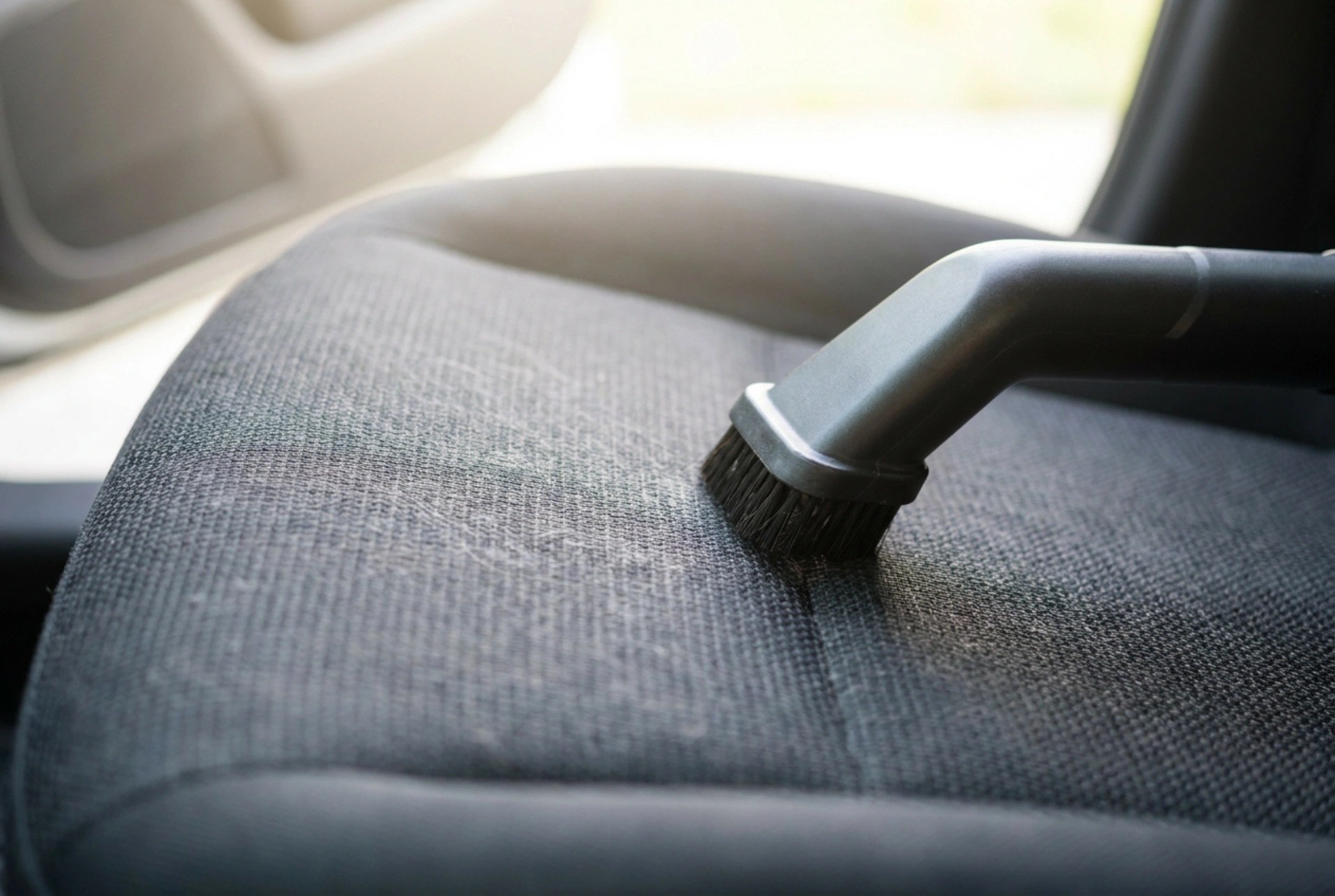
Place the transparent hand tool firmly against the fabric at a 45-degree angle to create an airtight seal. Pull the tool toward you in slow, steady strokes at a rate of approximately 5 to 10 centimetres per second. Trigger the fluid spray only during the backward pull, and release the trigger about 5 centimetres before finishing the stroke to ensure no puddles remain at the end of the pass.
3. Mechanical Dry Passes
This is the most critical phase for moisture control. After one wet pass, perform two to three "dry passes" over the exact same area without spraying any water. Press down firmly to maximize the static lift of the vacuum. Watch the transparent nozzle; continue making dry passes until you no longer see water droplets being pulled through the tool. This mechanical suction pulls water out of the weave before it can sink into the foam beneath.
Accelerating the Evaporation Phase
Even with meticulous extraction, some residual moisture will remain in the upper fibres of the textile. To ensure the seats dry within a few hours, you must manipulate the environmental conditions inside the vehicle cabin.
Lower the vehicle windows by approximately 2 to 3 centimetres to allow humid air to escape. If possible, place an axial air mover or a standard domestic fan inside the vehicle, directing the airflow directly across the damp seat surfaces. Increasing air velocity strips away the boundary layer of saturated air directly above the fabric, significantly accelerating the evaporation process. Avoid using high heat sources like heat guns or heavy space heaters directly on the seats, as excessive thermal energy can delaminate the fabric backing or warp synthetic fibres.