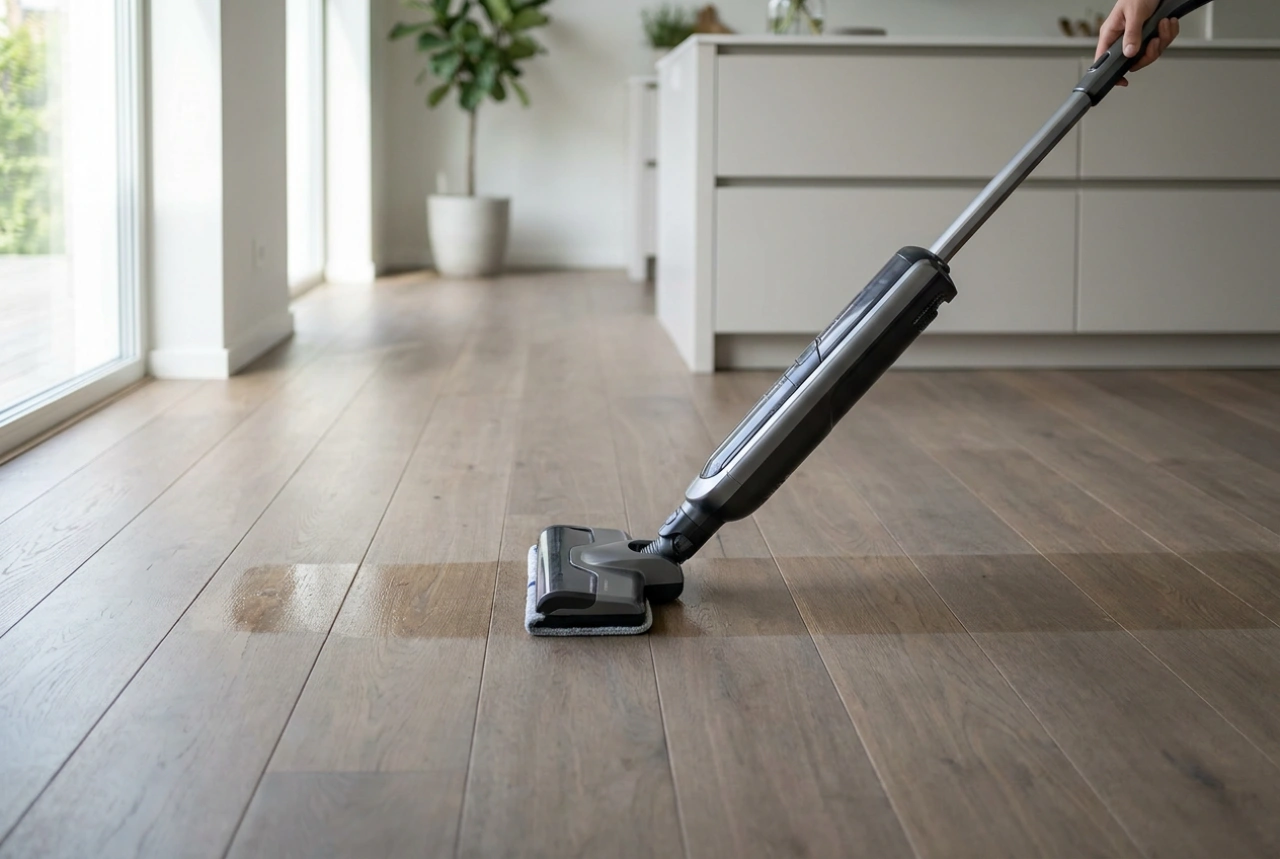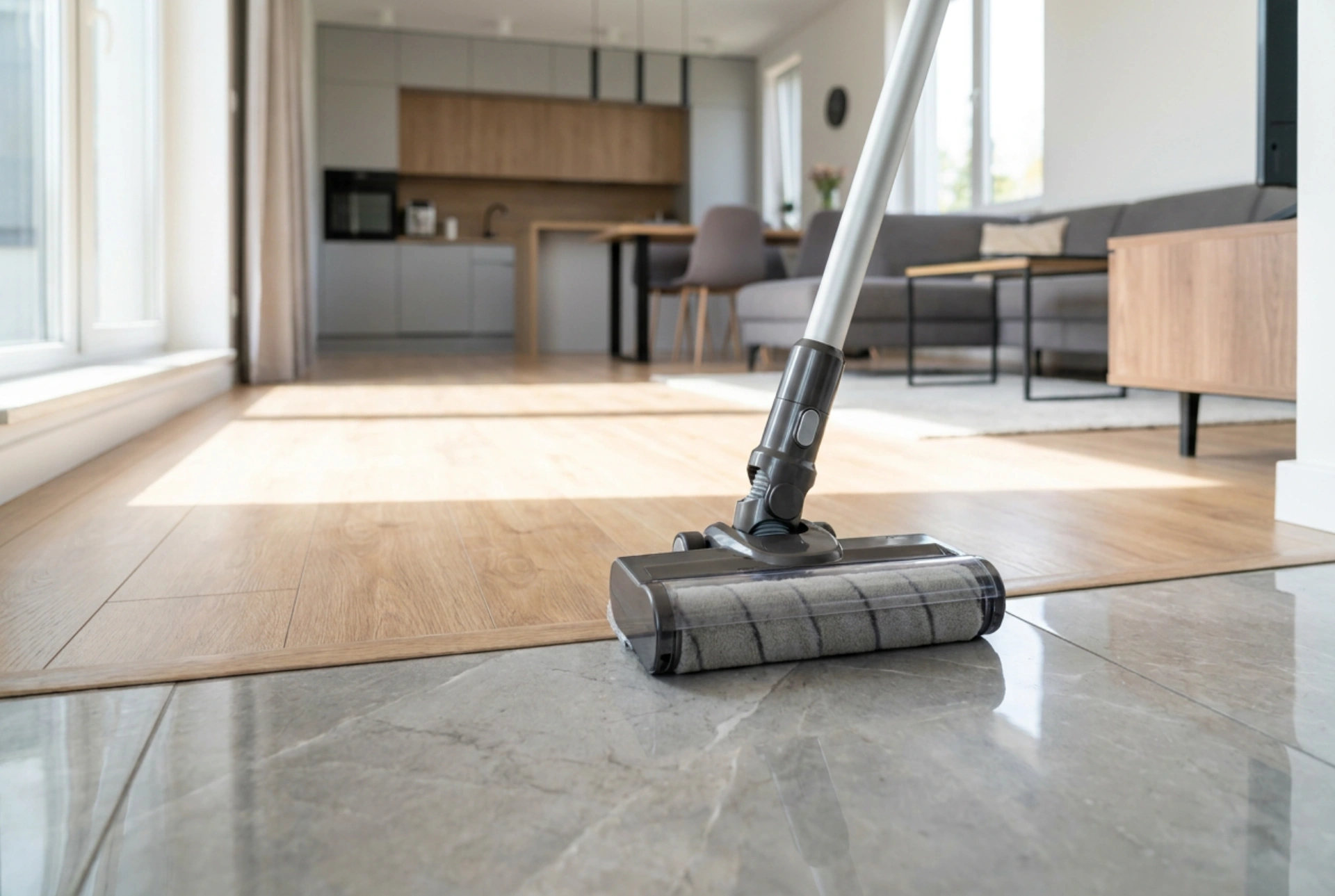


Using a vacuum mop combines debris suction and wet mopping into a single efficient pass, but mastering this dual-action tool requires a solid understanding of floor material science. Different surfaces, such as moisture-sensitive wood laminate and hard, porous-grouted ceramic tiles, demand distinct approaches to water volume, motion speed, and chemical application to prevent damage and eliminate streaks.
The Science of Surface Tension: Laminate versus Tile
To clean effectively without damaging your floors, you must understand how water interacts with different materials. Laminate flooring consists of a dense fiberboard core covered by a photographic layer and a protective, transparent melamine wear layer. While the surface itself is highly water-resistant, the joints between the planks are vulnerable. Water left standing on these seams penetrates via capillary action, causing the wood fibers to swell, warp, and permanently buckle. Therefore, the primary rule for laminate is strict moisture control.
In contrast, glazed ceramic and porcelain tiles are virtually impervious to liquid. However, the cementitious grout lines separating them are highly porous and prone to absorbing dirty water, which leads to staining and bacterial growth over time. On tiles, the vacuum mop's role is not just to wipe the surface, but to apply enough mechanical agitation and liquid to suspend the dirt in solution before the suction mechanics instantly extract it, keeping the grout lines clean.
The Perfect Technique for Moisture-Sensitive Laminate
When operating a wet-dry vacuum mop on laminate, your goal is to minimize water contact time. Modern appliances allow you to control the water flow rate; always select the lowest possible moisture setting. Before starting, ensure the vacuum's suction pathway is completely clear to guarantee maximum extraction power.
- The Continuous Motion Rule: Never let the vacuum mop idle while the water pump is active. Keep the machine moving at a steady pace of approximately one meter per two seconds. Standing still allows water to pool and seep into the plank joints.
- The Dry-Pass Finish: After pushing the machine forward with the water spray active, release the trigger or deactivate the wet mode during the backward pull. This allows the high-powered vacuum motor and dry microfiber roller to extract any remaining surface film, leaving the laminate virtually dry.
- Directional Cleaning: Guide the machine parallel to the long joints of the laminate planks. This minimizes the cross-joint friction of the roller brush and prevents water from being forced deep into the seams.
Maximizing Efficiency on Tiled Surfaces
Tiled floors can tolerate more moisture, allowing you to utilize the wet-dry vacuum’s full cleaning potential. To lift stubborn, dried-on grime from textured tiles and grout lines, you need to adjust your physical technique and liquid volume.
Increase the water flow rate to a medium or high setting to allow the cleaning solution to loosen embedded dirt. Move the machine slightly slower than you would on laminate, allowing the rotating brush roller to mechanically scrub the grout recesses. For heavy stains, perform a pre-soak pass: glide over the area with the water spray active to deposit the solution, let it sit for thirty seconds to chemically break down the grime, and then make a second pass with full suction to extract the suspended contaminants.
Water Chemistry and Temperature Dynamics
The chemical composition and temperature of your cleaning liquid dictate the final finish. Always use lukewarm water. Warm water lowers the surface tension of the liquid, enabling it to wet the surface more evenly and dissolve greasy residues faster. However, avoid boiling water, as extreme heat can degrade the internal seals of your vacuum mop and weaken the adhesive holding the laminate layers together.
To avoid a sticky residue that attracts dust immediately after drying, use a highly diluted, low-foaming surfactant solution. Standard detergents create excessive foam that bypasses the vacuum's water-separation system, potentially damaging the motor. If you live in an area with hard water, the minerals—mostly calcium and magnesium carbonates—will leave white spots as the thin film of moisture evaporates. Utilizing distilled or demineralized water in your clean water tank completely eliminates this issue, ensuring a streak-free, polished finish.
Post-Clean Maintenance to Prevent Streaking
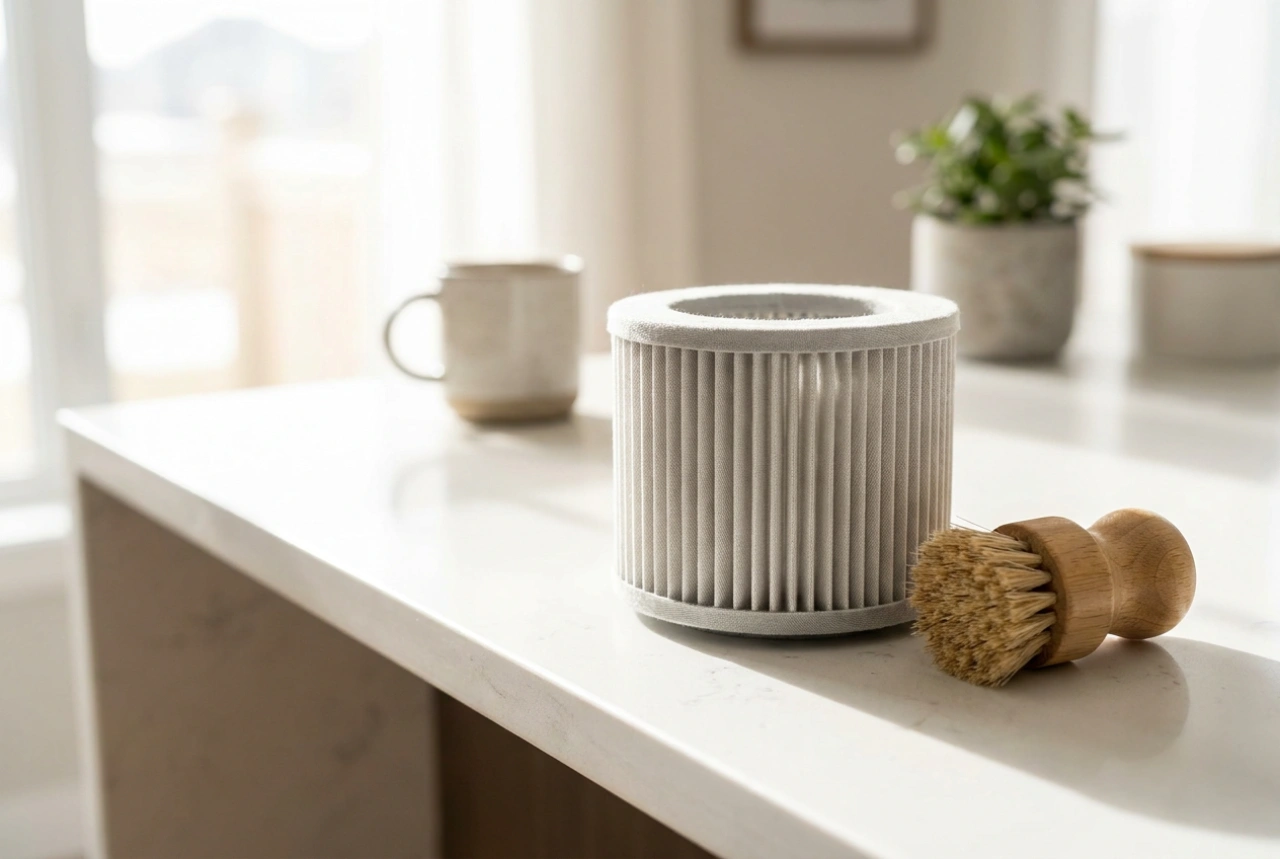
A common cause of streaks and foul odors is a poorly maintained machine. After every session, empty and rinse the dirty water tank immediately. Damp organic matter trapped in the tank or filter quickly breeds bacteria, creating unpleasant smells. Remove the microfiber roller, rinse it under warm water to remove trapped grit, and allow it to air-dry completely. A dirty roller cannot absorb water effectively, which will cause the machine to leave dirty tracks during your next cleaning session.