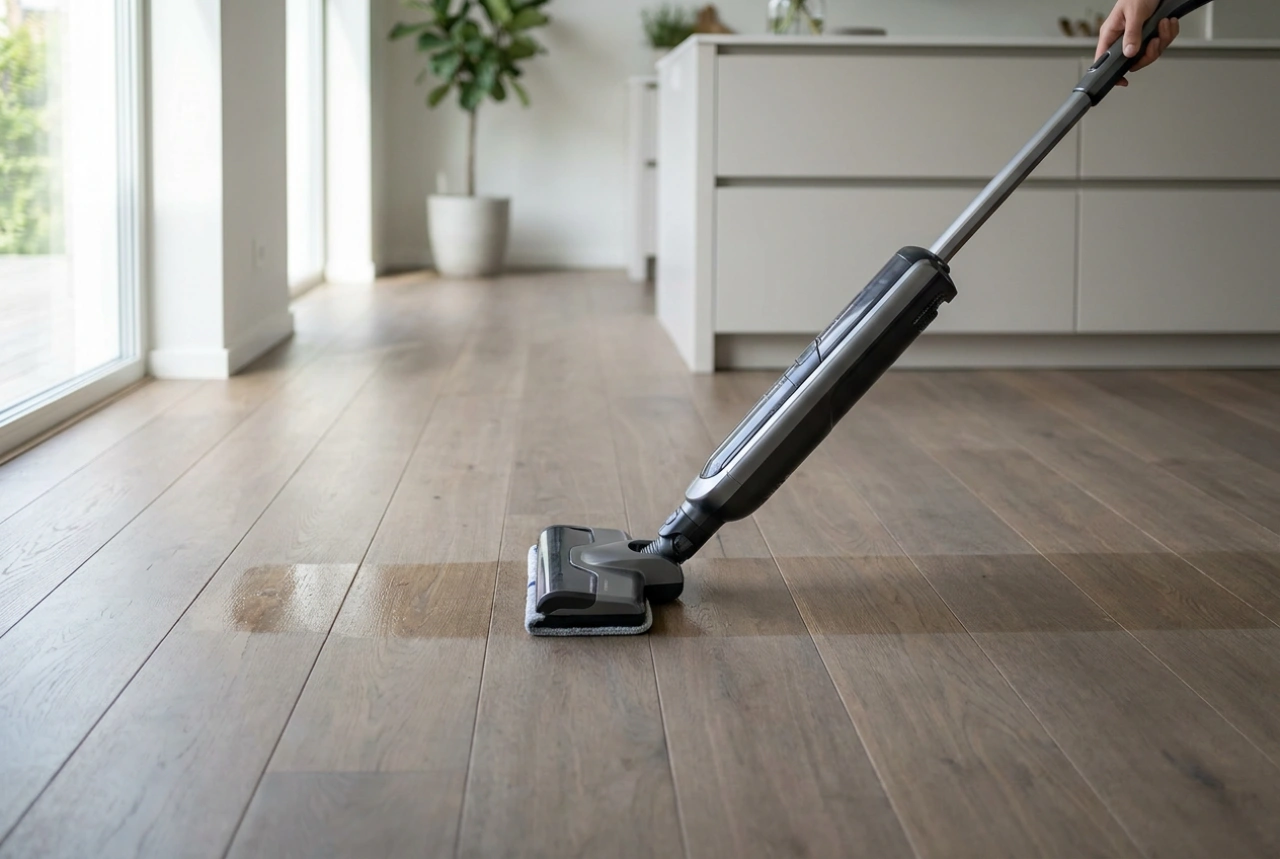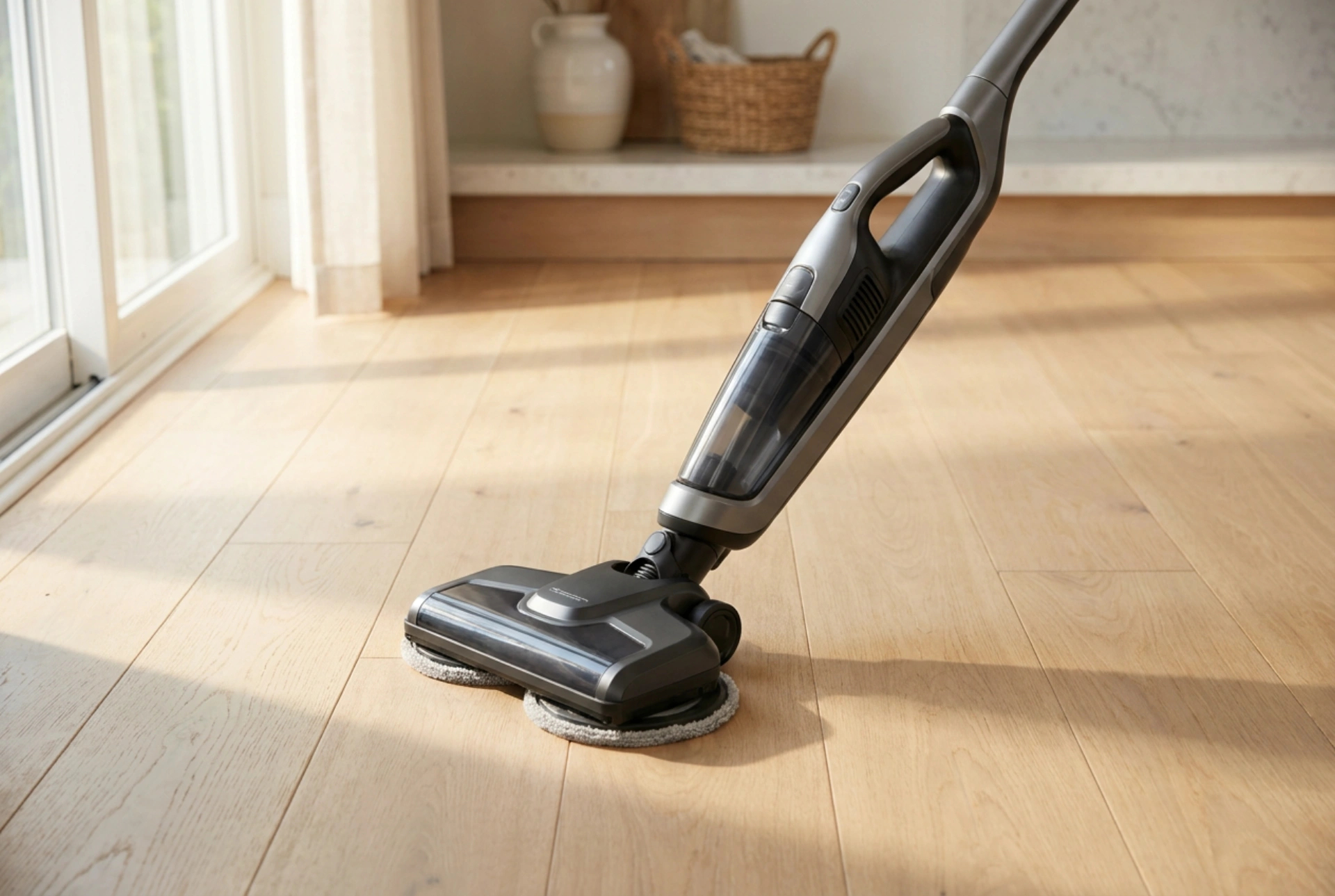


Using a cordless vacuum mop promises to cut floor care time in half, but improper execution often results in dull streaks, muddy corners, and lingering odors. Mastering the precise order of operations and understanding the physics of surface cleaning ensures a pristine, residue-free finish on your hard floors.
The Physics of Wet Dust: Why Pre-Vacuuming Matters
Although modern cordless vacuum mops are designed to handle both dry debris and liquids simultaneously, skipping a dedicated dry pass on heavily soiled floors is a common mistake. Fine dust, pet hair, and dander undergo a physical transformation when exposed to water: they bind together to form an abrasive micro-mud. When the vacuum’s roller or pad becomes oversaturated with this wet slurry, it can no longer absorb liquid effectively, leading to grey streaks across your floor.
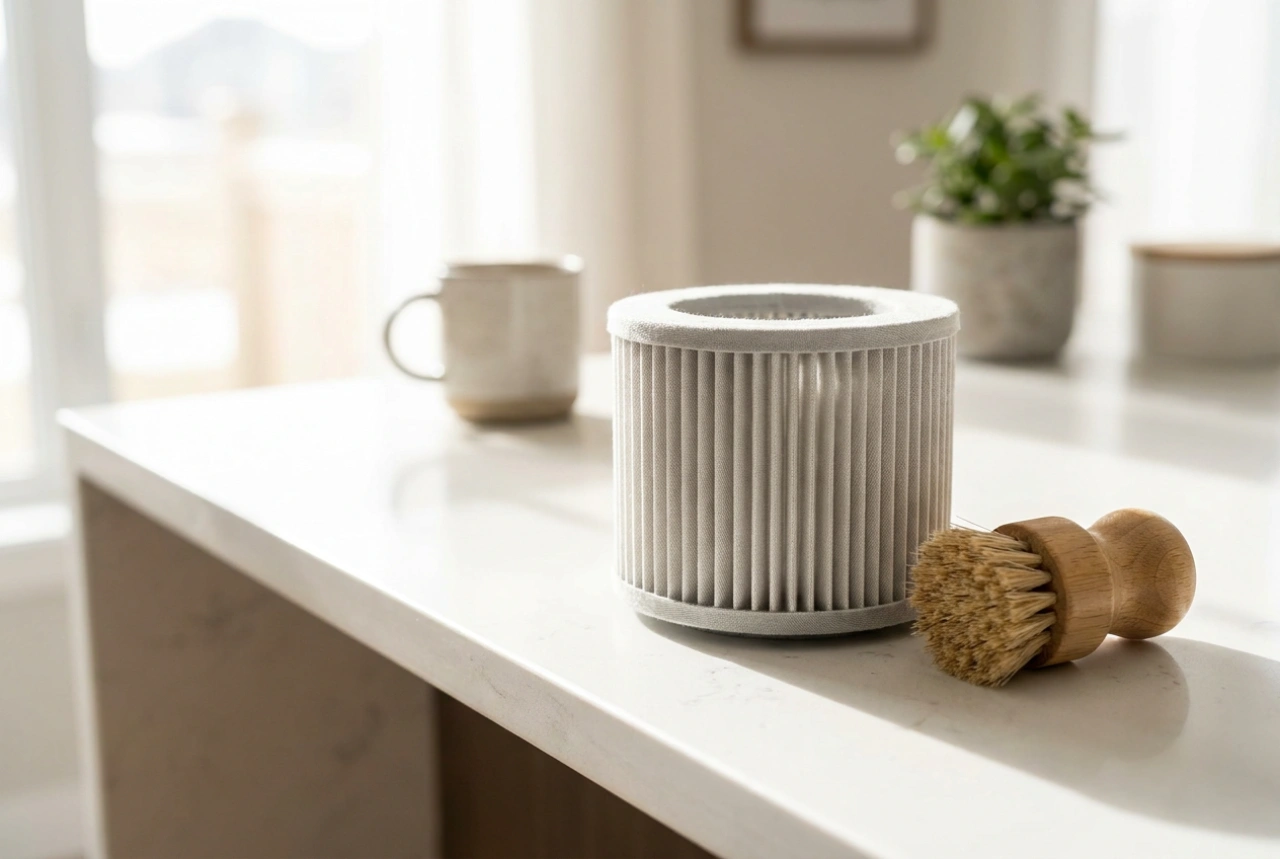
For optimal results, run your device in dry-only mode first—or use a standard dry vacuum—to clear loose particulate matter. This step protects the microfiber pad from premature saturation and prevents the fine pores of the vacuum’s internal filters from clogging. By removing the bulk of the dry dust first, the subsequent wet pass can focus on dissolving adhered grime and lifting bonded micro-particles through capillary action.
The Geometry of Cleaning: Path Planning and Movement
The sequence in which you traverse a room determines whether you keep the floor clean or re-contaminate it. Walking over a freshly mopped, damp surface deposits oils and dirt from your skin or shoe soles directly onto the wet film. Because water increases the surface adhesion of dust, any airborne particles or footwear residue will bond instantly to the damp floor, drying into permanent footprints.
- Start at the furthest point: Begin cleaning in the corner furthest from the room's exit, working along the edges first where dust tends to accumulate due to draft patterns.
- Adopt a backward pathing technique: Move backward toward the doorway, pulling the vacuum mop with you. This ensures your feet only step on dry, uncleaned floor.
- Control the speed of your strokes: Modern microfiber rollers require time to emulsify grease and lift dirt. Moving the machine too quickly prevents the liquid from penetrating the grime and does not allow the vacuum suction to fully retrieve the dirty water. Use slow, overlapping parallel passes.
Water Temperature and Surfactants: The Chemistry of a Clean Floor
It is tempting to use hot water in the clean water tank, assuming heat kills bacteria and cuts grease faster. However, in the context of vacuum mops, excessively hot water is counterproductive. Hot water evaporates rapidly upon contact with a cool floor. This fast evaporation rate prevents the water from properly wetting the dirt and causes any dissolved cleaning agents (surfactants) to dry instantly on the surface, leaving behind a dull, sticky film of crystallized residue.
Instead, use lukewarm or cool water. This keeps the cleaning solution active on the floor long enough for the surfactants to perform their chemical role. Surfactants feature a hydrophilic (water-attracting) head and a hydrophobic (water-repelling or grease-attracting) tail. The hydrophobic tails attach to grease and oily grime, lifting them into the water droplet, which is then cleanly vacuumed up into the dirty water tank. Keep cleaning agents to a bare minimum to prevent excess foam from bypassing the air-water separator in the recovery tank.
Post-Cleaning Hygiene: Preventing Biofilms and Malodors
The cleaning cycle is not complete until the appliance itself is maintained. The dirty water tank of a vacuum mop is a highly humid environment filled with organic matter, dust, and skin cells. If left standing, anaerobic bacteria will rapidly colonize this mixture, producing volatile organic compounds that emit a sour, rotten odor the next time you turn the machine on.
Immediately after cleaning, empty the dirty water tank, rinse it thoroughly, and leave it open to air-dry. Remove the microfiber roller or pad and wash it under warm running water to release trapped particles, or run it through a gentle washing cycle without fabric softeners, as softeners coat the microfibers and ruin their capillary absorption capabilities. Allow all components to dry completely before reassembling to prevent mold growth.