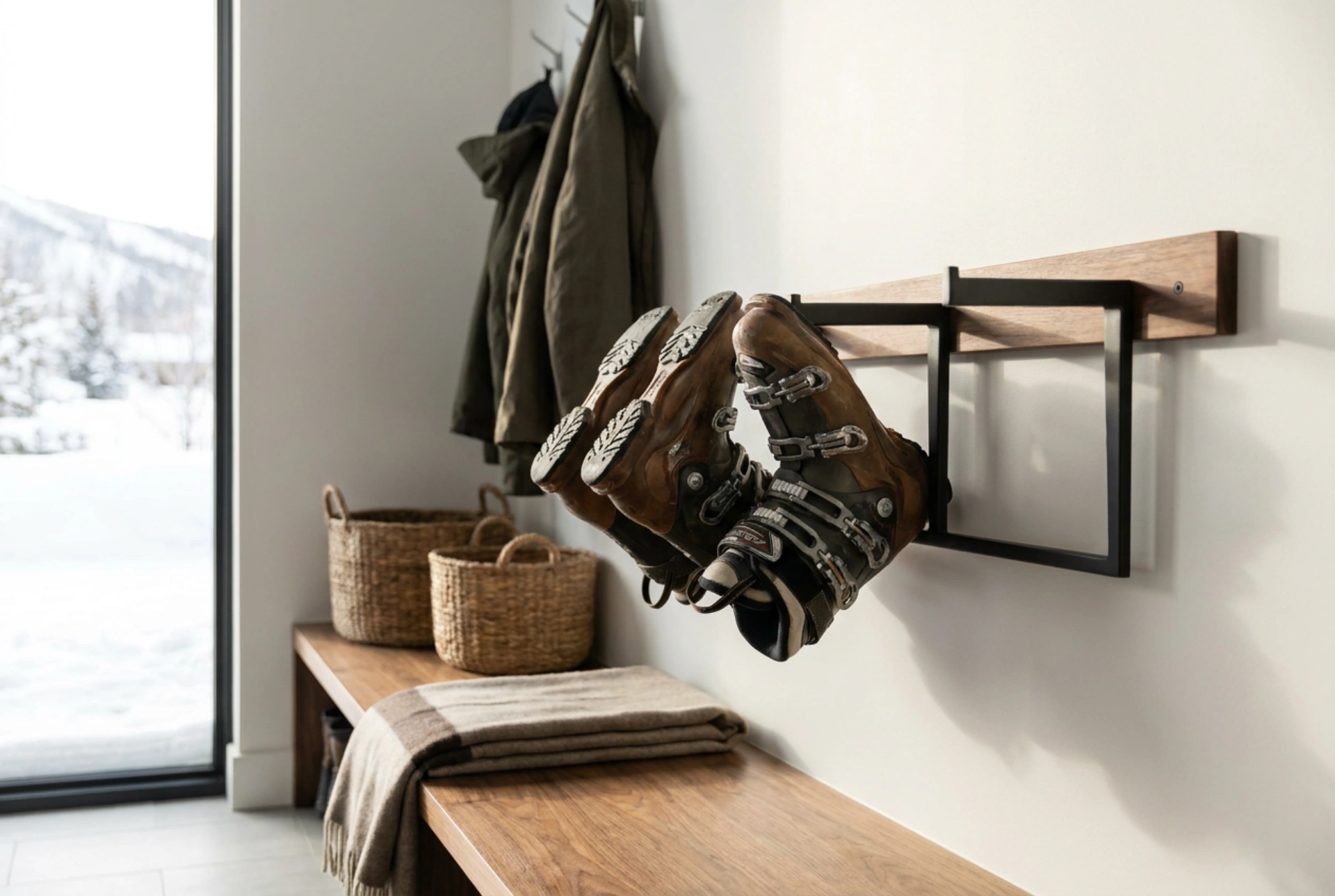


Drying your ski boots correctly after a long day on the slopes is essential for maintaining comfort, preserving custom-moulded liners, and preventing bacterial growth.
Understanding moisture retention in ski boots
Ski boots are designed to keep external wetness out, which unfortunately means they are equally efficient at trapping moisture inside. During physical exertion, your feet produce sweat, which is absorbed by the porous foam and synthetic fabrics of the boot liners. When combined with any melted snow that slips through the buckles, this moisture creates a humid microclimate. Because the outer polyurethane or polyether shell is completely non-porous, natural evaporation is virtually impossible without active assistance.
Leaving boots to dry passively at room temperature often takes days, during which time the moist environment becomes a breeding ground for bacteria and fungi. This leads to unpleasant odours and can degrade the adhesive bonds holding the liner together. Active drying using a dedicated boot dryer utilizes thermodynamics to accelerate evaporation, drawing moisture out of the tight toe box and venting it into the surrounding air.
Why temperature control is critical for boot liners
Modern ski boot liners, particularly high-performance and custom-moulded models, rely on thermoplastic materials that shape themselves to your feet under heat. Exposing these liners to excessive temperatures—such as placing them directly on domestic radiators or using high-heat blowers—can permanently deform them, ruining their custom fit. The plastic outer shell of the boot can also warp under intense heat, affecting the buckle alignment and structural integrity.
To protect your equipment, a ski boot dryer must operate within a safe thermal range, typically between 35°C and 45°C. This temperature mimics natural body heat, which is sufficient to break the surface tension of water molecules and encourage evaporation without reaching the softening point of the thermoplastic foams. Dryers that rely on forced, room-temperature or slightly warmed air convection are far safer and more effective than static, high-temperature heating elements.
Step-by-step guide to using a ski boot dryer
To maximize the efficiency of your dryer and ensure even moisture removal, follow a systematic approach when setting up your gear after skiing:
- Clear external snow and moisture: Before placing your boots on the dryer, wipe down the outer plastic shells and knock off any packed snow. This prevents external water from dripping onto the dryer or seeping into the boot opening.
- Unbuckle and open the boot fully: Release all buckles and power straps. Pull the tongue of the boot forward and upward as far as possible. This creates an open chimney effect, allowing moist air to escape freely as dry air is pumped into the toe box.
- Position the dryer nozzles correctly: Insert the drying tubes deep into the boots, ensuring they reach right into the toe box. The toe area is the furthest point from the boot opening and receives the least natural air circulation, making it the primary site for moisture accumulation.
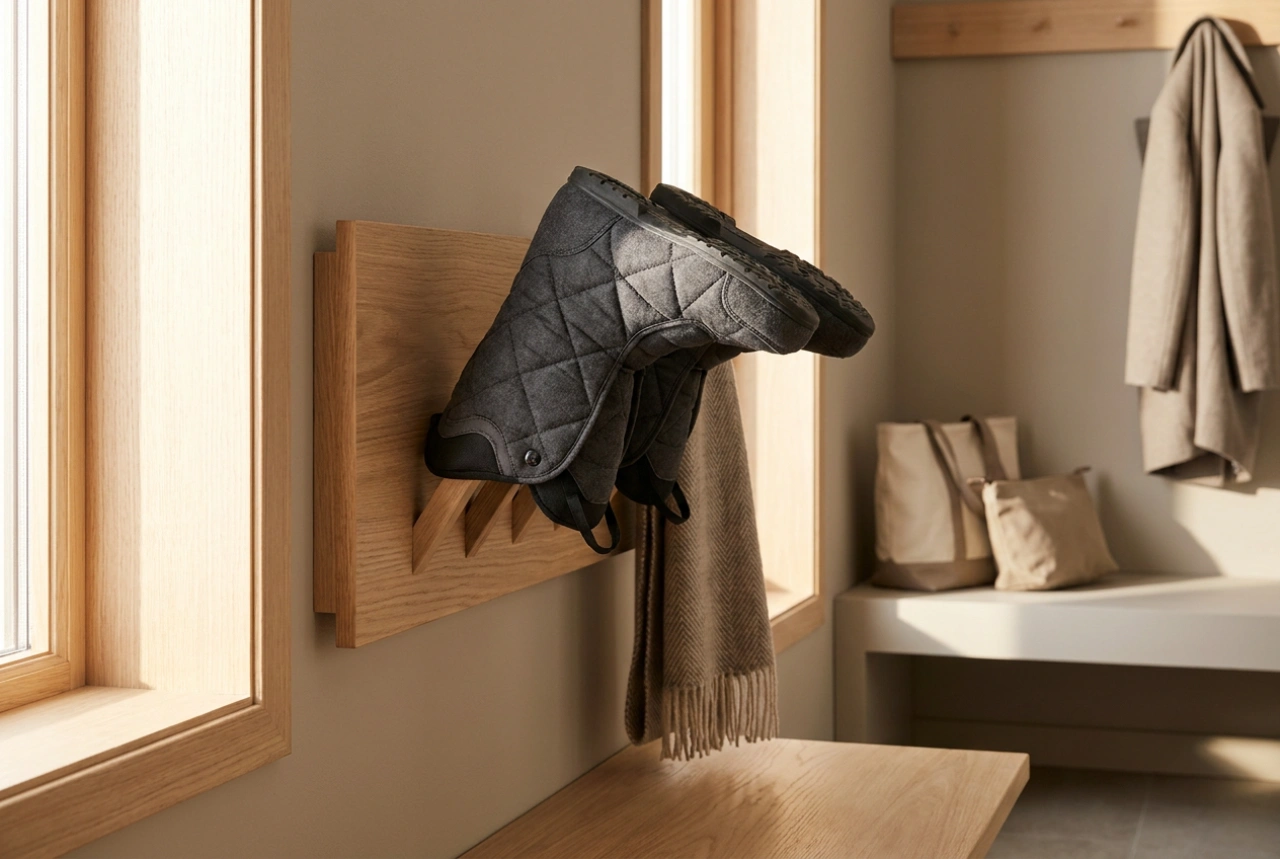
- Optimize the angle: If using a wall-mounted or freestanding rack, ensure the boots are hung upside down or at a downward angle. This allows gravity to help draw warm, moist air down and out of the boot opening.
Combatting odour-producing bacteria
The warm, dark, and damp interior of a wet ski boot is an ideal incubator for microscopic organisms. Sweat contains organic compounds such as urea and lactic acid, which bacteria feed upon, producing volatile organic compounds that cause the characteristic sour smell. Simply drying the boots stops bacterial reproduction, as these organisms require moisture to survive and multiply.
Some advanced drying systems utilize ultraviolet (UV) light or integrated ozone generators to actively sterilize the air flowing into the boot. UV light disrupts the DNA of bacteria and mold spores, preventing them from reproducing, while ozone acts as a powerful oxidizing agent that neutralizes odor molecules on a molecular level. If your dryer does not have these features, ensuring a rapid, complete drying cycle within a few hours of finishing your ski session is the most effective way to keep your boots fresh and hygienic.