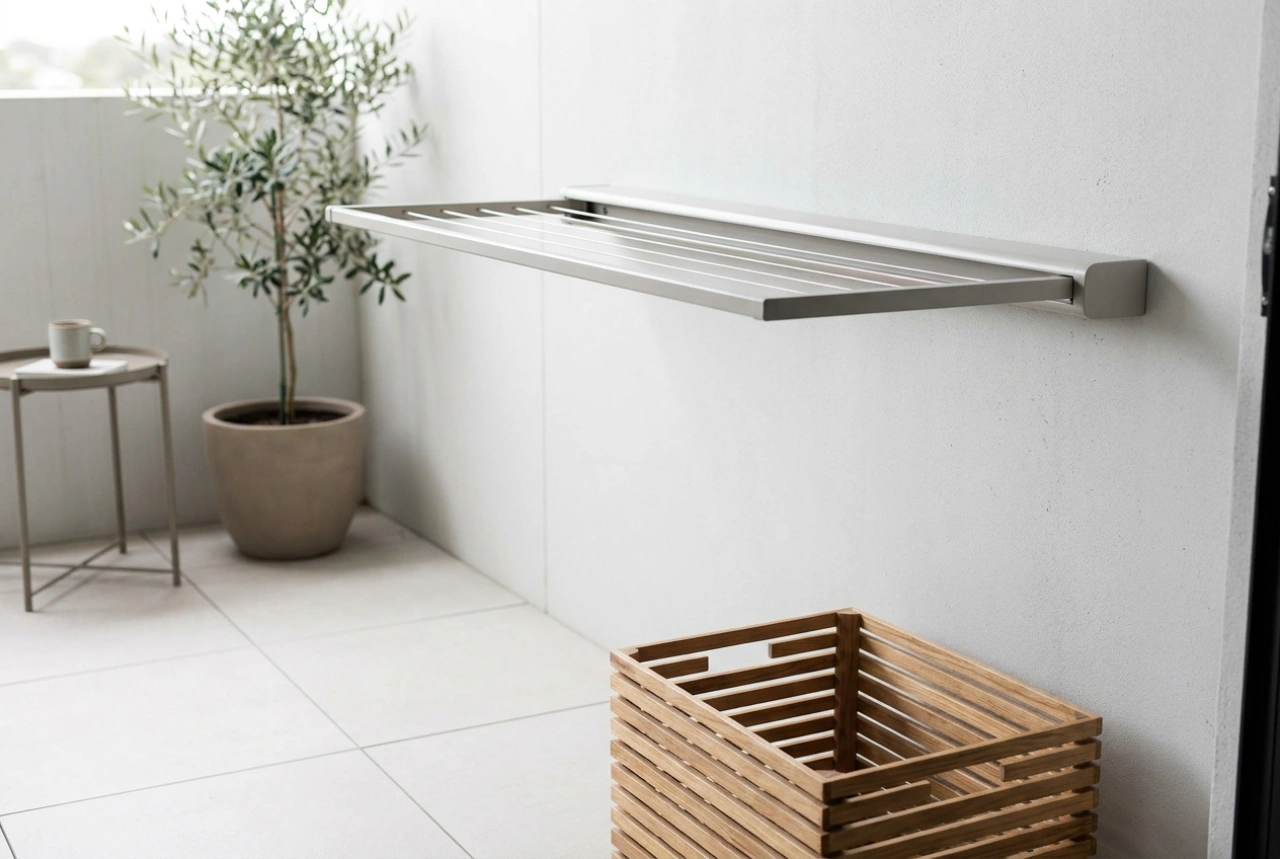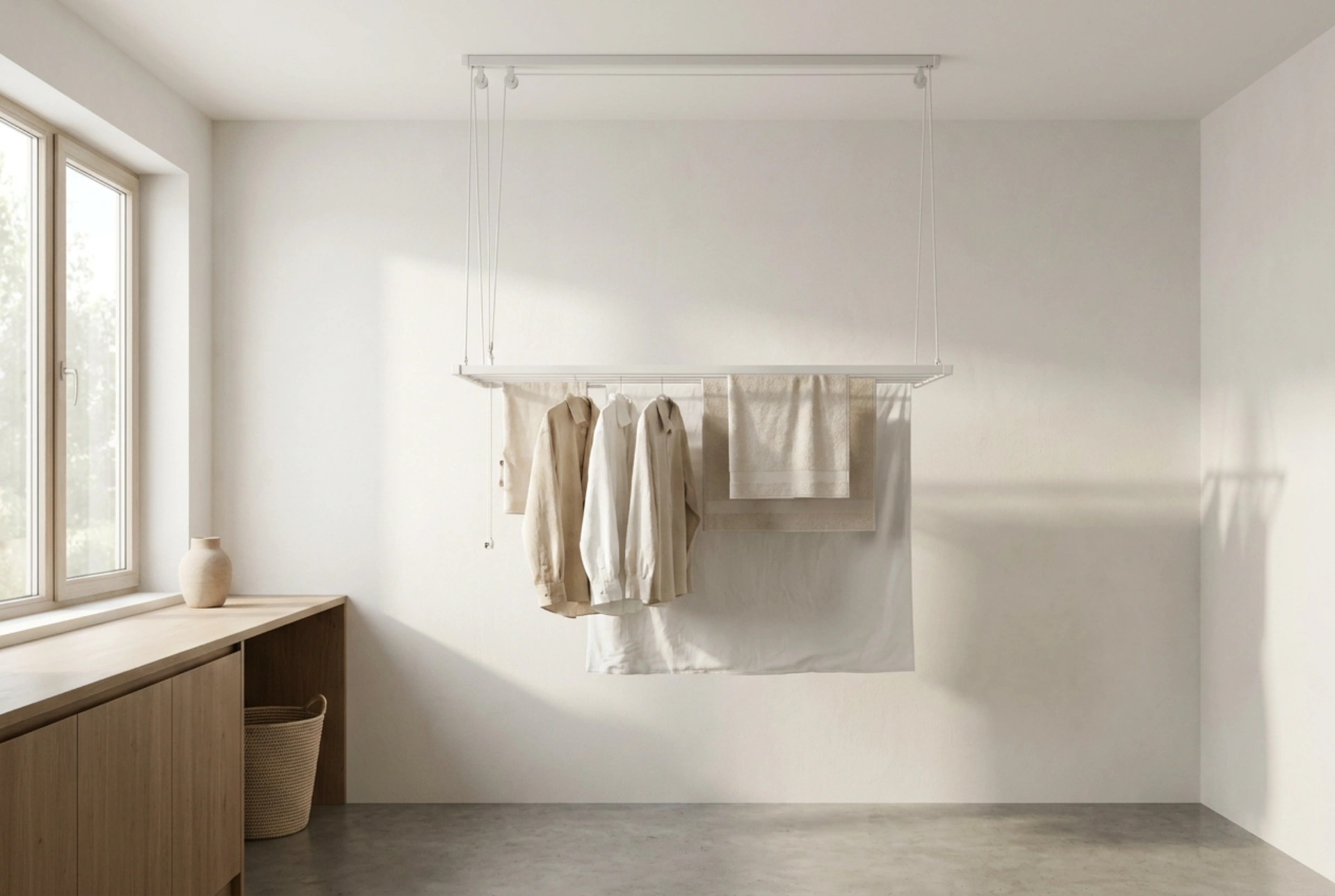


Ceiling-mounted drying racks utilize the natural physics of indoor environments to accelerate fabric drying while keeping valuable floor space completely clear. By positioning damp textiles in the warmest zone of a room, these systems optimize thermodynamics and air circulation for efficient, energy-free moisture evaporation.
The Thermodynamics of High-Level Drying
The primary benefit of a suspended drying rack lies in the fundamental law of thermodynamics: warm air rises. Because warm air is less dense than cold air, a natural thermal gradient forms in any indoor space, with the highest temperatures concentrated near the ceiling. This temperature variance, even if only two to three degrees Celsius, significantly impacts the drying process.
As temperature increases, the water-holding capacity of the air rises, which lowers its relative humidity. When you raise wet laundry to the ceiling, you place it in an environment with a higher vapor pressure deficit—the difference between the moisture pressure in the wet fabric and the moisture pressure in the surrounding air. This gradient forces water molecules to transition from a liquid state within the fabric fibers into a gaseous state in the air at a much faster rate than would occur at floor level.
Material Science: Selecting the Right Substrate
A ceiling drying rack operates in a microclimate of high humidity. Therefore, understanding the material properties of the rack is essential for long-term durability and fabric protection. High-quality systems generally utilize metals treated to resist moisture-induced oxidation or specially sealed organic materials.
- Powder-Coated Aluminum: Lightweight and highly resistant to corrosion. The electrostatic powder coating creates a non-porous barrier that prevents moisture from reaching the raw metal, ensuring no rust transfers to clean fabrics.
- Stainless Steel: Offers superior structural strength and density. Stainless steel containing chromium forms a microscopic, self-healing oxide layer that prevents rusting, making it ideal for heavy wet items like bedding.
- Treated Hardwoods: Wood naturally absorbs and releases moisture, which can cause swelling and warping. If wood is used, it must be treated with a water-resistant sealant to prevent mold growth and fiber degradation.
For the hoist mechanism, synthetic cords made of braided polyester or nylon are superior to natural fibers. Synthetic polymers possess high tensile strength, resist stretching under load, and are completely impervious to mold and rot caused by persistent humidity.
Optimizing Airflow and the Boundary Layer
Effective drying requires more than just heat; it requires the continuous removal of saturated air from the surface of the fabric. Around any drying garment, a thin layer of highly humid air—known as the boundary layer—develops. If this layer remains stagnant, evaporation slows down to a crawl.
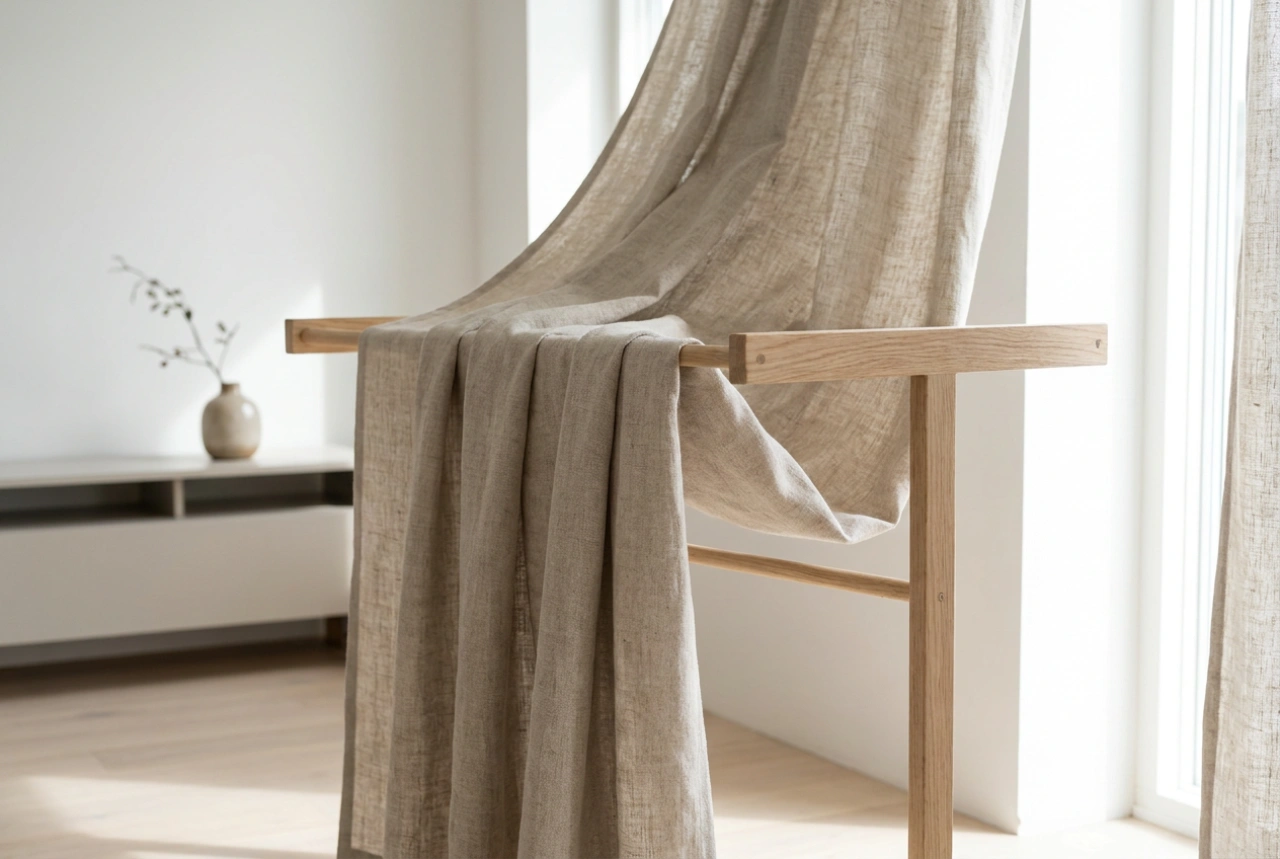
To break this boundary layer, natural air convection must be facilitated. Ceiling racks allow garments to hang freely in three dimensions, exposing them to ambient drafts. To maximize this effect, garments should be spaced at least five to eight centimeters apart. This spacing creates a chimney effect, allowing rising warm air to pass upward between the vertical sheets of fabric, carrying away the evaporated moisture. Furthermore, gravity pulls the liquid water downward through the textile fibers, concentrating the dampness at the lowest edge of the garment, where air currents can dry it efficiently.
Mechanical Force and Structural Considerations
Operating a ceiling-mounted rack involves managing static and dynamic physical loads. While dry clothing is light, wet fibers retain a substantial mass of water; a standard load of laundry can easily triple in weight when wet. A ceiling rack must distribute this mass safely across its anchoring points.
Pulley systems utilize mechanical advantage to reduce the force required to lift the loaded rack. A system with a multiple-sheave block reduces the pulling force by distributing the weight across several lines. When installing these systems, anchors must be secured directly into structural joists or solid concrete ceilings to withstand the downward gravitational pull. Properly balanced lines ensure that the rack remains perfectly horizontal, preventing wet clothes from sliding together and blocking essential airflow.