

Spotting a high-performing corded stick vacuum requires looking beyond marketing claims to understand the physics of airflow, filtration, and ergonomic design. Identifying the ideal appliance for your apartment involves evaluating its motor efficiency, sealed system integrity, and weight distribution.
Airflow Dynamics: Motor Wattage vs. Air Watts
Many consumers confuse motor wattage with actual cleaning performance. Motor wattage simply measures how much electrical power the device consumes from the mains, not how effectively it lifts debris. High-quality corded stick vacuums are defined by their Air Watts (AW) or suction pressure, measured in kilopascals (kPa). While a standard motor might draw 600 watts of electricity, an inefficient fan design or poorly sealed airway will waste this energy as heat rather than converting it into suction kinetic energy.
A premium corded stick vacuum maintains high airflow (measured in cubic feet per minute or litres per second) even as the dust bin fills. This is achieved through multi-cyclonic separation. When air enters the cyclonic chamber at a tangent, it spins rapidly, creating centrifugal forces that fling dust particles outward against the chamber walls, dropping them into the bin. This physical separation prevents premature clogging of the fine filters, ensuring that the motor does not have to work against increased resistance, which would otherwise drop suction power and overheat the system.
The Critical Importance of a True Sealed System
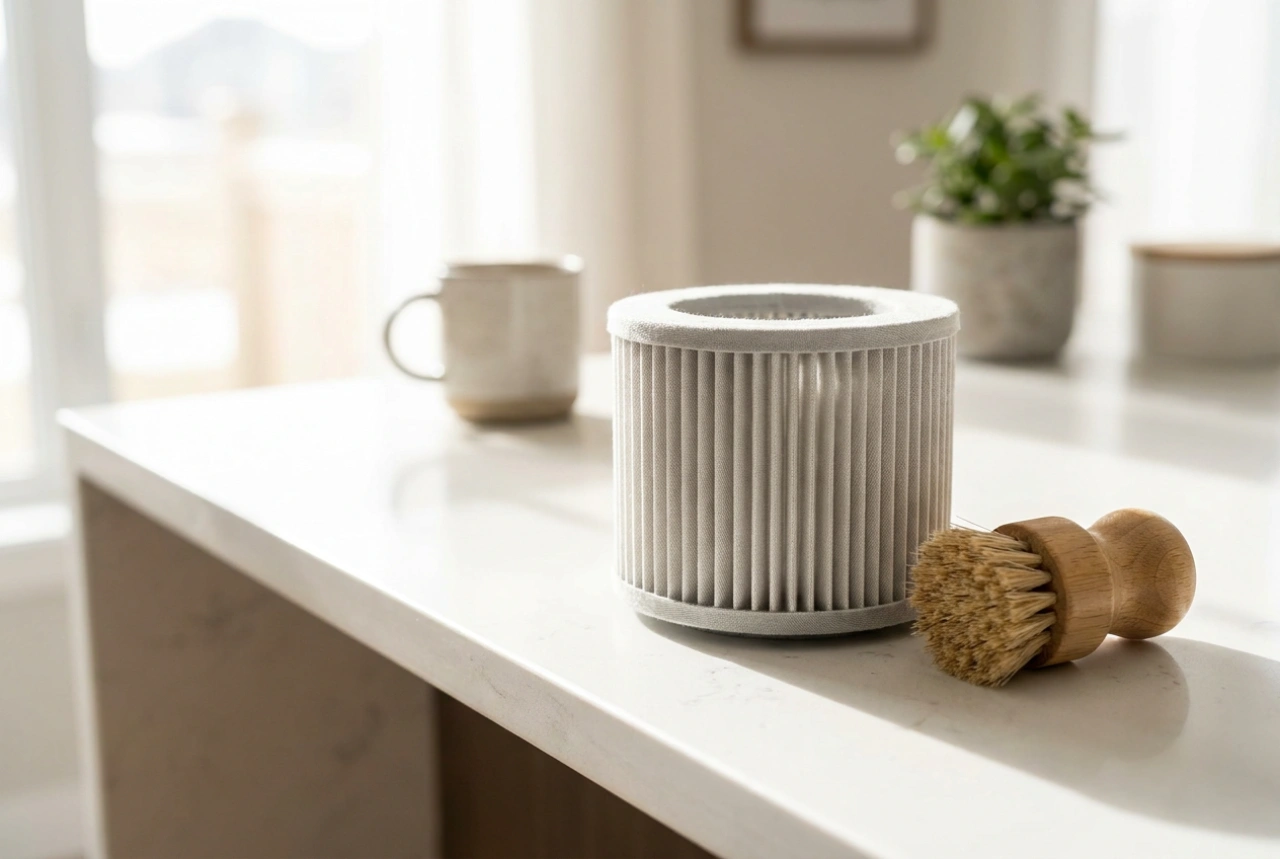
A common flaw in lower-grade vacuums is the lack of a completely sealed system. If the housing joints, seals, and gaskets around the dust bin and filters are not airtight, dirty air bypasses the filtration stages and escapes back into your living space. When evaluating a corded stick vacuum, look for rubberized gaskets at every connection point, particularly where the dust bin meets the motor housing and where the filters sit.
For effective allergen control, a high-efficiency particulate air (HEPA) filter is essential. It works through three physical mechanisms: interception, impaction, and diffusion, trapping 99.97% of particles down to 0.3 micrometres in size. However, a HEPA filter is only as good as the seal surrounding it. If air can take the path of least resistance around the sides of the filter frame, the filtration efficiency drops dramatically, redistributing fine silica dust and allergens into your indoor air.
Ergonomics and Mass Distribution
The physical layout of a stick vacuum dictates how fatigue-inducing it will be during extended use. There are two primary configurations: hand-stick (motor and dust bin near the handle) and upright-stick (motor and dust bin near the floor nozzle). This choice governs the center of gravity and the mechanical leverage required to operate the machine.
- Hand-stick Configuration: By placing the heavier components near the hand, the user gains maximum agility for reaching high cornices or vacuuming upholstery. However, this configuration transfers the entirety of the machine's weight to the user’s wrist and forearm. Look for designs where the handle is positioned directly over the motor's center of mass to minimize torque on the wrist joint.
- Upright-stick Configuration: Positioning the motor lower down shifts the weight closer to the floor, reducing the physical strain on your arm. The floor nozzle carries the bulk of the mass, making it effortless to push across large floor surfaces, though it limits above-floor reach and versatility.
Nozzle Physics: Seal, Agitation, and Airflow Control
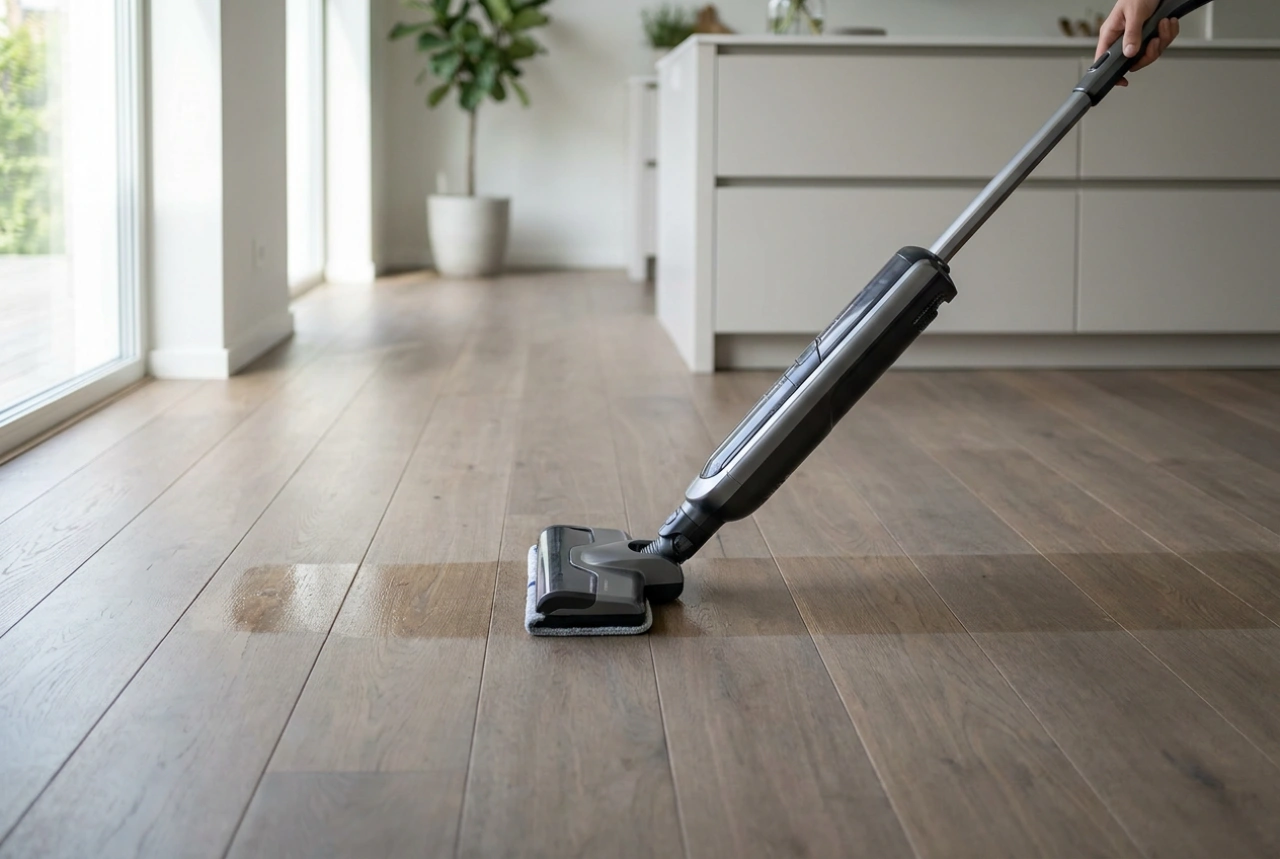
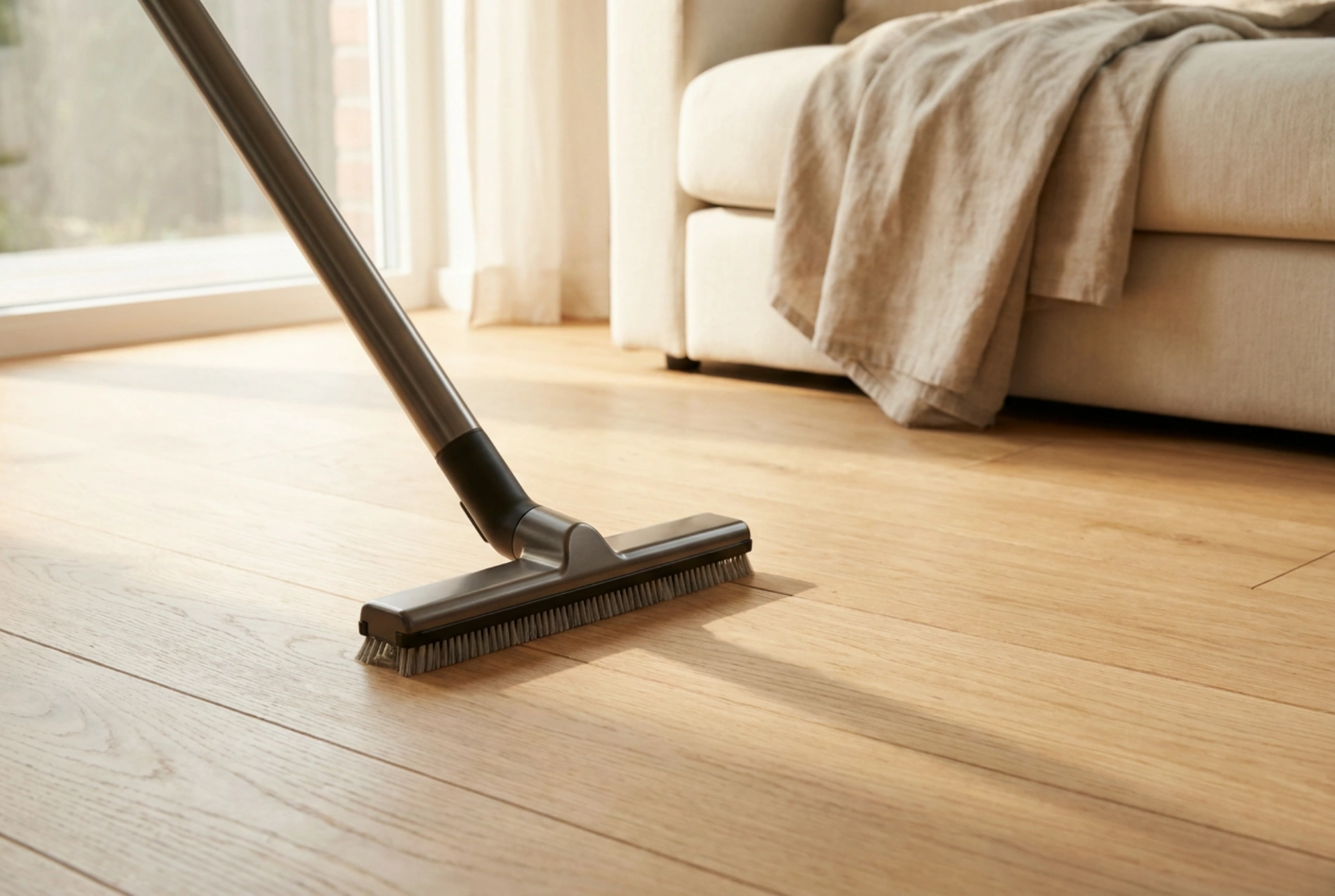
The point of contact between the vacuum and the floor is where the cleaning work actually happens. A high-quality floor nozzle must manage airflow to create a localized low-pressure zone. If the nozzle sits too high off the floor, air rushes in from the sides, reducing velocity and failing to lift heavy particles. Conversely, if it seals too tightly, the vacuum will stick to the floor, starving the motor of air and preventing debris from entering the suction path.
Look for nozzles equipped with a flexible, rubberized squeegee strip behind the roller bar. This strip acts as a barrier, forcing the incoming air to be drawn from directly beneath the brush bar, maximizing pickup efficiency on hard wooden floors and tiles. On carpets, a mechanical brush bar powered directly by the motor—rather than relying solely on the airflow to spin—is vital for agitating carpet fibres and releasing deeply embedded grit.