

Hanging clothes correctly on a drying rack is not just about tidiness; it relies on the physical principles of thermodynamics, evaporation, and fiber mechanics to speed up drying times and eliminate the need for ironing. By understanding how airflow interacts with wet textiles and how fabric fibers settle as they dry, you can significantly optimize your laundry routine.
Maximizing Airflow through Strategic Placement
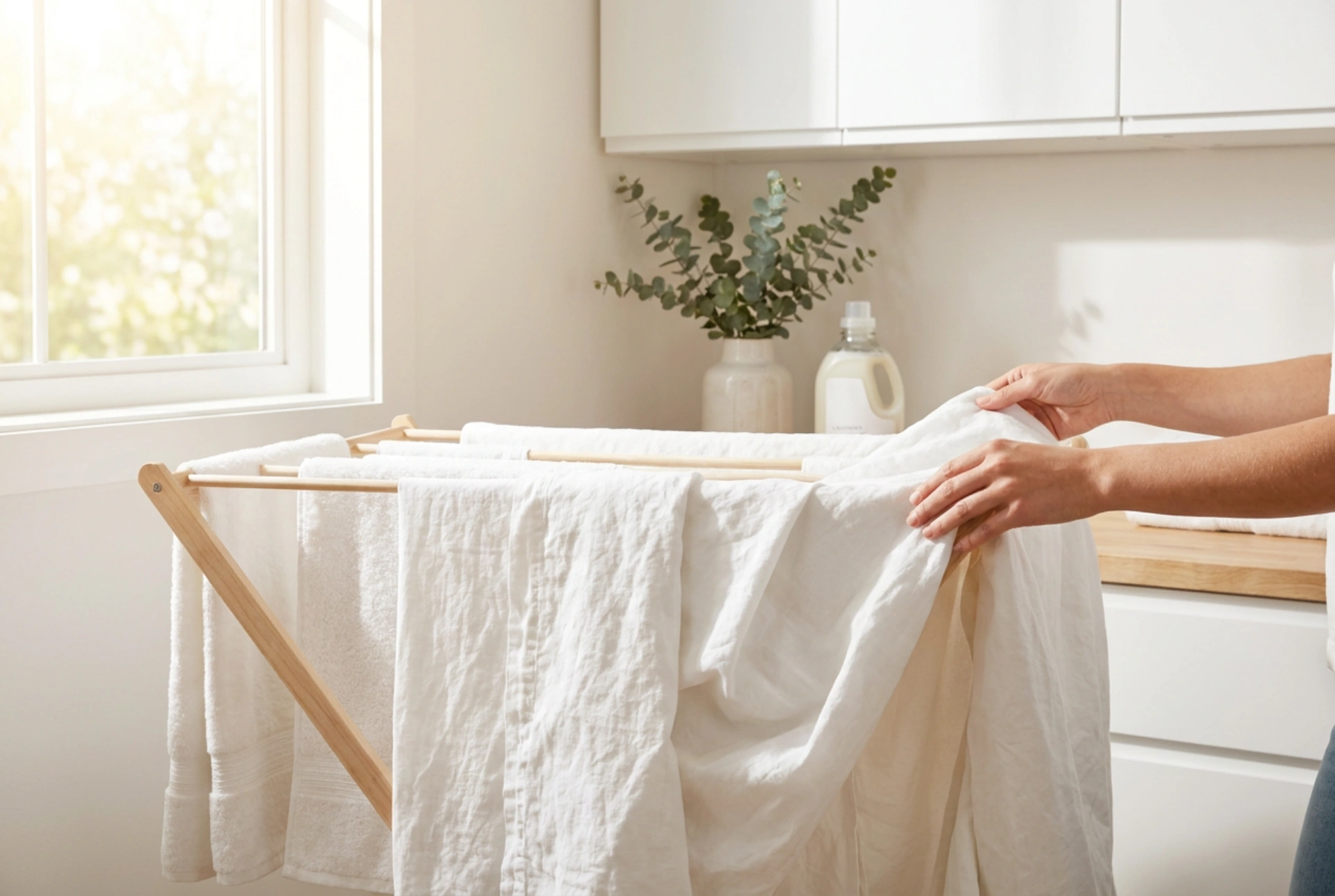
Evaporation is a cooling process driven by the concentration gradient of water vapor. When wet clothes are packed tightly together, the air surrounding them quickly becomes saturated with moisture, creating a microclimate of high relative humidity that stalls further evaporation. To prevent this, always leave at least one empty bar between thick garments. Position heavier items, such as denim trousers and thick cotton hoodies, on the outer edges of the drying rack where air circulation is highest. Lighter, synthetic fabrics that release moisture rapidly should be placed in the center. Hang garments in a staggered, alternating pattern rather than in uniform lines. This structural variation creates turbulence in the passing air currents, facilitating a faster exchange of saturated air with dry ambient air.
Utilizing Gravity and Fiber Tension
Before a wet garment even touches the rack, the fibers are in a highly pliable state. As the fabric dries, hydrogen bonds reform between the cellulose or polymer chains, locking in whatever shape the fabric currently holds. To prevent deep wrinkles, give every item a vigorous snap-shake before hanging. This mechanical action releases the fibers from their compacted, post-spin cycle state. Align the side seams of shirts and trousers perfectly. When hanging trousers, secure them from the bottom hems using pegs; the heavy waistband acts as a natural weight, pulling the fabric downward and smoothing out wrinkles through mild gravitational tension. For shirts, hanging them from the bottom hem rather than the shoulders prevents stretching and eliminates unsightly shoulder bumps caused by drying rack bars.
Fabric-Specific Techniques for Optimal Drying
Different materials require tailored drying positions due to their molecular structure and water-retention properties:
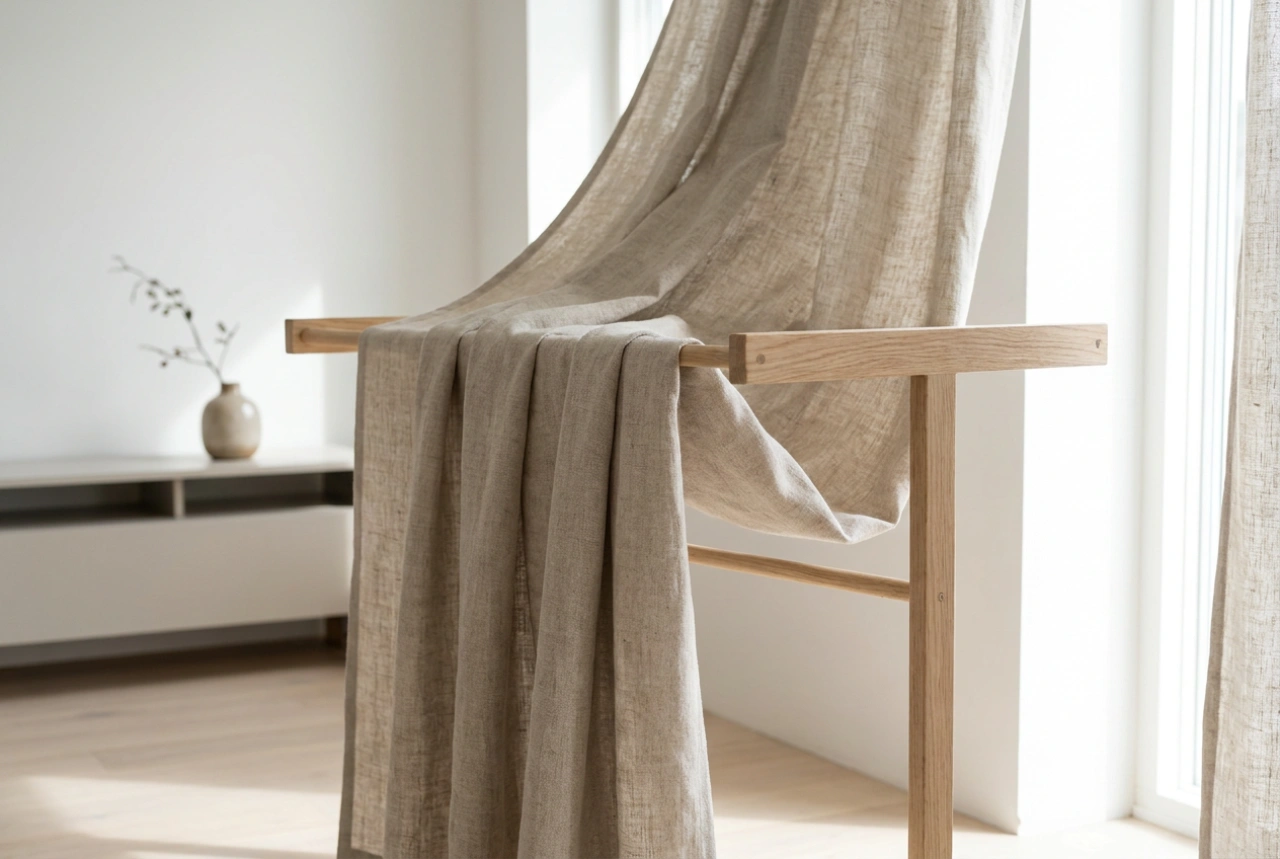
- Cotton and Linen: These natural, highly absorbent fibers swell significantly when wet. They require maximum tension to dry flat. Stretch them gently along the seams before draping them over the bars to ensure they dry with minimal creasing.
- Synthetics (Polyester, Nylon): Because synthetic fibers absorb very little water internally, retaining it mostly between the weave, they dry very quickly. Hang them freely, as they are highly resistant to wrinkling and do not require heavy tension.
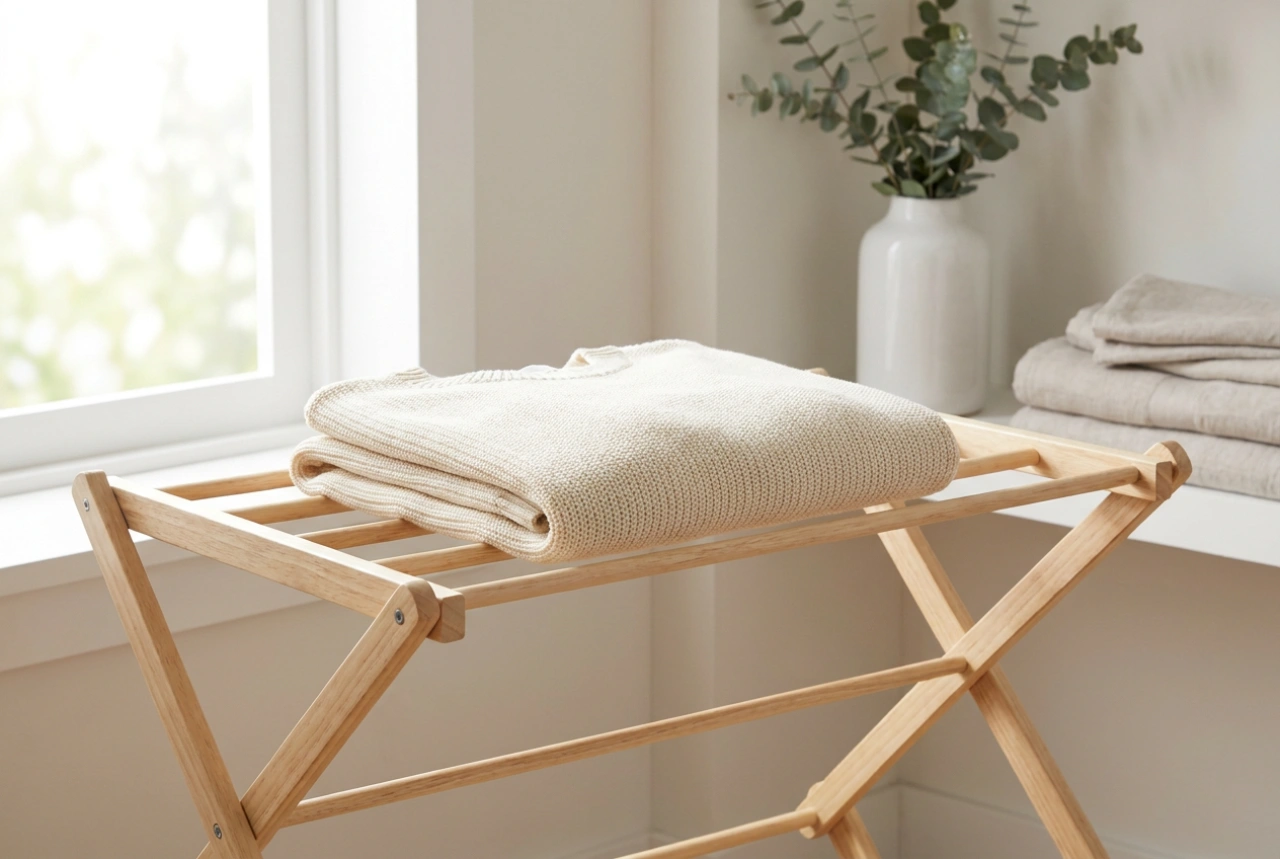
- Wool and Heavy Knits: Never hang wet wool vertically. Water weight will pool at the bottom, permanently stretching the delicate protein fibers out of shape. Instead, lay knits flat across the top surface of the rack, using a dry towel underneath to absorb initial moisture.
Environmental Factors and Convection
The physical environment surrounding your drying rack dictates the rate of evaporation. Placing a rack in a cold, unventilated room leads to stagnant air and prolonged drying times, which can cause musty odors due to bacterial growth. To optimize drying, position the rack near a heat source or in an area where natural convection occurs. Warm air rises, absorbing moisture as it moves past the damp fabric. Ensure the room has a continuous intake of fresh, drier air—even a cracked window can significantly lower the indoor relative humidity, accelerating the phase transition of water from liquid to vapor.