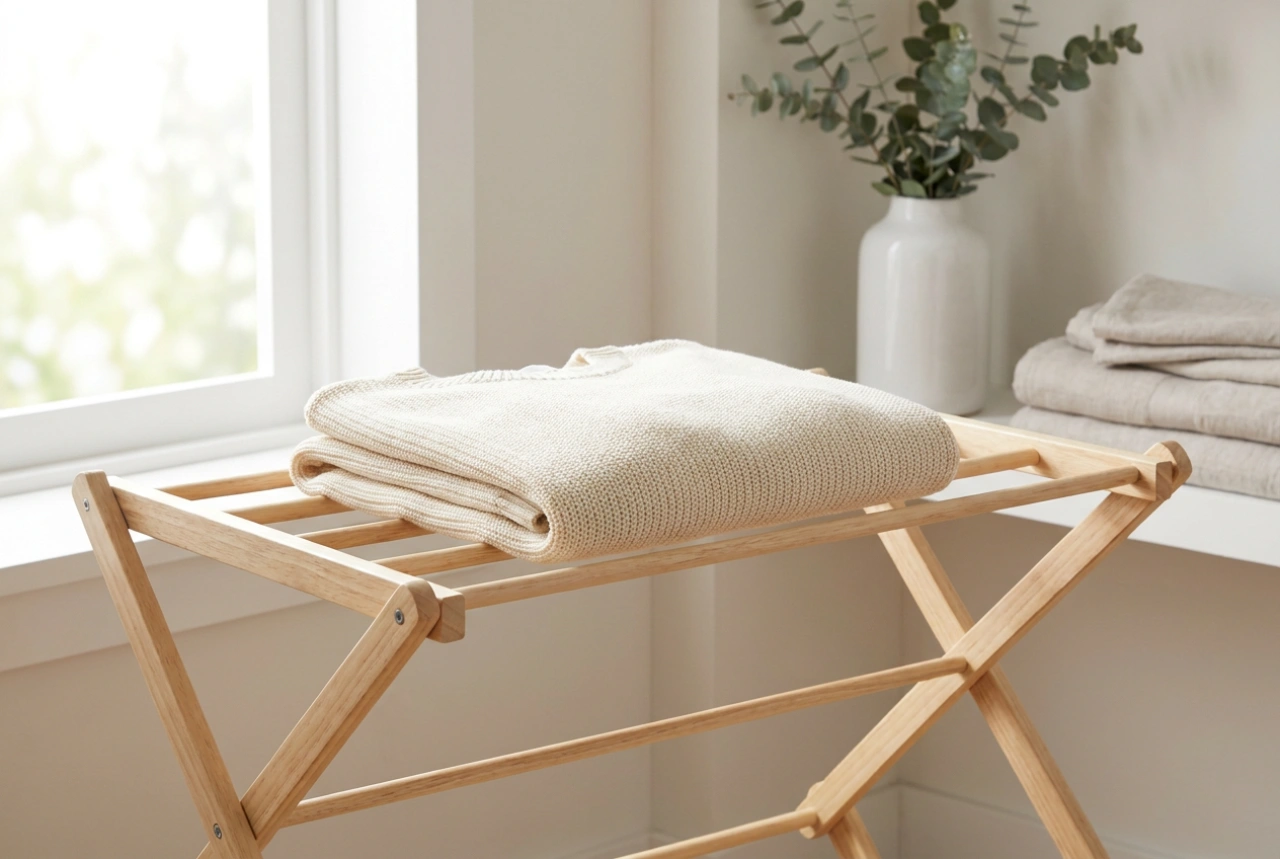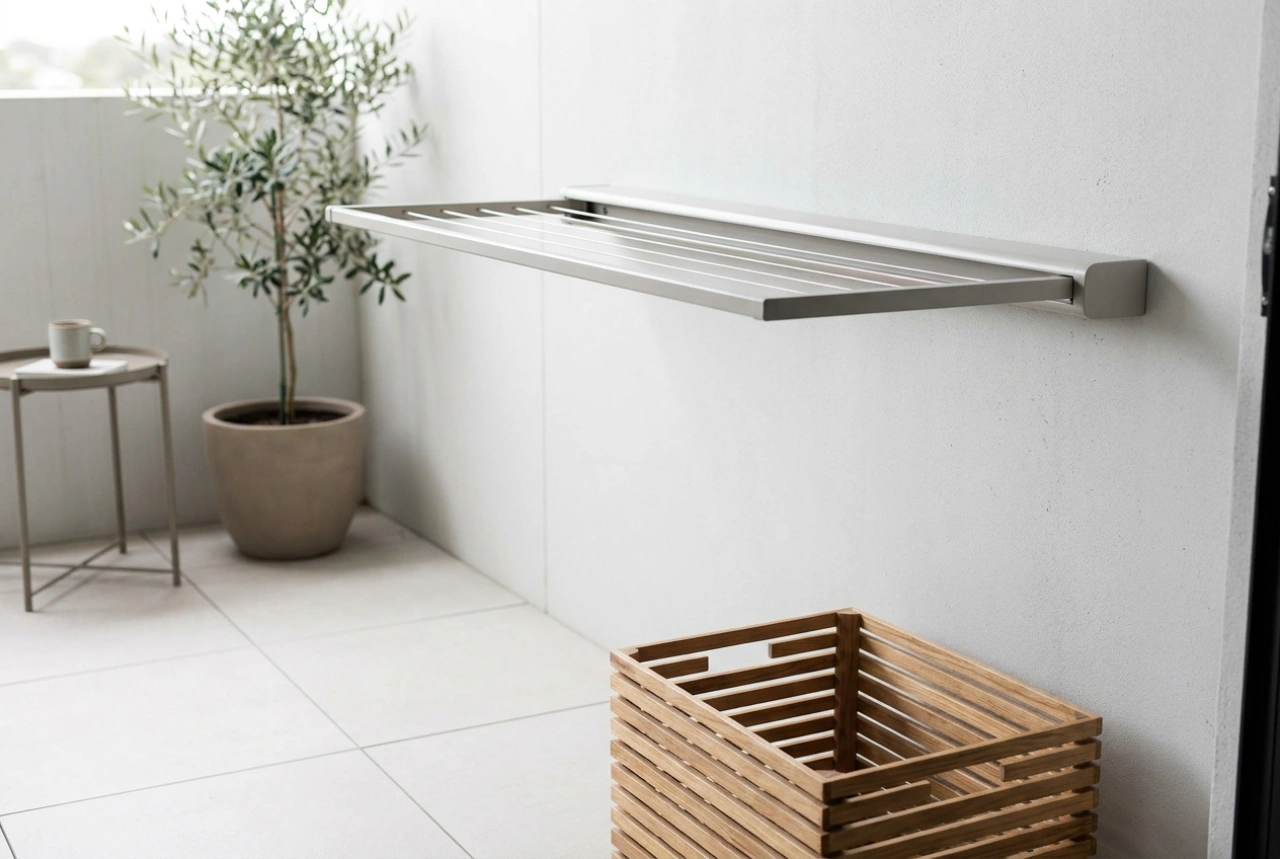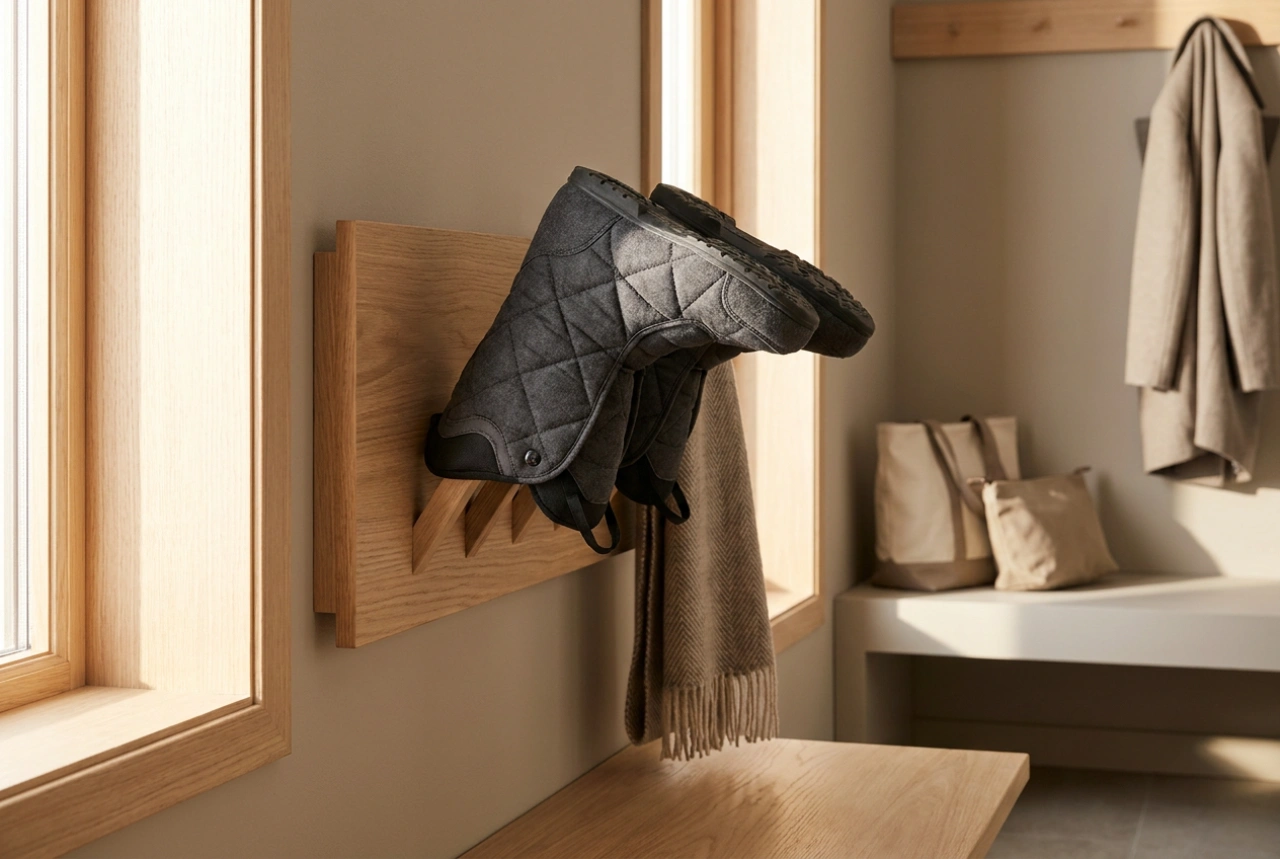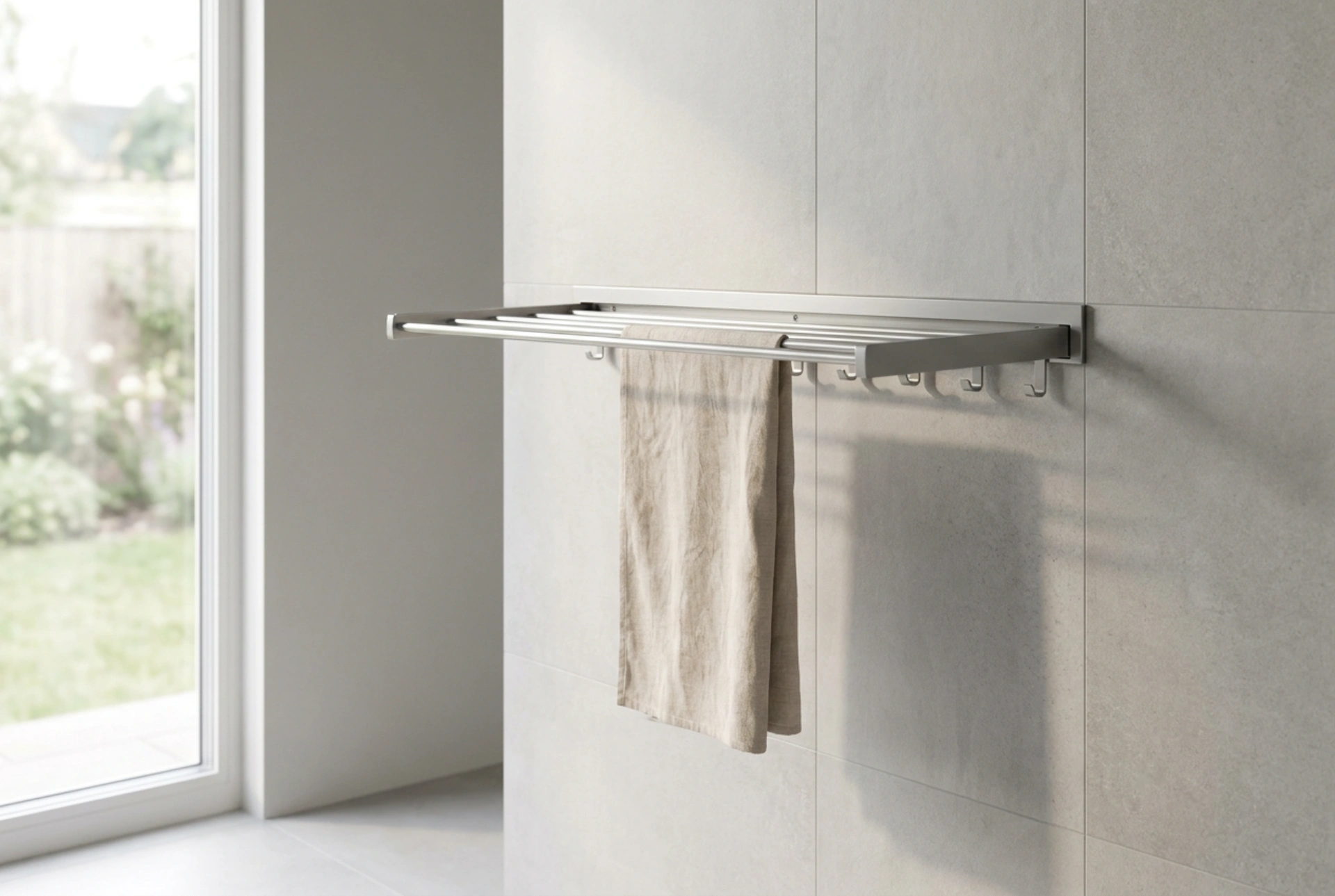


Space-constrained bathrooms require smart, physics-based solutions to dry clothes efficiently without fostering mould growth. Wall-mounted drying racks utilise vertical space and natural air convection to speed up drying while keeping the floor area entirely unobstructed.
The Physics of Air Movement in Small Bathrooms
Drying laundry indoors relies on two main thermodynamic principles: evaporation and convection. In a confined environment like a small bathroom, air quickly becomes saturated with water vapour, which significantly slows down the evaporation rate. Wall-mounted drying racks capitalise on vertical space by placing damp garments in the upper thermal zones where warmer, lighter air naturally rises. To accelerate this process, positioning the rack near an exhaust vent or a heat source utilises natural convection currents, pulling dry air past the wet fibres and carrying moisture away before it can settle on walls as condensation.
Material Science: Selecting Corrosion-Resistant Systems
Bathrooms are high-humidity zones subject to persistent condensation and chemical exposure from laundry detergents and fabric softeners. Choosing the wrong material for a drying rack can lead to oxidation and rust staining on clean fabrics. Anodised aluminium and high-grade stainless steel (such as 304 grade) offer superior resistance to oxidation. Anodisation creates a protective oxide layer integrated with the metal substrate, preventing peeling. If opting for powder-coated steel, the coating must remain completely intact; any hairline crack exposes the underlying iron to moisture, leading to rapid sub-surface corrosion and structural failure.
Structural Integrity and Wall Anchor Physics
A wet load of laundry can weigh up to three times its dry counterpart due to water retention within the textile fibres. When suspended on an extended wall-mounted rack, this weight exerts a significant cantilever effect, multiplying the pull-out force on the wall mounting brackets. The topmost anchors bear the highest tensile forces, while the bottom anchors experience mostly compressive forces against the wall. To secure the unit safely on tiled walls, use a diamond-tipped tile drill bit without the hammer function to prevent fracturing the ceramic glaze. Expanding nylon wall plugs are ideal for solid masonry, whereas heavy-duty toggle bolts should be used for hollow plasterboard to distribute the load across a wider surface area.
Optimising Airflow and Garment Arrangement
How you arrange textiles on a wall-mounted rack directly affects drying efficiency and prevents musty odours caused by prolonged moisture retention. Always maintain a minimum gap of three centimetres between hung items to allow air molecules to circulate freely. Hang thicker, denser fabrics like denim and heavy cotton on the outer rods where ambient airflow is strongest. Lighter synthetic fabrics, which release moisture rapidly due to low fibre absorption, can be placed on the inner rods. Additionally, shaking garments out to align their fibres before hanging reduces surface tension, allowing water to evaporate more uniformly across the textile surface.