

Removing stubborn pet hair from household surfaces requires understanding how static electricity and fibre structure lock fur into carpets and upholstery. Using a cordless vacuum effectively depends not just on suction power, but on employing the correct mechanical attachments and physical techniques to break these bonds.
The Science of Pet Hair Adhesion
To successfully clear pet hair, one must understand why it clings so tightly to fabrics. Animal fur, particularly the fine undercoat, possesses microscopic barbs that easily entangle with the woven fibres of carpets and sofas. Furthermore, friction between these materials generates static electricity through the triboelectric effect. This static charge creates an electrostatic attraction that holds the hair flat against the surface, making simple air suction insufficient for complete removal. To dislodge the hair, you must combine physical agitation to release the barbs with a method to neutralise or overcome the static charge.
Breaking the Static Bond
When static electricity binds hair to upholstery, you can neutralise the charge using basic physics. Lightly misting the surface with a highly diluted solution of water and antistatic fabric softener before vacuuming can instantly discharge the static build-up. Alternatively, wiping the fabric with a clean rubber glove or a rubber-bladed squeegee prior to vacuuming uses high-friction rubber to roll the hair into easily manageable clumps, breaking the static hold so your vacuum can lift the debris effortlessly.
Choosing and Using the Right Nozzle Mechanics
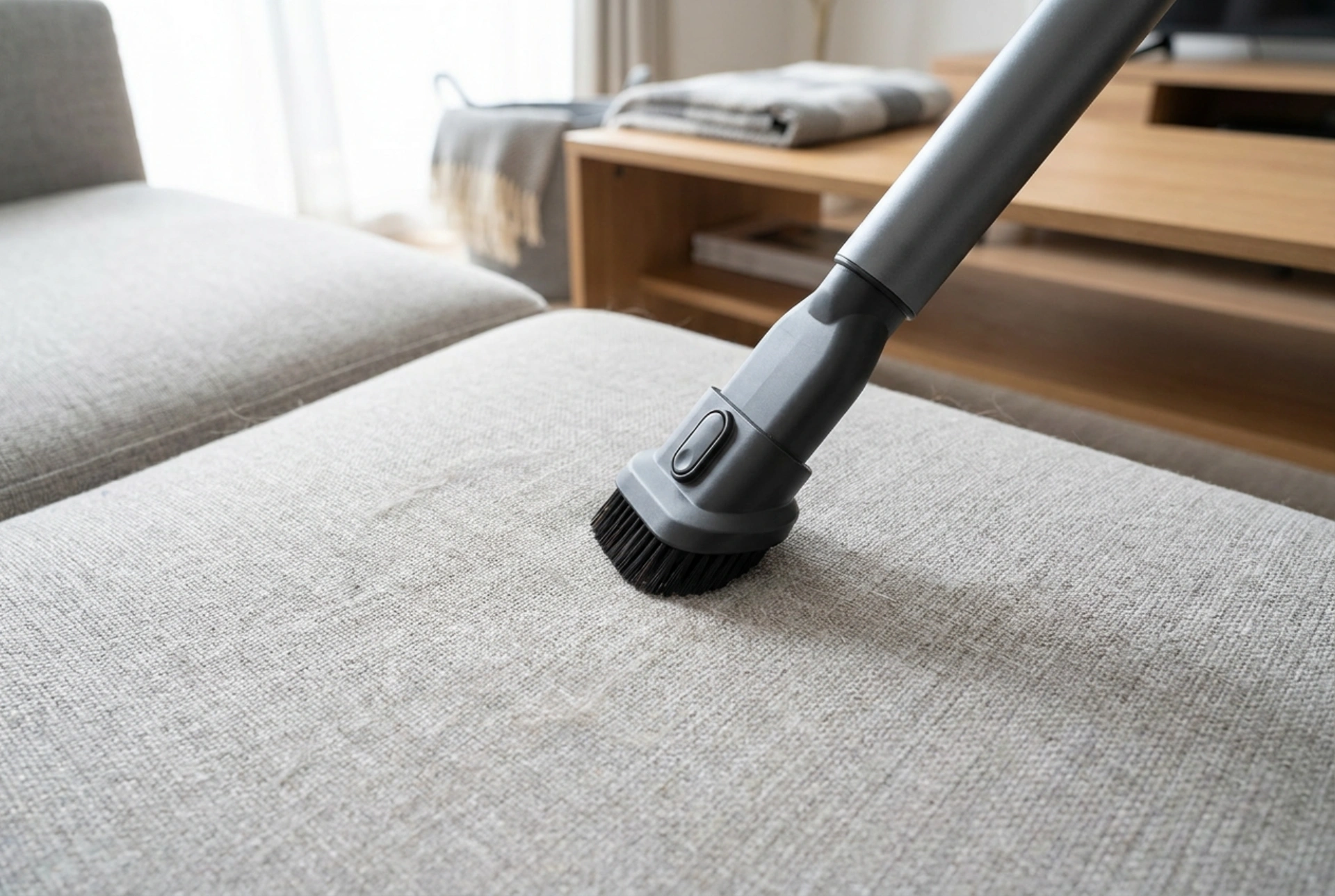
Standard floor nozzles rely purely on airflow, which is rarely enough to lift embedded fur. For carpets and thick fabrics, a motorised brush bar is essential. The rotating bristles physically agitate the textile fibres, lifting the embedded pet hair into the path of the vacuum’s airflow. When dealing with delicate upholstery, a smaller motorised mini-tool is preferred to concentrate the mechanical action without stretching the fabric weave.
- Stiff Bristle Brushes: These excel at digging into carpet piles to pull out deeply lodged undercoat fur.
- Rubberised Rollers: Ideal for pet hair on hard surfaces and some tight-weave fabrics, as rubber naturally generates friction that grabs hair and rolls it into clumps without tangling as easily as traditional bristles.
Optimising Technique: Direction and Speed
The speed and pattern of your vacuuming strokes significantly influence pet hair extraction rates. Fast, erratic passes merely skim the surface, leaving deeply embedded hairs untouched. Instead, adopt a methodical cross-directional technique:
First, vacuum slowly in a straight line (north-to-south) to allow the rotating brush bar time to agitate the fibres and pull the hair upward. Next, repeat the process at a 90-degree angle (east-to-west) over the same area. This multi-directional approach opens up the fabric weave from different angles, releasing hair that was trapped in one-directional folds. Slow down your stroke speed to roughly thirty centimetres per second; this allows the airflow to reach maximum velocity around the loosened fibres, ensuring they are pulled into the dust canister rather than left on the surface.
Managing Hard Floors and Preventing Hair Scattering
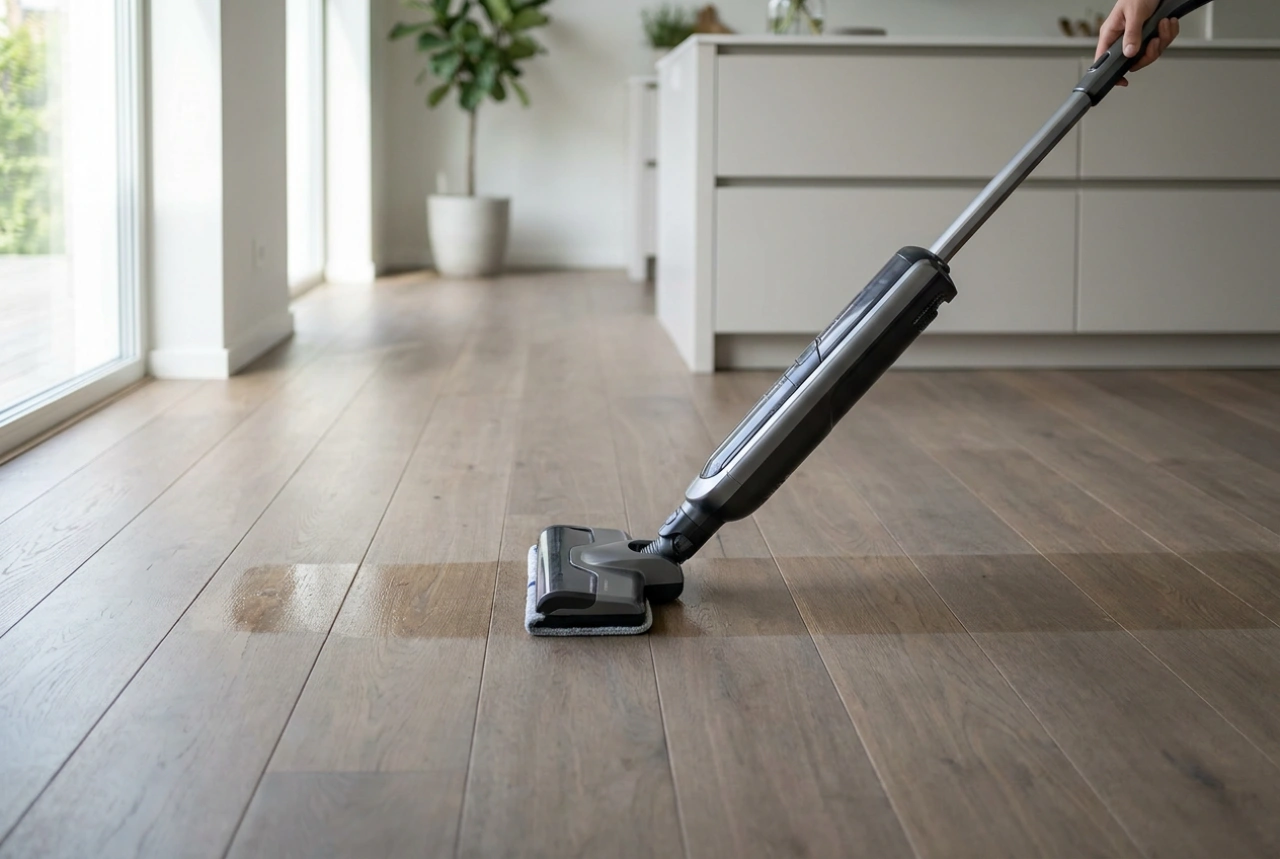
On hard floors, the challenge is not adhesion but displacement. Lightweight pet hair can easily be blown away by the exhaust air of a cordless vacuum or scattered by a rapidly spinning brush bar. To prevent this, reduce the brush bar speed if your vacuum allows, or use a soft roller head designed specifically for hard floors. These rollers seal against the floor surface, creating a high-velocity suction zone that draws in hair before the air currents can disperse it.
Maintenance for Maximum Airflow and Efficiency
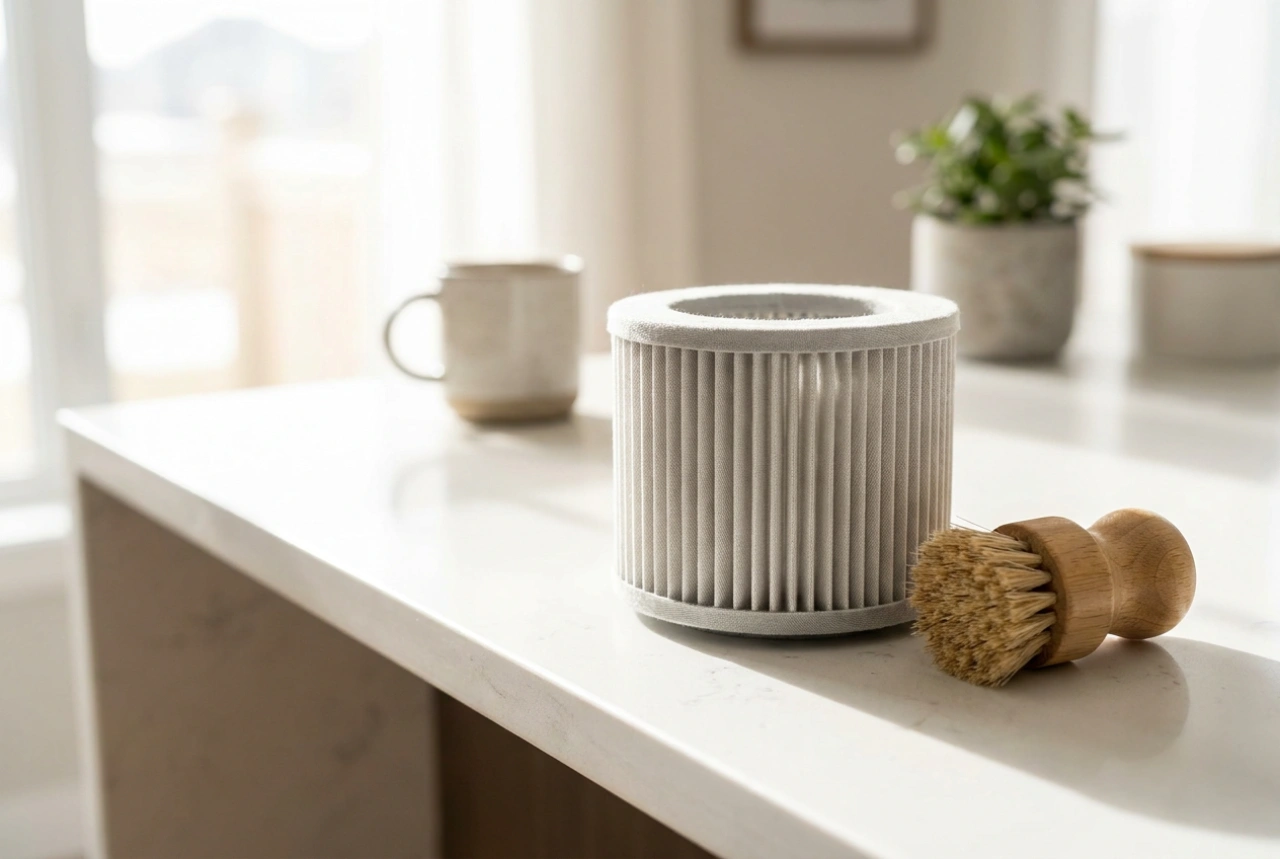
Cordless vacuums rely heavily on unrestricted airflow and battery-powered motor efficiency. Accumulated hair wrapped around the brush roll increases friction, slowing down the rotational speed and draining the battery faster. Regularly slide a pair of scissors along the designated groove of the brush bar to cut away wrapped hair and thread. Additionally, wash the vacuum's pre-motor and post-motor filters monthly. Fine dander and dust clog the filter pores, drastically reducing the suction velocity required to lift heavy pet hair.