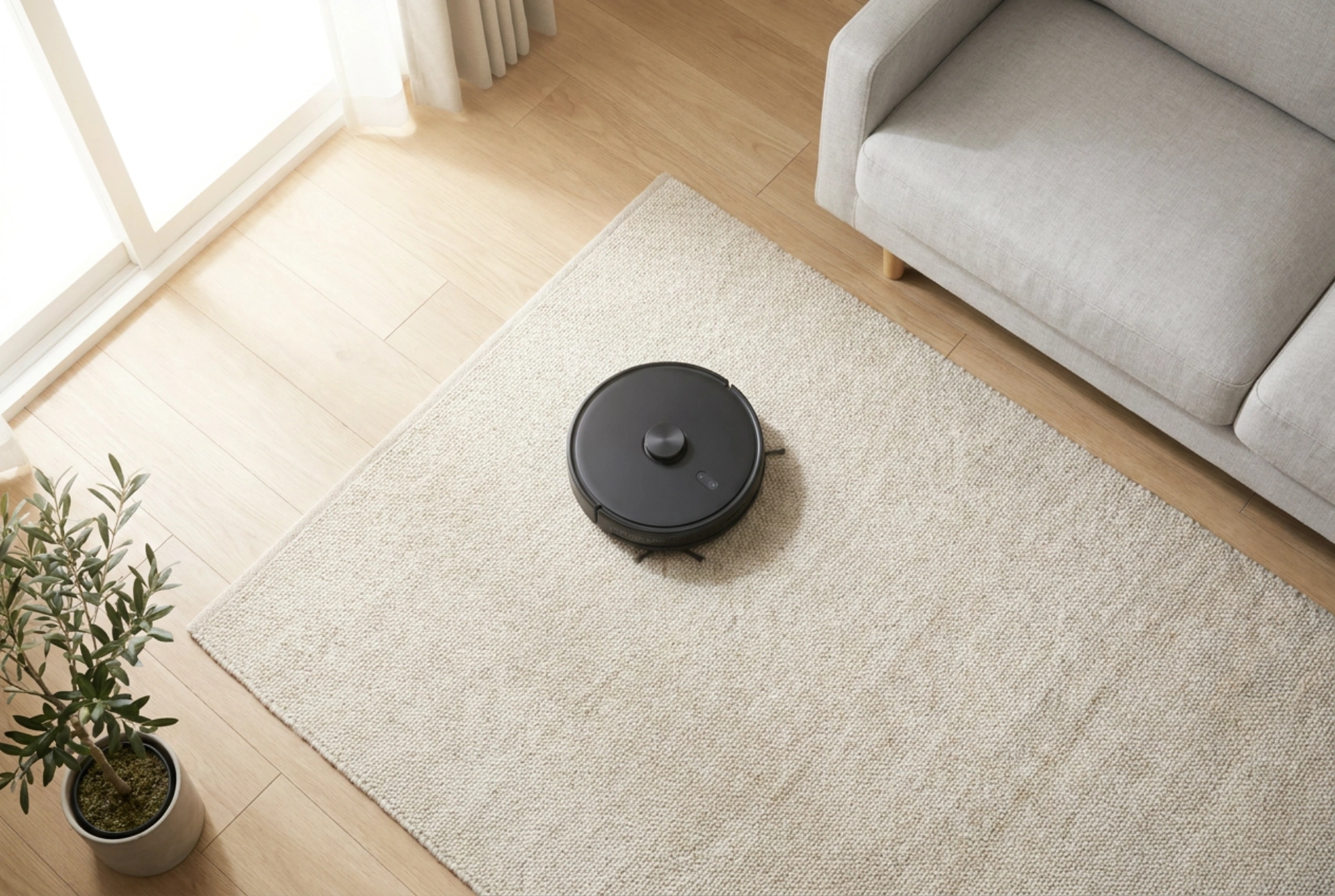


Setting an automated cleaning schedule for a hybrid robot vacuum and mop requires more than just choosing random hours. To achieve truly spotless floors without manual intervention, you must align the machine's mechanical capabilities with the physical properties of your flooring and the daily flow of your household.
The Mechanics of Dust and Water: Why Sequence is Critical
The primary rule of automated floor maintenance is the absolute separation of dry and wet phases. When dry particulate matter, such as silica-rich outdoor dust, pet dander, and hair, mixes with water, it undergoes a physical transformation. Instead of being lifted, these particles bind with the liquid to form a highly abrasive, muddy slurry.
If your robot attempts to mop a floor that has not been thoroughly vacuumed first, the microfibre pad will drag this slurry across your floor. On delicate surfaces like engineered oak, laminate, or polished marble, this acts as fine-grit liquid sandpaper. Over time, this micro-abrasion wears down the protective polyurethane or wax seal, leaving the surface dull and susceptible to deep staining. To prevent this, program a dedicated, high-suction dry-vacuuming cycle to finish at least fifteen minutes before the wet-mopping cycle begins, allowing any airborne dust settled by the vacuum's exhaust to return to the floor where it can be mopped up.
Zone-Based Scheduling: Matching Footfall with Cleaning Cycles
A single, blanket schedule for the entire home is highly inefficient. Different rooms experience varying levels of soil accumulation and traffic, requiring tailored cleaning frequencies.
- High-Traffic Zones (Kitchens and Hallways): These areas accumulate wet mud, organic grease, and food crumbs. They require daily attention. Schedule a high-suction vacuuming run mid-morning after the breakfast rush, followed immediately by a medium-moisture mop cycle. This ensures organic spills do not dry and polymerise under ambient heat, making them much harder to remove later.
- Medium-Traffic Zones (Living Rooms and Dining Areas): These spaces accumulate mostly dry dust and fibres. A dry vacuuming pass three times a week (e.g., Monday, Wednesday, Friday) is sufficient. A wet mop cycle should be scheduled once a week, preferably during a low-traffic window to allow the floor to dry undisturbed.
- Low-Traffic Zones (Bedrooms and Home Offices): These areas can be kept clean with a weekly dry vacuuming run. Mopping is only necessary bi-weekly or monthly, as these rooms do not suffer from wet or greasy soil ingress.
Material Science: Tailoring Water Volume to Floor Types
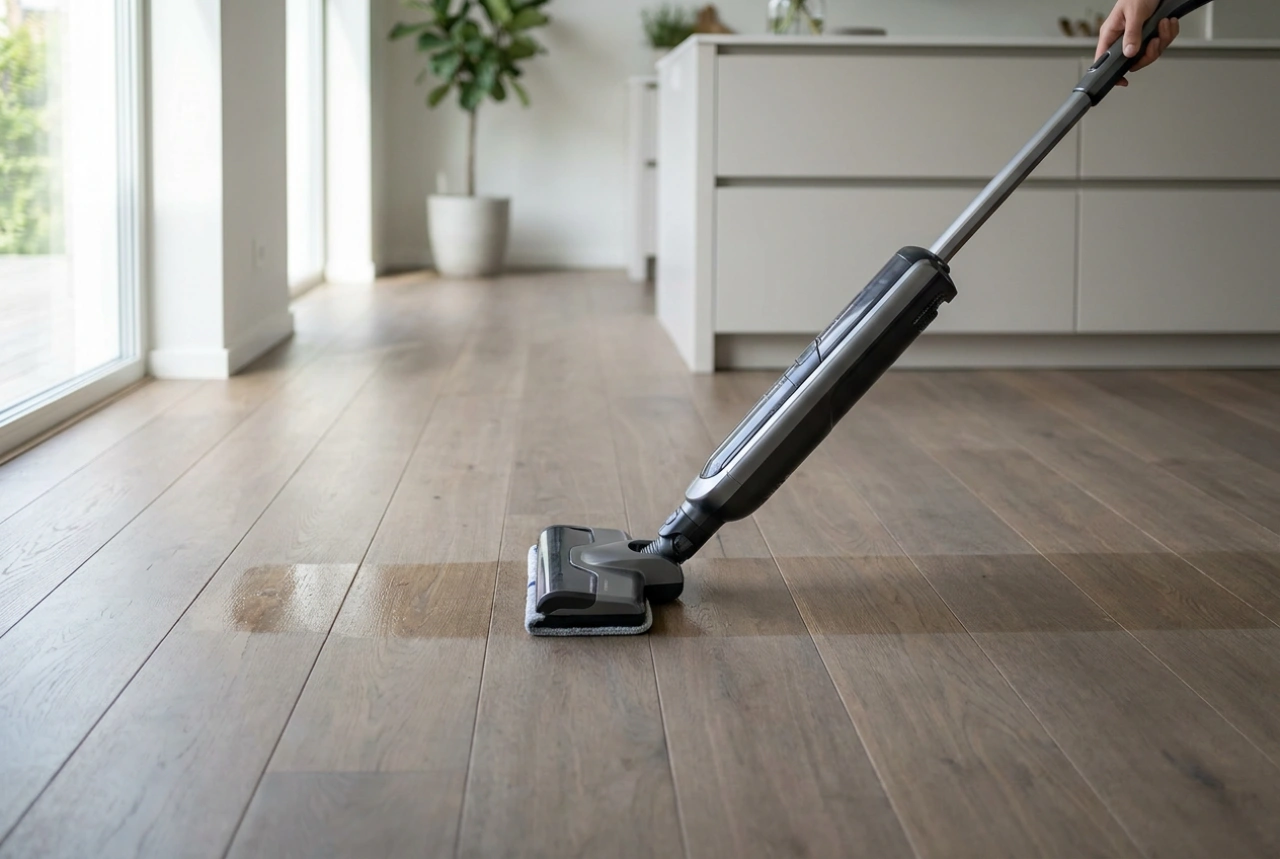
Different flooring materials react uniquely to moisture, and your robot's water output must be adjusted accordingly. Timber and laminate floors are highly vulnerable to capillary action. Water can easily penetrate the microscopic seams between planks. Once moisture enters these seams, the wood fibres swell, leading to irreversible warping, cupping, and joint degradation. For these surfaces, always set the robot's water flow to the lowest possible setting. The thin film of water deposited should evaporate within sixty seconds of application.
Conversely, non-porous surfaces like vitrified ceramic tiles or vinyl can withstand higher water volumes. On these materials, a higher water flow is actually beneficial. The increased volume helps lower the surface tension of dried-on stains, lifting mud and grease into suspension so the microfibre pad can trap and hold the dirt particles effectively.
Post-Cycle Maintenance: Preventing Microbial Growth
The physical process of mopping relies on the microfibre pad absorbing dirty water through capillary action. Once the robot completes its run and returns to its charging dock, this damp pad becomes a hazardous breeding ground. Saturated with water and loaded with organic skin cells, dust, and food residues, the pad is a perfect medium for anaerobic bacteria and mould.
Within just a few hours in a warm, dark docking area, bacteria will multiply exponentially, releasing volatile organic compounds that cause sour, musty odours. Running a damp, contaminated pad over your floors in the next cycle will simply spread these pathogens across your home. To prevent this, always schedule your mopping cycles for times when you are actively at home. Make it an absolute habit to remove, wash, and air-dry the microfibre pad immediately after the cycle terminates.