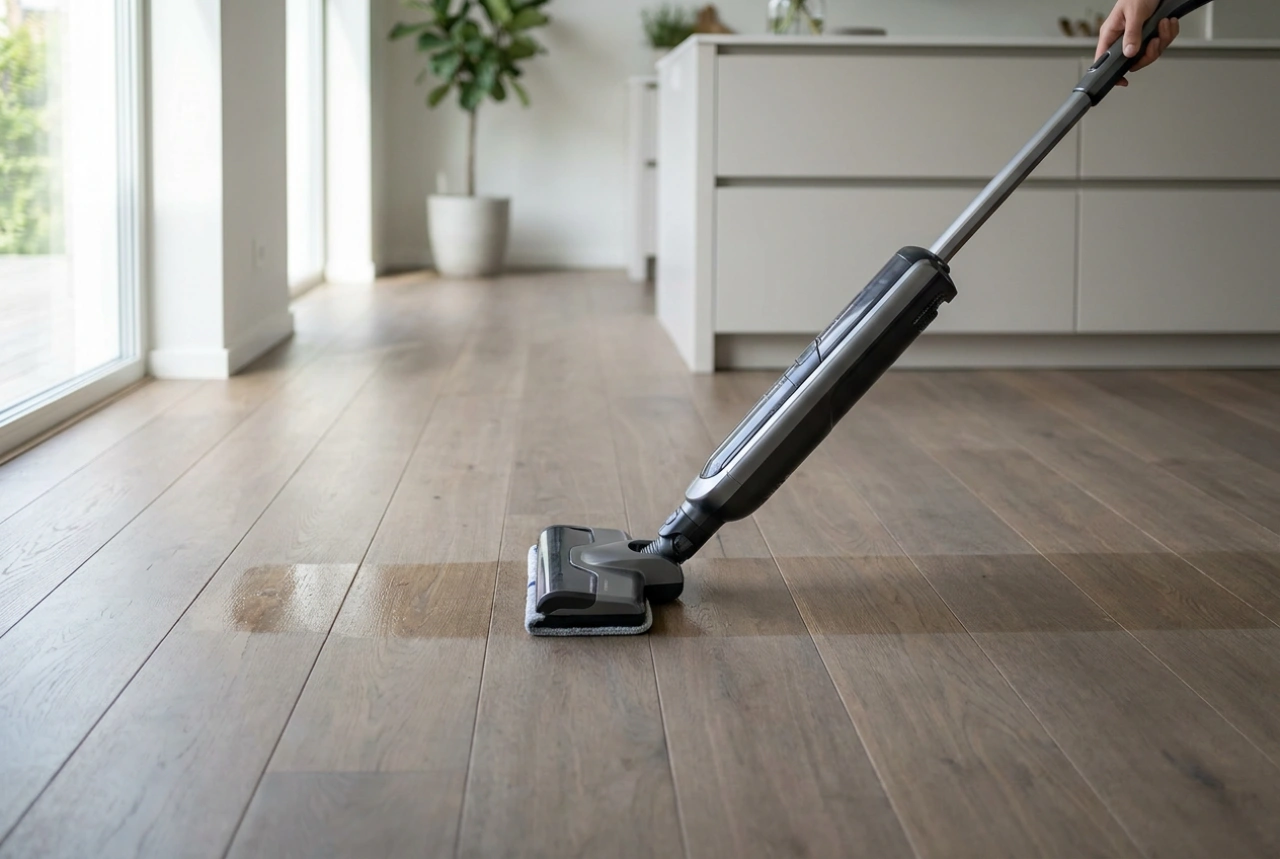


Using a wet and dry vacuum cleaner promises spotless floors in a single pass, yet users frequently struggle with unsightly streaks and water marks after the surface dries. Achieving a flawless, streak-free finish relies on understanding the relationship between water temperature, chemical surfactants, and the mechanical extraction process of your machine.
The Chemistry of Streaking: Why Residue Forms
Streaks on a freshly washed floor are rarely caused by remaining dirt; instead, they are usually the result of evaporated chemical residues. Most household floor detergents contain surfactants—molecules with a hydrophilic (water-attracting) head and a lipophilic (fat-attracting) tail. When you use too much detergent, these molecules cannot be fully extracted by the vacuum’s suction. As the water evaporates, the excess surfactants dry into a thin, sticky film that refracts light and attracts new dust instantly.
To prevent this chemical build-up, always dose cleaning agents below the manufacturer’s recommendations, or opt for specialised low-foaming formulas. Foaming is the enemy of wet vacuums; excess foam disrupts the air pressure within the extraction channel, reducing suction power and leaving dirty water behind. For highly sensitive surfaces like polished porcelain or high-gloss hardwood, using demineralised water mixed with a tiny fraction of isopropyl alcohol can lower the surface tension of the water, allowing it to sheet off and evaporate evenly without leaving mineral deposits.
The Physics of Suction: Technique and Speed Control
A wet-dry vacuum does not operate like a traditional mop. While a mop relies on manual absorption, a washer-vacuum relies on negative pressure to lift water off the surface. If you push the machine too quickly, the rubber squeegee blade cannot maintain constant contact with the floor, and the air flow cannot capture the water droplets before they escape the suction field.
- Slow, deliberate passes: Move the machine forward at a steady pace to lay down the water-detergent solution, then pull it backward even more slowly. The backward stroke is where the primary water extraction occurs.
- Overlap your lanes: Overlap each cleaning path by approximately 5 to 10 centimetres. This ensures that the edges of the roller, which receive slightly less suction than the center, do not leave thin lines of dirty water.
- Dry passes: On moisture-sensitive surfaces like laminate or engineered wood, perform a final dry pass without releasing any clean water. Use only the vacuum’s suction power to draw up remaining dampness.
Mechanical Hygiene: Preventing Dirt Redistribution
A dirty machine cannot clean a floor. If your wet-dry vacuum leaves dark, muddy streaks, the culprit is almost certainly a saturated roller brush or a blocked squeegee channel. Hair, lint, and pet dander wrap around the rotating brush, preventing its microfibres from absorbing water. Instead of lifting dirt, the clogged roller simply drags it across the floor.
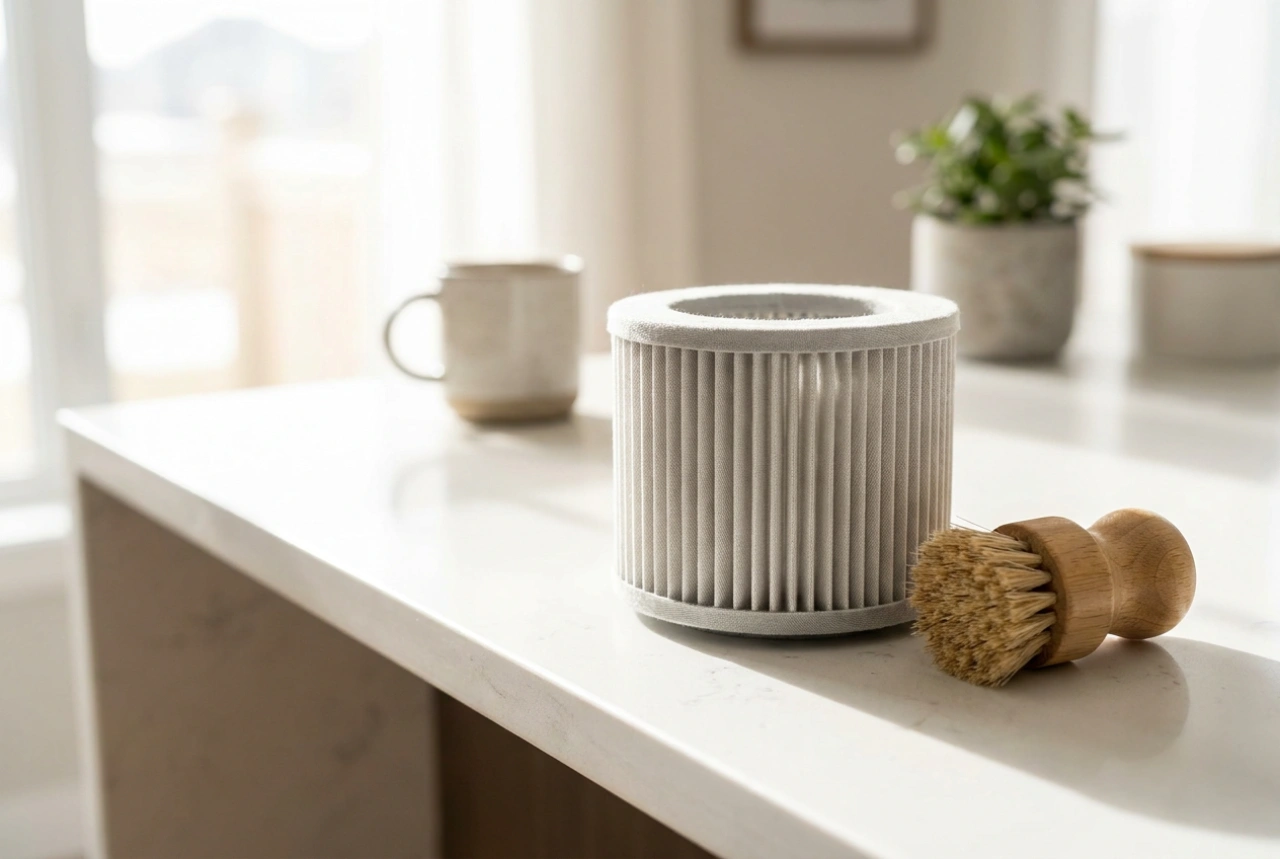
After every cleaning session, empty the dirty water tank immediately to prevent anaerobic bacteria from growing and causing odours. Remove the roller brush, rinse it thoroughly under warm running water to remove embedded grit, and clear any debris from the suction nozzle behind the roller. Always allow the roller and filter to air-dry completely for at least 24 hours before reassembly to maintain optimal airflow during your next clean.
Adapting to Floor Materials
Different materials require different moisture management strategies. Closed-pore surfaces like glazed ceramic tiles can withstand more water, but require high suction to draw moisture out of the lower grout lines. Open-pore or sensitive surfaces like natural stone, wood, or laminate require strict water regulation. On wood floors, minimise the liquid output and ensure the vacuum’s extraction is working at maximum capacity to prevent water from penetrating the joints, which causes swelling and structural damage.