

Fine dust particles, such as those generated during drywall sanding, masonry cutting, or wood processing, present a severe challenge to standard filtration systems because they rapidly clog the microscopic pores of a vacuum filter. Utilising an integrated filter shaker—whether manual, semi-automatic, or fully automatic—addresses this issue by employing mechanical kinetic energy to dislodge accumulated particles, ensuring sustained airflow and protecting the appliance motor from overheating.
The Mechanics of Filter Blinding: Why Fine Dust is Destructive
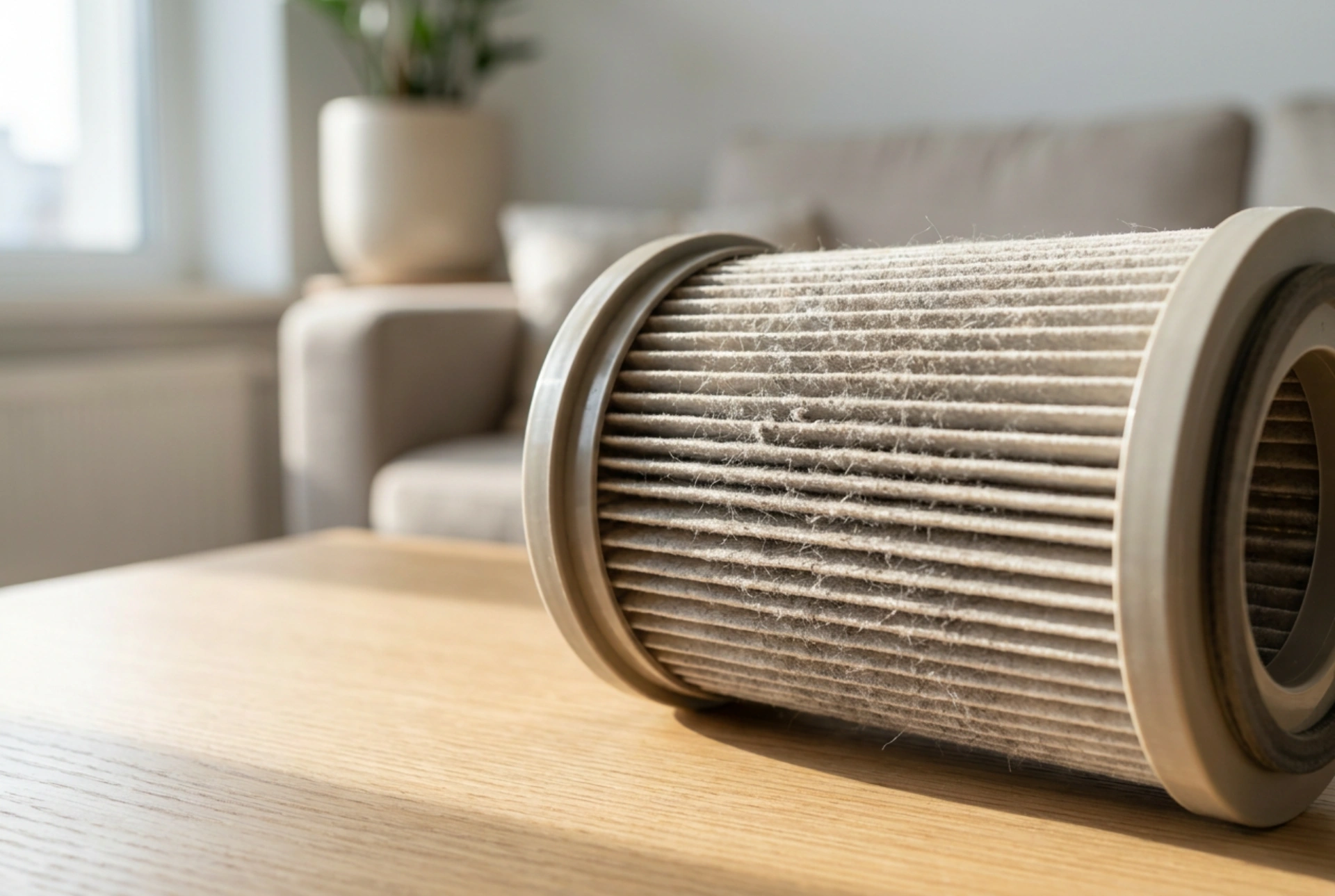
To understand why a filter shaker is essential, one must first look at the physical behaviour of fine dust on a microscopic scale. Unlike larger debris, which settles due to gravity, ultra-fine dust (often measuring under 10 micrometres) is highly susceptible to electrostatic charges and van der Waals forces. When drawn into a vacuum cleaner, these minute particles do not simply rest on the surface of the filter; they penetrate deep into the fibrous structure of the filter media, a phenomenon known as \"depth loading\" or \"filter blinding.\"
As these particles accumulate, they bridge the microscopic gaps within the filter material, creating a dense, impermeable cake. This sudden restriction in the airflow path causes a rapid increase in static pressure within the vacuum system. Consequently, the suction power drops precipitously, rendering the vacuum ineffective. Furthermore, because many vacuum cleaner motors rely on the intake airflow for cooling, a severely restricted filter can cause thermal overload, shortening the operational lifespan of the motor.
How Shaker Systems Dislodge Fine Particles
Filter shakers operate on the principle of inertia and mechanical acceleration to break the physical bonds between the dust cake and the filter membrane. There are three primary mechanisms employed in industrial vacuum systems to achieve this separation:
- Manual Shakers: These require the operator to actuate a lever or plunger. This action physically compresses or shakes the filter cartridge inside the housing, causing the dust cake to crack and fall into the collection bin.
- Semi-Automatic Shakers: These typically use a reverse-pulse airflow method. By pressing a button, the operator momentarily reverses the direction of the air, forcing a high-velocity blast of ambient air backward through the filter pleats to blow the dust off the surface.
- Fully Automatic Shakers: These systems monitor the pressure differential across the filter. When the pressure drop exceeds a pre-set threshold, an integrated electromagnetic solenoid or pneumatic valve triggers a rapid sequence of vibrations or reverse-air pulses. This process occurs during operation, often without requiring the user to turn off the machine.
The sudden deceleration and vibration force the accumulated dust cake to fracture. Because the cohesive forces holding the dust particles to each other are often stronger than their adhesion to the synthetic filter fibres, the dust falls away in larger sheets rather than dispersing back into the air stream.
Material Science of Vacuum Filters
The effectiveness of a filter shaker is closely tied to the material composition of the filter itself. Standard cellulose (paper) filters are highly prone to permanent blinding because their rough, irregular organic fibres trap dust deep within the matrix. Shaking paper filters can also damage the fragile pleats over time.
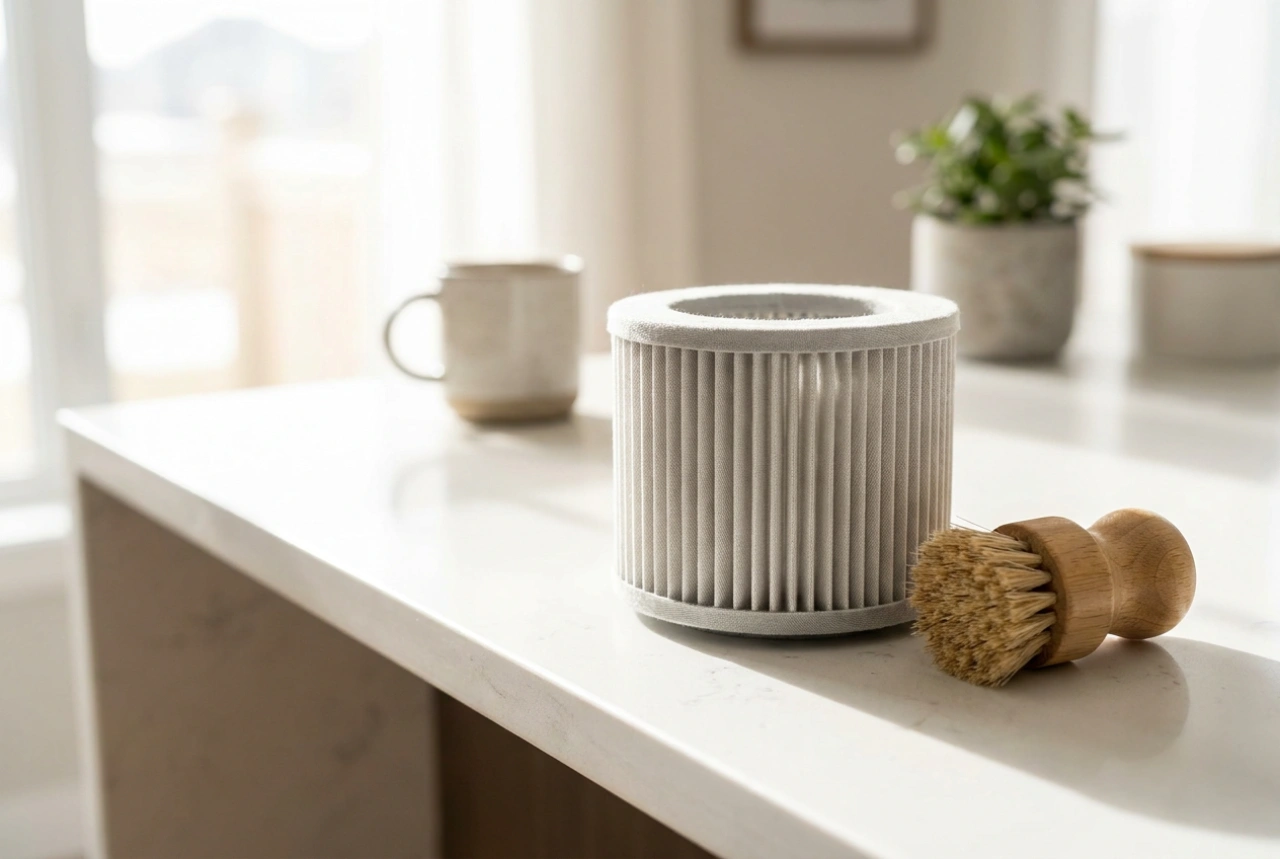
In contrast, high-performance industrial filters utilise synthetic materials such as polyethylene, PTFE (polytetrafluoroethylene) membranes, or polyester fleece. PTFE membranes, in particular, feature an extremely smooth surface with low surface energy, which prevents dust from adhering deeply. When the shaker mechanism is activated, the dust slides off these synthetic surfaces far more readily, restoring near-original airflow capacity without damaging the structural integrity of the filter pleats.
Operational Guidelines for Optimizing Filter Efficiency
To ensure maximum efficiency when dealing with high volumes of fine dust, operators should observe specific procedural steps. First, if using a manual or semi-automatic shaker, activate the cleaning cycle before suction power drops entirely; waiting too long allows the dust cake to become compacted, making it significantly harder to dislodge. Second, ensure that the collection container or fleece bag is not overfilled, as a high level of collected dust inside the canister reduces the clearance space beneath the filter, preventing the shaken dust from falling away and leading to immediate re-entrainment when the motor restarts.