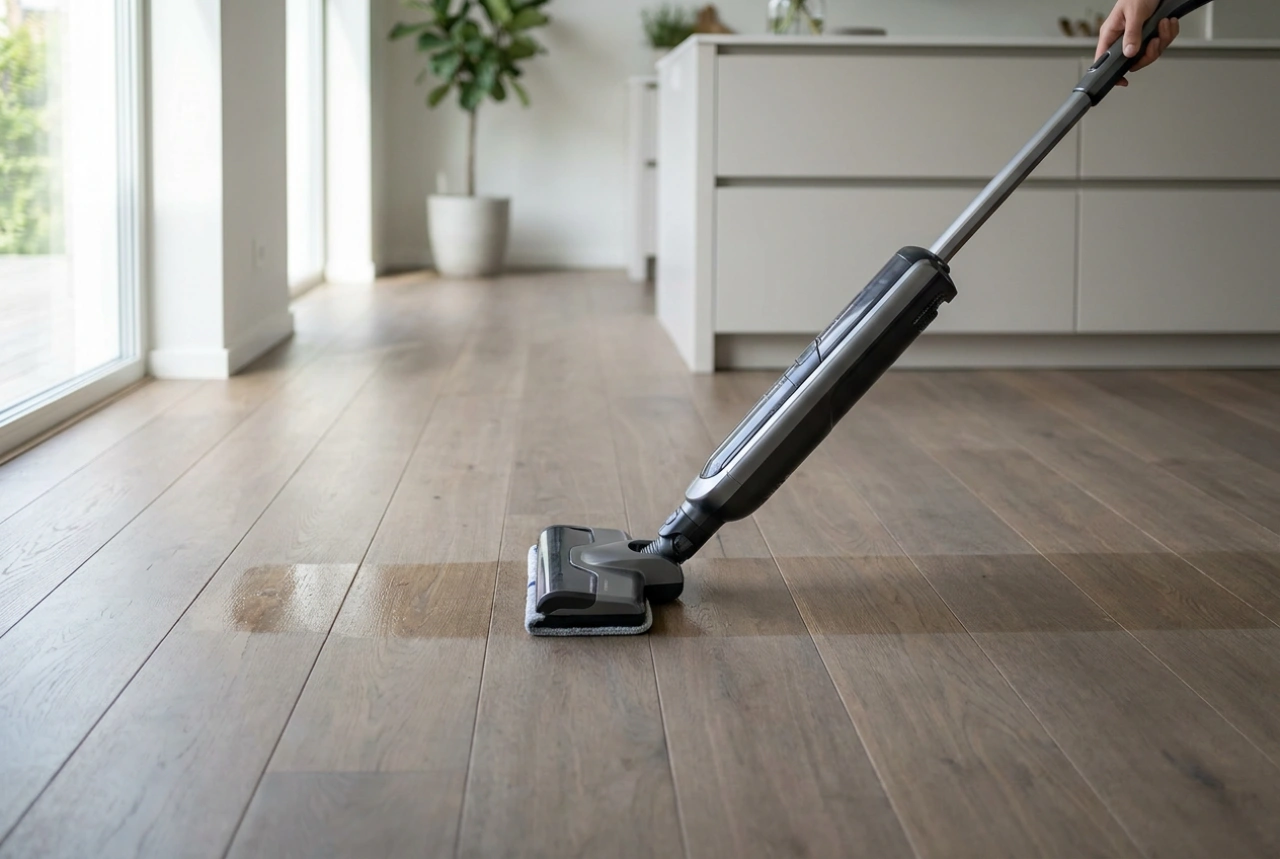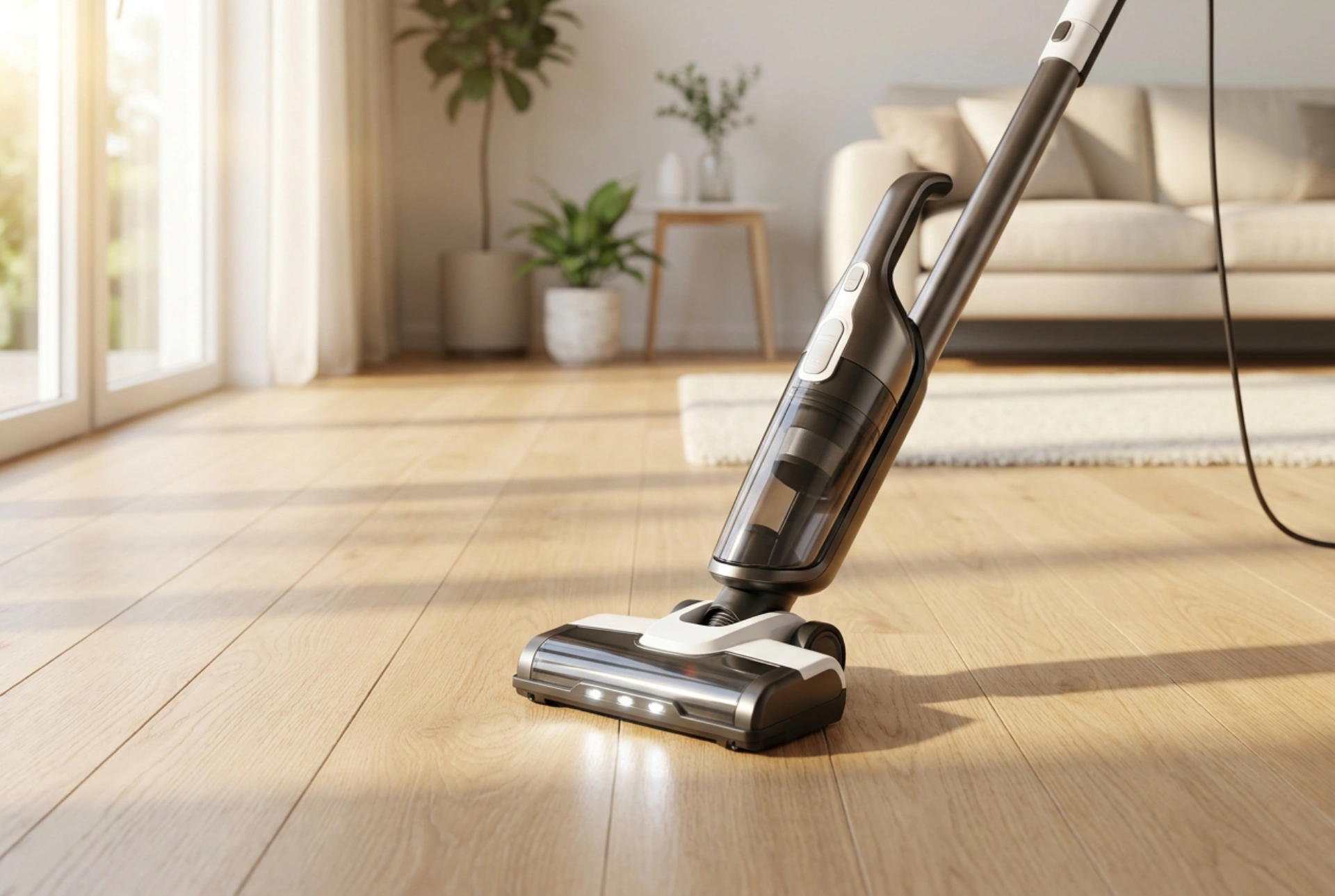


Extended deep cleaning sessions in larger apartments demand consistent performance that battery-powered alternatives often struggle to sustain. Understanding the physical mechanics of corded stick vacuums—specifically continuous airflow, thermal regulation, and weight distribution—allows for more efficient dust removal without performance drops.
The Physics of Continuous Power and Suction Consistency
Unlike battery-operated devices that experience voltage drop as the charge depletes, a corded stick vacuum relies on a direct, uninterrupted connection to the mains power supply. This constant electrical current ensures the electric motor operates at a stable, high rotational speed. Motor stability is directly proportional to two critical vacuum metrics: static pressure and airflow rate, measured in cubic feet per minute. Static pressure is the lifting power required to break the adhesion between dust particles and floor fibres, while airflow is the carrier medium that transports the debris into the collection vessel.
In prolonged cleaning sessions, maintaining a high airflow rate is vital. When a battery-powered vacuum\'s voltage drops, its motor slows, reducing both suction pressure and airflow. This leads to a phenomenon where heavier particulates, like sand or dense organic matter, settle back onto the floor before reaching the canister. A corded system bypasses this limitation, delivering identical kinetic energy to the air column from the first minute of cleaning to the last.
Managing Thermal Buildup during Extended Use
Extended operation introduces the challenge of heat generation. Vacuum motors convert electrical energy into mechanical energy, producing thermal energy as a byproduct. In compact stick vacuum designs, dissipation of this heat relies heavily on the intake air itself. The passing air stream cools the motor windings. If the airflow is restricted by a saturated filter or a full dustbin, the cooling capacity drops sharply, leading to thermal expansion of motor components and potential overheating.
To preserve motor longevity and maintain optimal suction during long cleaning sessions, a disciplined operational sequence is required. Always empty the dust receptacle when it reaches the maximum fill line, as accumulated dust disrupts the cyclonic vortex, increasing resistance and heat. Furthermore, regular inspection of the intake nozzle prevents blockages that force the motor to work harder against restricted airflow, generating excess thermal stress.
Cable Manoeuvring and Ergonomic Techniques
The primary trade-off of a corded system is the physical tether. Efficient, uninterrupted cleaning relies on strategic cable management and body positioning. To prevent tangling and physical strain, adopt a structured directional path. Always work away from the electrical outlet, starting at the furthest corner of the room and moving backward toward the exit. This keeps the cable behind the vacuum\'s path, preventing the wheels or brush roll from running over the cord.
Additionally, ergonomic strain in stick vacuums is heavily influenced by the centre of gravity. Many corded models house the motor and dustbin near the handle, placing the weight directly on the wrist. To mitigate muscle fatigue during long sessions, use a relaxed, neutral wrist position and leverage the physics of the tool: let the floor nozzle bear the weight on the ground. Use long, slow, sweeping motions in a grid pattern rather than short, rapid, jerky movements. Slow, deliberate passes allow the brush roll sufficient contact time to agitate carpet fibres and lift deep-seated dust, reducing the need for repetitive strokes over the same area.
Filtration Mechanics and Particle Separation
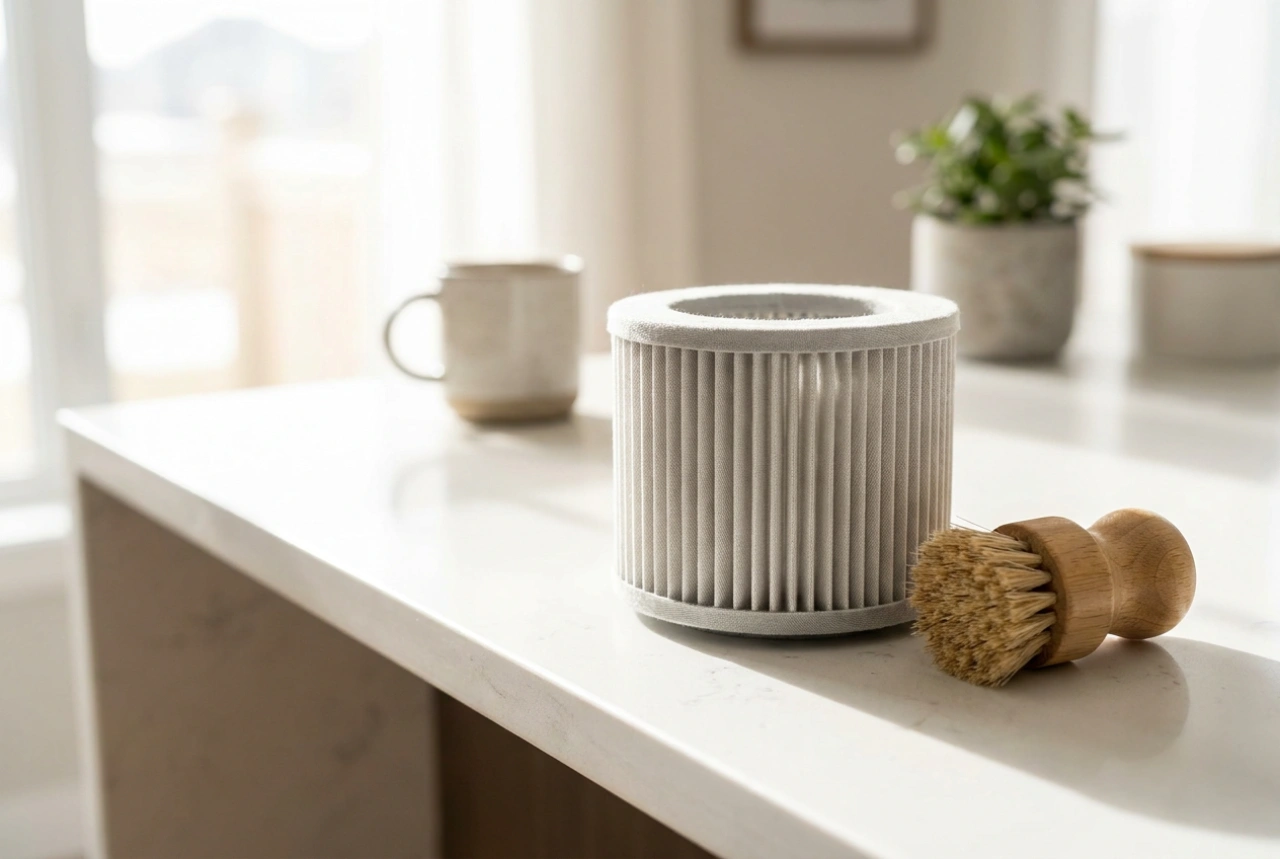
Sustained airflow also plays a crucial role in the efficiency of the filtration system. Most corded stick vacuums utilise a multi-stage cyclonic separation system. As dust-laden air enters the chamber, it is spun at high speeds. Centrifugal force pushes larger, heavier particles outward against the walls, where they slide down into the bin. The clean air then passes through fine mesh and particulate filters.
Because corded units maintain a high velocity, the centrifugal separation remains highly efficient. In contrast, lower velocity airflow allows smaller particles to bypass the cyclonic stage and clog the secondary filters prematurely. Ensuring the mechanical seals of the vacuum body remain airtight prevents pressure leaks, keeping the filtration system running at maximum efficiency and protecting indoor air quality from fine particulate exhaust.