

Preparing a carpet extraction cleaner correctly is the vital difference between reviving compressed fibres and permanently damaging your textile flooring. Mastering the mechanics of fluid dynamics, temperature thresholds, and chemical dilution ensures a professional finish while preventing common pitfalls like fibre shrinkage or mildew development.
The Physics of Dry Soil Extraction
The single most common mistake in carpet extraction cleaning is skipping a thorough dry vacuuming phase. When water is introduced to dry dust and quartz particles embedded deep in the carpet pile, it immediately creates a microscopic slurry of mud. This wet paste sinks into the backing of the carpet, making it nearly impossible to extract and leading to "wicking"—a phenomenon where stains reappear on the surface as the carpet dries.
Before assembling your extraction machine, use a high-filtration vacuum cleaner equipped with a mechanical brush roll. The spinning brush agitates the fibres, flexing them to release heavy, sharp silica particles trapped at the base. Vacuum in multiple directions (north-south, then east-west) to open up the pile, preparing the textile structure for deep moisture penetration.
Water Temperature and Fibre Sensitivity
The thermal energy of the water used in your extraction machine directly impacts how effectively the cleaning solution dissolves grease and bound soils. High temperatures reduce the viscosity of oily residues, allowing surfactants to emulsify them more efficiently. However, you must match the temperature of your clean water tank to the specific material of your carpet fibres:
- Synthetic Fibres (Nylon, Polyester): These resilient materials can withstand temperatures between 50°C and 60°C. Hotter water accelerates the chemical reaction of the cleaning agents, breaking molecular bonds of stubborn grease.
- Natural Fibres (Wool, Silk): Animal protein fibres are highly sensitive to heat and moisture. Water exceeding 40°C can cause irreversible shrinkage, fibre distortion (felting), and dye bleeding. Always use lukewarm water for these delicate materials.
The Chemistry of Dilution and Defoaming
Achieving the correct chemical ratio in the clean water tank is critical for preventing rapid re-soiling. Over-concentrating the cleaning solution does not increase cleaning power; instead, it leaves a sticky surfactant residue on the carpet fibres. Once dry, this residue acts like a magnet for airborne dust and foot traffic dirt. Always measure the cleaning agent precisely according to the manufacturer’s ratio, utilising generic low-foaming carpet extraction detergents.
Equally important is the treatment of the recovery tank. As dirty, soapy water is sucked back into the machine, it creates turbulence and foam. If foam reaches the vacuum motor, it can cause electrical short circuits or reduce suction power. To prevent this, add a small amount of liquid silicone-based defoaming agent directly into the empty recovery tank before starting. This breaks the surface tension of the recovered dirty water, collapsing the foam instantly.
Priming the System and Testing Spray Patterns
Before applying the tool to your carpet, the extraction pump must be primed to purge trapped air from the internal tubes. Fill the clean water tank, secure all seals, and hold the wand nozzle over a sink or bucket. Depress the spray trigger for 10 to 15 seconds until a steady, uniform mist is emitted without sputtering. A sputtering spray indicates air pockets, which lead to uneven wetting and chemical pooling on your carpet. Inspect the spray nozzle tip for any mineral build-up, and clean it with a soft brush if the fan pattern is distorted.
Optimising Drying Times via Capillary Extraction
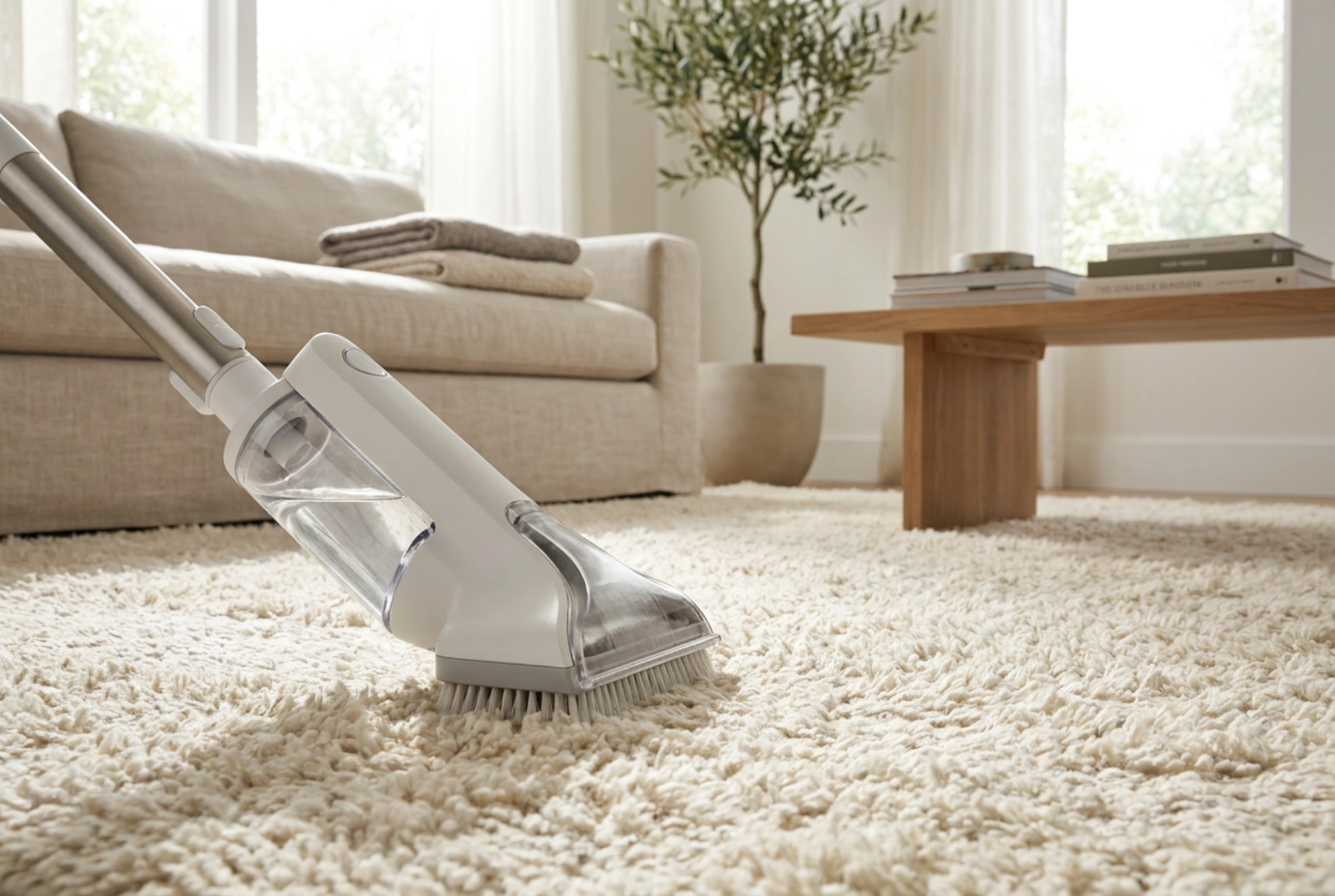
The extraction process relies on strong vacuum seal mechanics. When cleaning, pull the hand tool or floor wand slowly toward you while squeezing the spray trigger. To ensure thorough drying, follow every wet stroke with at least two "dry strokes"—passing the suction nozzle over the same area without pulling the trigger. This utilises atmospheric pressure and high-velocity airflow to lift water from the base of the pile via capillary action, keeping the drying window under the critical 24-hour mark to prevent microbial growth.