

Selecting a cordless stick vacuum requires looking beyond marketing claims and focusing on the core physics of airflow, battery chemistry, and mechanical filtration. To ensure long-term durability and efficiency, you must evaluate how these engineering components interact during daily use.
Battery Chemistry and Voltage Performance
The heart of any cordless vacuum is its battery pack, typically utilizing lithium-ion (Li-ion) chemistry. Unlike older nickel-cadmium cells, lithium-ion batteries provide a relatively flat discharge curve, meaning the machine runs at near-maximum suction power until the cell is almost depleted. However, you must look closely at the battery’s voltage (typically ranging from 18V to over 25V) and its capacity measured in Ampere-hours (Ah).
Higher voltage generally correlates with a more powerful motor capable of generating greater static lift. It is critical to understand that the advertised runtime always refers to the lowest power setting without a motorized brush bar attached. Under high-load conditions—using a motorized floor head on carpet—the battery must discharge rapidly, often reducing runtime to under 10 minutes due to internal resistance and heat generation. Look for models with removable, swappable batteries to extend operational limits without waiting for a full recharge cycle.
Airflow Physics: Air Watts and Sealed Suction
When assessing cleaning capability, raw motor wattage is a misleading metric because it only indicates electrical consumption, not moving air. Instead, focus on Air Watts (AW) or kilopascals (kPa). Air Watts measure the overall efficiency of the vacuum by combining airflow volume (cubic feet per minute) and static lift (the pull force at the nozzle).
- Sealed Suction (kPa): This indicates the motor's ability to lift debris from deep carpet fibers or crevices. A rating above 15 to 20 kPa is standard for deep cleaning.
- Airflow Volume: High airflow is crucial for sweeping larger particles on hard surfaces. Without sufficient airflow, debris is simply pushed forward rather than lifted.
A high-performance cordless vacuum must balance these two forces. If the seals around the dustbin, wand connectors, or filter housings are loose, air escapes, resulting in a sudden drop in both static lift and airflow.
Cyclonic Separation and Filtration Efficiency
Without proper separation, fine dust quickly clogs the primary filter, choking the airflow and rendering even the most powerful motor useless. High-quality cordless vacuums employ multi-stage cyclonic separation. As dirty air enters the chamber, it is spun at high speeds. Centrifugal force flings heavier debris and fine dust outward against the chamber walls, dropping them into the collection bin.
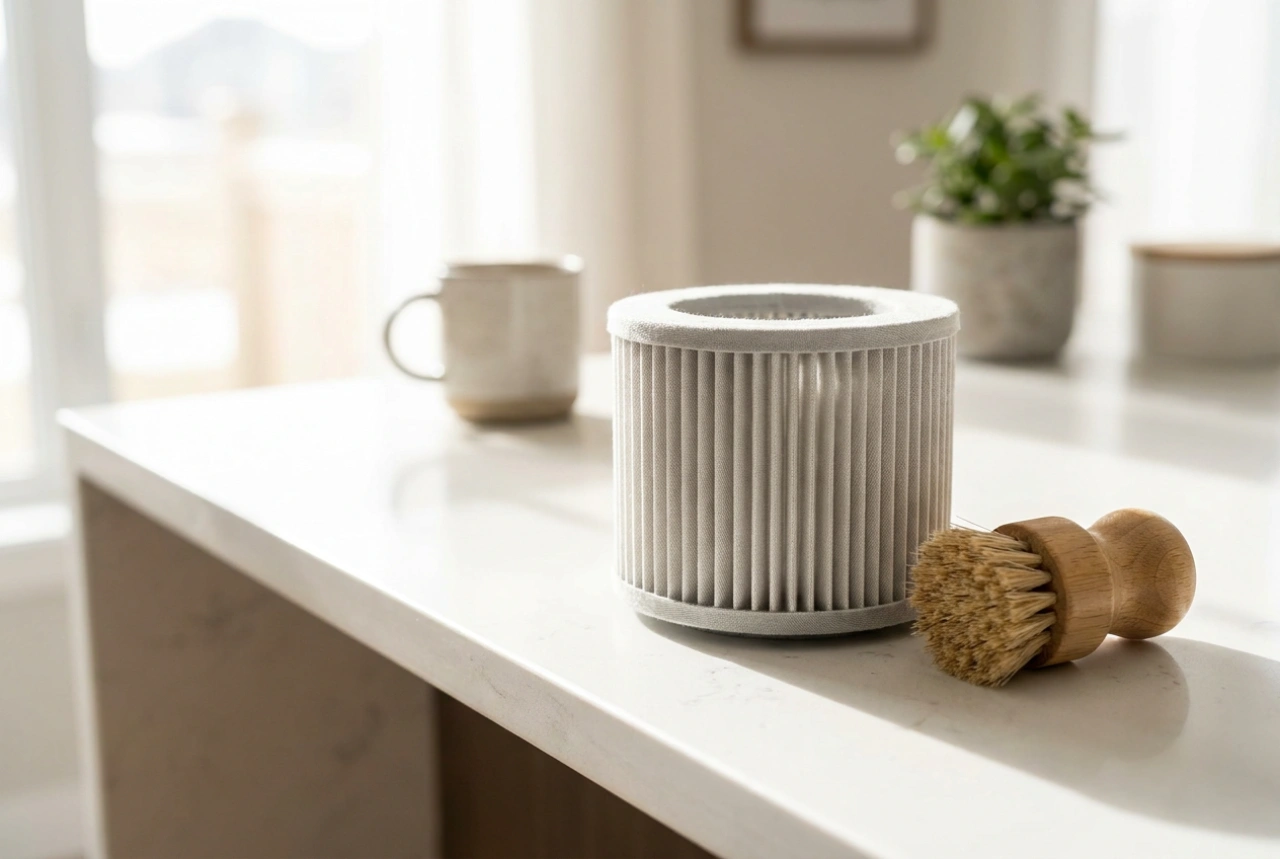
The remaining microscopic particles must pass through a physical barrier. Ideally, look for a fully sealed system equipped with a high-efficiency particulate air (HEPA) filter. A true HEPA filter traps 99.97% of particles down to 0.3 microns, including pollen, mold spores, and dust mite dander. Ensure the exhaust air path is completely sealed with silicone gaskets so dirty air cannot bypass the filter and blow back into your living space.
Mechanical Agitation and Brush Roll Design
Vacuuming carpets relies heavily on mechanical agitation to dislodge deep-seated dirt. Cordless vacuums achieve this via motorized brush rolls powered by an independent motor inside the cleaning head. Look for two distinct brush roller designs depending on your flooring:
- Bristle Brush Bars: Crucial for carpets, these nylon bristles penetrate the pile to vibrate and lift embedded dust. Seek designs with anti-tangle geometry to prevent hair wrap from binding the motor.
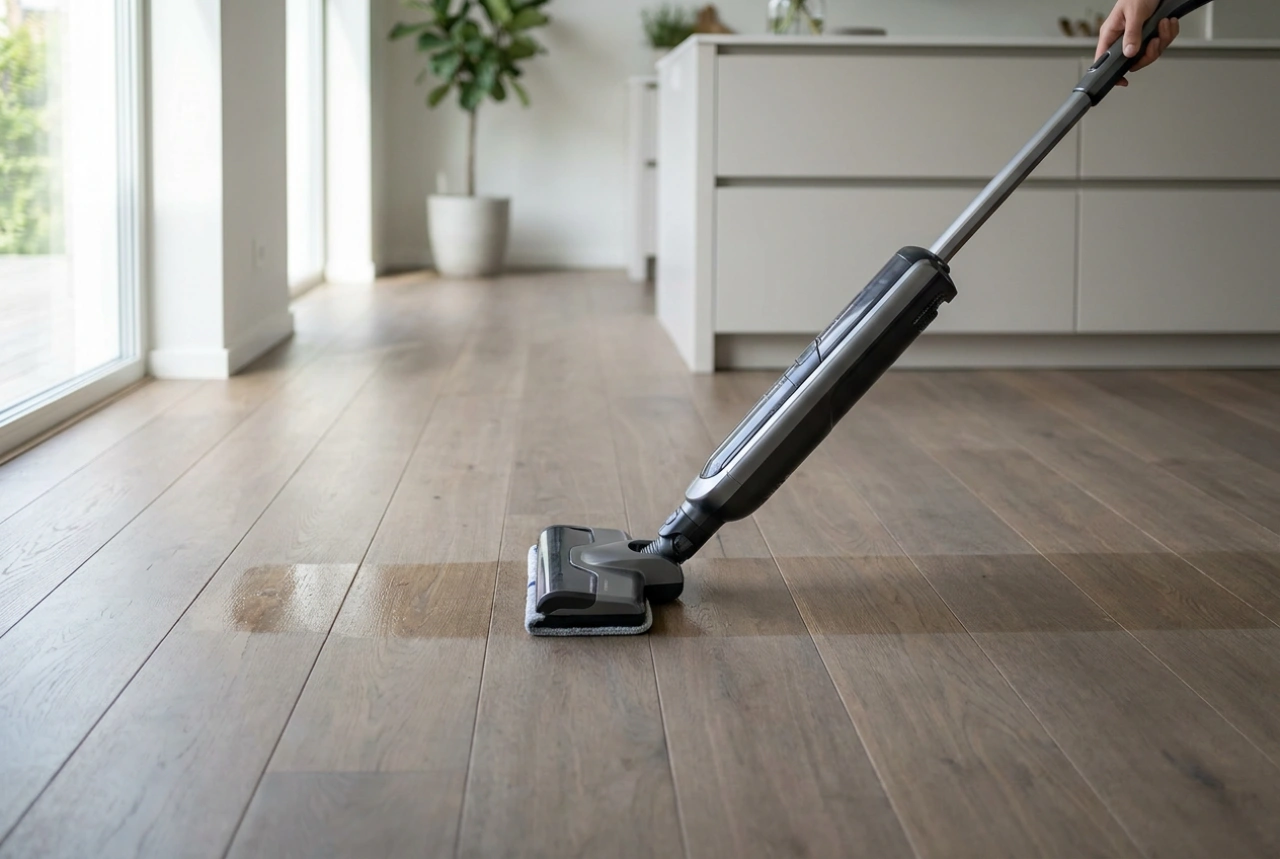
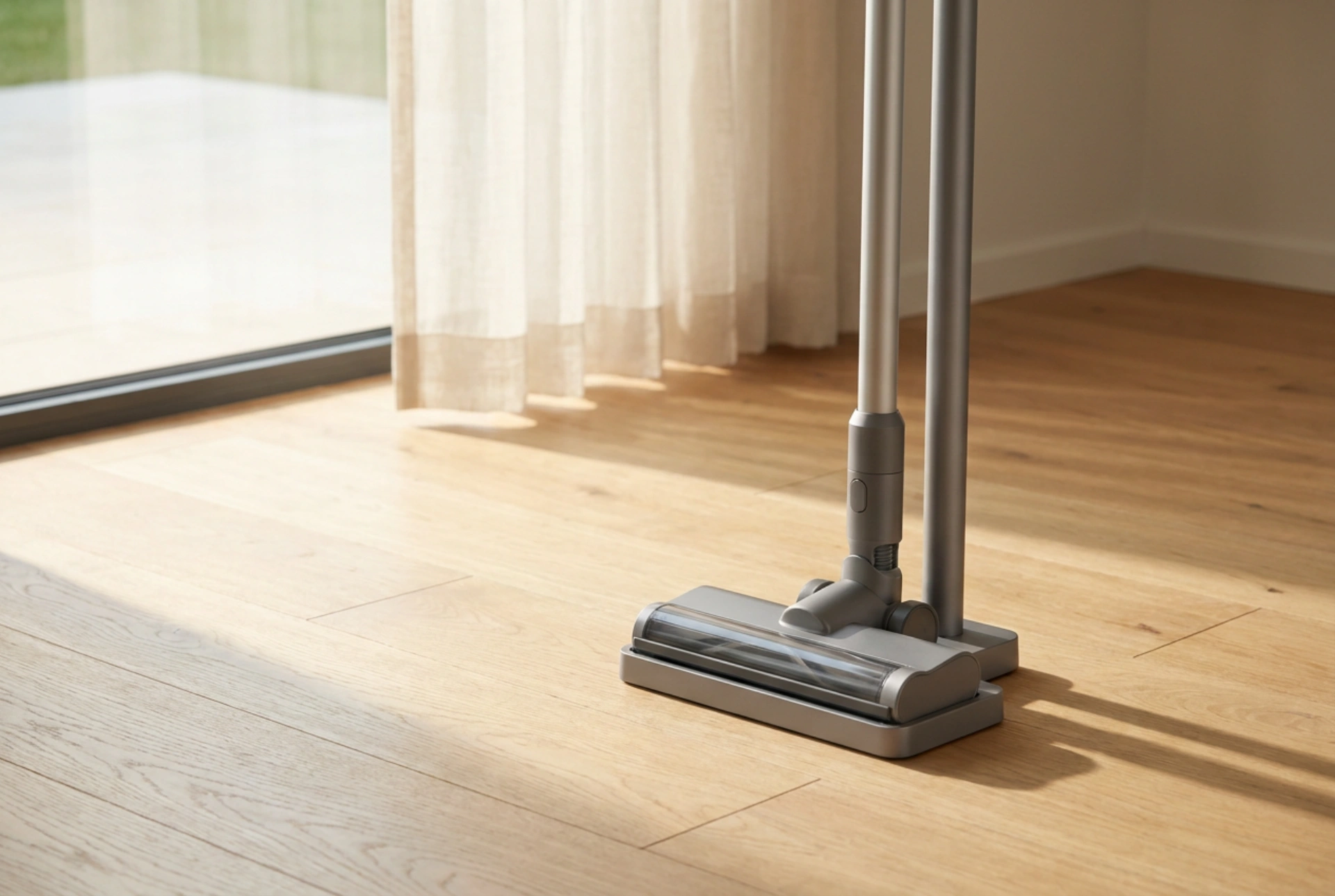
- Soft Roller Bars: Designed for hardwood and tile floors, these plush, woven rollers create a seal against the floor, utilizing pure static pressure to pull fine dust out of wood grain and crevices without scratching the surface.
Weight Distribution and Maintenance Ergonomics
Since you carry the entire weight of a stick vacuum, the physical layout dictates comfort. Models with the motor and battery positioned near the handle place the center of gravity in your hand, making it easier to lift the machine to clean high cornices but adding strain to your wrist during prolonged floor cleaning. Conversely, a lower center of gravity reduces hand strain but limits vertical maneuverability. Finally, evaluate the dustbin mechanism; a hygienic, point-and-shoot emptying system prevents you from manually pulling out compacted dust clumps, preserving both hygiene and ease of maintenance.