

Achieving a streak-free finish with a wet vacuum cleaner relies on managing chemical residues, water hardness, and evaporation rates during the suction cycle.
The Chemistry Behind Floor Streaks and Residue
When a wet vacuum leaves unsightly streaks, the culprit is rarely dirt itself; instead, it is usually a microscopic layer of evaporated chemical surfactants or mineral deposits. Standard floor detergents rely on surfactants (surface-active agents) to break the bond between grease and the floor. While highly effective with a traditional mop, these molecules must be entirely lifted by the vacuum's suction flow. If the detergent concentration is too high, or if the water evaporates too quickly before suction occurs, these surfactants crystallise on the surface, refracting light and creating visible streaks.
Water hardness also plays a critical role in this physical process. Tap water contains dissolved minerals, primarily calcium and magnesium ions. As the wet vacuum dispenses water and subsequently suctions it up, any remaining damp film dries. The pure water evaporates into the air, leaving the inorganic minerals behind as tiny white rings or cloudy lines. To prevent this, using demineralised or distilled water in your machine's clean water tank completely eliminates mineral-based spotting, protecting both the appearance of your floor and the internal pathways of the machine.
Why Standard Detergents Fail in Suction Machines
Using regular dish soaps, highly concentrated floor cleaners, or high-foaming detergents in a wet-and-dry vacuum is a recipe for streaky floors and decreased machine performance. High-foaming agents create an excess of micro-bubbles in both the suction nozzle and the dirty water recovery tank. This foam acts as a physical barrier, drastically reducing the vacuum’s negative pressure. When suction drop occurs, the machine cannot pull the dirty water off the floor quickly enough, leaving behind puddles that dry into concentrated dirty spots.
For streak-free results, you must use low-foaming, non-ionic surfactants. Non-ionic surfactants do not carry an electrical charge, making them highly effective at emulsifying oily soils without binding strongly to the floor material itself. Additionally, these specialized formulas are designed to dry evenly without forming crystalline structures that scatter light.
The Critical Role of Temperature and Dilution
Temperature dictates how fast chemical bonds break and how quickly water evaporates. Using lukewarm water (between 30°C and 40°C) is ideal. Warmer water lowers the surface tension of the cleaning liquid, allowing it to wet the floor surface more uniformly and lift oils efficiently. However, avoid boiling water, as excessive heat can warp the plastic internal gaskets of your wet vacuum and cause the solution to evaporate before the suction nozzle can retrieve it, locking streaks in place.
Dilution is the most common operational error. More soap does not equal cleaner floors; it equals more residue. Always err on the side of under-dilution. If the instructions suggest a specific ratio, reducing the soap concentration by half often yields a cleaner, glossier finish, particularly on high-gloss tiles or dark laminate.
Technique: Speed, Movement, and Dry Passes
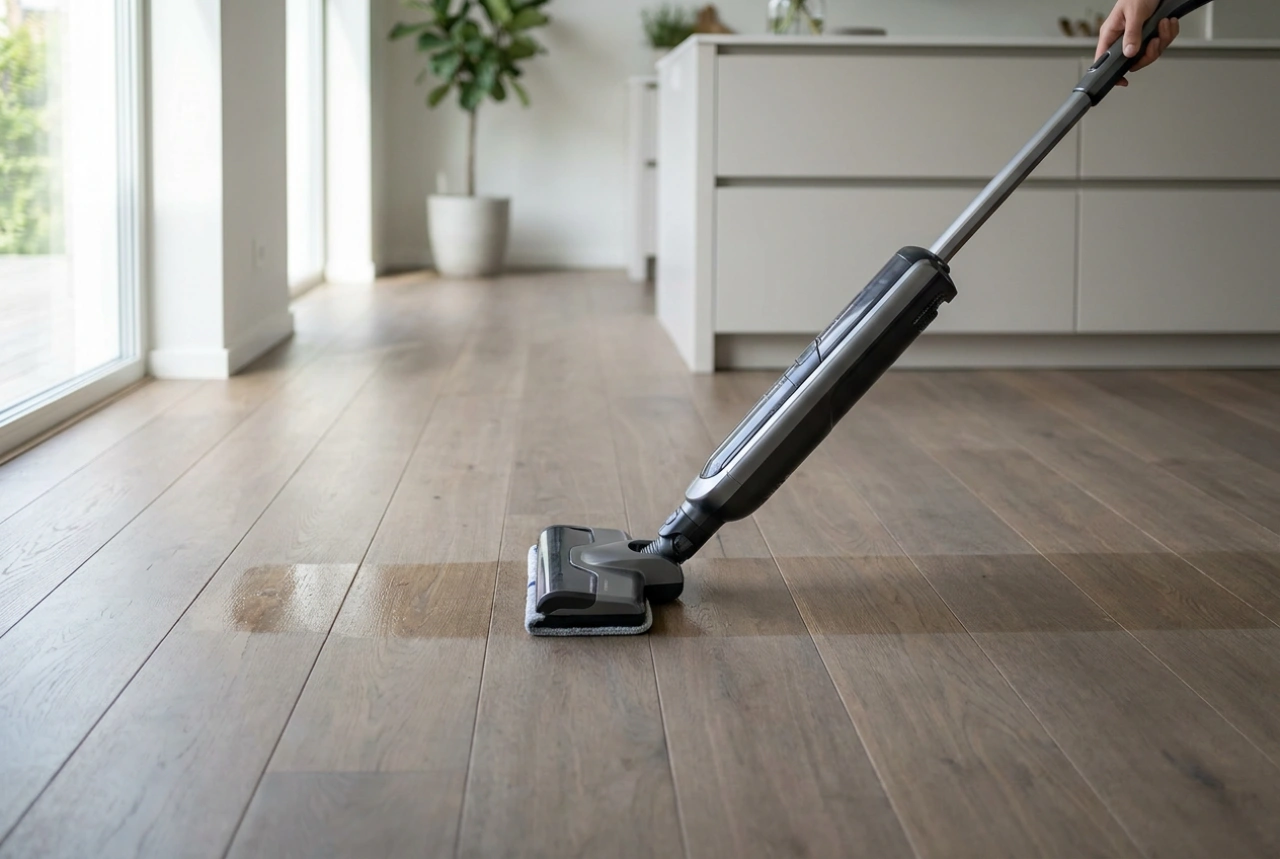
How you navigate the floor with your wet vacuum directly impacts the final finish. Speed must be deliberate and steady. Moving the machine too quickly does not allow the suction squeegee to make full contact with the floor, leaving a thick moisture film behind.
- The Overlap Rule: Overlap each cleaning path by approximately 5 to 10 centimetres to ensure no dry zones are missed and no edges pool water.
- The Dry Pass: After applying the solution on a forward stroke, perform a slow backward stroke with the spray function turned off. This dedicated suction pass draws up the residual moisture layer.
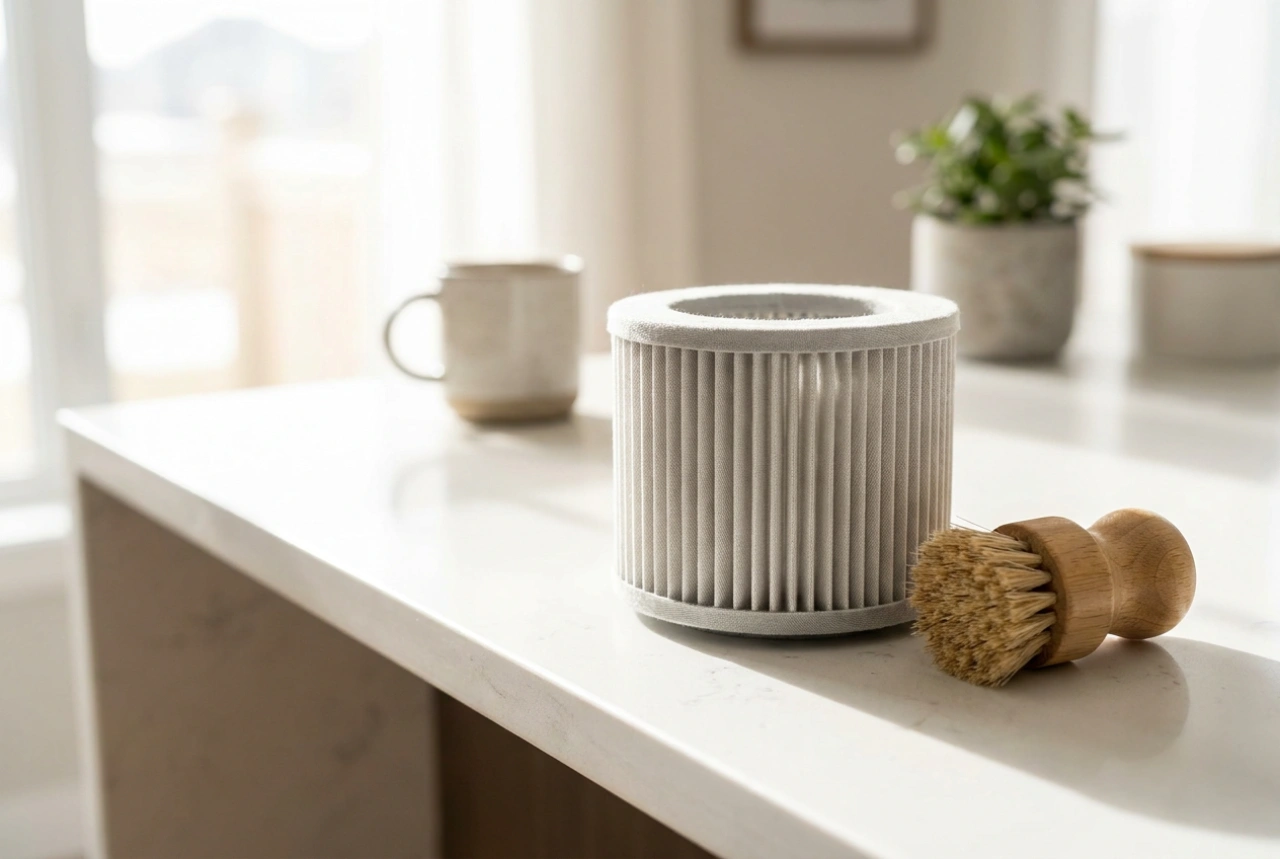
- Mechanical Cleanliness: A dirty roller brush or a worn rubber squeegee blade will drag dirty water across the floor, leaving linear streaks. Clean the roller and wipe down the squeegee after every use to ensure even suction pressure.