

Extracting embedded grime from vehicle upholstery using a spray-extraction vacuum requires a precise balance of chemistry, mechanical agitation, and fluid dynamics to avoid unsightly water stains. When executed incorrectly, capillary action pulls deep-seated dirt to the surface during drying, resulting in dark, unsightly rings and streaks.
The Chemistry of Pre-Treatment: Breaking Surface Tension
A common error is spraying detergent and immediately vacuuming it away. To effectively lift bonded dirt, you must first break the surface tension of the water and allow the active agents to work. Surfactants feature hydrophilic heads and hydrophobic tails; they align at the interface of water and oil, encapsulating lipid-based grime and suspending it in the solution.
Apply a low-foaming pre-spray formulation evenly across the fabric. High-foaming detergents must be avoided, as excess foam disrupts the vacuum suction pump and traps air pockets in the textile weave, preventing thorough moisture removal. Allow the solution to dwell for five to ten minutes, but do not let it dry. During this time, use a soft-bristled upholstery brush in circular motions to mechanically loosen particles from the individual synthetic fibres without damaging the delicate pile.
The Physics of Extraction: Nozzle Technique and Dry Passes
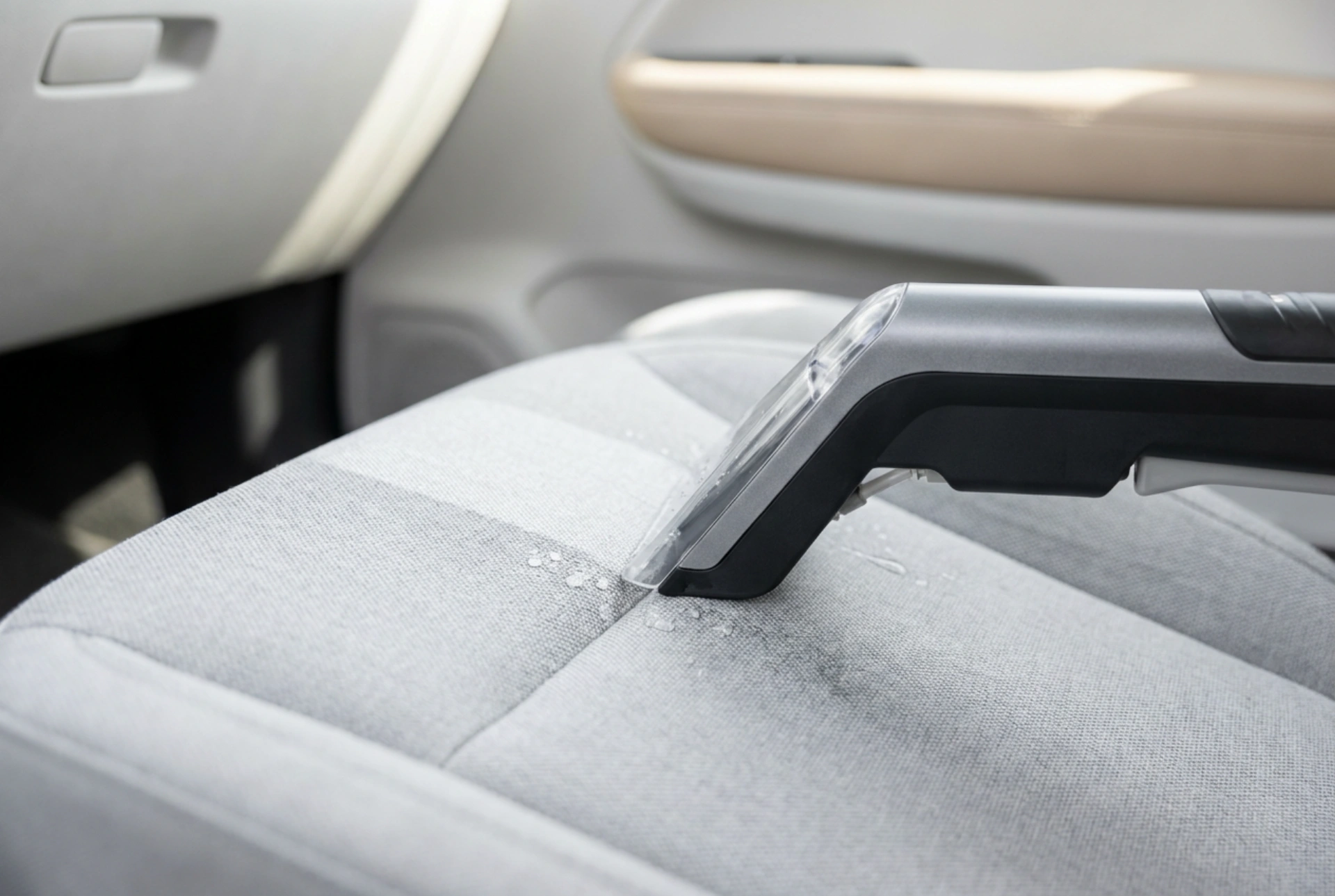
The primary mechanism of a spray-extraction vacuum is not washing, but the physical displacement of liquid. The extraction nozzle must be held at a consistent angle (typically forty-five degrees) to ensure a perfect seal against the textile. This seal is critical; any loss of vacuum pressure decreases the air velocity, leaving contaminated water deep within the seat padding.
Work in structured, overlapping lanes. For every wet pass (where water is sprayed and immediately pulled back), you must perform at least two to three 'dry passes'—dragging the extraction head slowly over the area without releasing any fluid. Watch the transparent nozzle dome; continue making dry passes until you no longer see water droplets being pulled into the chamber. This ensures you remove the moisture trapped not just in the top fabric layer, but also in the polyurethane foam beneath.
Understanding Wick-Back: The Root Cause of Stains
Water stains, often called tide marks, are the direct result of capillary action. When the surface of a car seat dries faster than the damp foam core underneath, a pressure differential is created. The moisture from the deeper, dirtier layers of the foam travels upward toward the drier surface fibres. As this water evaporates into the air, it leaves behind the dissolved minerals and suspended dirt it carried from the depths, forming a concentrated ring of soil.
To prevent this phenomenon, you must ensure the core of the seat remains as dry as possible during the cleaning process. This is achieved by limiting the volume of water sprayed, avoiding over-saturation, and executing thorough extraction passes. If a seat is highly soiled, it is far safer to perform two light cleaning cycles with drying time in between than one heavily saturated wash.
The Neutralising Rinse: Preventing Resoiling and Stiffness
Most heavy-duty upholstery cleaners are alkaline, with a pH ranging from nine to eleven. If left to dry in the fabric, these alkaline residues act like magnets for fresh dust and oils, leading to rapid resoiling. Additionally, dried detergent crystals coat the fibres, making the fabric feel stiff, rough, and uncomfortable.
To combat this, the final rinse step in your extraction machine should utilise a slightly acidic rinsing agent (typically containing citric or sulfamic acid with a pH of three to four). This neutralisation reaction converts the alkaline residues into soluble salts that are easily extracted, restoring the natural pH of the fibres. This process stabilises dyes, prevents browning, and leaves the fabric feeling soft and clean.
Active Drying Protocols: Eliminating Residual Moisture
The final phase of a streak-free clean is controlled, accelerated drying. Leaving a vehicle closed after extraction creates a microclimate of high relative humidity, slowing down evaporation and encouraging fungal growth or musty odours. Follow this drying protocol immediately after extraction:
- Absorption: Press clean, dry microfibre towels firmly onto the wettest areas of the seats to absorb any residual moisture near the surface through capillary transfer.
- Air Circulation: Position an axial air mover or a strong domestic fan to blow air directly across the treated seats. Moving air lowers the boundary layer of humidity directly above the fabric, drastically speeding up evaporation.
- Climate Control: If drying indoors or in cold weather, run the vehicle’s engine with the heater set to maximum and the air conditioning turned on (in recirculation mode). The air conditioning system acts as a dehumidifier, pulling moisture out of the air while the heat accelerates evaporation.