

Hanging wet laundry in a bathroom significantly increases indoor air humidity, which can lead to condensation and mould growth if not managed scientifically. Understanding the thermodynamics of evaporation and airflow allows you to dry clothes efficiently while keeping indoor moisture levels under control.
The Physics of Evaporation in Closed Bathrooms
To dry clothes, liquid water must undergo a phase transition into water vapour. This rate of evaporation is governed by three primary physical factors: ambient temperature, air movement, and the existing relative humidity of the room. In a confined space like a bathroom, the air volume is relatively small. As water evaporates from wet fibres, the relative humidity of the room quickly approaches saturation point (100% humidity). Once this limit is reached, the air can no longer hold additional moisture, and evaporation ceases entirely, leaving clothes damp for hours and encouraging fungal growth. Raising the temperature slightly increases the air's moisture-holding capacity, but without air exchange, saturation is inevitable.
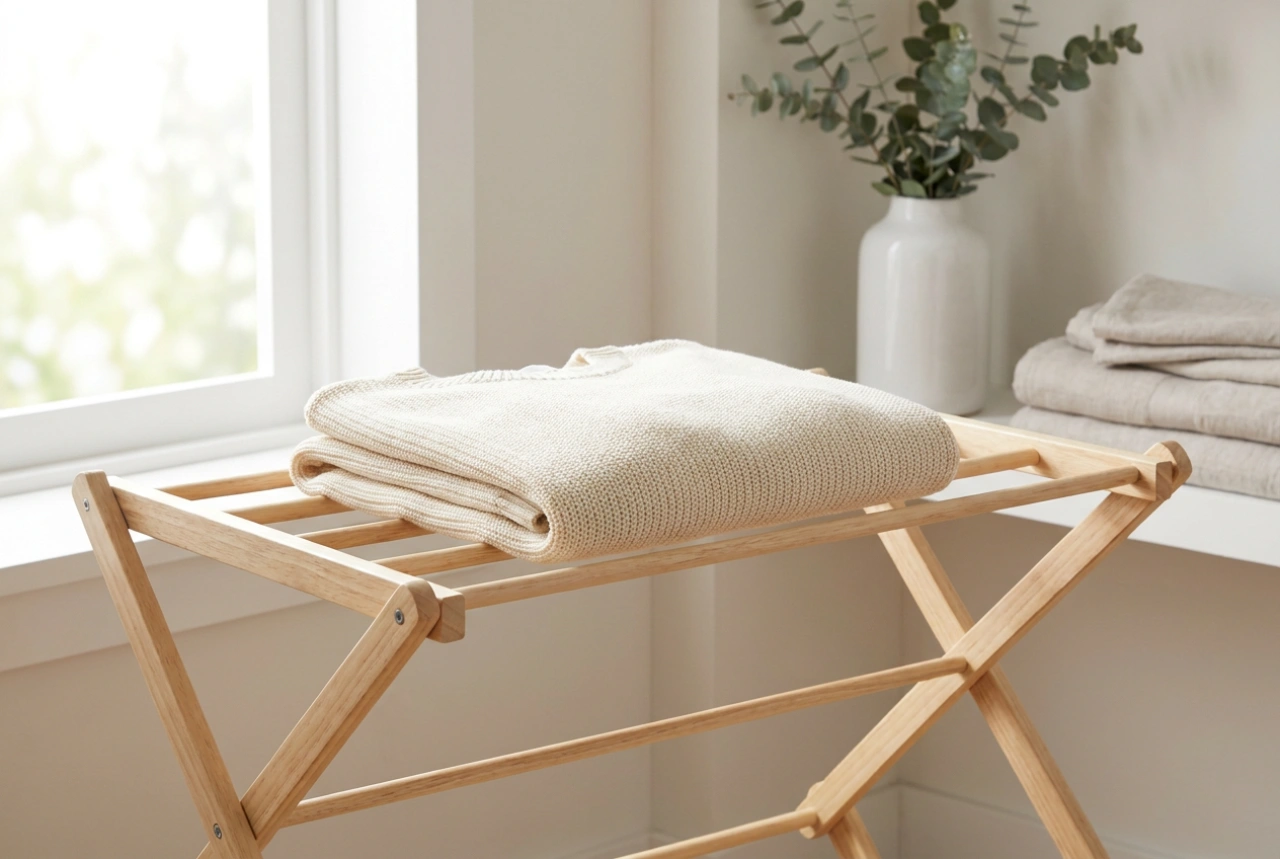
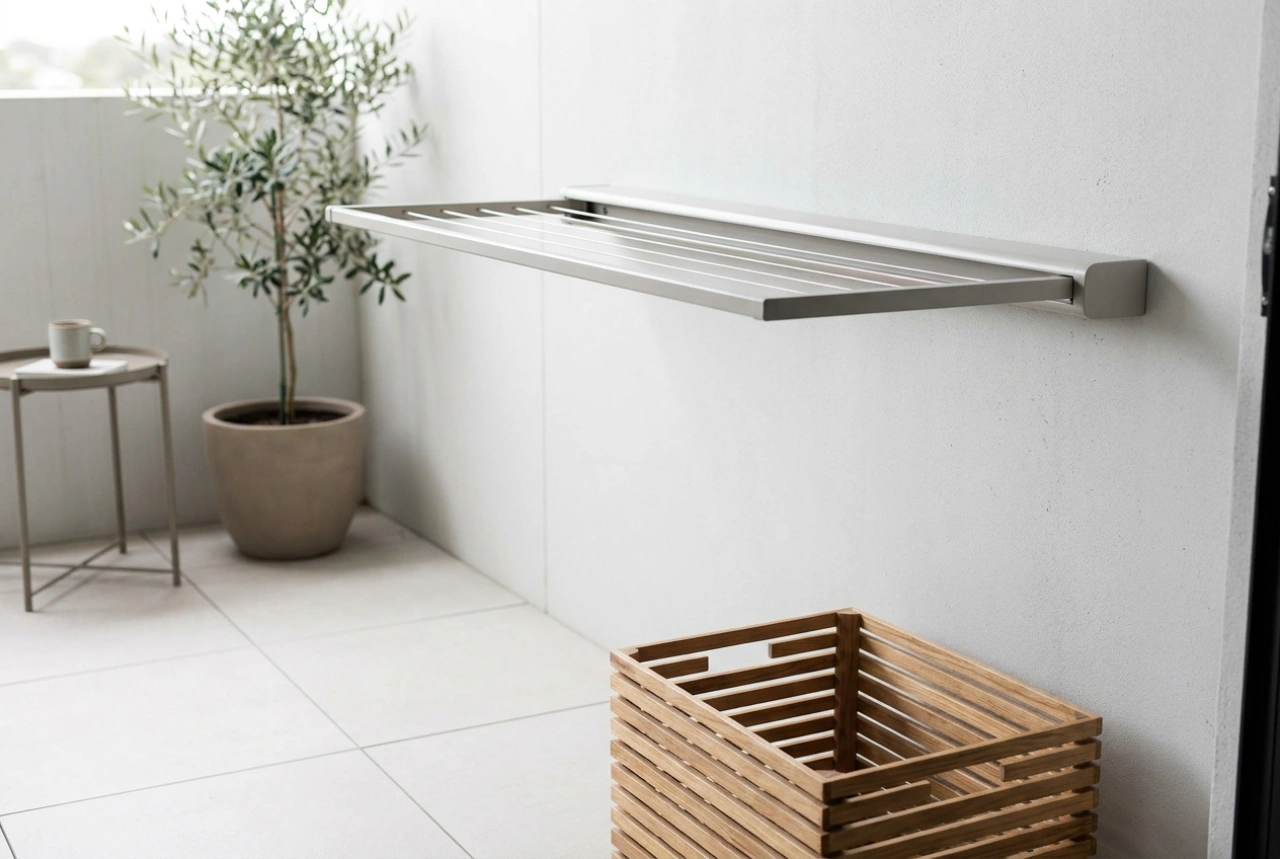
Optimising Drying Rack Design and Placement
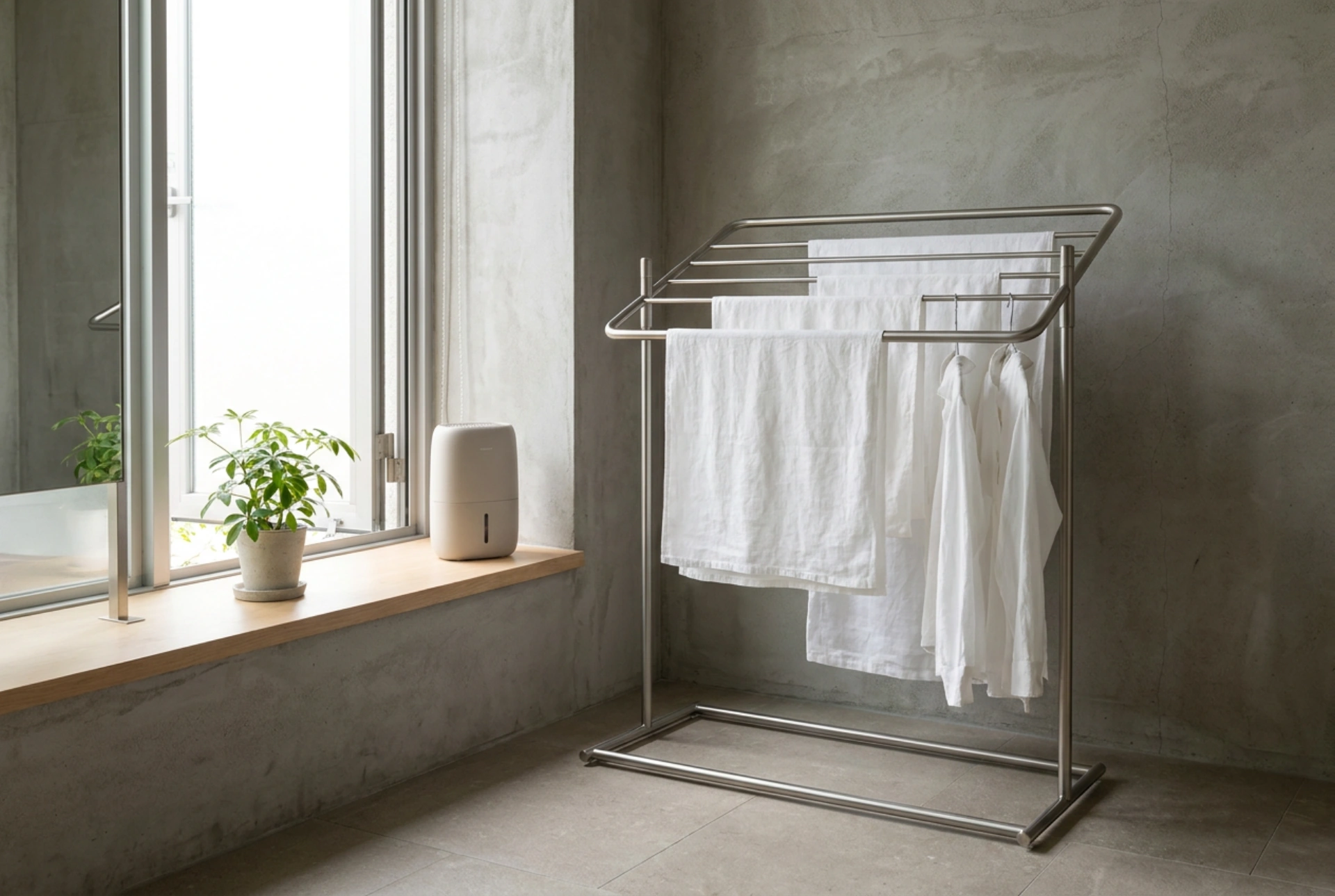
Maximising the efficiency of a bathroom drying rack requires tactical placement based on thermal convection. Warm air naturally rises because it is less dense than cold air. Utilizing a ceiling-mounted pulley rack or a tall tower rack allows you to position wet fabrics in these warmer, upper microclimates of the room. Furthermore, clothing must be arranged to permit unhindered airflow. When garments are crowded together, a boundary layer of stagnant, saturated air forms around each fabric layer. Hanging items with at least a five-centimetre gap ensures that convection currents can pass between them, stripping away this boundary layer and accelerating the drying process. Heavy items like towels should be placed near the outer edges of the rack where air movement is highest.
Managing Humidity with Ventilation and Physics
Active air exchange is the most direct method to prevent high humidity during the drying cycle. If your bathroom is equipped with a mechanical extraction fan, it should remain operational throughout the entire drying process and for at least one hour afterward. This creates a low-pressure zone that draws dry air from adjacent rooms while expelling humid air outside. For bathrooms with windows, employing cross-ventilation is highly effective. By cracking the bathroom window and opening a window in an opposite room, you harness wind pressure differentials to generate a continuous stream of dry air. If natural airflow is minimal, placing a simple electric fan near the base of the drying rack artificializes convection, keeping the air around the wet garments constantly moving and preventing local saturation.
Chemical and Mechanical Dehumidification
When natural ventilation is insufficient, mechanical or chemical dehumidification is necessary to protect the structural integrity of your bathroom. Electric condensation dehumidifiers operate by pulling humid air over an internal evaporator coil cooled to below the dew point. The moisture condenses into liquid water and drains into a tank, while the dry air is slightly warmed and recirculated back into the room. For a passive, energy-free solution, chemical absorbers utilising calcium chloride crystals are highly effective. Calcium chloride is an anhydrous, highly hygroscopic salt. It actively attracts water molecules from the surrounding air, binding with them to form a liquid brine solution. This chemical reaction continuously lowers the ambient relative humidity, protecting walls and ceilings from condensation.
Mechanical Pre-Treatment: The Spin Cycle
Reducing the drying time in the bathroom starts inside the washing machine. The energy required to mechanically extract water through centrifugal force is significantly lower than the energy required for thermal evaporation. Selecting a high spin speed, such as 1200 or 1400 RPM (revolutions per minute), mechanically expels a substantial percentage of free water from fabric pores before the clothes are even hung. For delicate fabrics that cannot withstand high spin speeds, a secondary, short spin cycle can be used, or the garments can be rolled in a dry, highly absorbent cotton towel first to extract excess liquid. Minimising the initial water load on the drying rack directly reduces the total volume of water vapour that must be managed by your bathroom's ventilation system.