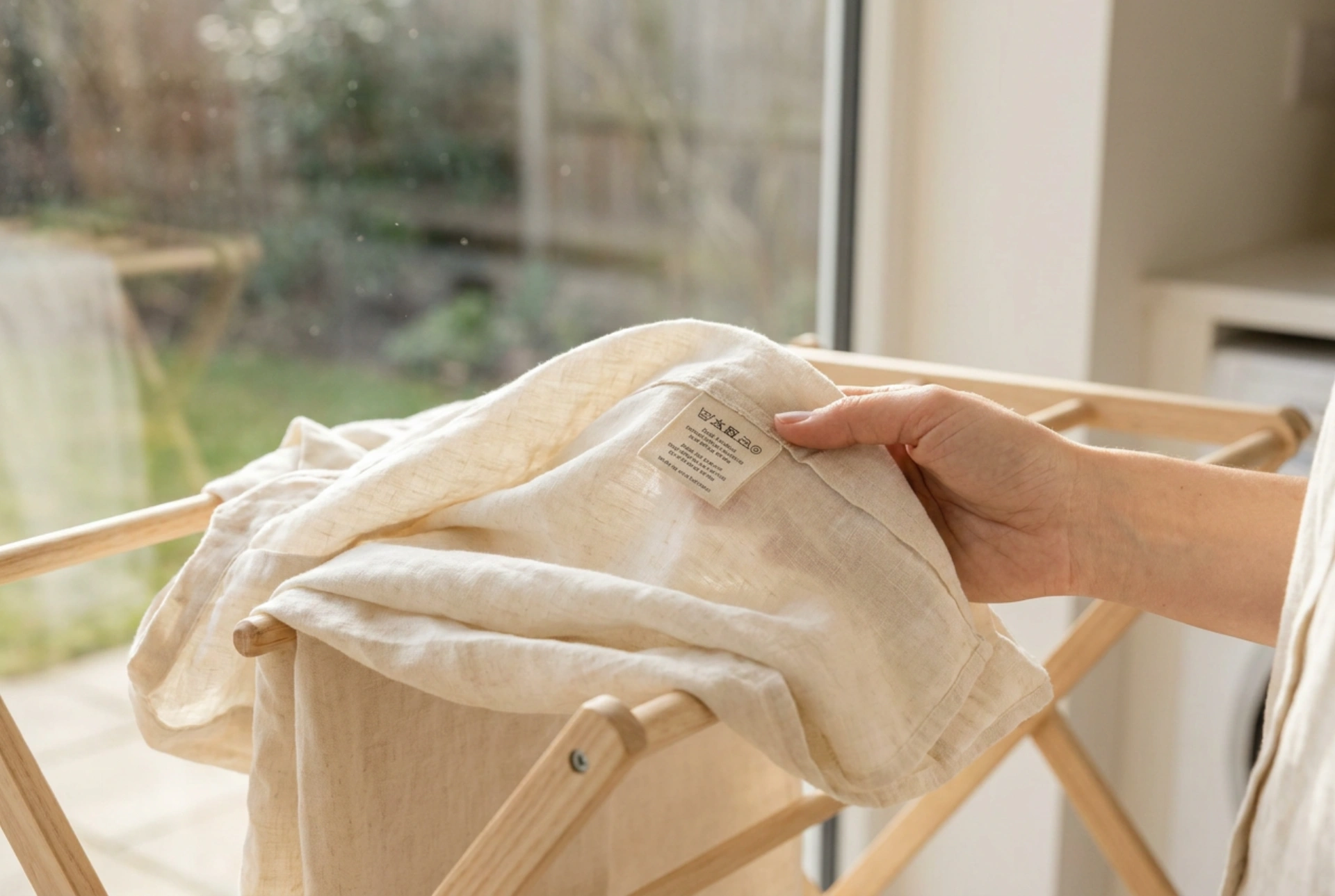


The "do not tumble dry" symbol—a square containing a circle with a bold cross through it—is a critical warning from textile manufacturers that mechanical heat and friction will permanently damage the garment's fiber structure. Ignoring this instruction can lead to irreversible shrinkage, fiber warping, and accelerated wear.
The Physics of Tumble Drying: Why Some Fabrics Fail
To understand why certain garments cannot tolerate tumble drying, we must look at the combination of heat, moisture, and mechanical agitation inside the drum. Tumble dryers operate by circulating hot air while rotating. This process creates continuous friction as fabrics rub against each other and the drum walls. For many fibers, this environment is highly destructive.
When fibers absorb water, they swell, and the intermolecular bonds—specifically hydrogen bonds in natural fibers like cotton and linen—become temporary and fluid. As water evaporates rapidly under high heat, new hydrogen bonds form in a compressed, agitated state, leading to what textile scientists call relaxation shrinkage. Furthermore, synthetic polymers have a specific glass transition temperature (Tg). If the dryer's temperature exceeds this threshold, the polymer chains become mobile and reform in a deformed shape, causing wrinkles that cannot be ironed out, or structural weakening.
Material-Specific Risks: Protein, Cellulose, and Synthetic Fibres
Different materials respond uniquely to the physical stresses of machine drying, which dictates whether they receive the do-not-tumble-dry designation.
- Animal Proteins (Wool and Silk): Wool fibres are covered in microscopic scales. When subjected to moisture, heat, and mechanical agitation, these scales expand and interlock permanently. This process, known as felting, causes irreversible shrinkage and hardening of the fabric. Silk, made of the protein fibroin, loses its tensile strength when wet and is easily abraded by the friction of the dryer drum, resulting in a dull, fuzzy surface.
- Cellulose Fibres (Linen and Cotton): Linen is made from flax fibres, which are highly inelastic. High-velocity tumbling breaks these brittle fibres, causing excessive linting and weakening the fabric structure. While cotton is more resilient, delicate weaves or loose-knit structures will undergo severe dimensional changes when dried too quickly.
- Elastic Synthetics (Elastane and Spandex): Elastane provides stretch to modern clothing. However, polyurethane-based elastomeric fibres are highly sensitive to thermal degradation. Regular exposure to tumble dryer heat snaps these microscopic chains, causing garments to lose their recovery power, resulting in bagging, ripples along seams, and premature structural failure.
Scientific Alternatives to Machine Drying
When the care label prohibits tumble drying, the alternative drying method must match the structural needs of the fabric. The goal is to facilitate moisture evaporation without introducing mechanical stress or excessive heat.
Flat Drying (Drying Flat)
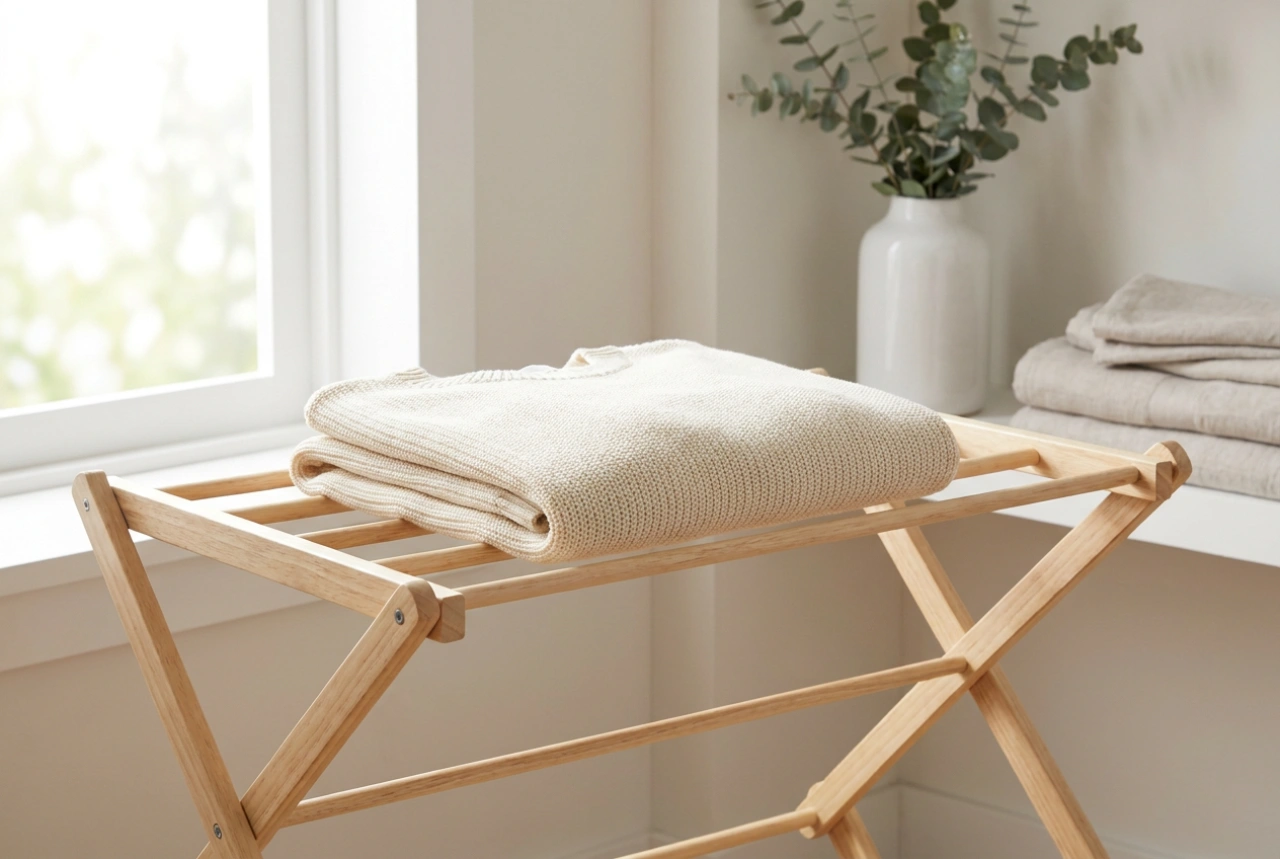
For heavy, knitted garments—especially woollens—flat drying is essential. When a wet garment is hung vertically, gravity pulls the trapped water downward. This concentrated weight stretches the softened fibres, permanently deforming the garment's shape. Laying the garment flat on a clean, horizontal mesh rack allows air to circulate from both above and below, promoting uniform evaporation without structural distortion.
Drip Drying and Line Drying
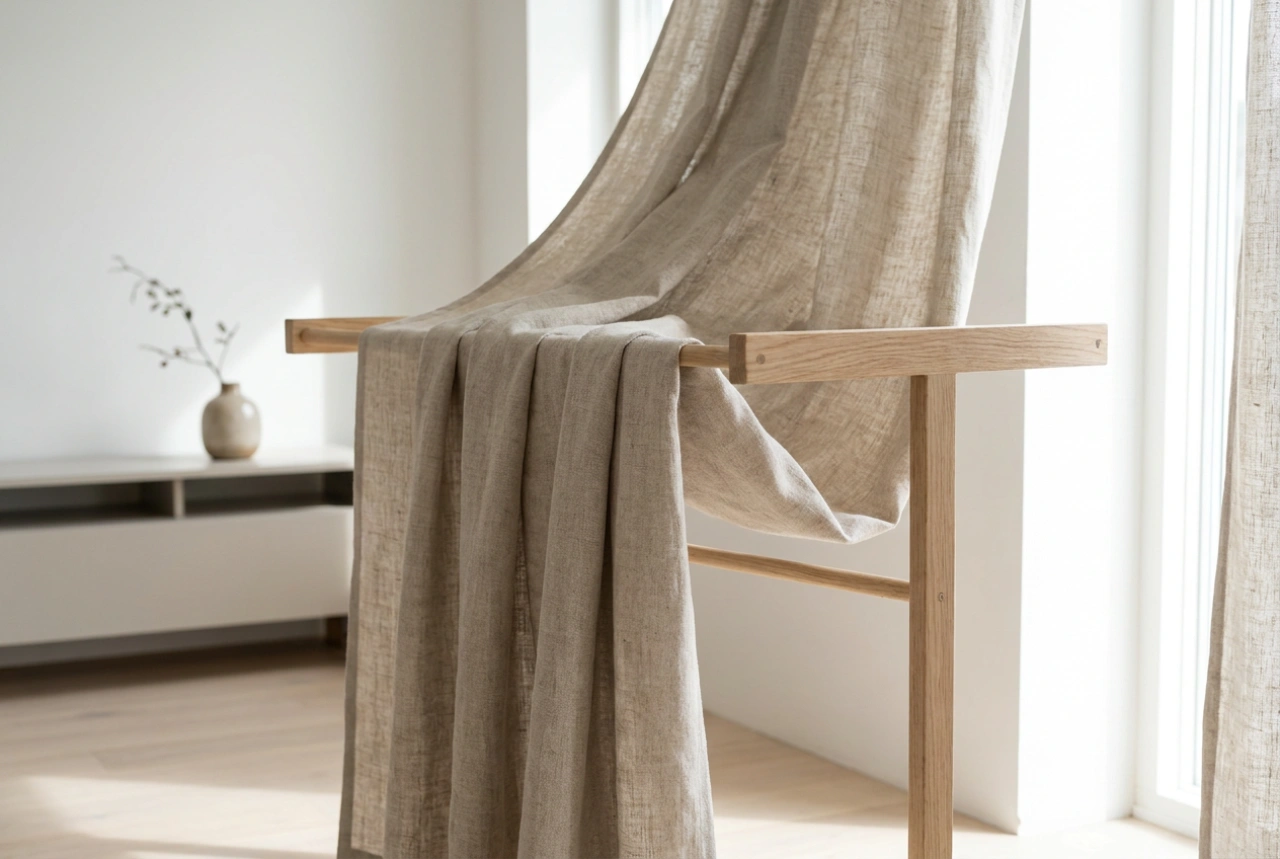
Woven garments made of linen, cotton, or robust synthetics can be hung. To optimize this process, hang garments from their strongest structural points, such as the waistband or shoulder seams, using non-marking clips. Ensure adequate spacing between items to maintain a low-humidity boundary layer, which accelerates the natural evaporation process. Indoors, placing a fan nearby to create a gentle cross-breeze is far more effective than heating the room, as moving air continually strips away the saturated micro-climate surrounding the wet fabric.
Navigating Drying Symbols on Labels
Understanding the nuances of laundry care symbols helps preserve textile longevity. While the crossed-out circle inside a square indicates an absolute ban on machine drying, other variations dictate specific thermal limits:
- One Dot: Safe to tumble dry only at low temperatures (typically up to 60°C), ideal for delicate synthetics.
- Two Dots: Safe for medium-heat drying (up to 80°C), suitable for standard cottons.
- Three Dots: Safe for high-heat drying, reserved for heavy-duty linens and cotton towels.
- Empty Circle in Square: Tumble drying is permitted at any temperature cycle.
By respecting these thermodynamic limits and mechanical boundaries, you can significantly extend the lifespan of your wardrobe, maintaining both the structural integrity and aesthetic qualities of your clothing.