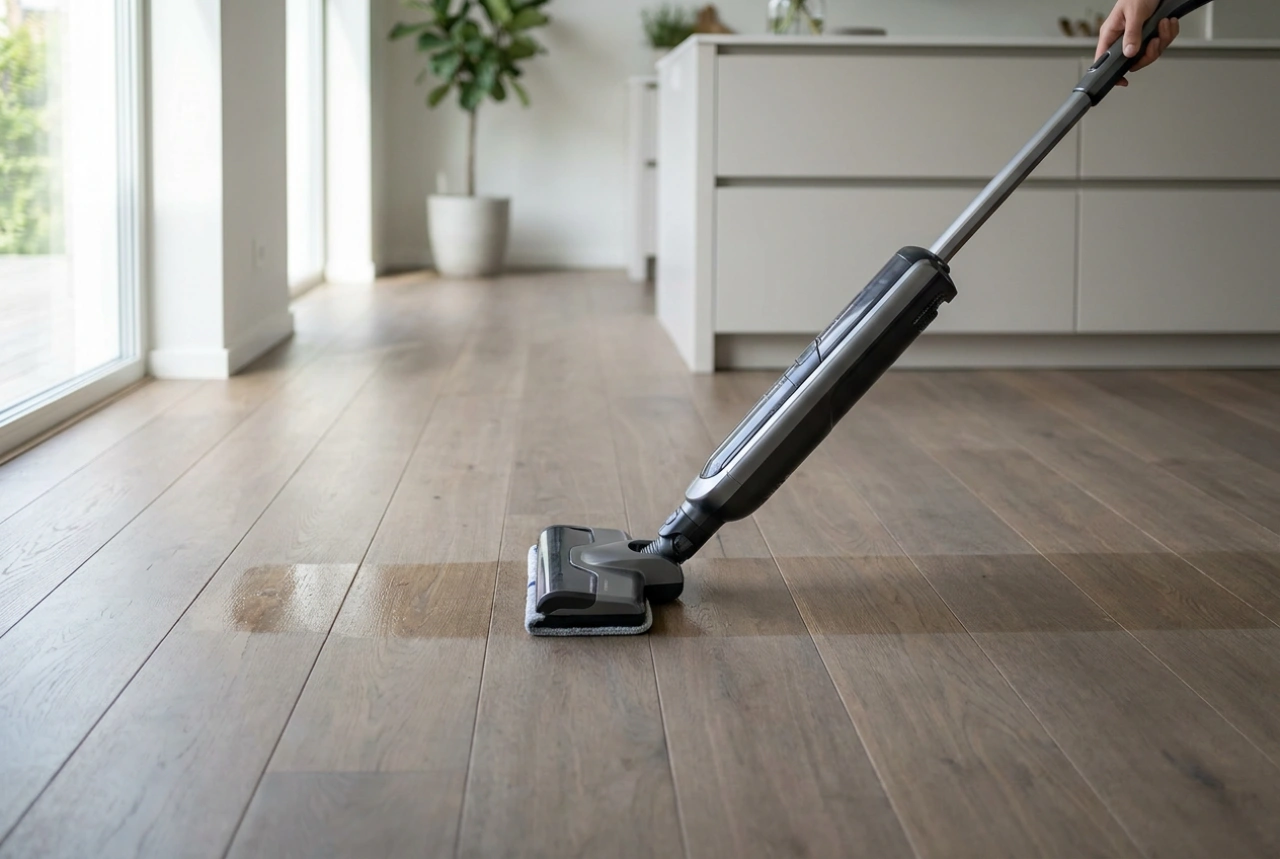


Cordless vacuums offer unparalleled agility, but their compact design makes them highly sensitive to airflow restrictions that degrade suction power. Maintaining maximum performance relies on understanding the physics of airflow, filtration, and battery thermal management.
The Physics of Vacuum Suction and Airflow
Unlike traditional corded vacuums with large, high-wattage motors, cordless vacuums rely on highly efficient, brushless DC motors operating in a compact space. These motors create a pressure differential: by spinning at high speeds, they force air outwards, creating a low-pressure zone inside the machine. Atmospheric pressure then pushes air—and the debris it carries—into the nozzle to fill this void. Because cordless systems have less raw power to spare, any impedance along the airflow path dramatically reduces this pressure differential. Maintaining suction is not about increasing motor power; it is about eliminating resistance in the aerodynamic circuit.
The Cyclonic Separation and Bin Dynamics
Most cordless vacuums use cyclonic separation to fling dust particles out of the air stream using centrifugal force. As air enters the cyclone chamber, it spins rapidly. Heavy particles hit the outer walls and fall into the bin, while cleaner air escapes through the centre. If the dust bin is filled past the maximum fill line, this cyclonic vortex is disrupted. Instead of separating, dust is sucked directly into the fine filters, clogging them instantly. Emptying the bin when it reaches three-quarters capacity preserves the vortex dynamics and prevents premature filter starvation.
Maintaining the Filtration Network
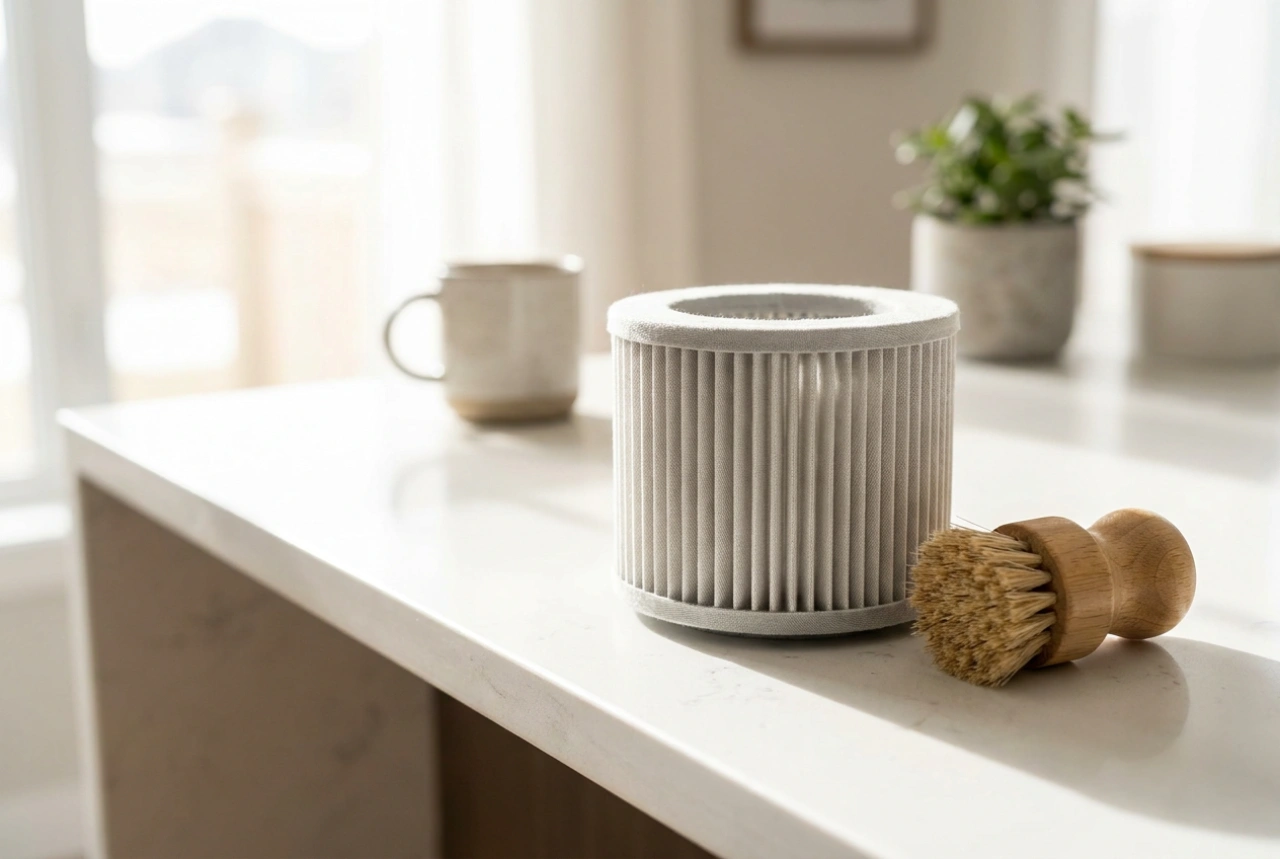
The filtration system is the final gatekeeper before clean air is exhausted back into your home. Over time, microscopic dust particles lodge deep within the porous fibres of the pre-motor and post-motor HEPA filters. This physically blocks the passage of air molecules, increasing static pressure and straining the motor. To restore airflow, filters must be cleaned systematically:
- Dry clearing: Tap the filter gently against a hard surface outdoors to release loose dust cakes. Never use sharp tools that can puncture the delicate synthetic mesh.
- Hydraulic rinsing: Rinse the filter under cold, running water without detergents. Avoid hot water, which can degrade the adhesive bonds holding the filter pleats together. Wash from the inside out to push dust back out the way it entered.
- Evaporation phase: Allow the filter to dry completely for at least 24 hours in a well-ventilated space. Reinserting a damp filter causes dust to immediately clump into an impermeable cement-like layer, permanently ruining the filter and risking moisture ingress into the motor.
Clearing Mechanical and Airway Obstructions
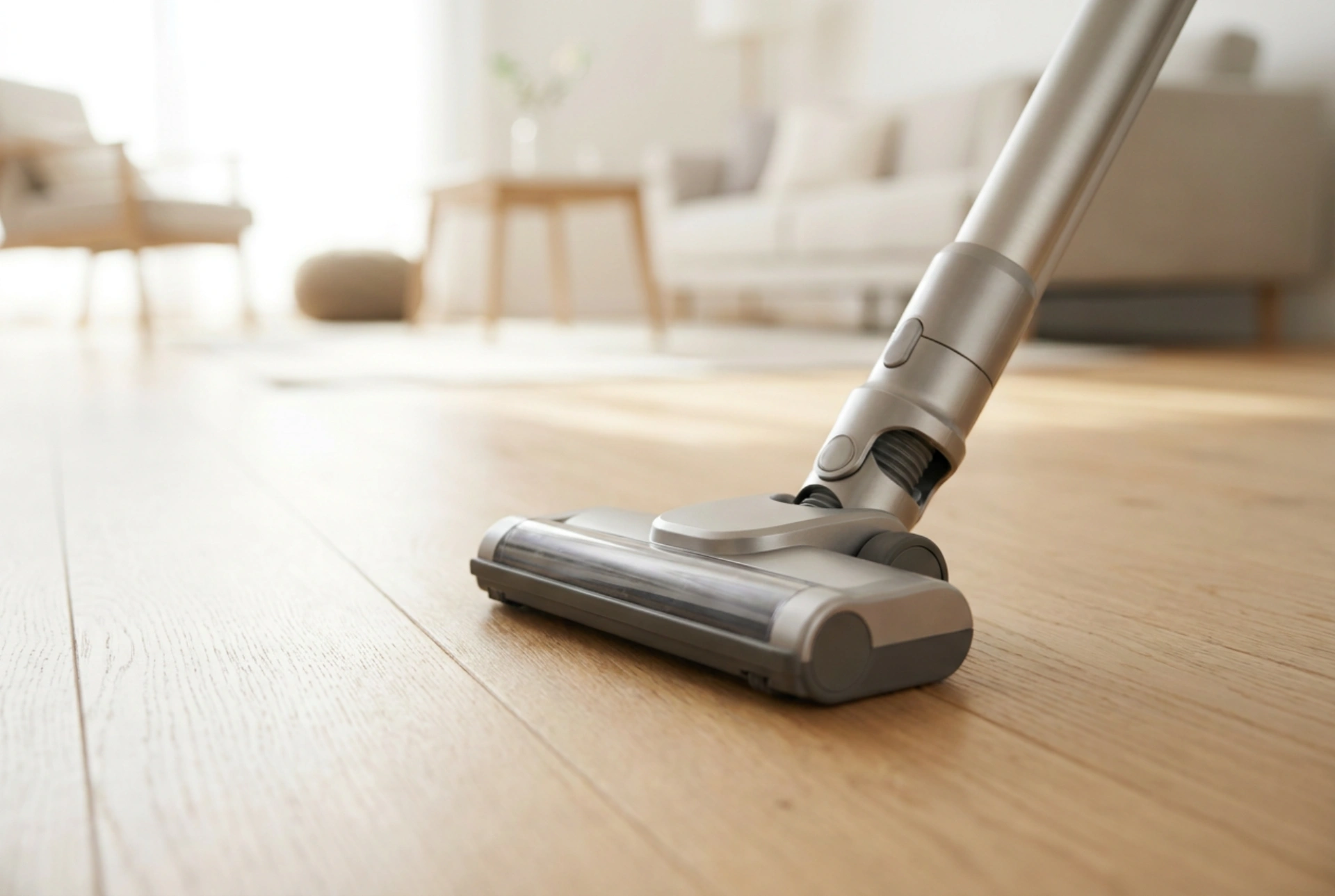
The brush bar and intake tubes are primary sites for physical friction. Hair, thread, and long fibres wrap tightly around the rotating brush roll. This creates rotational resistance, forcing the small electric motor driving the brush bar to draw more electrical current. This extra load drains the battery faster and slows down the agitation process, reducing the amount of dirt lifted into the air stream. Use scissors to cut along the designated groove of the brush roll to release wrapped fibres without damaging the nylon bristles. Additionally, inspect the flexible neck hose and the metal wand for static-cling debris, which can constrict the internal diameter of the airway.
Battery Conservation and Thermal Management
The suction power of a cordless vacuum is directly tied to the voltage output of its lithium-ion battery pack. As a battery heats up during high-demand tasks (such as using boost mode on thick carpets), its internal resistance increases. This resistance causes a voltage drop, which translates directly to a decrease in motor RPM and suction. To maximise battery health and maintain steady power delivery, avoid using maximum power modes for extended periods. Allow the battery to cool down to room temperature before plugging it in to charge, as charging a hot lithium-ion cell accelerates chemical degradation and permanently lowers its capacity.