

While manual scrubbing and domestic carpet shampooers seem to offer a quick fix for stained textiles, they often trap dirt deeper within the fibers instead of removing it. True restorative textile cleaning relies on professional spray-extraction, a process grounded in fluid dynamics and surface chemistry that physically removes suspended contaminants from deep within the pile.
The Physics of Deep Extraction Versus Surface Friction
Manual carpet washing relies heavily on mechanical friction—scrubbing with brushes or sponges. This action disperses the stain horizontally and pushes heavy soil particles down into the primary and secondary backing of the carpet. Once dry, these embedded particles act as abrasives, cutting carpet fibers at their base under foot traffic.
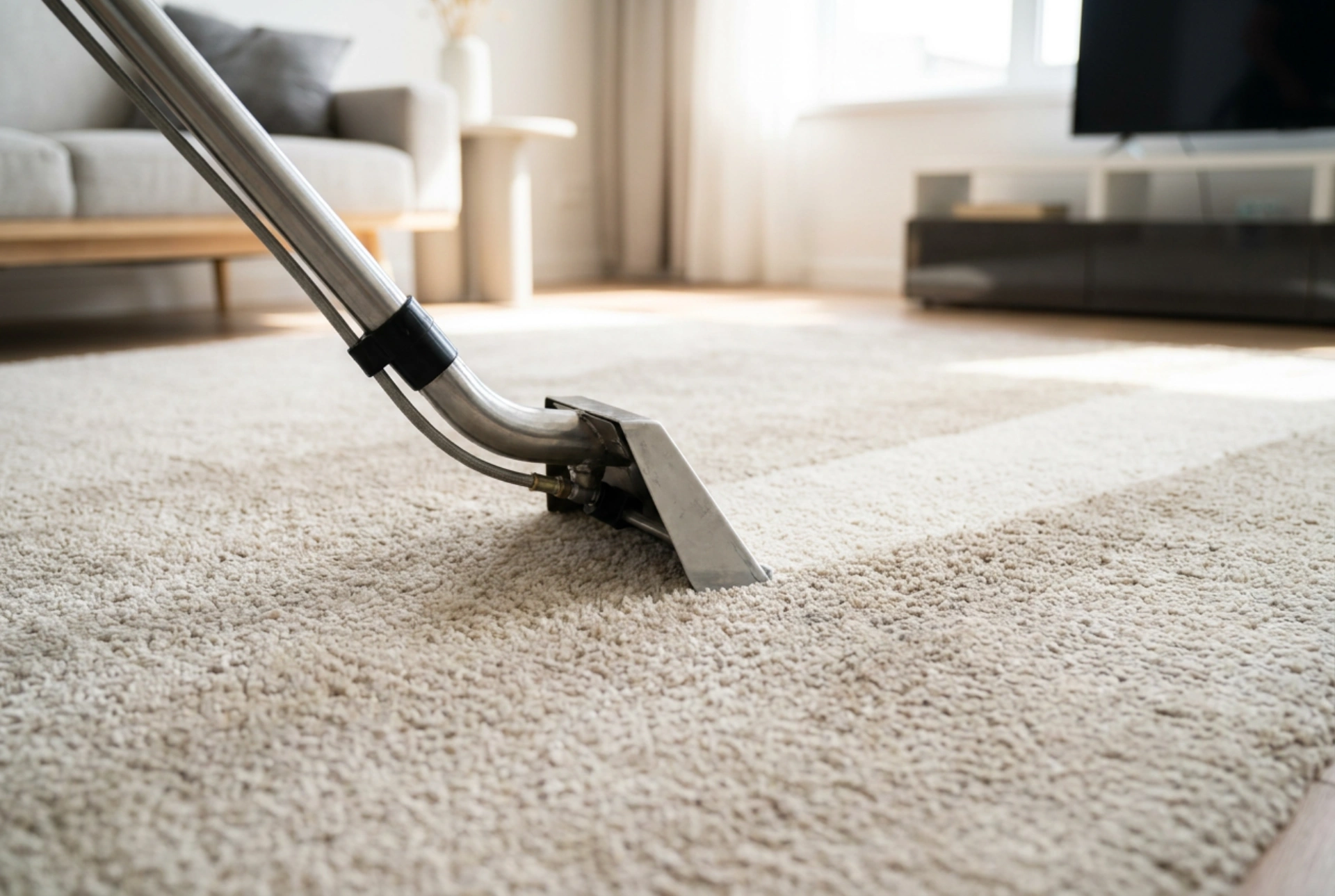
In contrast, professional spray-extraction machines utilize pressure and high-lift vacuum suction. The machine injects a pressurized stream of water mixed with a low-foaming surfactant deep into the pile. Instantly, a powerful vacuum nozzle, positioned mere millimeters from the surface, pulls the liquid back out. This creates a high-velocity air stream that lifts the water, along with suspended soil, oil, and dander, out of the textile. By avoiding physical scrubbing, the structural integrity of delicate wool or synthetic loops is completely preserved.
The Chemistry of Surfactants and the Danger of Re-Soiling
One of the biggest pitfalls of manual cleaning is the overuse of soapy detergents. When you scrub a carpet with household detergent, rinsing it thoroughly is almost impossible. As the moisture evaporates, a sticky surfactant residue remains on the fibers. This residue acts like a magnet for airborne dust and dirt from shoes, leading to rapid re-soiling—a phenomenon where the carpet becomes dirtier faster after cleaning than before.
Professional cleaning solves this through chemical balance and pH neutralization. The process typically involves applying a pre-spray to break the molecular bonds between oily soils and the fibers. After allowing sufficient dwell time for the chemistry to work, the spray-extraction machine rinses the carpet using a slightly acidic rinse agent. This neutralizes the alkaline pre-spray, breaks down any sticky residues, and leaves the fibers at a neutral pH (around 5.5 to 7), which restores the natural softness of the pile and prevents rapid re-soiling.
Moisture Control: Preventing Backing Rot and Mold
Water damage is a major risk when manually washing carpets or using low-powered domestic machines. Excess water that penetrates the carpet backing cannot be extracted by standard household vacuums. This trapped moisture creates a breeding ground for mold, mildew, and bacteria within 24 to 48 hours, often resulting in musty odors and the decay of natural jute backings.
Professional-grade extraction equipment features high-vacuum motors capable of reaching water lift ratings of over 3000 mm H2O (approx. 30 kPa). This immense suction power ensures that over 90% of the injected water is immediately recovered. The carpet fibers remain only slightly damp to the touch, allowing the entire textile to dry completely within 4 to 8 hours through natural evaporation, eliminating the risk of microbial growth.
The Correct Extraction Technique for Professional Results
Achieving a professional finish requires precise physical technique and systematic overlapping passes. The process should always follow a structured sequence to maximize soil recovery and prevent fiber distortion:
- Dry Soil Recovery: Always perform a thorough, slow vacuuming pass using an upright vacuum with a brush roll to remove dry, insoluble grit before introducing moisture.
- Pre-treatment: Apply the cleaning agent uniformly and let it dwell for 10-15 minutes to chemically loosen bound oils. Do not let it dry out.
- The Wet Pass: Pull the extraction wand slowly toward you in straight, parallel lines while pulling the trigger to inject the rinsing solution. Keep the transparent wand head flat against the textile to maintain a vacuum seal.
- The Dry Pass: Immediately follow each wet pass with one or two "dry passes" (vacuuming without spraying water) to pull out the remaining moisture and suspended dirt.
- Overlapping: Overlap each pass by approximately two centimeters to ensure no strips of dirty carpet are missed.