

Using a handheld extraction cleaner is one of the most effective ways to remove deep-seated dirt, oils, and stubborn stains from your sofa's fabric. However, achieving professional-grade results requires more than just spraying soapy water; it demands a precise understanding of fibre chemistry, fluid dynamics, and mechanical suction techniques.
The Physics and Chemistry of Extraction Cleaning
At its core, a handheld extraction cleaner operates on a simple thermodynamic and physical principle: injecting a pressurized cleaning solution into fabric fibres to dissolve and bind with contaminants, followed immediately by high-vacuum suction to pull the liquefied dirt out. This process relies heavily on surfactants. Surfactants lower the surface tension of water, allowing it to penetrate deep into the woven structure of the upholstery rather than sitting on top of it. One end of the surfactant molecule is hydrophilic (water-loving) and the other is lipophilic (fat-loving). This dual nature allows the solution to encapsulate oily residues from skin contact and suspend them in the water, making extraction possible.
Water temperature also plays a critical role in this chemical process. Warm water increases the kinetic energy of the molecules, accelerating chemical reactions and softening fats and oils embedded in the fibres. However, excessive heat can shrink wool or melt delicate synthetic glues used in some backing fabrics, so maintaining a warm but not boiling temperature is key.
Understanding Your Sofa's Fabric Code
Before introducing moisture to your furniture, you must identify the material composition. Check the care label for the cleaning code:
- W: Wet cleaning. Safe for water-based cleaning agents and extraction machines. This is typical for synthetic fibres like polyester and nylon.
- S: Solvent-based cleaning only. Do not use an extraction cleaner; water will cause shrinkage, dye bleeding, or water rings.
- WS: Water or solvent-based. Safe for extraction, but caution must still be exercised regarding temperature and chemical concentration.
- X: Vacuum only. No liquids allowed. Professional dry-cleaning methods are required.
Step-by-Step Order of Operations
To avoid trapping dirt deeper into the weave, you must follow a strict order of operations. Skipping the initial dry phase is the most common cause of muddy streaks and musty odours.
1. Thorough Dry Vacuuming
Before applying any liquid, use a standard dry vacuum with an upholstery attachment to remove loose dust, hair, and grit. If wet first, these dry particles turn into a microscopic paste that penetrates deep into the cushion foam, making it significantly harder to extract.
2. Targeted Pre-Treatment and Dwell Time
Mix a specialized low-foaming upholstery detergent with warm water in your machine's clean tank. For heavy stains, apply a pre-treatment solution directly to the area. Allow a dwell time of three to five minutes. This period is crucial; it gives the chemical agents time to break the electrostatic bonds between the soil particles and the fabric fibres. Use a soft-bristled brush to gently agitate the fibres in circular motions, ensuring the solution distributes evenly.
3. The Extraction Technique
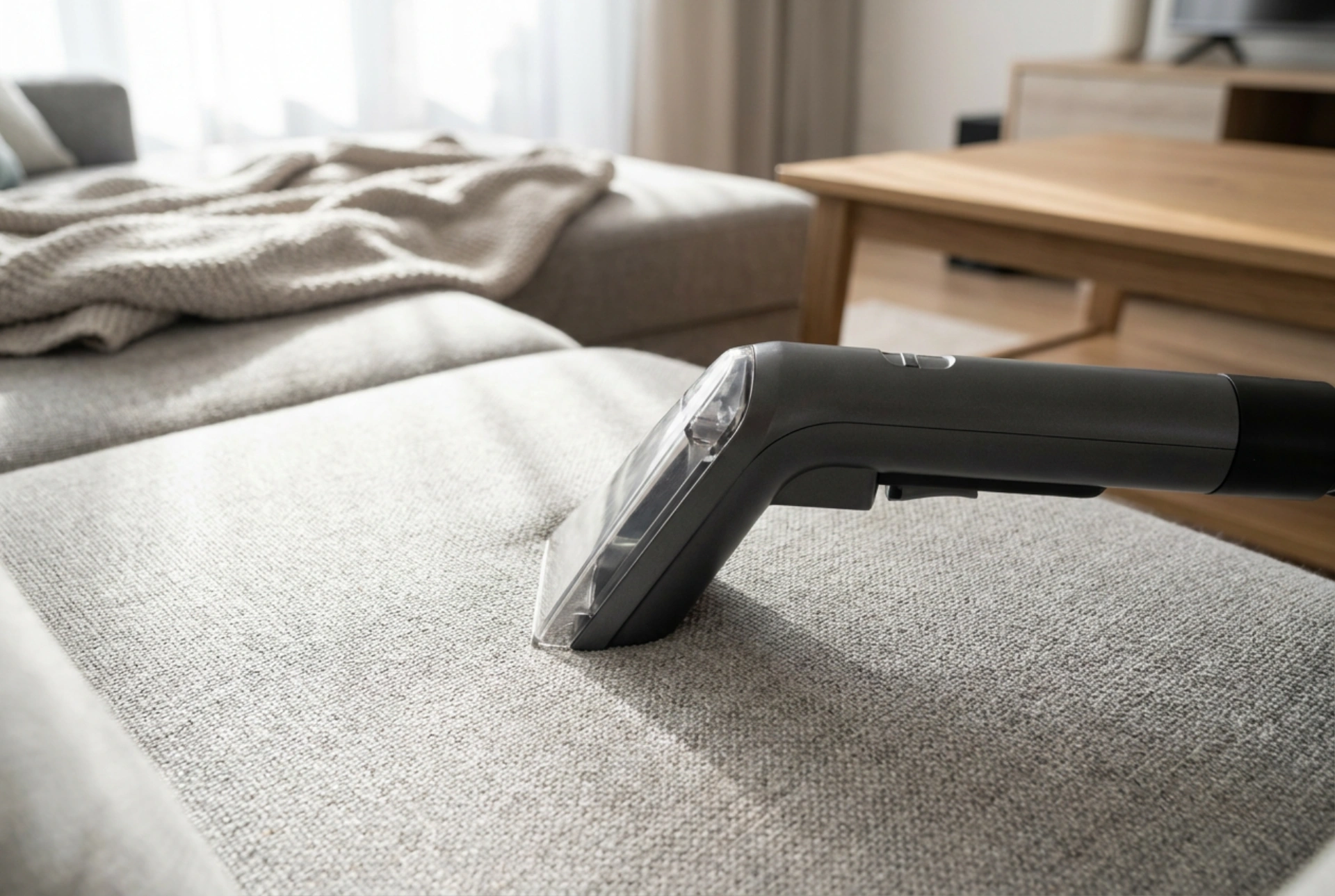
Turn on the extraction machine and place the nozzle firmly against the fabric. The key to successful extraction is maximizing the vacuum seal. Tilt the nozzle head slightly forward so the suction slit makes flat, continuous contact with the material. Pull the nozzle toward you in slow, steady strokes while pressing the spray trigger. Do not rush; the vacuum needs time to draw the liquid out of the deep pile.
4. The Rinsing and Dry Passes
After a wet pass, perform multiple dry passes over the same area without pulling the spray trigger. Watch the clear plastic window of the nozzle. Continue making dry passes until you no longer see water being pulled into the nozzle. This is critical to prevent overwetting, which can lead to mould, mildew, and weakened fabric structures.
Post-Cleaning Drying Phase
Once extraction is complete, the fabric will feel slightly damp. To prevent water rings—which occur when minerals in the remaining water migrate to the dry edge of the fabric as it evaporates—speed up the drying process. Increase airflow by opening windows or directing a household fan toward the sofa. Keep the room temperature moderate to encourage rapid evaporation without causing thermal damage to synthetic fibres.