

Clearing cold ash from your fireplace or pellet stove is essential for safety, but the fine particulate matter can quickly clog your ash vacuum filter, reducing suction power and putting strain on the motor.
The physics of ash filtration
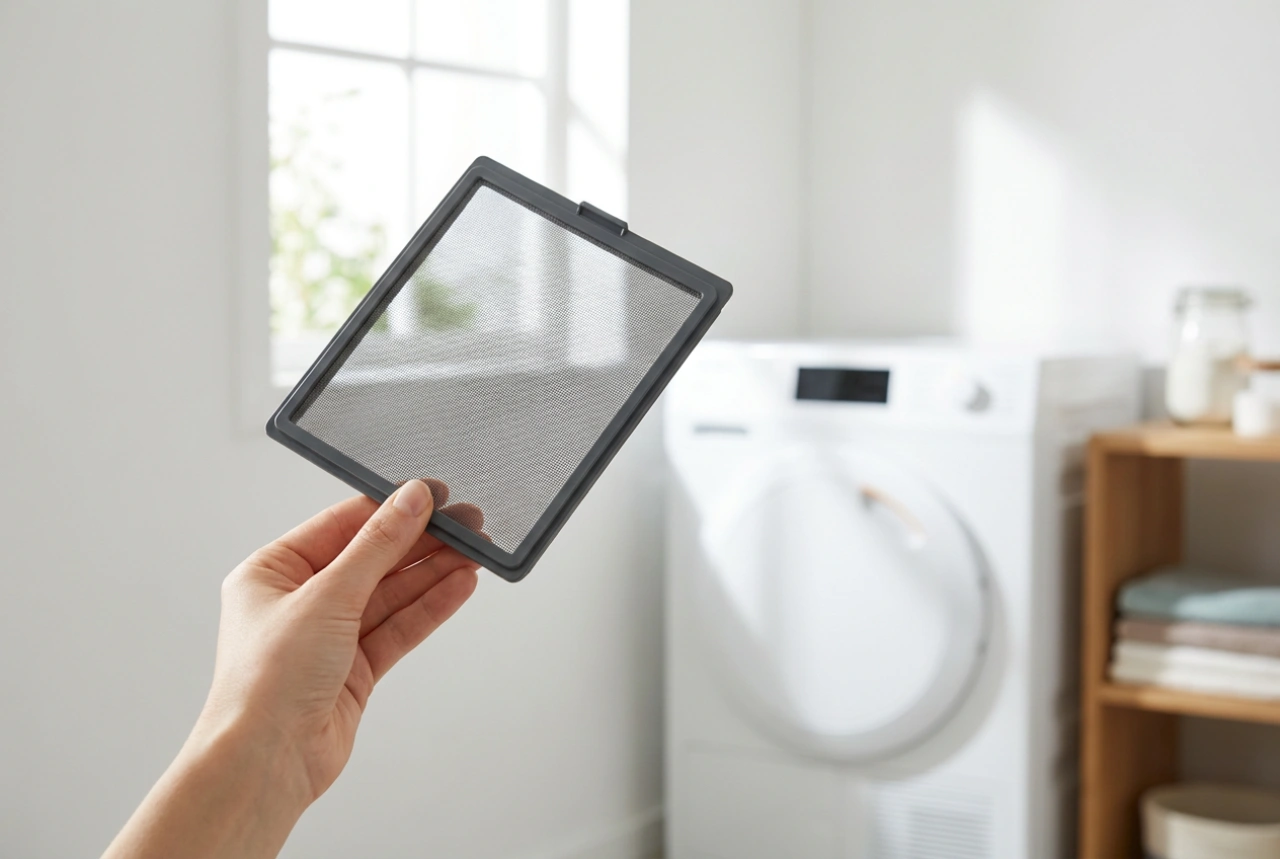
Unlike regular household dust, wood ash consists of extremely fine mineral particles, primarily calcium carbonate, potash, and oxides of silicon and aluminum. These microscopic particles are highly abrasive and carry a static charge that causes them to cling tenaciously to filter media. Ash vacuum filters typically use a combination of a pleated paper or synthetic HEPA element and a protective metal mesh or fabric pre-filter. Understanding how these layers interact is key to cleaning them without destroying the delicate materials.
The dry cleaning process: tapping and brushing
Never rush to use water on a dirty ash filter. When ash mixes with water, it creates an alkaline paste (similar to lye) that can permanently cement itself inside the pores of the filter material. Always start with dry decontamination.
- Isolate the workspace: Take the vacuum canister outdoors or work inside a large, deep bin to prevent the fine dust from recirculating into your living space.
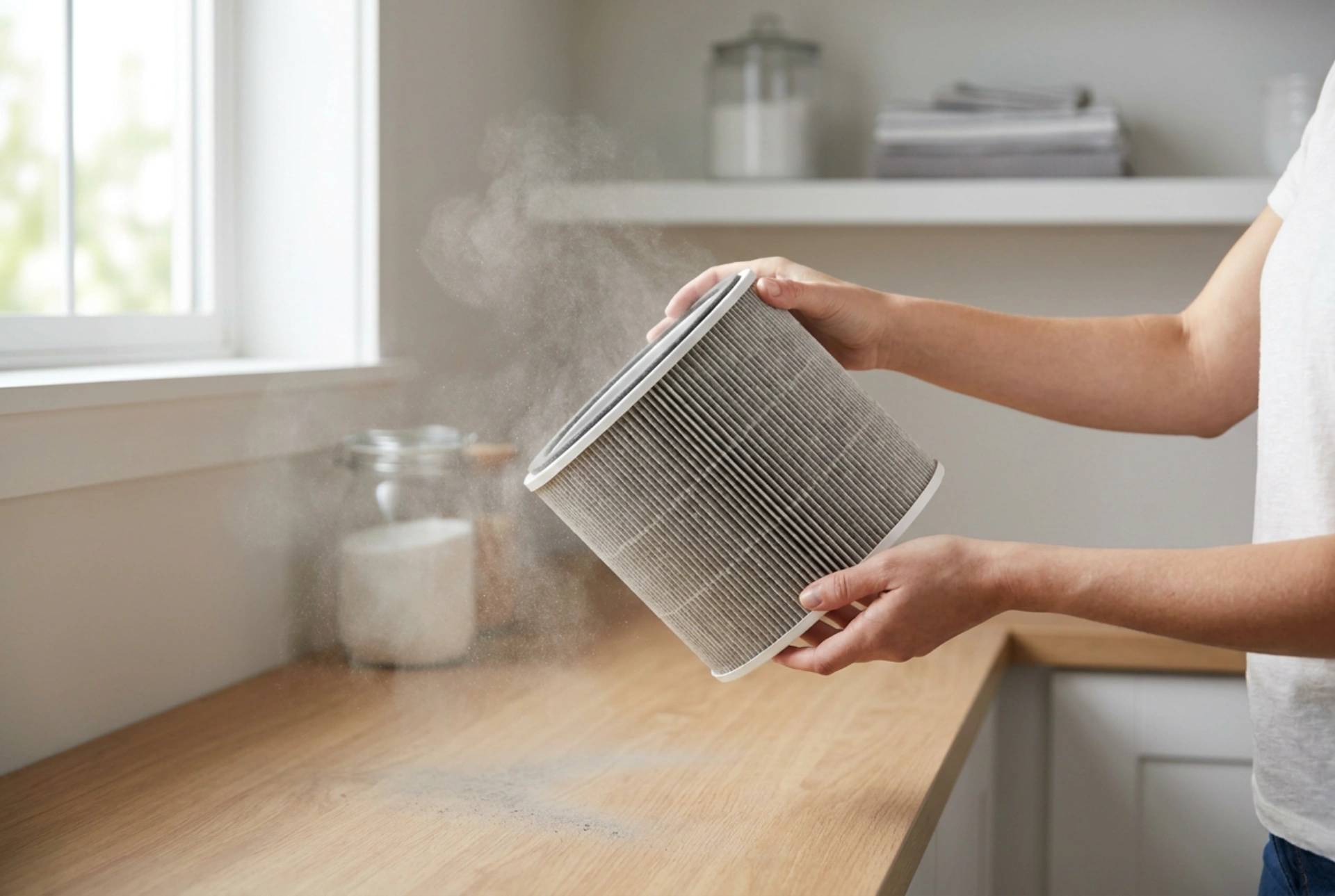
- Gentle mechanical agitation: Remove the filter assembly carefully. Holding the solid plastic rim of the filter, gently tap it against the inside wall of your bin. Tap only on the rigid structure, never on the pleated material itself.
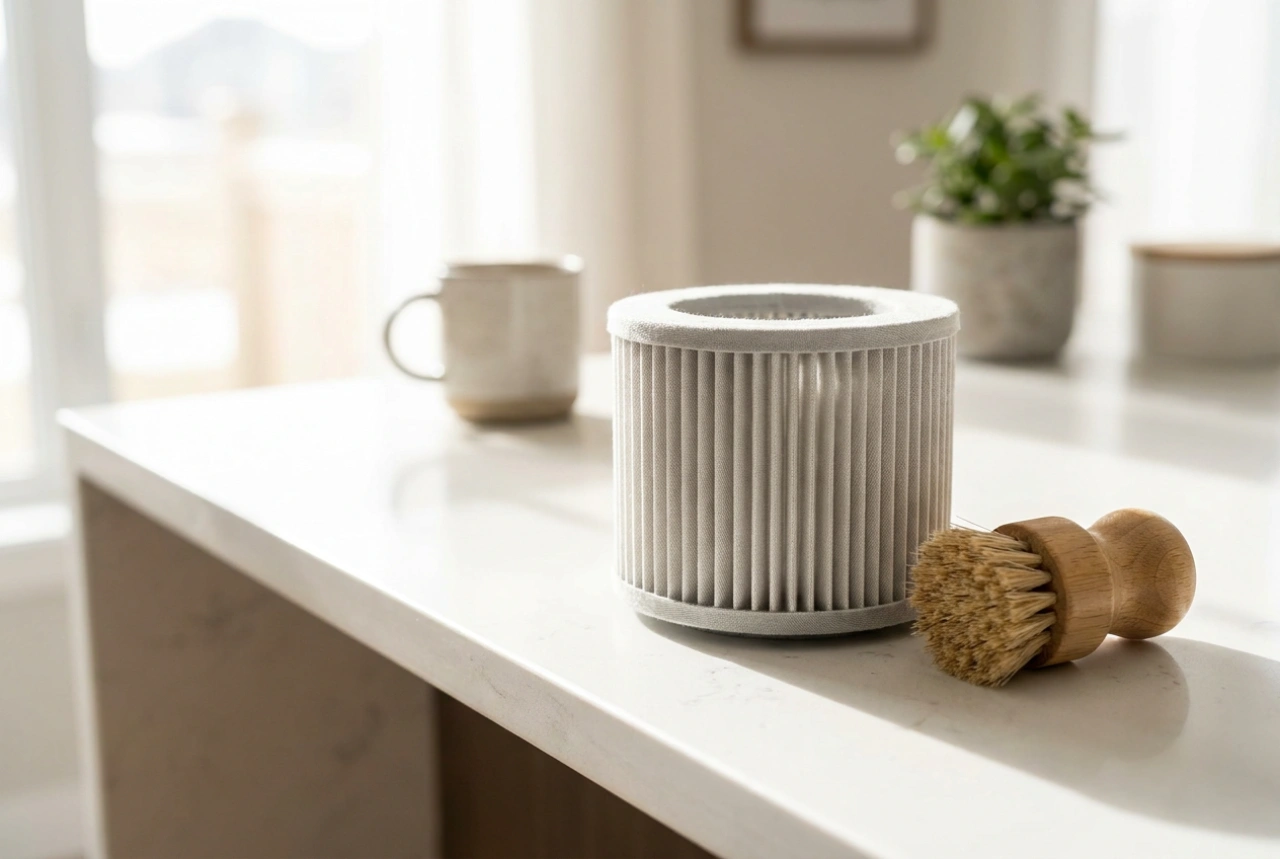
- Soft brushing: Use a soft-bristled brush, such as a clean paint brush, to sweep along the pleats. Work from the top down, guiding the dust out of the crevices. Avoid stiff wire brushes which can tear the synthetic fibers or puncture the paper mesh.
Using compressed air for deep particulate removal
If simple tapping does not restore sufficient airflow, compressed air can blow out the deeply embedded particles that are wedged between the fibers of the filter media.
- Direction of airflow: Always blow the compressed air from the inside of the filter outwards. This reverses the normal vacuum airflow and pushes the trapped particles out the way they came in, rather than forcing them deeper into the filter matrix.
- Pressure regulation: Keep the air pressure moderate, ideally under 30 PSI (2 bar). High pressure can tear microscopic holes in the delicate HEPA layer, rendering the filter useless at stopping fine dust from escaping into your room.
- Distance: Hold the air nozzle at least 15 to 20 centimeters away from the filter surface, moving it continuously in smooth, sweeping motions.
Wet cleaning and chemical considerations
Some ash vacuum filters are labeled as washable, but this step should only be performed after thorough dry cleaning has removed 95% of the bulk ash.
- Rinsing technique: Run lukewarm, low-pressure tap water through the filter from the clean side to the dirty side. Do not use high-pressure nozzles or pressure washers.
- No harsh detergents: Avoid acidic or highly alkaline cleaning agents, as they can degrade the synthetic adhesives holding the pleats together. A drop of mild dish soap is sufficient if there is soot residue.
- Complete dehydration: This is the most critical step. Allow the filter to air dry completely in a warm, well-ventilated area for at least 24 to 48 hours. Putting a damp filter back into an ash vacuum will cause the next batch of dry ash to instantly turn into concrete, permanently destroying the filter and potentially damaging the vacuum motor.