

Selecting a cordless vacuum cleaner that maintains consistent, high suction power requires understanding the relationship between motor design, airflow dynamics, and floor-to-nozzle sealing.
Understanding the Physics of Cordless Vacuum Suction
Suction power in cordless vacuums is determined by two main metrics: Air Watts (AW) and Pascal (Pa) pressure. Air Watts measure the overall efficiency of the airflow combined with power input, while Pascals indicate the raw vacuum seal pressure. For hard floors like wood, stone, or tile, high static pressure is essential for drawing out fine dust from deep crevices and grout lines.
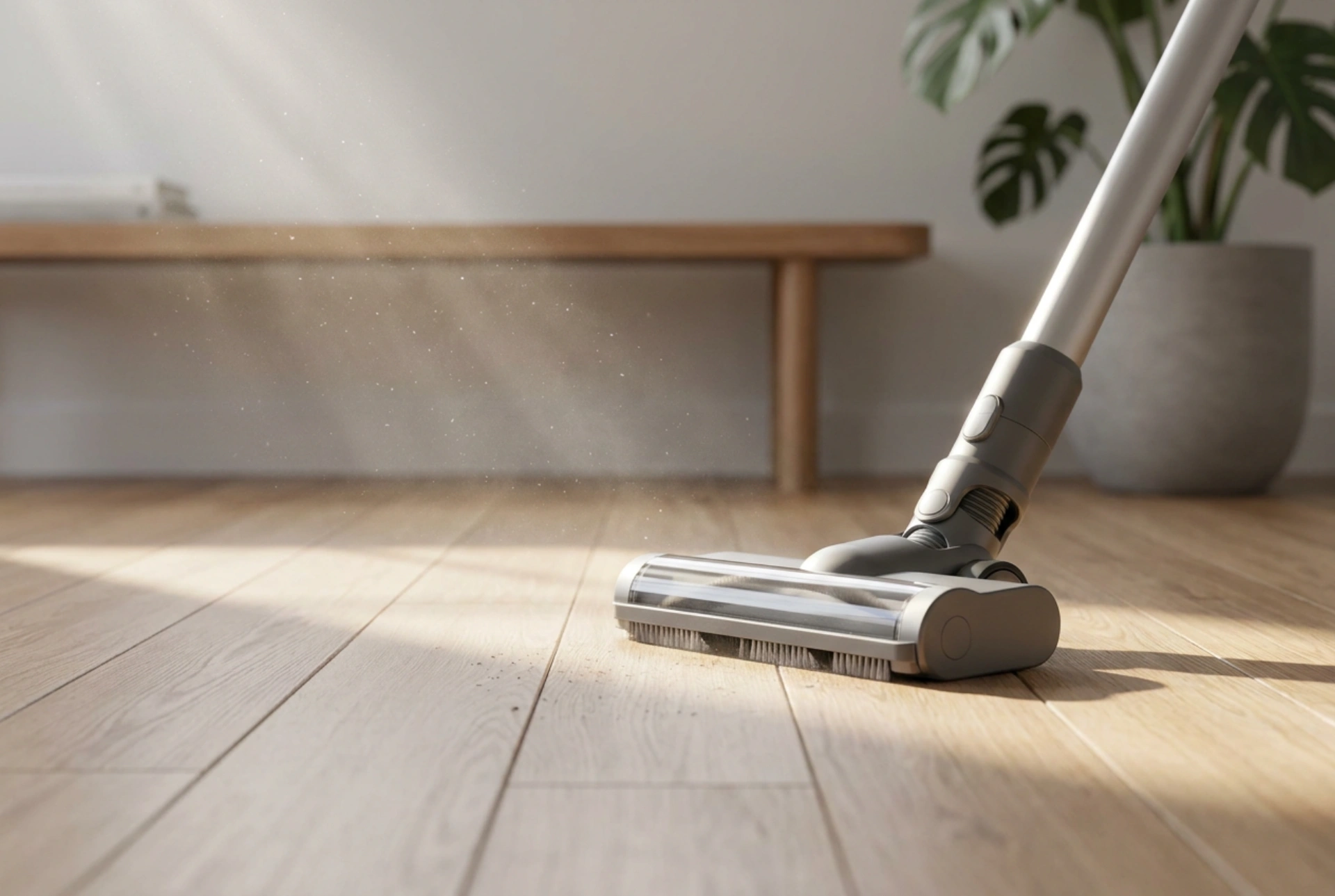
Unlike carpeted floors where mechanical brush bars beat out dirt, hard surfaces require a tight seal. When there is a gap between the vacuum head and the floor, velocity drops instantly, leaving fine particles behind. Opting for a brushless digital motor is crucial, as these motors use magnetic fields instead of physical carbon brushes to rotate, reducing friction, heat, and energy loss while maximizing operational longevity.
The Critical Role of Floor Nozzle Architecture
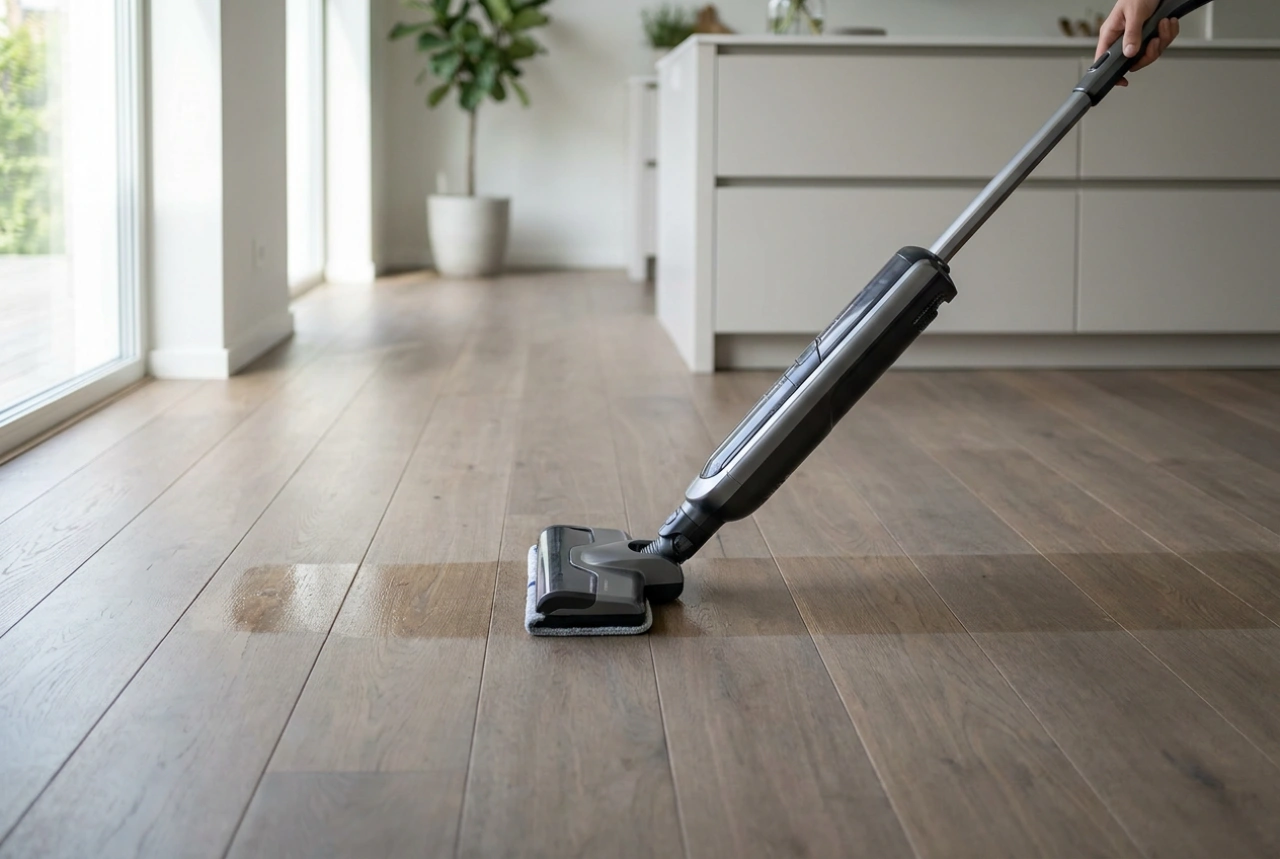
To maximize high suction power on hard floors, the physical design of the cleaning head is just as important as the motor. A standard motorized brush bar designed for carpets often scatters debris on hard surfaces and allows air to escape through the bristles, lowering the effective suction pressure.
- Soft Roller Heads: These are wrapped in dense, woven nylon and anti-static carbon fiber filaments. The soft roller acts as a continuous squeegee against the floor, creating a near-perfect seal that forces all air velocity to pull from the narrow point of contact.
- Airflow Paths: Look for a nozzle with a wide, unobstructed throat. Sharp angles or narrow bottlenecks within the neck of the cleaning head cause turbulence, which creates air resistance and decreases the suction power that actually reaches the floor surface.
Battery Management and Voltage Drop
Cordless vacuums rely on lithium-ion battery packs to drive their high-wattage motors. High suction modes place a massive current draw on these cells, which can lead to a phenomenon known as voltage drop. As the battery discharges, the voltage can sag, leading to a noticeable drop in motor RPM and suction efficiency.
To counteract this, modern systems utilize electronic monitoring chips within the battery pack that regulate power output, ensuring a flat discharge curve where suction remains constant until the cell is fully depleted. Opting for a vacuum with a higher nominal voltage (typically 25.2V or higher) ensures the motor can draw the necessary current without overheating the battery chemistry.
Filtration Systems and Airflow Preservation
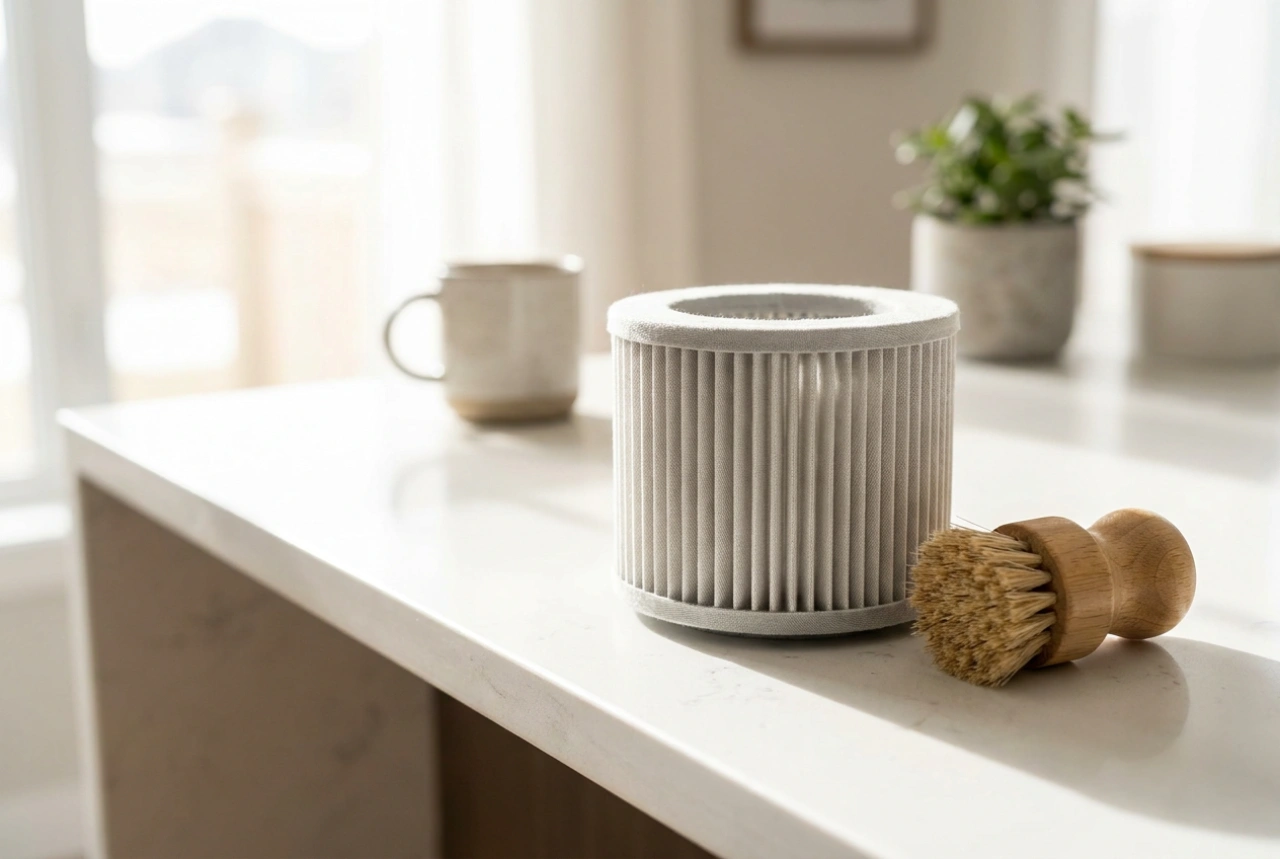
High suction is impossible without efficient filtration. As air is drawn into the dustbin, it must be separated from the debris before it exits the machine. If the filters become clogged with micro-dust, the static pressure drops significantly, forcing the motor to work harder while moving less air.
A multi-stage cyclonic separation system uses centrifugal force to spin heavy dust particles out of the airflow and deposit them into the bin before they ever reach the physical filters. This protects the pre-motor filter and the post-motor HEPA (High-Efficiency Particulate Air) filter, maintaining an open pathway for maximum air velocity over extended cleaning sessions.