

Removing stubborn sand, grit, and fine dust from block paving requires the right mechanical approach to avoid damaging the jointing sand while thoroughly cleaning the stone surface.
The physics of vacuuming outdoor masonry
Standard household vacuums rely on low airflow and high suction restricted to small nozzles, which easily clog when facing heavy mineral debris. Outdoor wet-and-dry vacuums utilize high-volume airflow (measured in liters per second) to lift dense particles like silica sand and granite grit without overheating the motor. When clearing block paving, the goal is to remove loose surface dirt and debris that has settled in the pores of the stones, without sucking out the stabilizing jointing sand that keeps the blocks locked in place.
Adjusting the angle and airflow
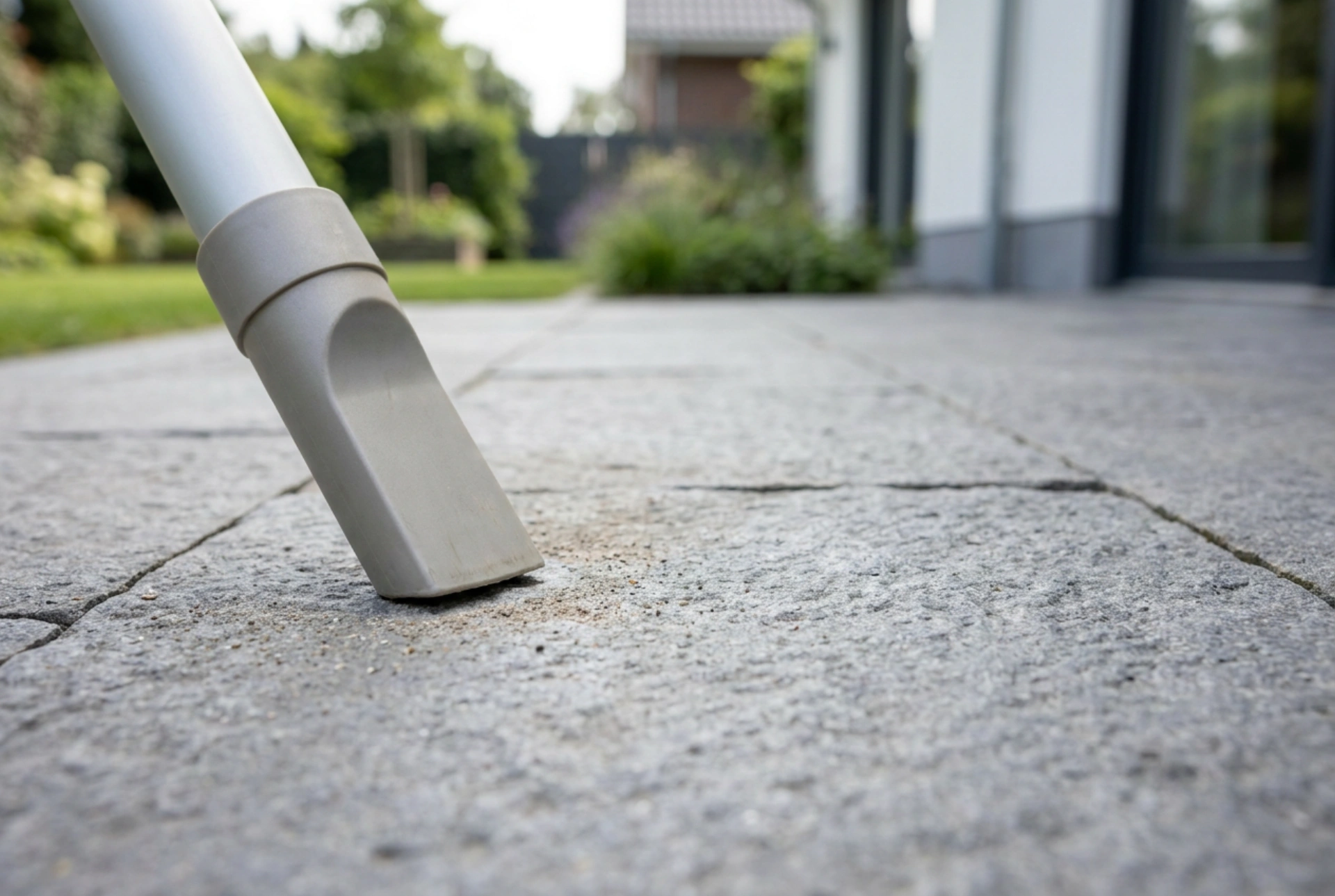
To target surface debris safely, you must control the angle of the vacuum nozzle. Holding the nozzle at a 45-degree angle to the pavement creates a shear wind effect. This lifts loose debris from the flat surfaces of the pavers while leaving the compacted sand within the deep joints untouched. Working at a 90-degree angle (directly perpendicular to the ground) creates a localized vacuum seal that will quickly evacuate the essential joint sand, destabilizing the driveway or patio structure.
Step-by-step surface preparation and technique
Before turning on the machine, the paving must be completely dry. Wet sand increases in density and sticks to the porous surface of the concrete or stone, making mechanical extraction highly inefficient and risking clogs within the vacuum hose.
- Assess the surface: Ensure the paving has not been rained on for at least 24 to 48 hours. Dry mineral dust lifts effortlessly, whereas damp sand behaves like a heavy paste.
- Choose the correct attachment: Use a wide, hard-floor tool fitted with stiff brushes rather than a squeegee attachment. The bristles agitate the surface dust, freeing it from the micro-pores of the stone so the airflow can capture it.
- Establish the movement pattern: Work in straight, overlapping rows. Move the vacuum wand at a steady, moderate pace. Rushing will leave grit behind, while hovering too long over a single spot risks drawing out the jointing material.
Managing the filter and debris bucket
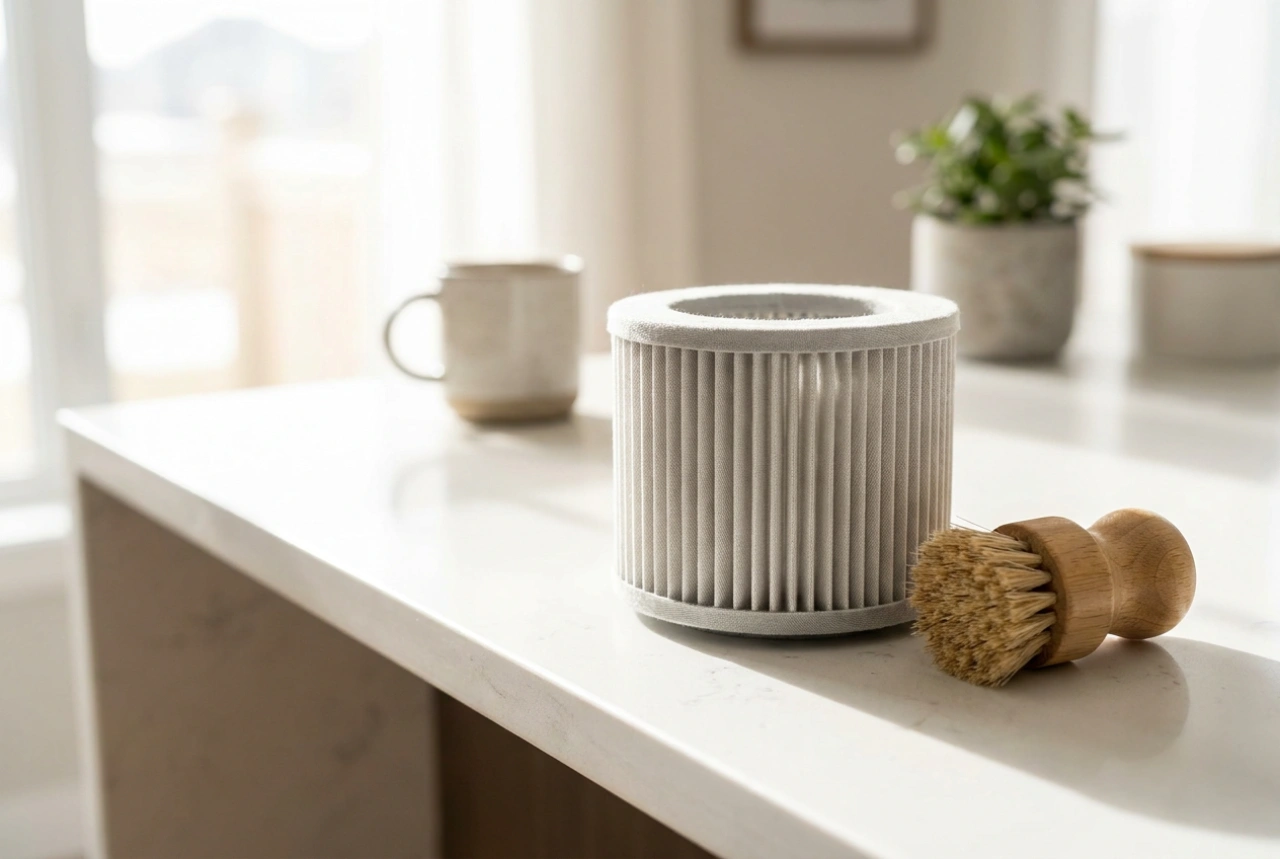
Fine mineral dust, especially silica from sand and concrete, behaves differently than organic house dust. It quickly coats cartridge filters, reducing the machine’s suction capacity. To maintain optimal airflow, use a fleece filter bag designed for fine dust extraction, or periodically utilize the vacuum's mechanical filter-clearing function if equipped. Always empty the collection tank when it is half full; heavy mineral waste puts extra strain on the motor when carrying the unit.
Post-vacuuming joint inspection
Once the surface grit is removed, inspect the joints between the pavers. If any jointing sand was accidentally extracted during the process, sweep fresh, dry kiln-dried silica sand into the gaps using a soft-bristled broom. This ensures the structural integrity of the paving is maintained, preventing the blocks from shifting under vehicle or foot traffic.