

Drying laundry in a confined bathroom often leads to high humidity, musty odors, and cluttered spaces if you rely on bulky floor racks. A retractable clothesline offers a space-saving alternative, but maximizing its efficiency requires understanding the physics of evaporation and airflow.
The Physics of Drying: Airflow and Temperature
For wet laundry to dry efficiently, water molecules must transition from a liquid state on the fabric fibers into vapor in the surrounding air. This process depends heavily on relative humidity, ambient temperature, and air movement. In a small bathroom, the air quickly becomes saturated with moisture, slowing down evaporation to a crawl.
To accelerate this process, you must actively disrupt the boundary layer of saturated air that wraps around wet garments. Positioning your retractable clothesline directly in the path of natural cross-ventilation or near the bathroom exhaust fan is critical. Running the mechanical ventilation system creates a low-pressure area that draws moist air out, allowing drier air from adjacent rooms to pull moisture away from the drying fibers.
Optimal Placement and Installation Mechanics
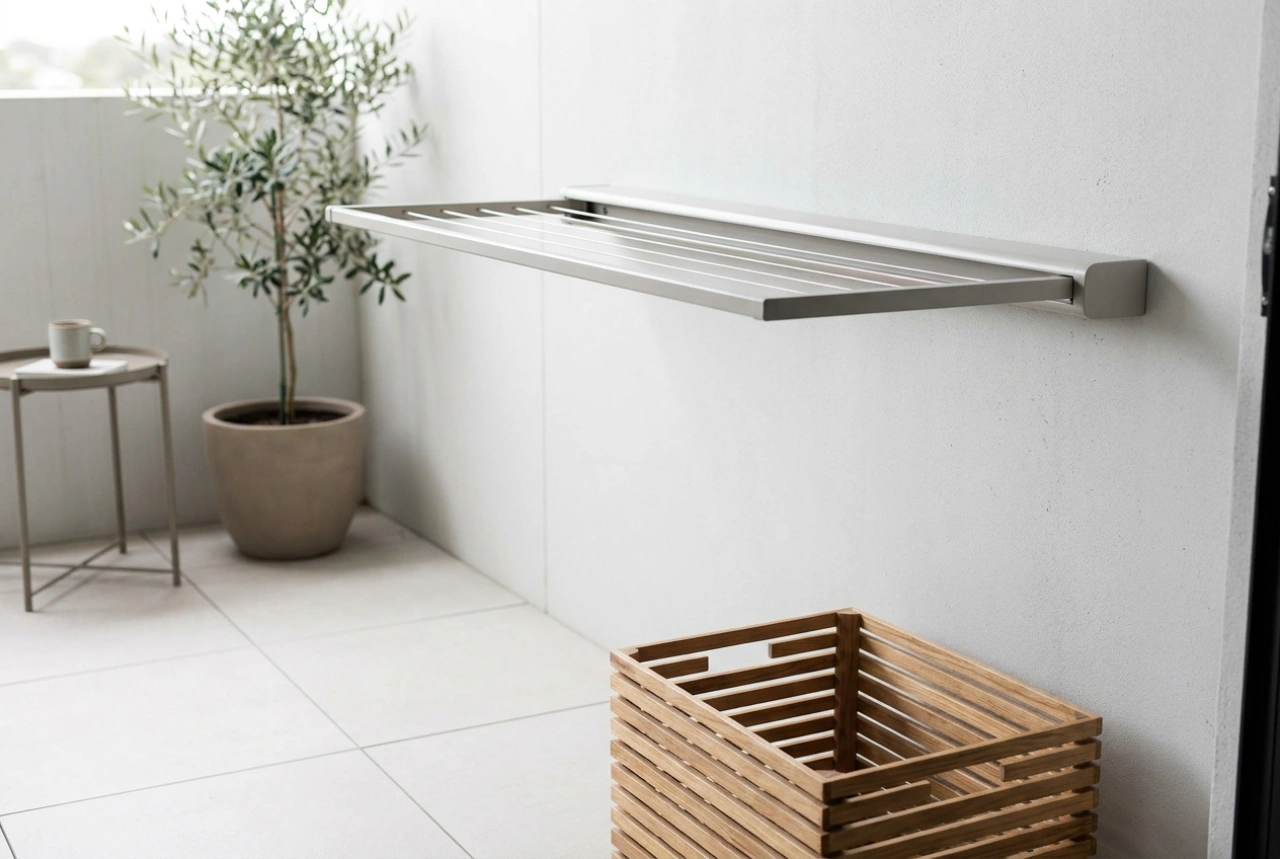
Installing a retractable line requires securing the housing to a structurally sound wall surface, ideally anchoring it into wall studs or using specialized heavy-duty hollow wall anchors for drywall. Because wet textiles carry significant water weight, the tension on the line will exert a strong downward and outward pull on the mounting brackets.
Position the line at a height that allows maximum vertical air clearance beneath the garments. The warmest air in any room rises toward the ceiling. By hanging your laundry higher, you position the dampest fabrics in this warmer zone, speeding up the thermal transition of liquid water to gas. Ensure the line is taut; any sag will cause wet clothes to slide together, trapping moisture between the layers of fabric and prolonging the drying cycle.
Hanging Techniques for Maximum Efficiency
How you arrange textiles on a retractable line directly dictates how fast they dry. Use the following mechanical principles to optimize air exposure:
- The Tunnel Effect: When hanging heavier garments like shirts or sweaters, use thick plastic hangers rather than wire ones. Thick hangers hold the front and back panels of the garment apart, creating an internal air channel that allows air to circulate through the inside of the clothing.
- Strategic Spacing: Maintain a minimum gap of five to ten centimeters between each item. If garments touch, capillary action can transfer moisture back and forth, stalling the drying process.
- Gravity and Fiber Alignment: Hang heavier items closest to the mounting points of the line where tension is strongest. Shake each garment vigorously before hanging to align the fibers and release trapped surface water, which reduces drying time and minimizes deep creasing.
Managing Indoor Humidity Levels
Without proper moisture control, drying clothes indoors can raise the relative humidity above the critical sixty percent threshold, creating an environment ripe for mold growth. To prevent this, always leave the bathroom door slightly ajar during the drying process to facilitate air exchange. If your bathroom lacks mechanical ventilation, running a compact, compressor-based dehumidifier directly beneath the hanging line will rapidly pull moisture from the air, maintaining low relative humidity and dramatically accelerating evaporation rates through physical condensation principles.