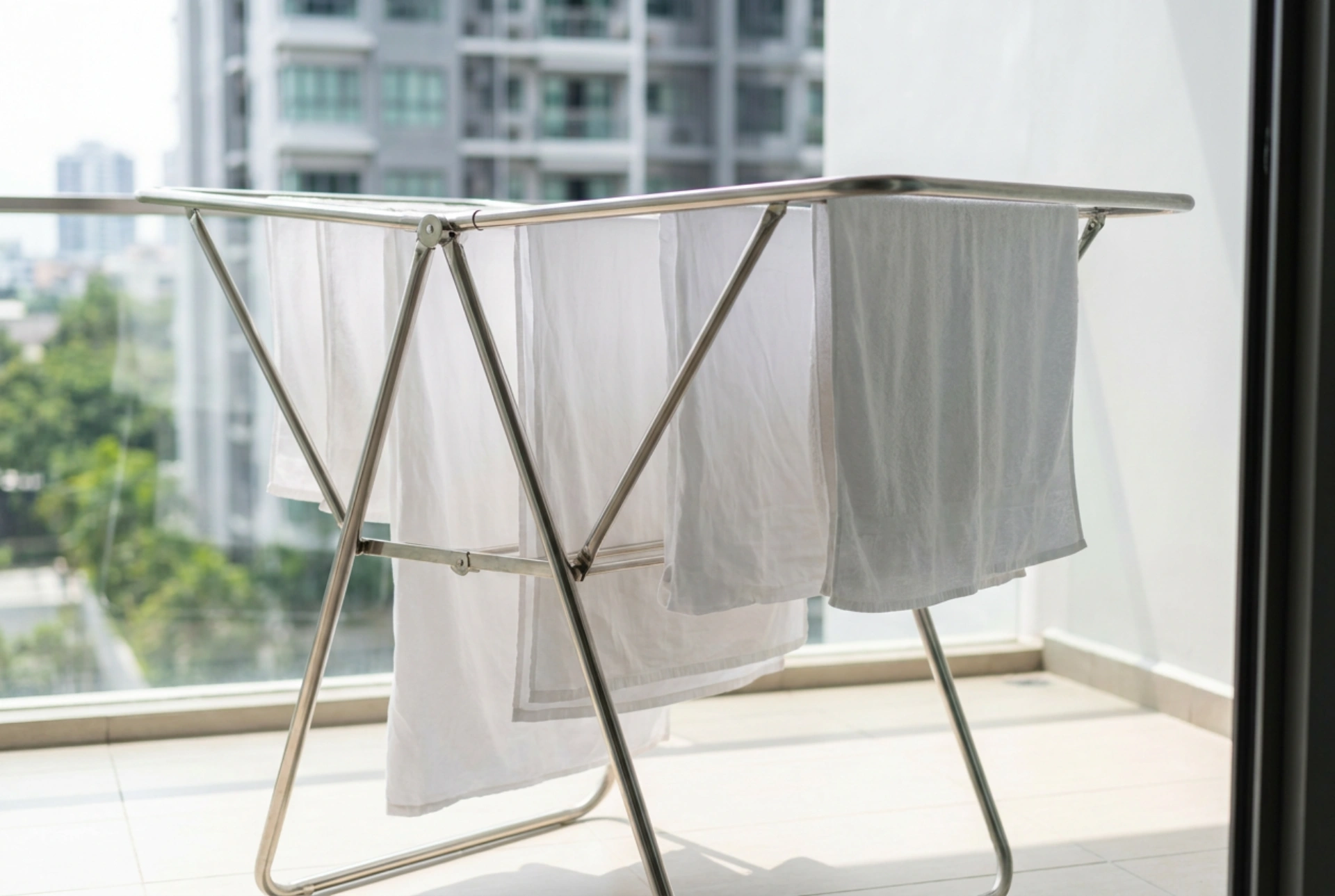


Drying laundry outdoors on a balcony utilizes natural air circulation and solar radiation to dry fabrics quickly, but it requires understanding the physics of evaporation and fabric protection.
The Physics of Outdoor Drying
Outdoor drying relies on two primary environmental factors: relative humidity and air movement. When wet clothes are hung outside, water molecules on the fabric surface absorb ambient thermal energy and transition from a liquid to a gaseous state. Wind accelerates this process by constantly replacing the saturated boundary layer of air directly surrounding the wet garments with drier ambient air. To maximize this convective drying effect, garments must be spaced at least three to five inches apart on the rack, allowing unrestricted airflow through the channels between the clothing.
Selecting and Positioning the Drying Rack
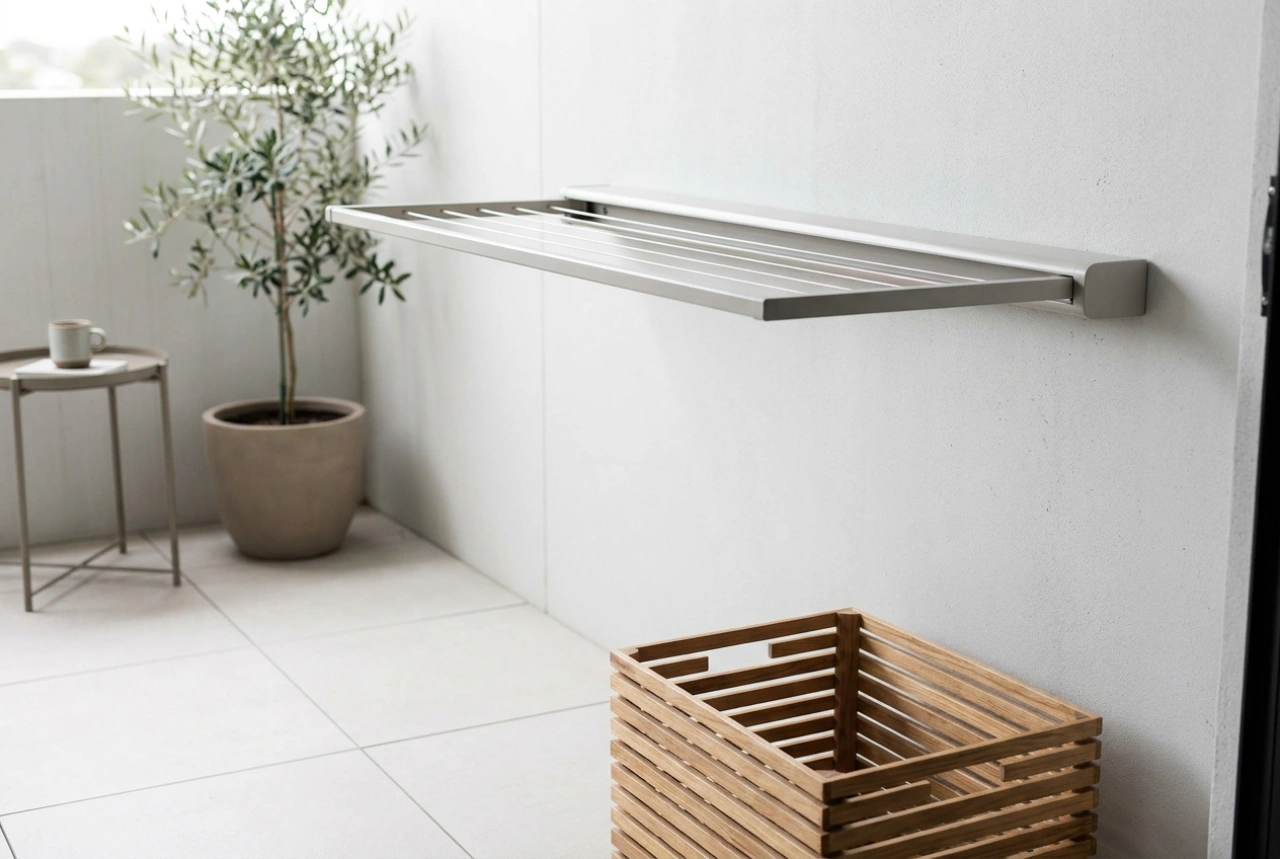
The structural stability of your drying rack is critical when dealing with wind loads. A low-profile, wide-base rack constructed from powder-coated steel or anodized aluminum resists oxidation and prevents tipping. When positioning the rack on a balcony, align it parallel to the dominant wind direction rather than perpendicular to it; this reduces aerodynamic drag and minimizes the risk of the rack falling over. To secure the setup further, place dense rubber weights or heavy patio tiles over the base legs to lower the center of gravity without damaging the balcony flooring.
Protecting Fabrics from Solar Radiation and Pollutants
Direct sunlight contains ultraviolet (UV) radiation, which acts as a natural sanitizer by disrupting the cellular walls of microorganisms, effectively bleaching white linens. However, UV radiation also breaks down the chemical bonds in synthetic dyes, causing colored fabrics to fade. To utilize solar heat while protecting colors, turn dyed garments inside out before hanging them, or position the drying rack in a partially shaded area where ambient warmth still drives evaporation without direct UV exposure. Additionally, in urban environments, hang delicate items during periods of low traffic to avoid the deposition of airborne particulate matter onto wet, sticky fibers.
Hanging Techniques for Optimal Structural Integrity
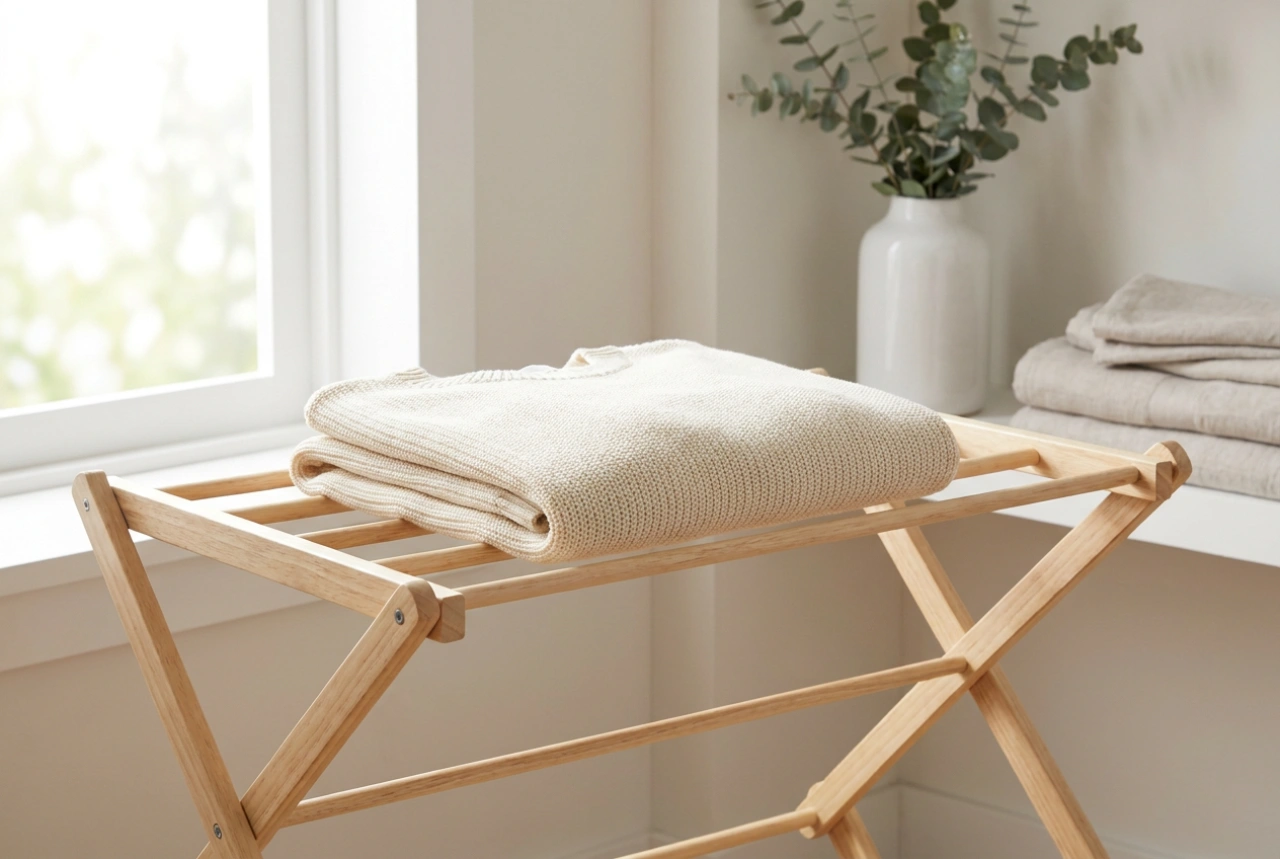
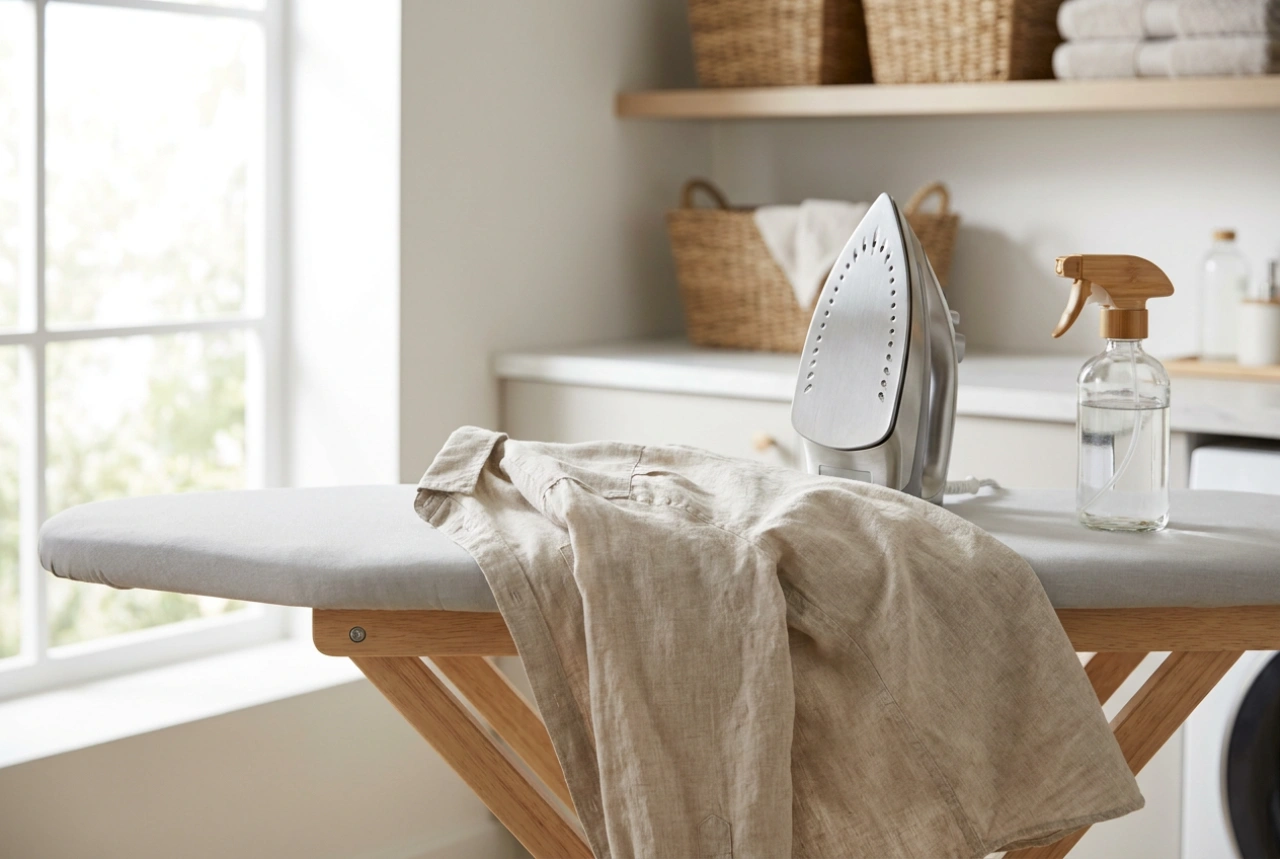
The method used to secure wet garments directly influences their final shape and the amount of ironing required. Wet fibers are highly malleable; gravity will stretch them if the weight of the water is concentrated in one area. For heavy knits, sweaters, or woolens, dry them flat across the top mesh of the rack to distribute the load evenly and prevent fiber elongation. For woven shirts and trousers, hang them upside down from the hem or waistband using non-marking tension clips, which allows the natural weight of the damp fabric to pull out wrinkles as it dries.