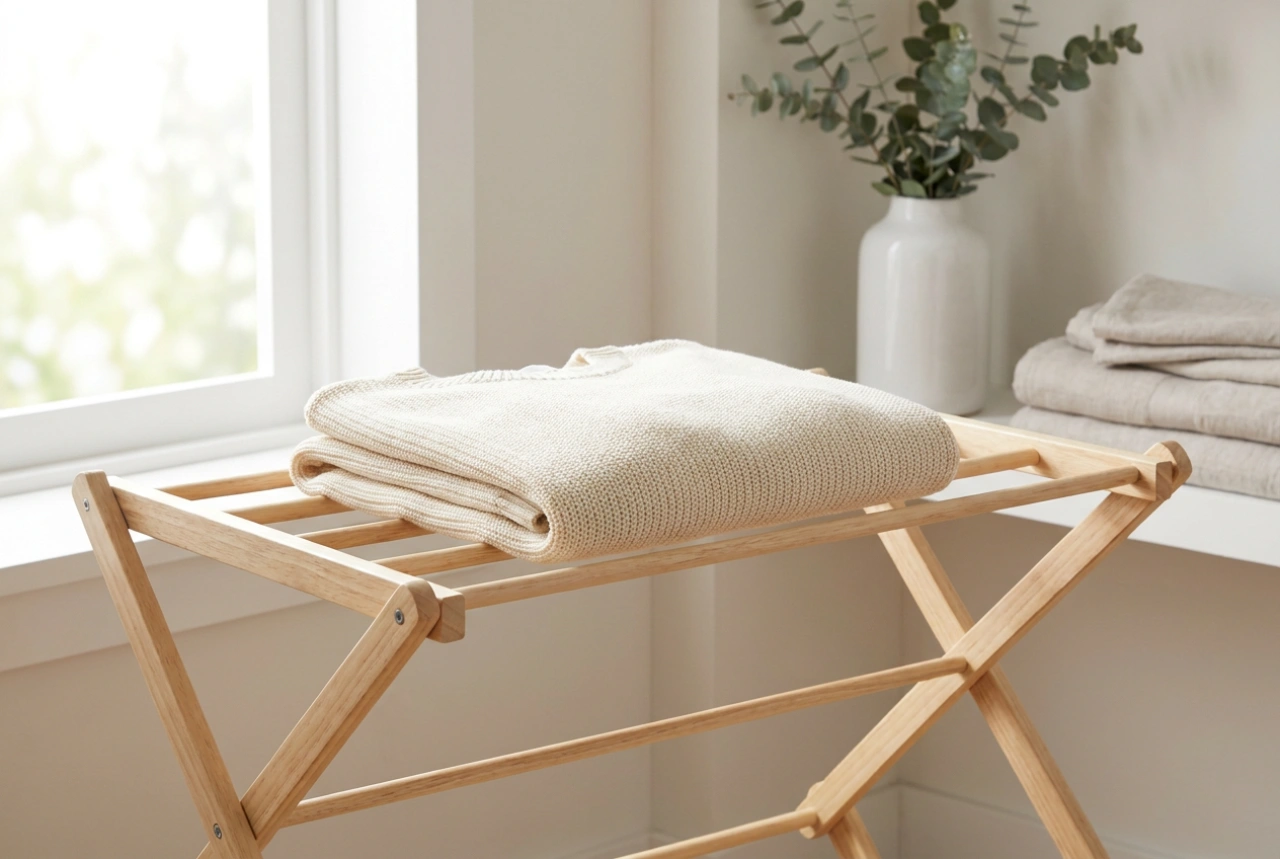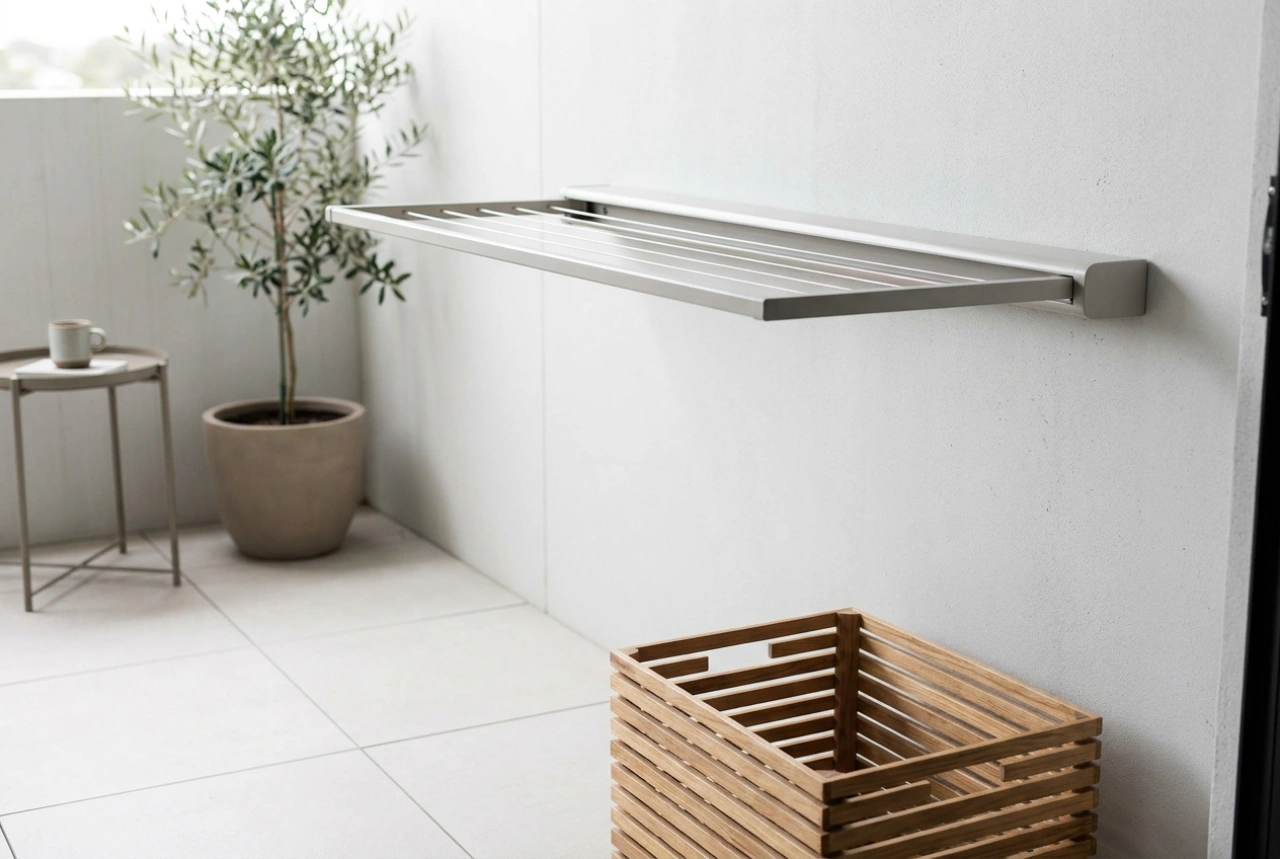


Drying clothes indoors without a direct condensation drain requires a strategic approach to evaporation, air movement, and humidity control to prevent mold and structural dampness.
The Physics of Drying: Temperature and Air Movement
Drying is the process of water transitioning from a liquid state within fabric fibers into a gaseous state in the surrounding air. For this transition to occur efficiently, the boundary layer of saturated air directly contacting the wet clothes must be constantly replaced with drier air. Without mechanical extraction or a drain, you must rely on thermodynamic principles.
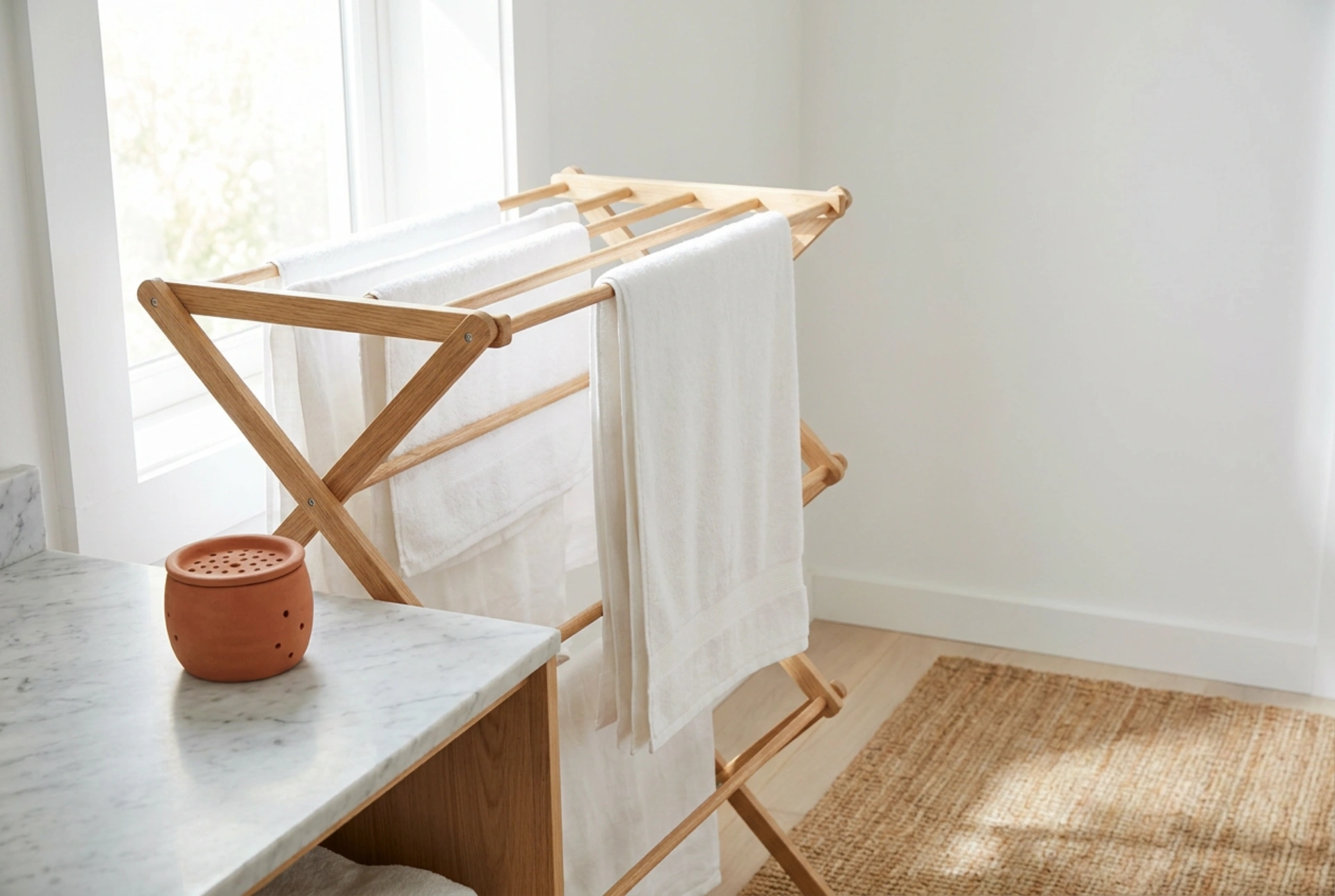
Position your drying rack in a room with active convection. Placing the rack near a heat source, such as a radiator, increases the kinetic energy of the water molecules, accelerating evaporation. However, heating alone is insufficient; without air circulation, the relative humidity in the room will quickly reach 100%, halting the drying process entirely. Introduce a gentle airflow using a standard household fan directed at the lower half of the drying rack to push damp air away and maintain a high evaporation rate.
Optimizing the Hanging Technique for Maximum Surface Area
The speed of evaporation is directly proportional to the exposed surface area of the wet fabric. Proper spacing and alignment on the drying rack are critical when moisture cannot be mechanically pumped away.
- The Cascade Method: Hang thicker garments, such as heavy cotton sweaters and denim, on the outermost rails of the rack where air circulation is strongest. Thinner synthetic fabrics should occupy the inner rails.
- Double-Bar Hanging: Drape heavy items across two parallel bars instead of one. This creates an air gap inside the garment, allowing air to flow through the center of the item and doubling the evaporation surface.
- Peg Geometry: Use hangers for shirts and blouses to maximize vertical space and ensure that fabric layers do not touch or overlap, which traps moisture and causes sour odors.
Passive and Active Moisture Capture Methods
When drying laundry indoors without an external vent or drain pipe, the evaporated water must be captured from the air to prevent it from condensing on cold walls and window frames.
Chemical Desiccants
Passive moisture absorbers utilizing anhydrous calcium chloride are highly effective for small rooms. Calcium chloride is a hygroscopic salt that actively attracts water molecules from the air, chemically binding them and dissolving into a liquid brine collected in the lower chamber of the unit. This liquid can be easily poured down any standard sink once the crystals are spent, requiring no electrical power or permanent drainage installation.
Condensation Management
If you use a non-vented condenser or heat pump dryer that utilizes an internal collection tank instead of a plumbed drain, empty the water reservoir immediately after every cycle. Letting the tank sit full increases the ambient humidity within the utility closet through micro-evaporation around the seals. Additionally, wipe down the door gaskets and heat exchanger coils to prevent standing water from evaporating back into your living space.
The Critical Role of Ventilation Timing
To dry laundry efficiently without accumulating dampness, utilize the concept of cross-ventilation. Open two opposing windows for brief, intense periods of five to ten minutes, a technique known as shock ventilation. This rapidly replaces the warm, moisture-laden indoor air with cooler, drier outdoor air without significantly lowering the temperature of the walls and furniture, preserving the thermal energy needed to continue the drying cycle.