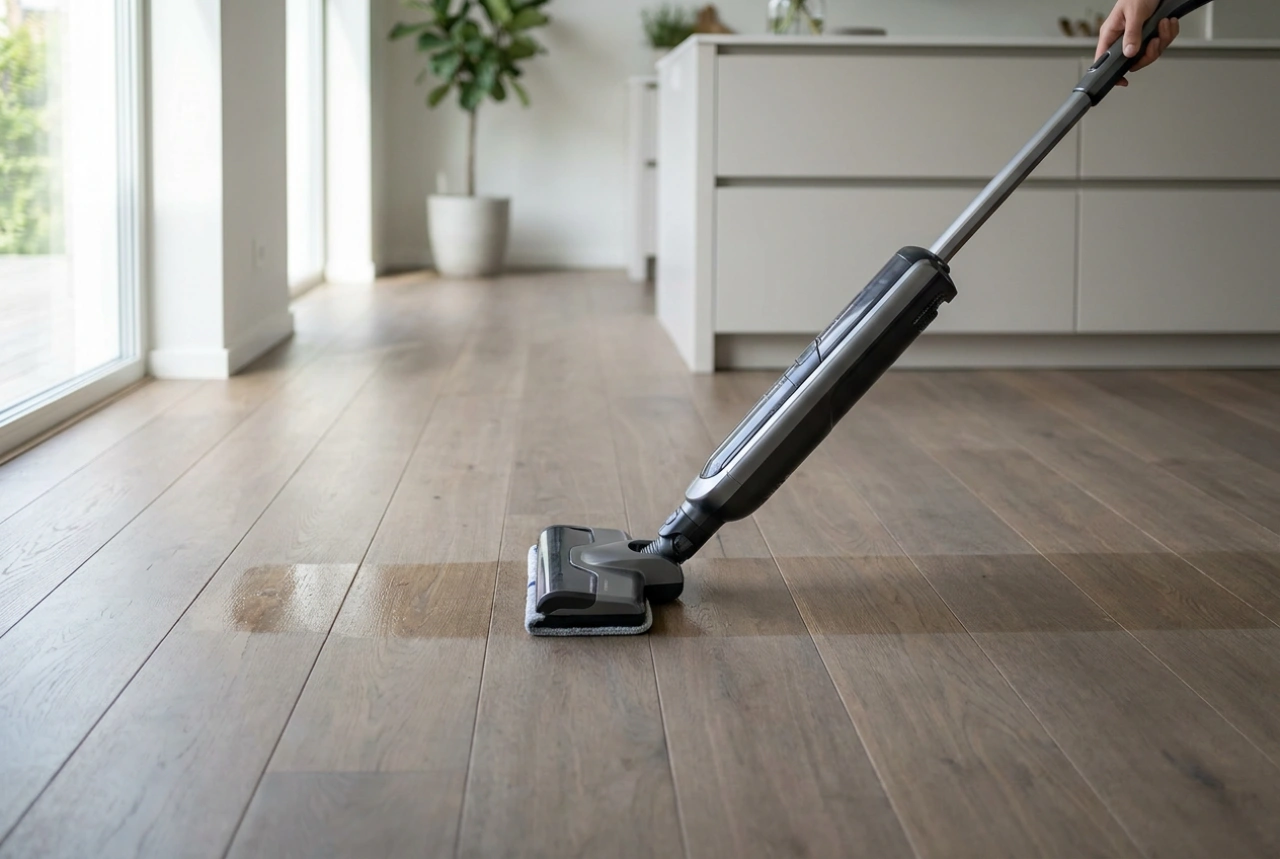


Selecting the correct nozzle for your central vacuum system is critical to protecting delicate wood finishes while effectively extracting deeply embedded soil from textile fibers.
The Physics of Parquet Protection: Bristles and Airflow
Hardwood surfaces, particularly natural oak parquet, are highly susceptible to micro-scratches caused by abrasive dirt particles dragged across the floor. Standard combination nozzles often fail on hard floors because their hard plastic undercarriages can make direct contact with the wood if the brush strip is worn or insufficiently dense.
When cleaning parquet, the primary objective is to maintain a physical barrier between the hard nozzle body and the floor while channeling airflow efficiently. Natural bristles, such as horsehair, are ideal for this purpose. Unlike synthetic nylon bristles, natural hair is softer, more flexible, and features microscopic scales that trap fine dust particles instead of pushing them forward. This prevents the "snowplow effect" and ensures that fine silica dust is immediately drawn into the vacuum stream rather than acting as sandpaper under the brush.
Why Bristle Density and Spacing Matter
An effective parquet brush must have dense bristle bundles, but it also requires strategic gaps in the front row. These gaps, often called cutouts, allow larger debris to enter the airflow path without requiring you to lift the nozzle. Without these air passages, the suction of a powerful central vacuum can seal the nozzle to the floor, reducing dust collection efficiency and making the wand difficult to maneuver.
The Mechanics of Carpet Cleaning: Agitation and Friction
Carpets require a completely different mechanical approach. While hard floors need gentle sweeping, carpets demand physical agitation to dislodge sand, pet dander, and dust mites wedged deep within the pile. Airflow alone is rarely sufficient to clean dense carpet fibers; mechanical force must be applied.
For low-pile carpets, a standard floor tool with a retractable lint lifter—usually made of a textured, red velour material—is sufficient. These strips utilize friction to grab hair and lint in one direction while releasing them into the suction path in the opposite direction. However, for medium to deep-pile carpets, you must choose between two distinct mechanical tools: the air-driven turbo brush and the motorized powerhead.
- Air-Driven Turbo Brushes: These tools utilize the vacuum's own airflow to spin an internal turbine, which drives a rotating brush roller. Because they rely entirely on suction, their performance is directly linked to the airflow volume of your central vacuum unit. They are highly effective on light to medium carpets but can stall under heavy load on deep, plush piles.
- Motorized Powerheads: These nozzles contain an independent electric motor that spins the brush roller at a constant speed, regardless of suction level or carpet depth. The aggressive mechanical beating action vibrates the carpet backing, lifting heavy mineral dirt to the surface where the airflow can capture it. This is the optimal choice for thick wool rugs and high-traffic carpeted areas.
Dual-Purpose Tools: The Practicality of Combination Nozzles
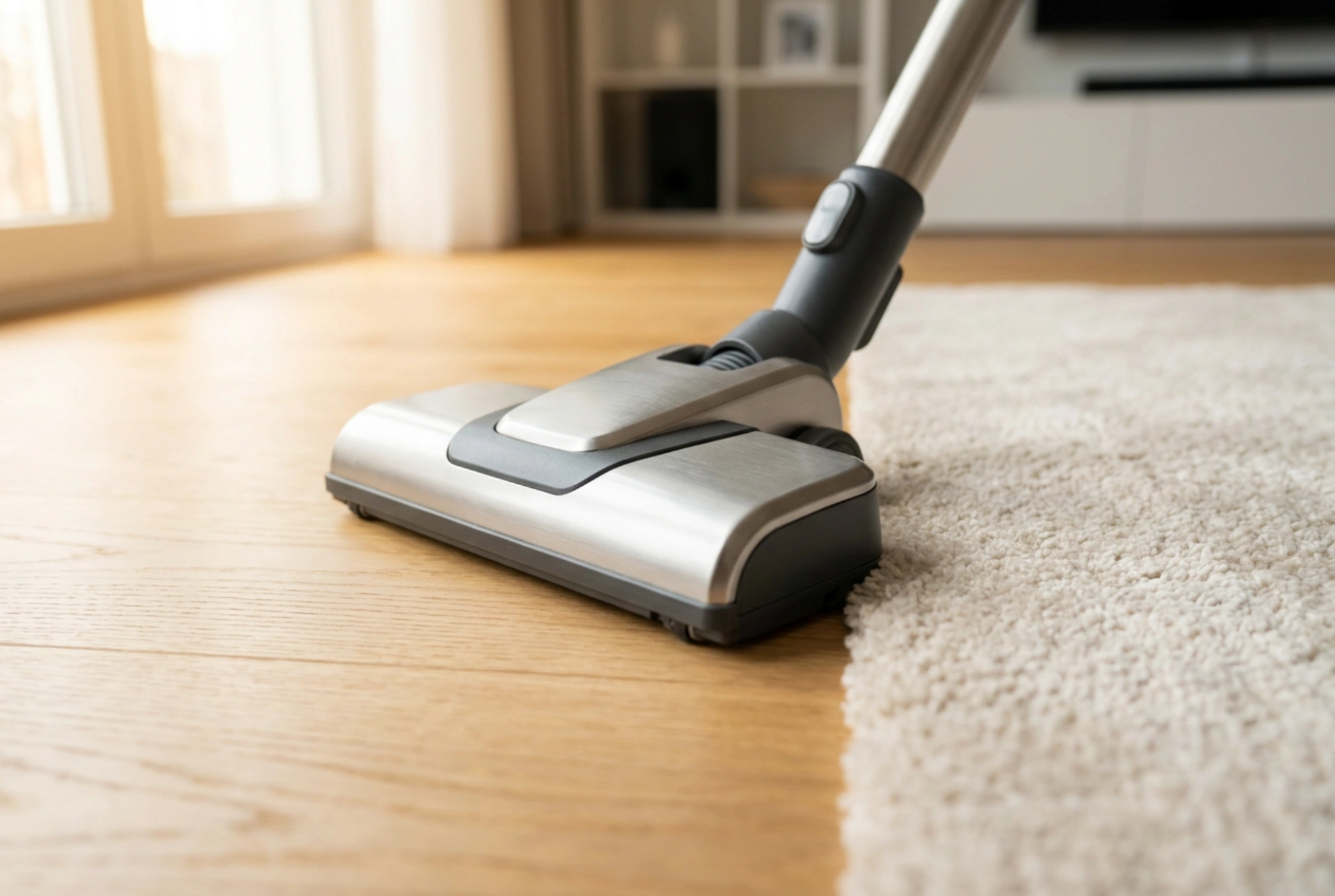
If your home features a seamless transition between parquet corridors and carpeted rooms, a high-quality combination nozzle offers a practical compromise. These tools feature a foot-activated switch that retracts or extends the brush strip. When switching from carpet to parquet, the bristles must be fully extended to lift the plastic soleplate off the wood. When moving onto a carpet, retracting the bristles allows the metal or plastic glide plate to make direct contact with the fibers, maximizing the vacuum seal and utilizing the integrated lint lifters.
Optimizing Your Cleaning Technique
To maximize the lifespan of your flooring and ensure optimal vacuum performance, always vacuum hard floors first. This prevents any sharp debris picked up from carpets from being dragged across delicate wood. Work in straight, overlapping lanes, moving with the direction of the wood grain on parquet to minimize friction on the joints. When cleaning carpets with a rotating brush, maintain a slow, steady pace to allow the bristles sufficient time to agitate the fibers and release deeply embedded dirt.