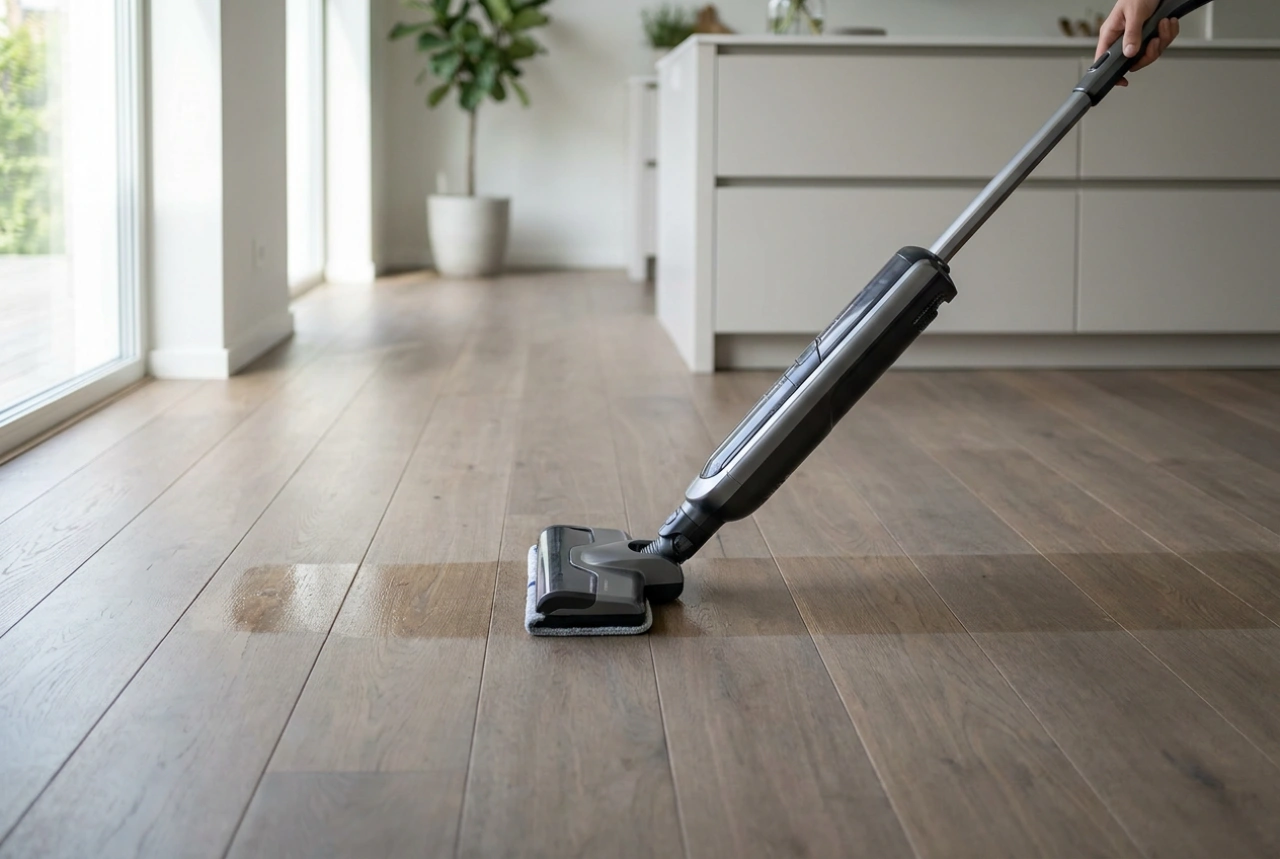


Selecting the right wet-and-dry stick vacuum requires understanding how different cleaning mechanisms interact with specific flooring materials to prevent moisture damage and scratches.
Understanding the Mechanics of Wet-and-Dry Stick Vacuums
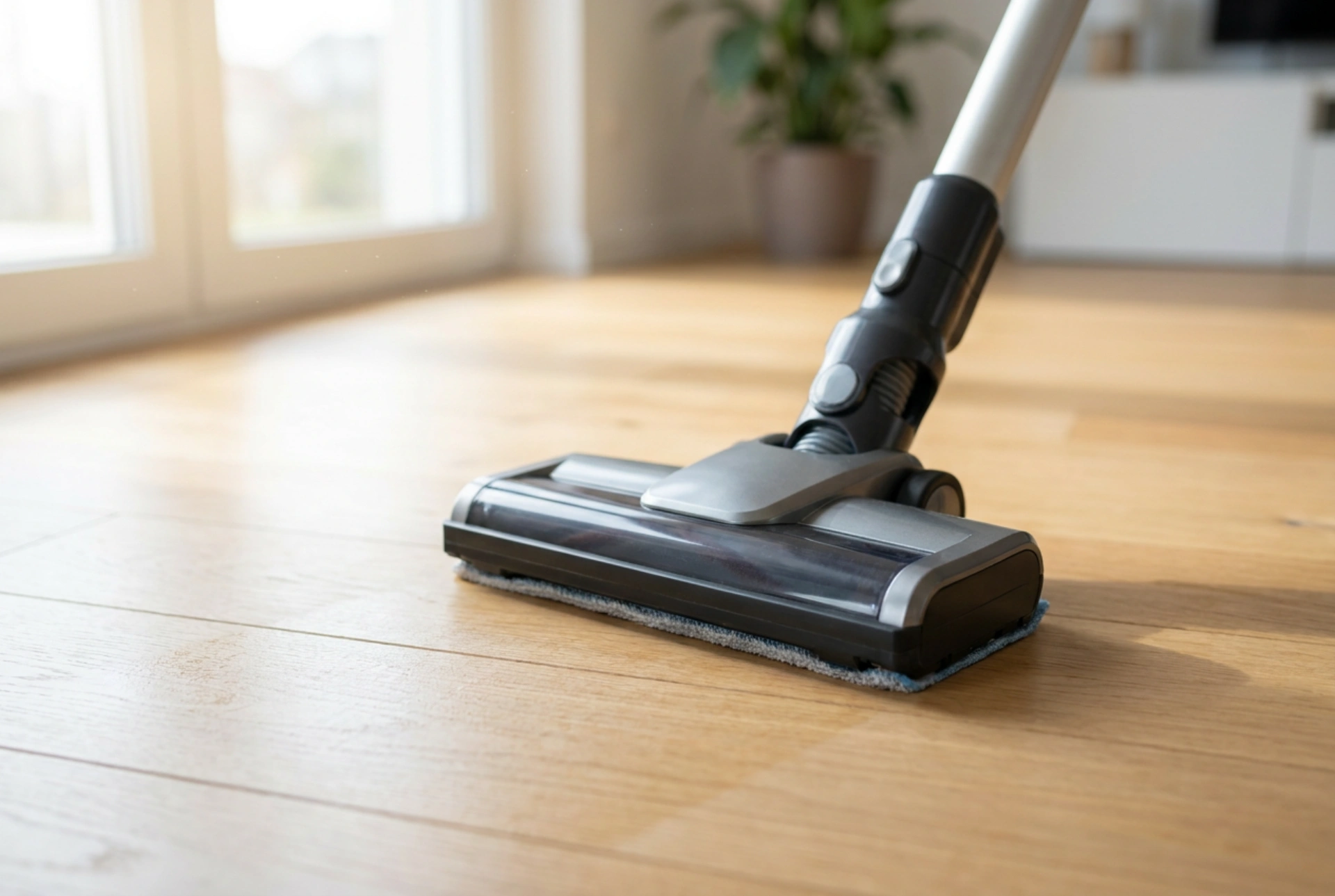
Wet-and-dry stick vacuums generally fall into two categories: active roller mops and passive microfiber pad attachments. Active roller systems utilize a motorized, rotating cylindrical brush or soft roller that is continuously fed with clean water from an internal reservoir. As the roller spins, it creates mechanical friction to lift stubborn, dried-on dirt, while a squeegee system immediately vacuums up the dirty water into a separate recovery tank. Passive systems, on the other hand, rely on a stationary microfiber pad attached behind the standard vacuum nozzle, which is slowly dampened by gravity-fed water. While passive systems are excellent for light maintenance dusting, active roller systems provide the deep mechanical scrubbing action needed for high-traffic zones.
Hardwood and Engineered Wood: Moisture Control is Critical
Wood is highly hygroscopic, meaning it readily absorbs moisture from its environment, leading to swelling, warping, and cupping. When choosing a wet-and-dry vacuum for real wood or high-quality engineered flooring, the absolute recovery rate of water is your primary metric. Look for devices equipped with high-suction motors and advanced squeegee seals that dry the floor almost instantly, leaving only a microscopic film of moisture that evaporates within seconds. Avoid passive gravity-fed systems that can leak water when stationary. Additionally, the roller brush material must be composed of ultra-soft microfiber rather than stiff nylon bristles, which can micro-scratch the protective polyurethane seal of your wooden floors over time.
Laminate and Vinyl: Heat and Water Resistance
Laminate floors consist of high-density fiberboard (HDF) core layers covered by a photographic applique and a clear wear layer. The weak point of laminate is its joints; if standing water penetrates these seams, the HDF core swells permanently. For laminate, you must select a wet-and-dry vacuum that allows you to manually regulate or entirely shut off the water flow. Vinyl floors (LVP/LVT) are chemically synthetic and highly water-resistant, making them much more forgiving. However, they are sensitive to excessive heat and abrasive scrubbing. Stick vacuums that utilize steam or very stiff, abrasive rollers can dull the vinyl wear layer. For both materials, a moderate water flow setting combined with a medium-density soft roller is the ideal setup.
Stone, Ceramic, and Porcelain Tiles: Managing Grooves and Grout
Tiled surfaces are highly durable, but they present a unique physical challenge: uneven grout lines. Standard soft microfiber rollers often glide right over recessed grout joints, leaving dirt behind. For tiled floors, you need a wet-and-dry vacuum that features dual-material rollers, combining soft microfiber with lines of slightly firmer nylon bristles. The stiffer bristles physically reach down into the grout lines to agitate and dislodge packed dirt. Because tiles are completely impervious to water damage, you can maximize the water flow rate and suction power on these surfaces to flush out deep pores in natural stone or textured ceramic.
The Dual-Tank System: Preventing Cross-Contamination
The core science of a successful wet cleaning cycle relies on separating clean water from extracted dirty water. Traditional mopping simply redistributes dissolved soil across the floor. When evaluating a wet-and-dry stick vacuum, ensure the clean and dirty water tanks are completely isolated from one another. The dirty water tank should feature a mechanical float valve or electronic sensor to prevent overfilling and dirty water backflow into the suction motor. For optimal hygiene, select a model with a self-cleaning dock cycle, which spins the roller at high speeds while flushing it with clean water to prevent anaerobic bacterial growth and unpleasant odors within the roller fibers.