

Fine dust from sanding, masonry, and plastering quickly clogs standard vacuum filters, reducing suction and risking motor burnouts. Utilizing a construction vacuum equipped with an automatic or manual filter shaker resolves this issue by mechanically clearing dust from the filter pleats during operation.
The physics of filter clogging and the shaker mechanism
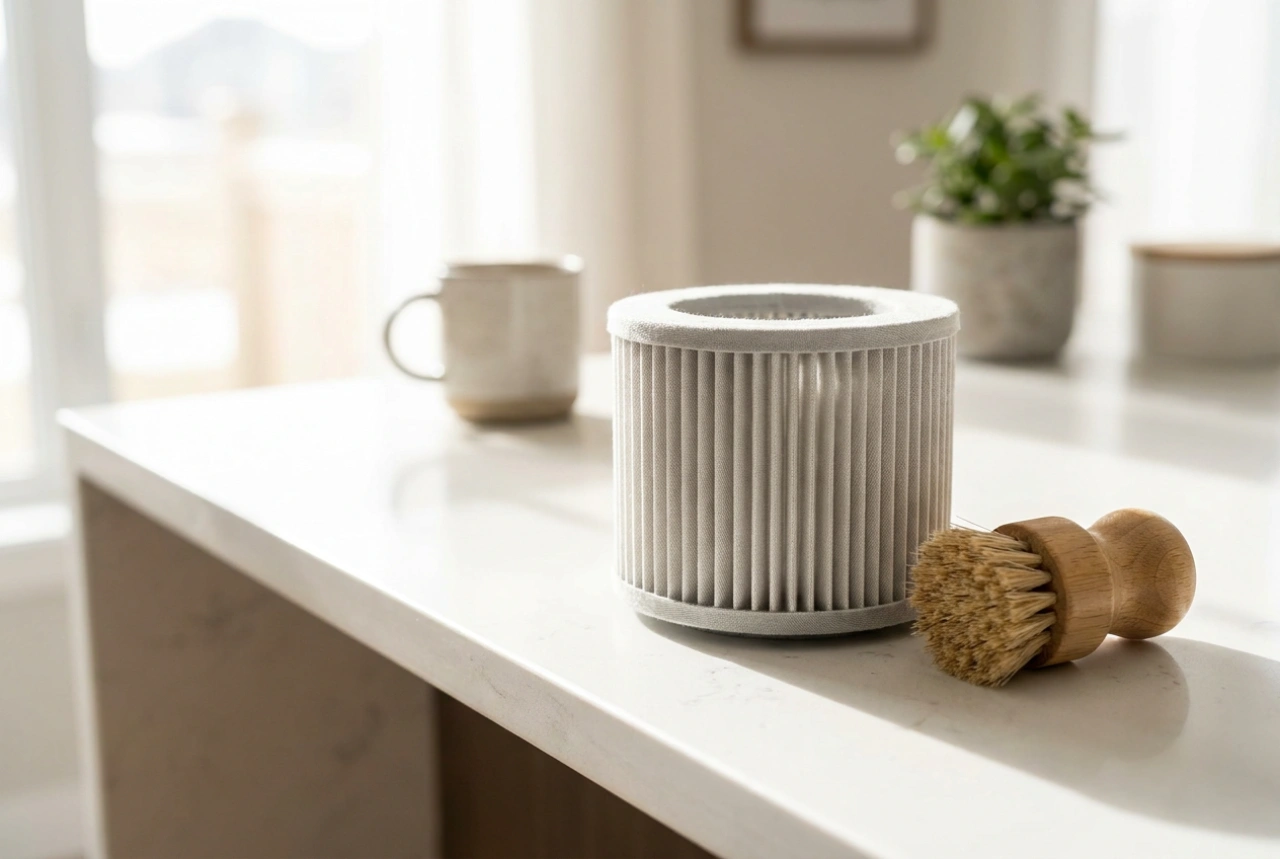
When vacuuming fine construction dust, such as concrete, drywall residue, or sawdust, particles travel at high velocity into the collection chamber. While larger debris settles at the bottom due to gravity, ultra-fine particles are drawn toward the motor by the airflow. The pleated polyester or polyurethane filter catches these micro-particles, but they rapidly settle in the deep folds, forming a dense barrier known as a dust cake. This barrier chokes the airflow, forcing the motor to work harder, run hotter, and lose suction. A filter shaker uses mechanical vibration or timed reverse pulses of air to physically shake the filter elements. This sudden movement shears the bonded dust cake, causing the accumulated fine dust to drop directly into the collection bucket, instantly restoring optimal airflow and cooling.
Setting up the vacuum for dry fine dust extraction
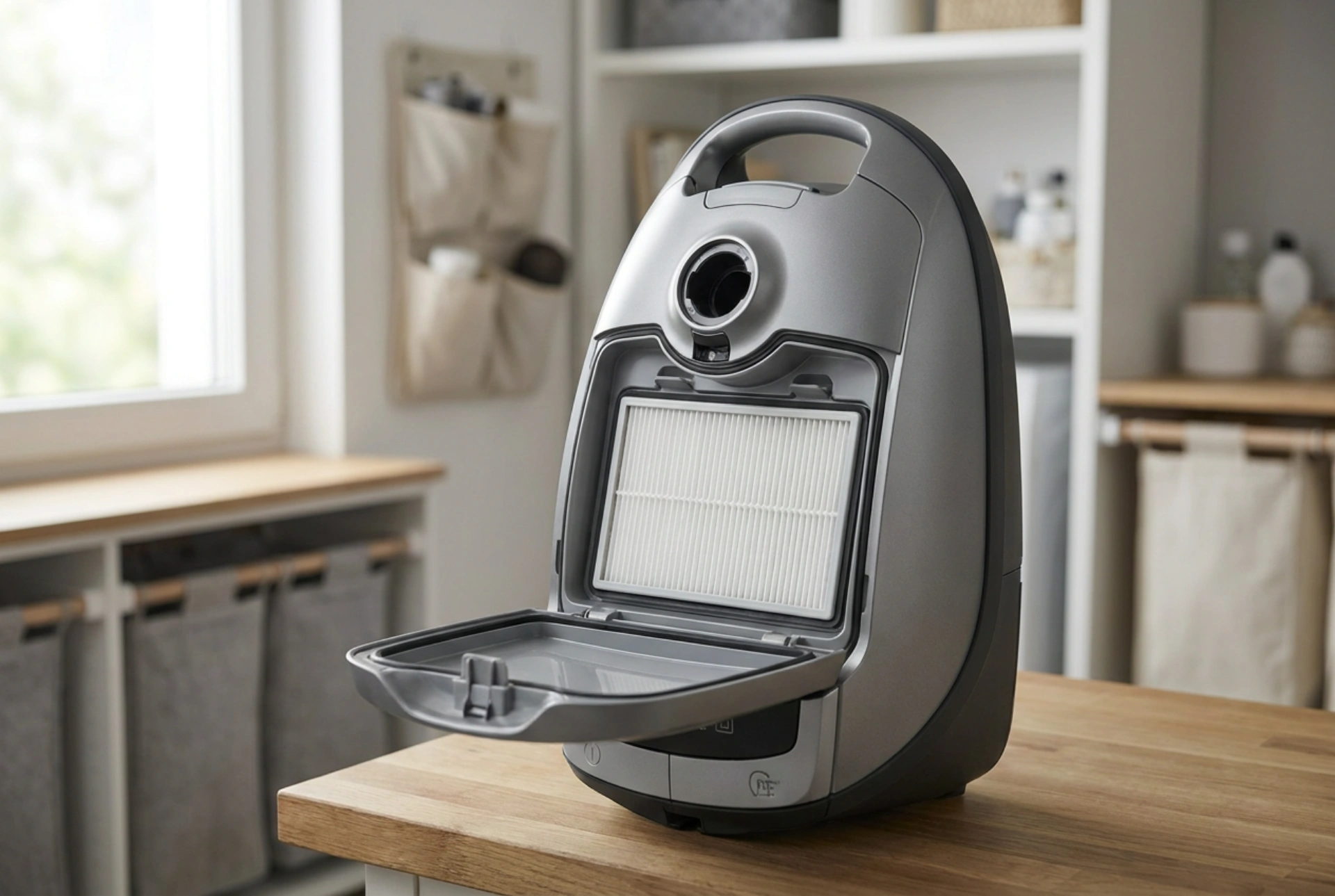
To maximize the efficiency of the shaking system, the correct configuration must be used before starting work. For dry plaster or concrete dust, always pair the pleated main filter with a compatible fleece filter bag. The fleece acts as a pre-filter, capturing the bulk of the material while allowing the shaker to clean the main filter of the finest airborne particles that escape. Ensure that the filter shaker setting is engaged. Most professional vacuums feature an automatic pulse setting (often labeled as Tact, Auto-Clean, or AFC) that triggers a reverse airflow pulse every 15 to 30 seconds. If your unit has a manual shaker, you must periodically stop vacuuming, seal the hose inlet with your hand or the hose cap to create a vacuum seal, and press the shaker button three to four times to clear the filter.
Correct operating techniques on site
Operating a construction vacuum with a shaker requires a specific rhythm to maintain performance. When connected to power tools like wall sanders or concrete grinders, set the vacuum to automatic start mode. This synchronizes the vacuum motor with the tool, ensuring suction begins before dust is generated and continues for a few seconds after the tool stops to clear the hose. Do not bypass the shaking cycles. If the automatic pulsing sound (a distinct tapping or thumping noise) occurs, do not turn off the machine mid-cycle, as this prevents the dust from settling fully into the container. Maintain a steady movement when vacuuming floors; pushing the nozzle too quickly can overload the suction pathway before the shaker has time to clear the internal air resistance.
Post-work maintenance and filter longevity
The shaker mechanism reduces manual cleaning, but it does not eliminate basic maintenance. After completing your work, allow the vacuum to run for thirty seconds while activating the manual shaker or letting the automatic pulse run one last cycle. This ensures the filter is clean before storage, preventing moisture in the air from turning dry dust into a hardened crust on the pleats. When emptying the container, gently tap the pleated filter against a hard surface outdoors to remove stubborn particles lodged deep in the folds. Never wash a polyester filter while it is covered in dry cement or plaster dust, as water will hydrate these materials, permanently clogging the pores and ruining the filter structure.