

Removing stubborn dog hair from fabric fibers and tight corners requires understanding how static electricity and textile weave work together to trap pet fur.
The physics of pet hair adhesion
Dog hair holds onto upholstery through two main forces: static electricity and mechanical interlocking. When a dog moves across a sofa, friction transfers electrons, creating a static charge that pulls the hair shaft tightly against synthetic or natural fibers. Furthermore, individual hairs have microscopic scales (cuticles) that act like tiny hooks, tangling deep within the woven structure of your furniture. Standard vacuum suction alone often fails to break these bonds, which is why a systematic approach combining friction, direction, and specialized nozzles is necessary.
The right attachments and movement techniques
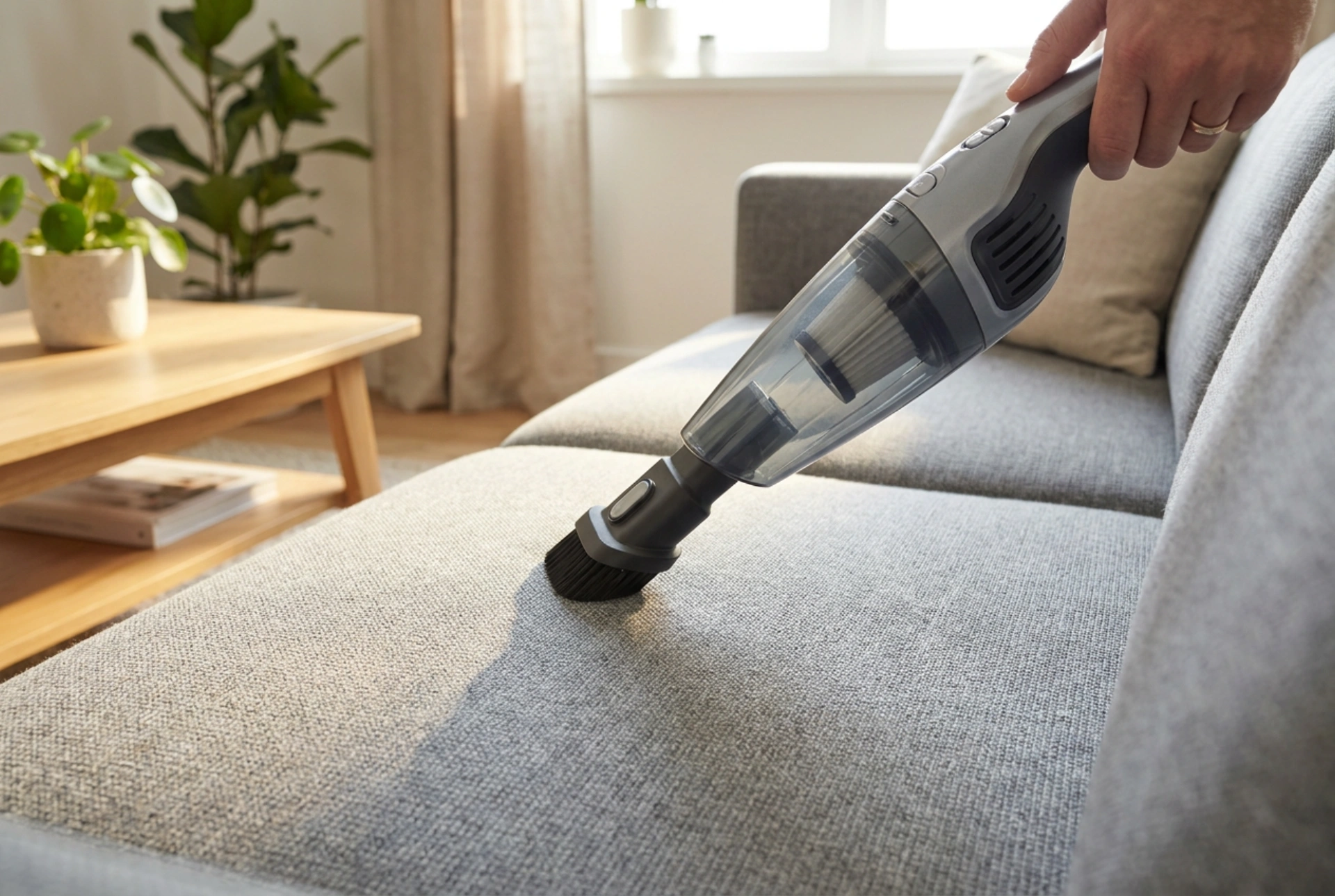
Using the wrong vacuum attachment simply glides over the surface without dislodging embedded hair. To clean upholstery effectively, switch to a motorized mini-brush tool or a specialized upholstery nozzle with lint-lifting strips.
- The Cross-Hatch Technique: Always vacuum in two perpendicular directions. First, glide the nozzle vertically to loosen the hairs, then vacuum horizontally to lift them out of the fabric weave.
- Speed and Pressure: Slow, deliberate strokes are far more effective than rapid back-and-forth movements. The slower pace allows the rotating brush or rubber strip to build the necessary friction to pull the hair free.
- Airflow Management: Ensure the vacuum's suction control is set to its medium-to-high setting. Too much suction can seal the nozzle flat against the fabric, stopping the airflow needed to carry the loose hair away.
Clearing tight corners and crevices
Corners where cushions meet the sofa frame are natural collection points for pet dander and fur. Standard nozzles cannot reach the deepest points of these angles, causing hair to compress into dense felt over time. To clean these areas, use a narrow crevice tool. Angle the tip at 45 degrees relative to the corner seam to maximize airflow velocity right at the point of contact. If the hair is deeply wedged, run a rubber-gloved hand down the seam first; the high coefficient of friction of the rubber pulls the hair clusters out of the deep crevice, making them easy to vacuum up instantly.
Neutralizing static charge before vacuuming
When dealing with highly charged synthetic fabrics like microfiber or polyester, neutralizing the static charge makes vacuuming significantly easier. You can lightly mist the upholstery with a mixture of water and a tiny drop of fabric softener or isopropyl alcohol. This increases surface conductivity, allowing the static electricity to dissipate. Let the fabric dry slightly so it is barely damp to the touch before vacuuming, as vacuuming soaking wet fabric can damage standard household filters and create a breeding ground for mold.
A routine checklist for pet owners
- Weekly Maintenance: Vacuum high-traffic pet zones twice a week to prevent hairs from weaving deeply into the upholstery fibers.
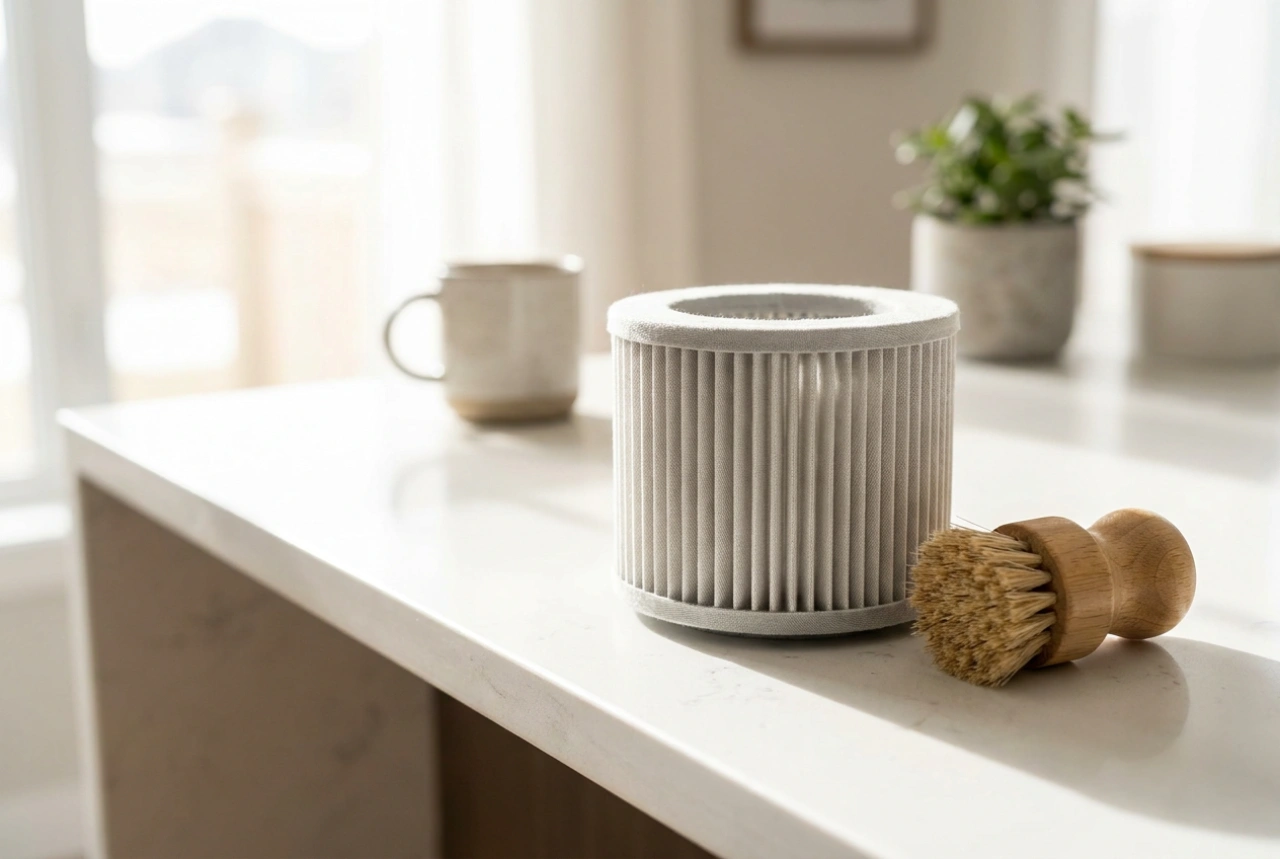
- Filter Care: Clean or replace your vacuum’s HEPA filter regularly. A clogged filter reduces static pressure, severely diminishing the tool's ability to lift heavy pet hair.
- Nozzle Cleaning: Check the brush roller after every use and cut away wrapped hairs to maintain maximum agitation power.