

Integrating a vacuum sealer into your weekly meal planning routine dramatically extends the shelf life of fresh ingredients and prepared dishes by eliminating oxygen, the primary catalyst for food spoilage.
The Science of Oxygen Exclusion
Food degradation is primarily driven by aerobic micro-organisms, such as bacteria and fungi, and oxidation reactions. Oxidation causes fats to go rancid, fresh vegetables to brown, and delicate proteins to lose their structure. By utilizing a vacuum sealer, you extract the air surrounding the food and create a hermetic seal. This oxygen-deprived environment halts the proliferation of aerobic bacteria and drastically slows down enzymatic activity. Consequently, ingredients remain fresh up to five times longer than they would in standard plastic wrap or lidded storage containers.
Optimal Portioning and Advanced Meal Prep
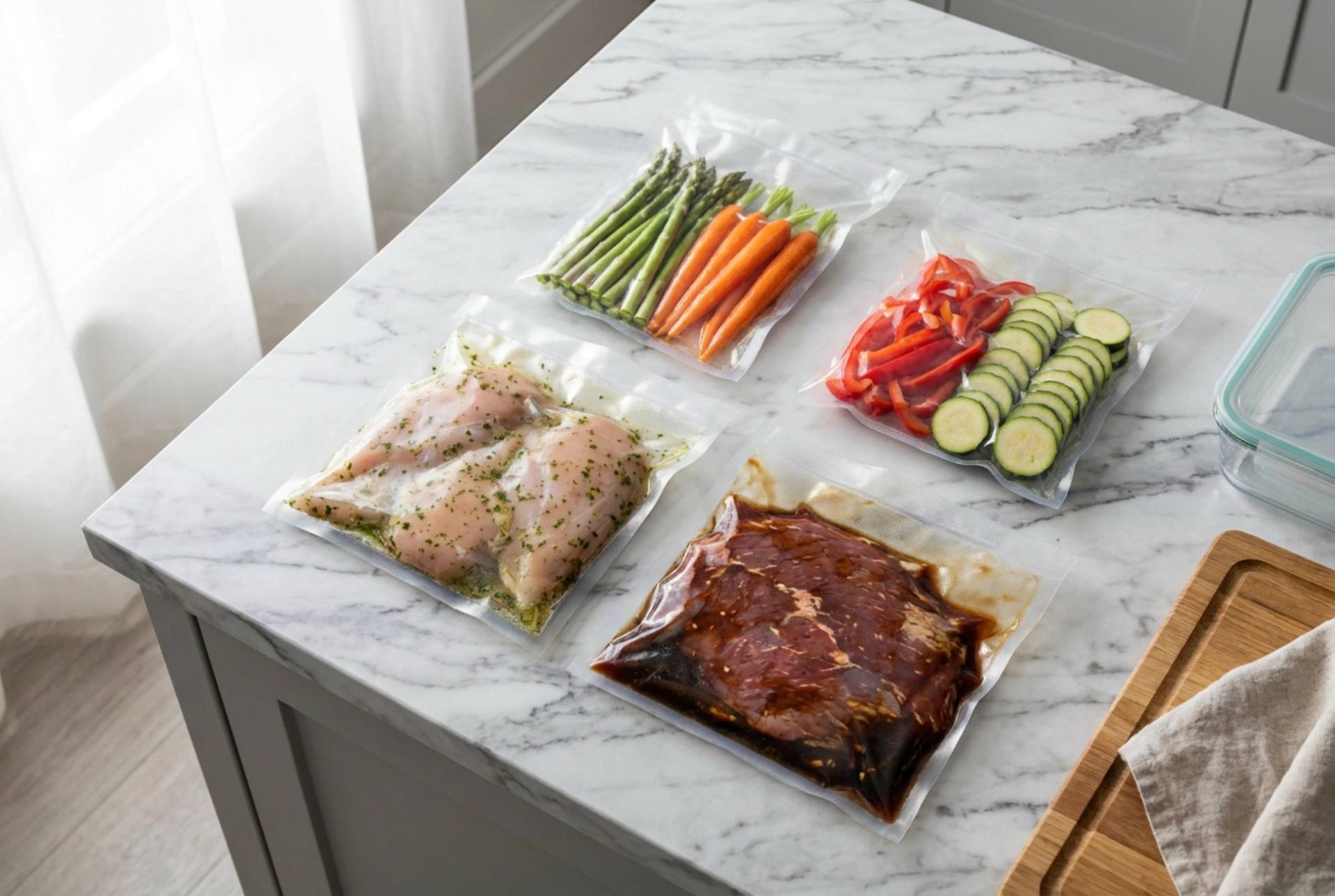
Effective meal planning relies on precision and portion control. When preparing meals for the week, portioning raw ingredients or cooked elements before sealing ensures that you only open what you intend to consume.
- Individual Portions: Divide large batches of stews, grains, or proteins into single-serve bags to prevent repeated heating and cooling cycles, which degrade food quality.
- Ingredient Kits: Group pre-chopped vegetables and herbs needed for specific recipes. For example, sealing a mirepoix base (onions, carrots, and celery) together keeps the aromatics crisp and ready for immediate cooking.
- Liquid Management: When sealing liquids like soups or marinades, pre-freeze them slightly in a container before vacuum sealing to prevent the liquid from being drawn into the sealing chamber during the vacuum cycle.
Preventing Freezer Burn
Freezer burn occurs when dry air circulates around frozen food, causing dehydration and oxidation on the surface of the ingredient. This results in tough, discolored meat and bland, fibrous vegetables. Vacuum sealing removes the air pocket where moisture can evaporate and reform as ice crystals. By keeping the protective plastic membrane in direct contact with the food surface, the cellular structure of meats and vegetables remains intact, preserving both the original texture and nutritional value upon thawing.
Accelerated Marinating and Flavor Infusion
The physics of vacuum sealing can also be leveraged to accelerate culinary processes. When you subject meat, fish, or tofu to a vacuum inside a bag containing a marinade, the atmospheric pressure drop forces the muscle fibers and cellular walls of the food to expand. This expansion allows the marinade to penetrate deep into the tissue within minutes, a process that normally takes hours or days under standard atmospheric conditions. This technique ensures deep flavor distribution throughout your pre-planned weekly proteins with minimal effort.
Temperature and Handling Protocols
To maximize food safety when using a vacuum sealer, strict temperature control is necessary. Always cool cooked food to at least room temperature—ideally below 4 degrees Celsius in the refrigerator—before sealing to prevent steam from breaking the vacuum seal. Label each sealed package with the preparation date and contents using a permanent marker, and store them systematically in your refrigerator or freezer to maintain a strict first-in, first-out rotation system.