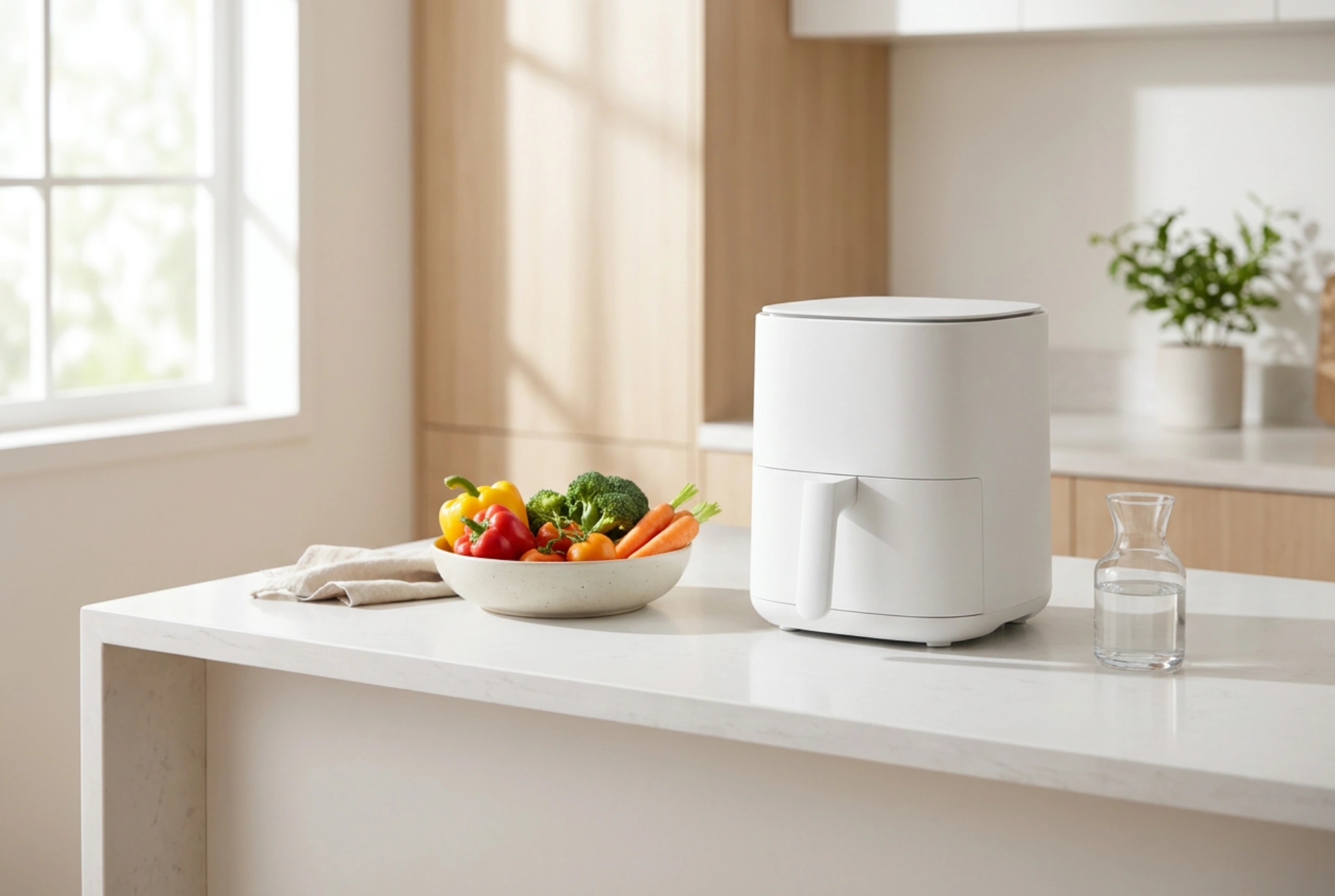


An air fryer is essentially a highly concentrated convection oven that uses rapid air technology to mimic the effects of deep frying without the excess lipids.
The Physics of Rapid Air Technology
To understand why this appliance is highly efficient, one must look at the mechanics of heat transfer. Traditional convection ovens rely on natural or gently forced air circulation, which can lead to slow heat transfer and uneven moisture evaporation. An air fryer utilizes a powerful heating element combined with a high-velocity fan positioned directly above the food basket. This design forces hot air downward and around the ingredients, creating a high-speed thermal circulation loop. This intense convection significantly accelerates the evaporation of surface moisture from the food, triggering the Maillard reaction—the chemical reaction between amino acids and reducing sugars that gives browned food its distinctive, desirable flavor and texture. Because the cooking chamber is compact, heat loss is minimized, resulting in cooking times that are often up to fifty percent faster than in a conventional oven.
Optimal Scenarios for Air Frying
The appliance performs exceptionally well under specific conditions where dry heat and rapid evaporation are required. Understanding these scenarios allows for maximum efficiency in the kitchen.
Reheating and Restoring Crispness
Leftover fried or baked goods often become soggy in a microwave because the water molecules inside the food are heated, turning to steam that softens the outer crust. An air fryer quickly evaporates this surface moisture while simultaneously reheating the interior, restoring the original crispy texture of items like roasted vegetables, pastries, and breaded proteins in minutes.
Roasting Small Batches of Root Vegetables
For preparing small portions of dense vegetables like carrots, parsnips, or potatoes, preheating a large conventional oven is highly energy-inefficient. In the air fryer, the high-velocity air quickly crisps the exterior while locking in the natural sugars of the vegetables, achieving a caramelized exterior and a tender interior with only a fraction of the oil required for traditional roasting.
Cooking From Frozen
Frozen convenience foods, such as potato wedges or pre-breaded proteins, benefit greatly from the dry, fast-moving heat. The rapid air circulation quickly thaws the outer frost and prevents the food from sitting in its own condensation, resulting in a firm, crispy texture rather than a soggy finish.
When to Avoid the Air Fryer
Despite its versatility, the physical principles of air frying make it unsuitable for certain types of food preparation.
- Wet Batters: Unlike deep frying, where a hot oil bath instantly cooks and seals a liquid batter, the air flow in an air fryer will blow wet batter off the food before it can set, resulting in a messy chamber and unevenly cooked food. Stick to dry coatings, breadcrumbs, or starch-based dredges.
- Lightweight Leafy Greens: Due to the high-speed fan, lightweight ingredients like raw spinach or loose herbs will be blown around the cooking chamber, potentially getting stuck in the heating element and burning.
- Large Quantities: Overcrowding the basket disrupts the air flow, trapping steam and leading to soggy, unevenly cooked food. For large family meals, a standard convection oven remains the more efficient tool.
Maintenance and Care for Longevity
To keep the appliance running efficiently, proper maintenance of the non-stick surface and fan mechanism is vital. Avoid using abrasive scrubbing pads or aerosol cooking sprays, which contain propellants that can permanently damage the non-stick coating. Instead, wash the cooled basket with warm water, mild dish soap, and a soft microfiber sponge. Periodically wipe the upper heating element with a damp cloth to prevent carbon buildup from accumulated cooking grease.