

Achieving spotless, dry dishes depends entirely on controlling the temperature, water chemistry, and timing of your dishwasher tablet’s dissolution.
The science of dissolution: why timing is everything
Dishwasher tablets are engineered with distinct chemical layers that must dissolve at precise moments during the wash cycle. The outer polymer wrapping is water-soluble, designed to break down rapidly when exposed to hot water. If the tablet is released too early, its enzymes—which break down starches and proteins—will be washed away during the initial pre-wash phase before the main cleaning cycle even begins. To prevent premature dissolution, always ensure the detergent dispenser cup is completely dry before inserting the tablet. Moisture inside the chamber causes the tablet to swell and stick, preventing the spring-loaded door from opening at the correct thermodynamic interval.
Water temperature and foaming mechanics
For the surfactants in the tablet to foam and emulsify grease effectively, the water temperature must reach a minimum threshold, usually between 50 and 65 degrees Celsius. Low-temperature eco-modes require highly soluble formulations; if you run a short or cold cycle with a dense, multi-phase tablet, the tablet will not dissolve completely. This leaves behind a soapy residue and leads to poor foaming performance. To optimize chemical action, select a cycle that matches the tablet type, and periodically run a cleaning cycle to clear the internal heating elements of limescale, ensuring the water reaches the necessary temperature quickly.
The role of rinse aid in the drying process
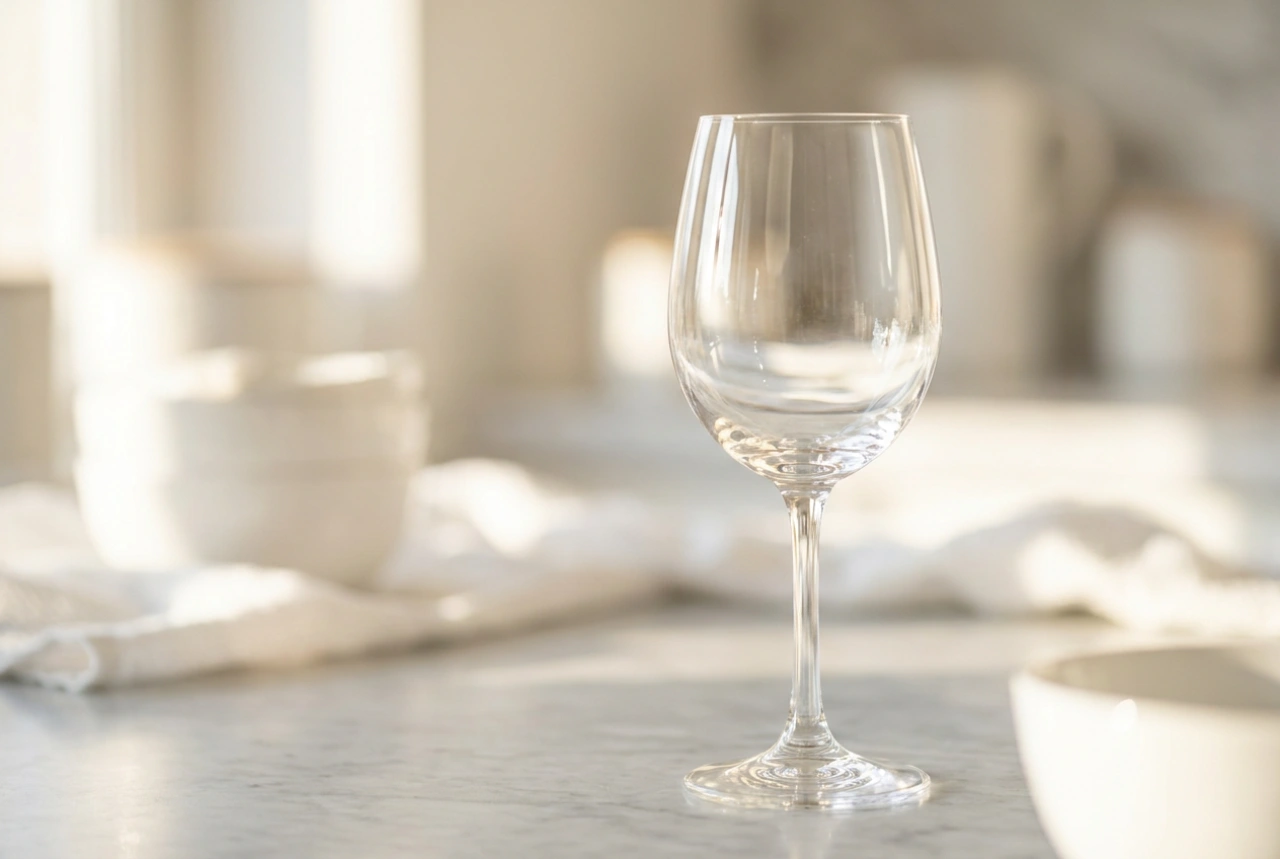
Many modern tablets claim to include built-in rinse aid, but physics dictates that a separate liquid rinse aid is often still necessary for perfect drying. Rinse aid acts as a surfactant that lowers the surface tension of water. Instead of forming spherical droplets that cling to ceramic and glass, the water flattens into a thin sheet and drains off the surfaces rapidly via gravity. This mechanism, known as shear flow, prevents water spots and speeds up the evaporation process during the condensation drying phase. If your glasses emerge cloudy or wet, the physical barrier of water tension has not been sufficiently broken, and relying solely on the tablet's integrated agents is likely insufficient for your local water hardness level.
Optimizing mechanical loading for airflow
Proper chemical action must be supported by correct physical loading. Overcrowding the racks blocks the spray arms, preventing water from reaching the detergent cup to dissolve the tablet efficiently. Furthermore, effective drying relies on convection currents inside the tub. Angle cups, bowls, and glasses downward to prevent water from pooling in the concave bases. When the cycle ends, open the door slightly to allow the hot, moisture-saturated air to escape, preventing the humidity from condensing back onto the cooling ceramic and glass surfaces.