

The unsightly, dark crust that accumulates on the underside of frying pans is a mixture of polymerised cooking oils and carbonised food residue, baked onto the metal surface by intense, direct heat.
The Chemistry of Polymerised Grease on Metal
When cooking oils spill over the edge of a pan and meet the high temperatures of the stove burner, they undergo polymerisation. This chemical reaction links the liquid lipid molecules into a tough, plastic-like varnish that bonds tightly to the metal substrate. Simply scrubbing this layer with harsh abrasives like steel wool or brass wire brushes will irreparably scratch the metal surface, creating micro-grooves that make the pan even more prone to future sticking and burning. To remove this layer safely, you must break the chemical bonds of the polymerised oil using temperature, alkaline reactions, and mild, non-destructive friction.
The Sodium Bicarbonate and Thermal Expansion Method
This technique uses the mild alkalinity of sodium bicarbonate (baking soda) combined with the physical expansion of metal when heated to lift carbonised crusts.
- Step 1: Dry heat expansion. Warm the empty pan gently on the stove over medium-low heat for two minutes. Metal expands slightly when heated, which creates micro-fissures in the rigid, brittle burnt layer. Do not overheat empty non-stick coated pans.
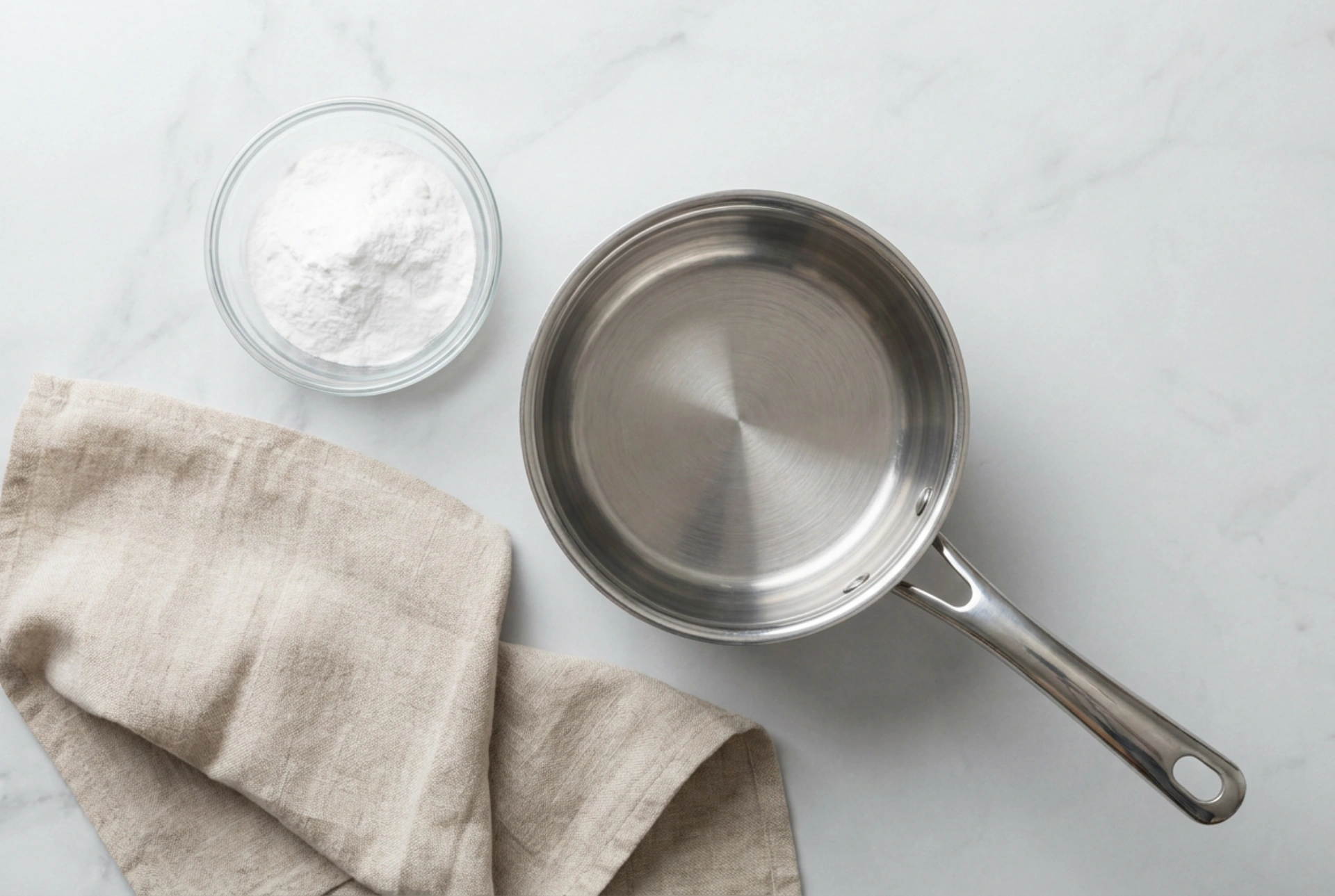
- Step 2: Apply the alkaline paste. Mix three parts sodium bicarbonate with one part warm water to form a thick, spreadable paste. Remove the pan from the heat, turn it upside down, and coat the entire burnt bottom with the paste while the metal is still warm.
- Step 3: Trigger the reaction. Spray the coated area lightly with water or a mild acid like white vinegar. The resulting effervescence helps physically dislodge the softened grease from the metallic pores. Leave the paste to react for 30 minutes.
- Step 4: Mechanical removal. Use a non-scratch cellulose sponge or a soft-bristled brush in tight, circular motions. The sodium bicarbonate acts as a soluble, crystalline abrasive that dissolves as you rinse, ensuring it cannot scratch stainless steel, copper, or aluminium.
The Oxygen Bleach Simmer for Stubborn Carbon
For pans with extreme, multi-layered carbon build-up, sodium percarbonate (oxygen bleach) offers a highly effective, non-abrasive chemical solution.
- Step 1: Choose a wide vessel. Find a larger pot or a deep baking tray that can fully submerge the bottom of the affected frying pan.
- Step 2: Dissolve the active agent. Fill the large vessel with boiling water and add two tablespoons of sodium percarbonate powder. This compound releases active oxygen bubbles and sodium carbonate upon contact with hot water.
- Step 3: Submerge and soak. Place the bottom of the dirty pan into the bubbling solution. Keep the water hot (just below a boil) and let it soak for 20 to 30 minutes. The active oxygen penetrates the porous carbon structure, breaking down the organic polymers from within.
- Step 4: Wipe clean. Lift the pan out and wipe the softened black residue away easily with a damp microfiber cloth. Rinse thoroughly with clean water.
Preventative Maintenance and Protective Habits
The easiest way to keep pan bottoms clean is to prevent the polymerisation process from occurring in the first place.
- Wipe the exterior: Always wipe down the outer walls and the bottom of your pans with a dry cloth before putting them on the stove to remove invisible oil droplets.
- Manage the heat: Excessively high heat causes immediate carbonisation of any food spills. Match the burner size to the pan base to prevent flames or heating elements from licking up the sides of the cookware.