

Removing coffee stains from textiles often leads to a secondary problem: a stubborn yellow or brown ring that remains around the edge of the dried spot once the liquid evaporates.
The physics behind the coffee halo effect
To prevent the yellow outline, you must understand the physical mechanism known as the coffee ring effect. When a coffee drop lands on fabric, evaporation occurs faster at the outer edges of the wet spot than at the center. This creates an outward capillary flow, driving the dissolved organic pigments (tannins and melanoidins) to the perimeter where they deposit and dry into a concentrated ring. To prevent this, you must disrupt this capillary migration by managing moisture gradient and chemical bonding.
Why plain water makes the ring worse
Applying water to the center of a semi-dry coffee stain simply dissolves the concentrated pigments at the core and flushes them further outward to form a larger, more prominent halo. To lift the stain completely, you must combine chemical dissolution with physical capillary action that pulls the pigment away from the fibers rather than pushing it into surrounding dry areas.
Step-by-step extraction technique
This process relies on using acidic solvents to break down tannins, followed by surfactant dispersion and vacuum-like absorption.
1. Immediate moisture control
Place a dry, clean, highly absorbent white cotton cloth or heavy-duty paper towel directly beneath the stained fabric. Instead of rubbing the stain from the top, press a dry cotton pad firmly over the spot to absorb excess liquid vertically. This prevents the lateral spread of pigments along the woven fibers.
2. Chemical breakdown of tannins
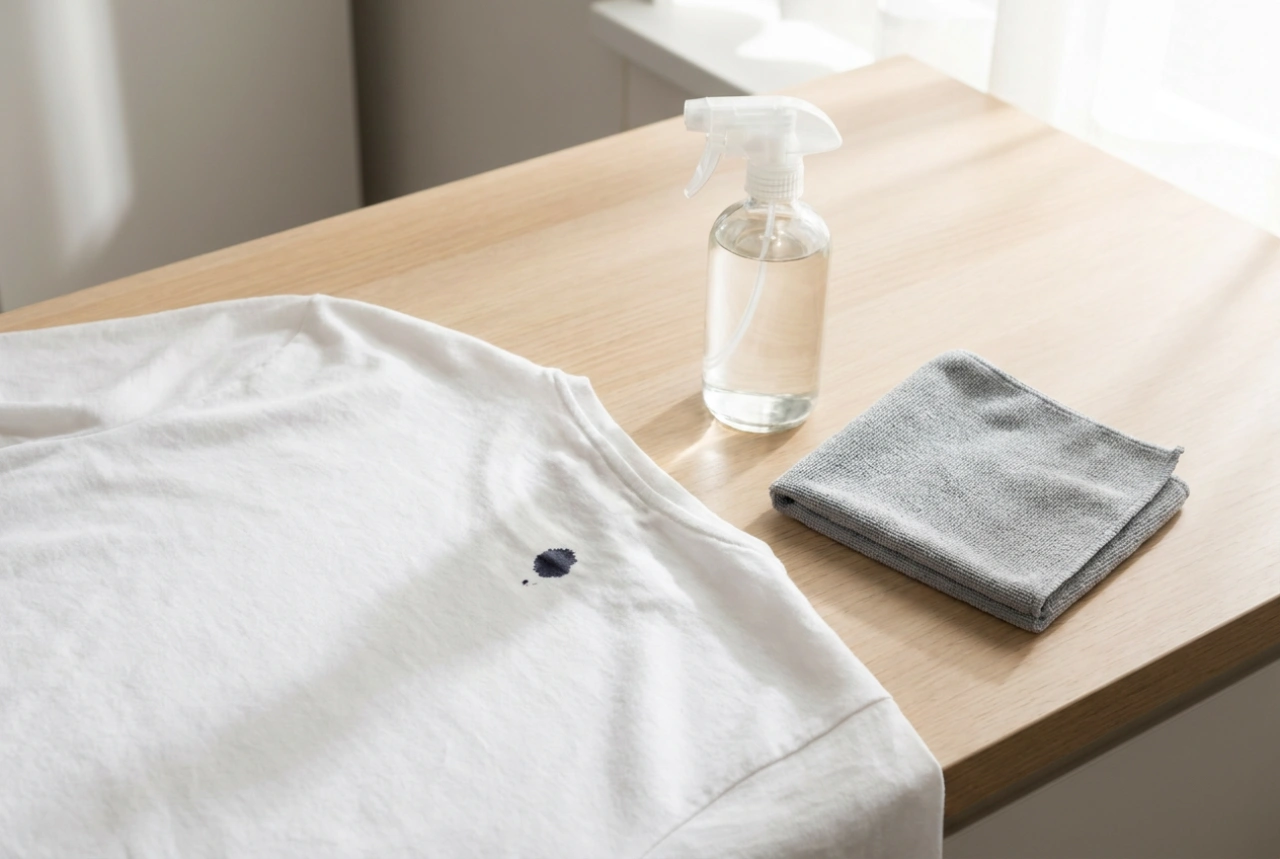
Mix a solution of equal parts white vinegar (acetic acid) and cool water. Acetic acid lowers the pH, which protonates the tannin molecules, making them less soluble in water but highly susceptible to being lifted from the cellulose or protein fibers of the fabric. Dab this solution from the outer edges of the stain inward to stop the outward capillary flow.
3. Surfactant application
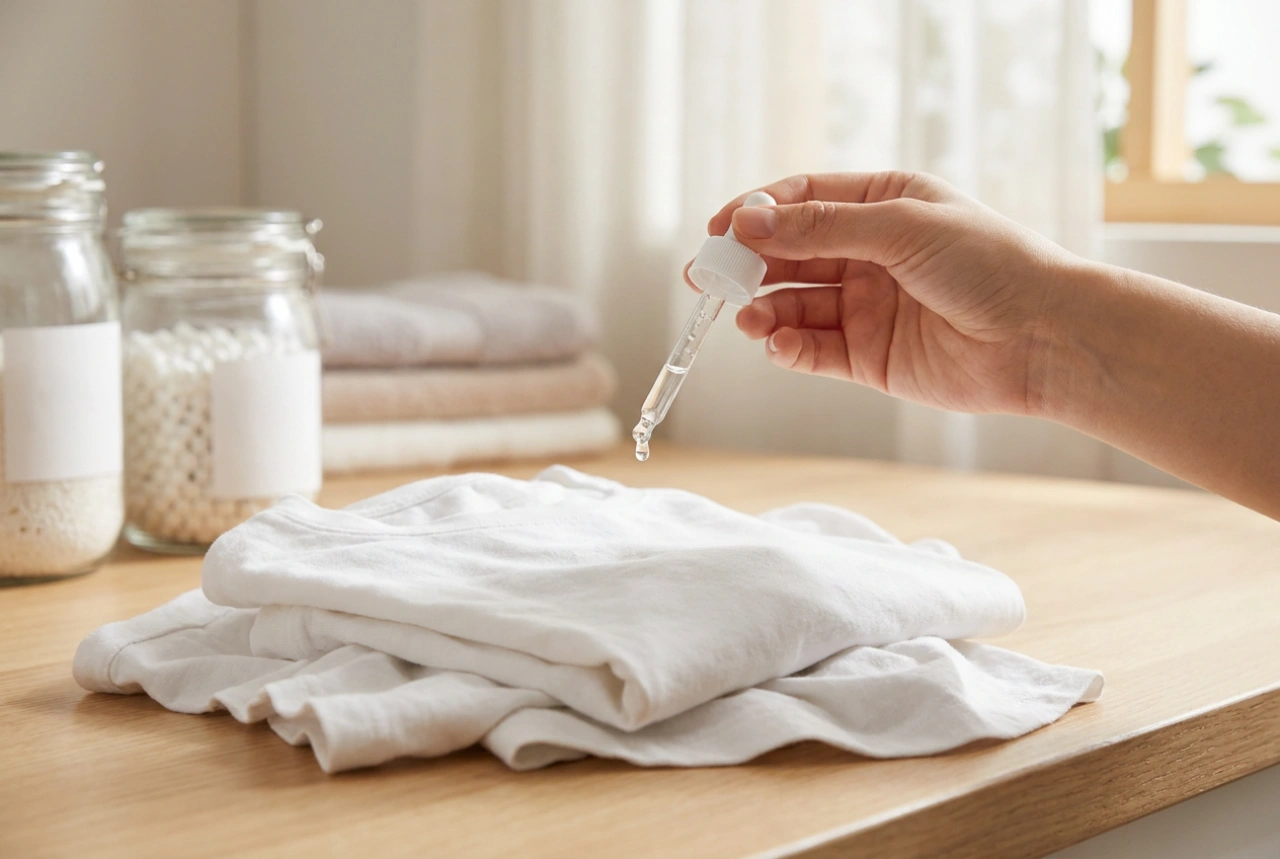
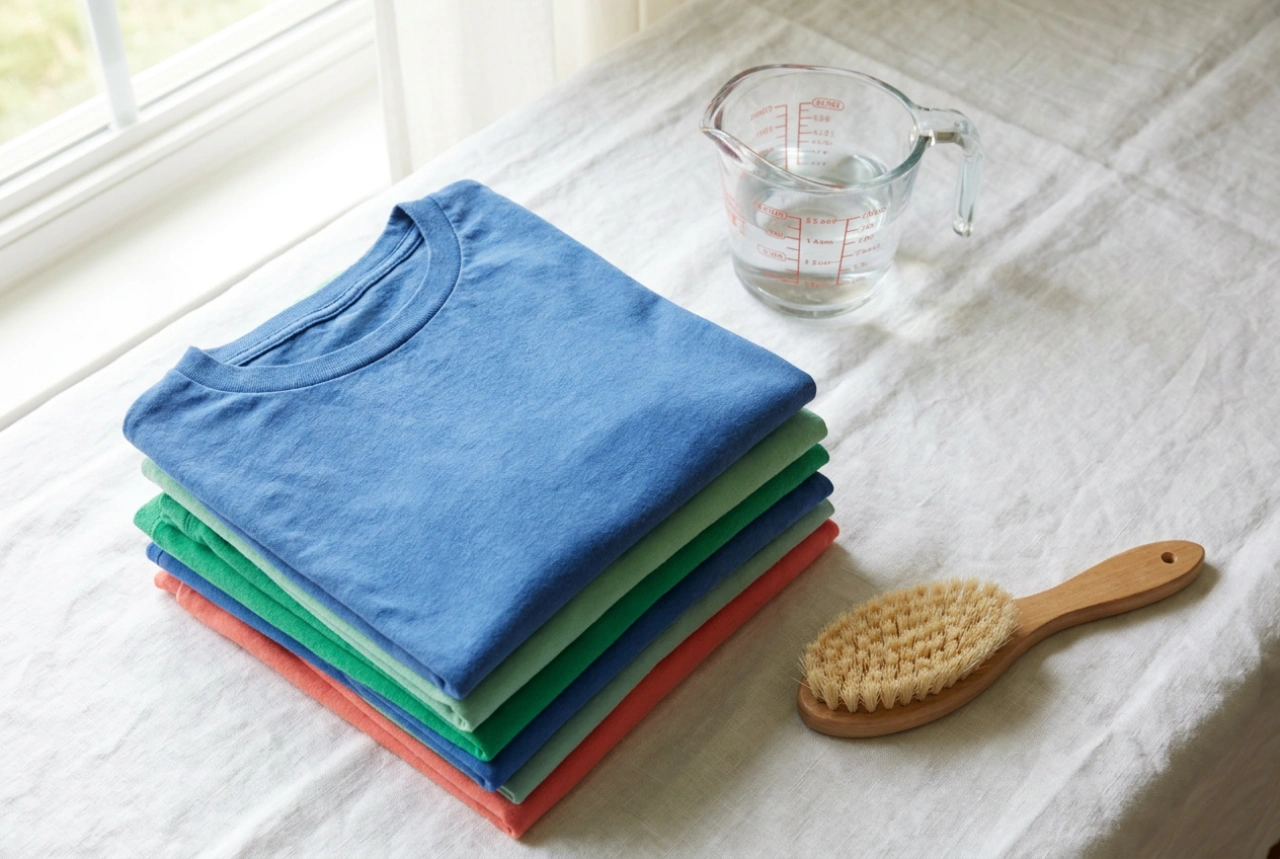
Apply a single drop of pH-neutral liquid dish soap or a mild laundry detergent directly to the treated area. Use a soft-bristled brush to gently tap—never scrub—the fabric. Tapping pushes the surfactant deep into the weave, emulsifying the lipids and oils present in the coffee (especially if milk or cream was added) and suspending them in the liquid phase.
4. The outward-to-inward rinsing process
To rinse, dampen a clean sponge with distilled water. Press the sponge firmly onto the outer dry perimeter of the stain first, working your way toward the center. This reverses the evaporation gradient and forces the suspended pigment molecules inward toward the dampest point rather than allowing them to migrate outward.
5. Rapid drying
Once the pigment is lifted, sandwich the wet area between two dry, thick cotton towels and apply heavy pressure. Removing the moisture as quickly as possible prevents the slow evaporation process that causes residual particles to settle on the edges. Do not use heat guns or hair dryers, as high heat can chemically bake any remaining microscopic organic compounds into the fibers, turning them permanently yellow.
Special considerations for different fiber types
Cotton and linen are cellulose-based and highly porous, meaning they absorb dyes easily. For stubborn stains on white cotton, a mild solution of oxygen bleach (sodium percarbonate) dissolved in warm water can be applied. The released oxygen ions break down the double bonds in the pigment molecules, rendering them colorless. For protein-based fibers like wool and silk, avoid alkaline substances and oxygen bleach entirely, as they degrade the natural protein structure; stick strictly to the mild acetic acid method with cool water.