

Coffee stains on light fabrics are primarily composed of tannins—organic polyphenols that act as natural dyes—alongside lipids, proteins from milk, and sugars. Removing these compounds from light blouses, tablecloths, and upholstery requires a systematic chemical and physical approach tailored to each material's properties to prevent the pigments from permanently binding to the fibers.
The Chemistry of Coffee Stains: Why They Bind
Understanding the molecular structure of coffee is key to effective stain removal. Tannins are water-soluble plant compounds that readily form hydrogen bonds with the cellulose in cotton and linen, or the proteins in silk and wool. When hot coffee spills, the thermal energy accelerates this bonding process, opening up the fiber structure and allowing the pigments to penetrate deeply. If the coffee contains milk or cream, you also have to contend with lipids (fats) and proteins, which require surfactant action to break down. To remove these elements successfully, you must use temperature, mechanical action, and chemical agents in a precise order: dissolve the lipids, break the tannin-cellulose bonds, and oxidize any remaining pigments.
How to Remove Coffee Stains from Light Blouses
Light blouses made of cotton, linen, or synthetic blends require delicate but effective chemical interventions. The order of operations is critical here to prevent setting the stain.
Immediate Action: Cold Water Flushing
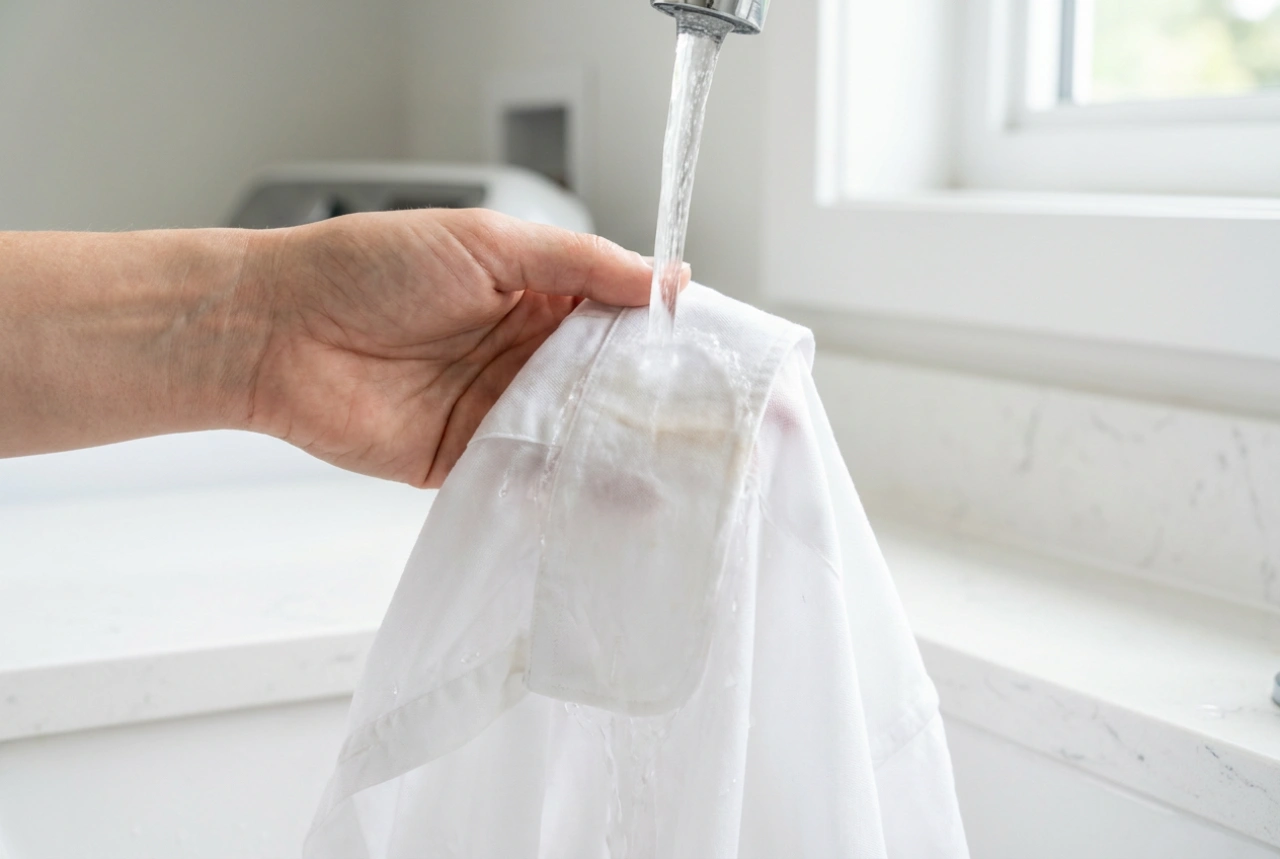
For fresh stains on a blouse, immediately flush the fabric from the reverse side with cold, running water. This uses physical pressure to push the coffee particles out of the weave rather than driving them deeper. Never rub the stain with a dry cloth, as friction generates heat and pushes the pigments into the fibers through capillary action.
Chemical Neutralization with Mild Acids
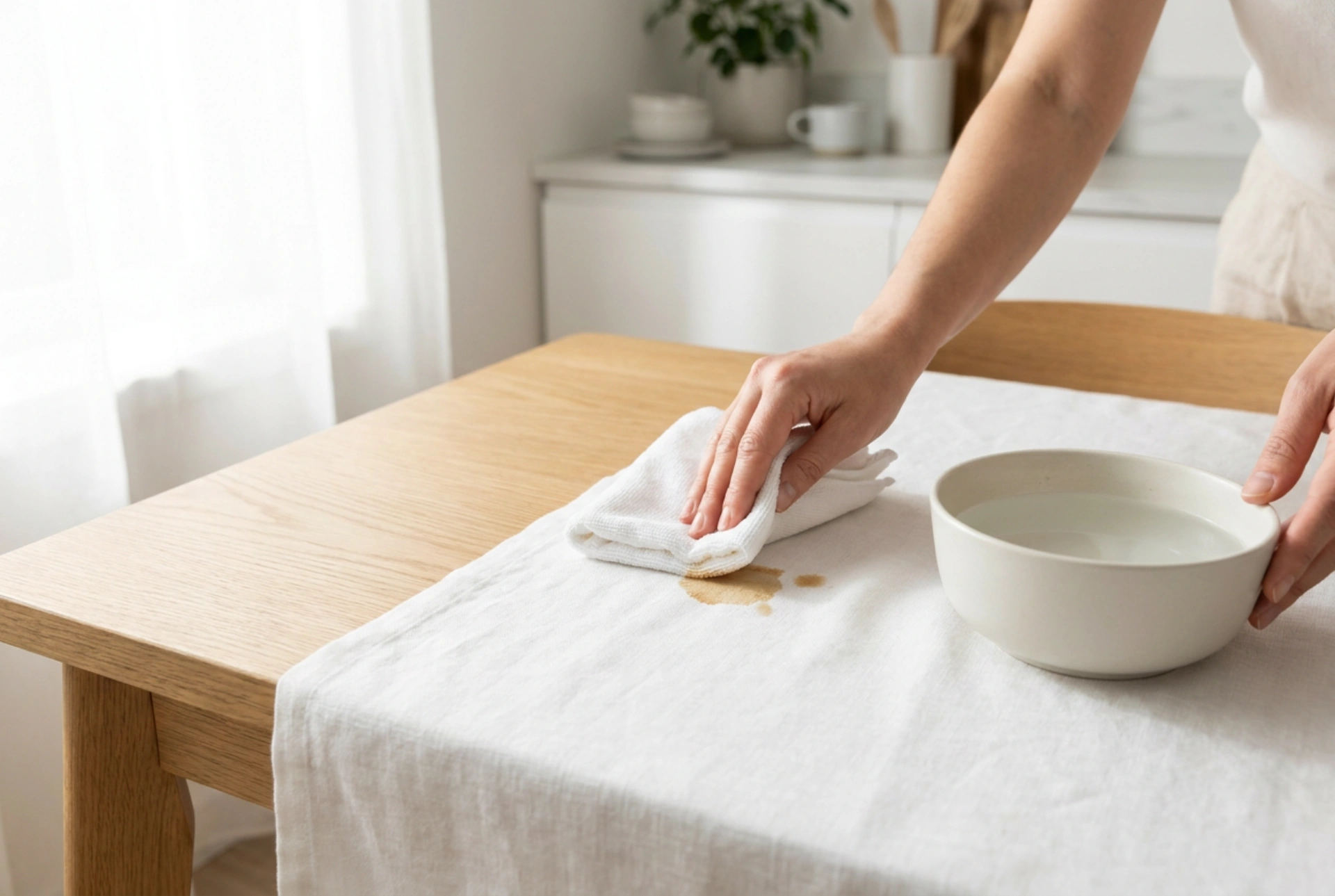
For persistent stains, apply a mild acidic solution, such as a mixture of white vinegar (acetic acid) and water in a 1:1 ratio, or a diluted citric acid solution. The acid breaks down the tannin structures and alters their pH, making them more soluble in water. Dab the solution onto the stain using a clean, white microfiber cloth, working from the outer edges inward to prevent spreading.
Oxidation for Remaining Pigments
If a yellow or light brown shadow remains, utilize an oxygen bleach (sodium percarbonate) dissolved in lukewarm water. This releasing agent breaks down the double bonds in the pigment molecules (chromophores), rendering them colorless. Avoid chlorine-based bleaches on light synthetics, as they can cause yellowing of the polymer chains.
Restoring White and Light Tablecloths
Tablecloths, often made of robust cotton or heavy linen, can withstand higher temperatures and more vigorous physical treatments than delicate apparel.
The Gravity Flush Technique
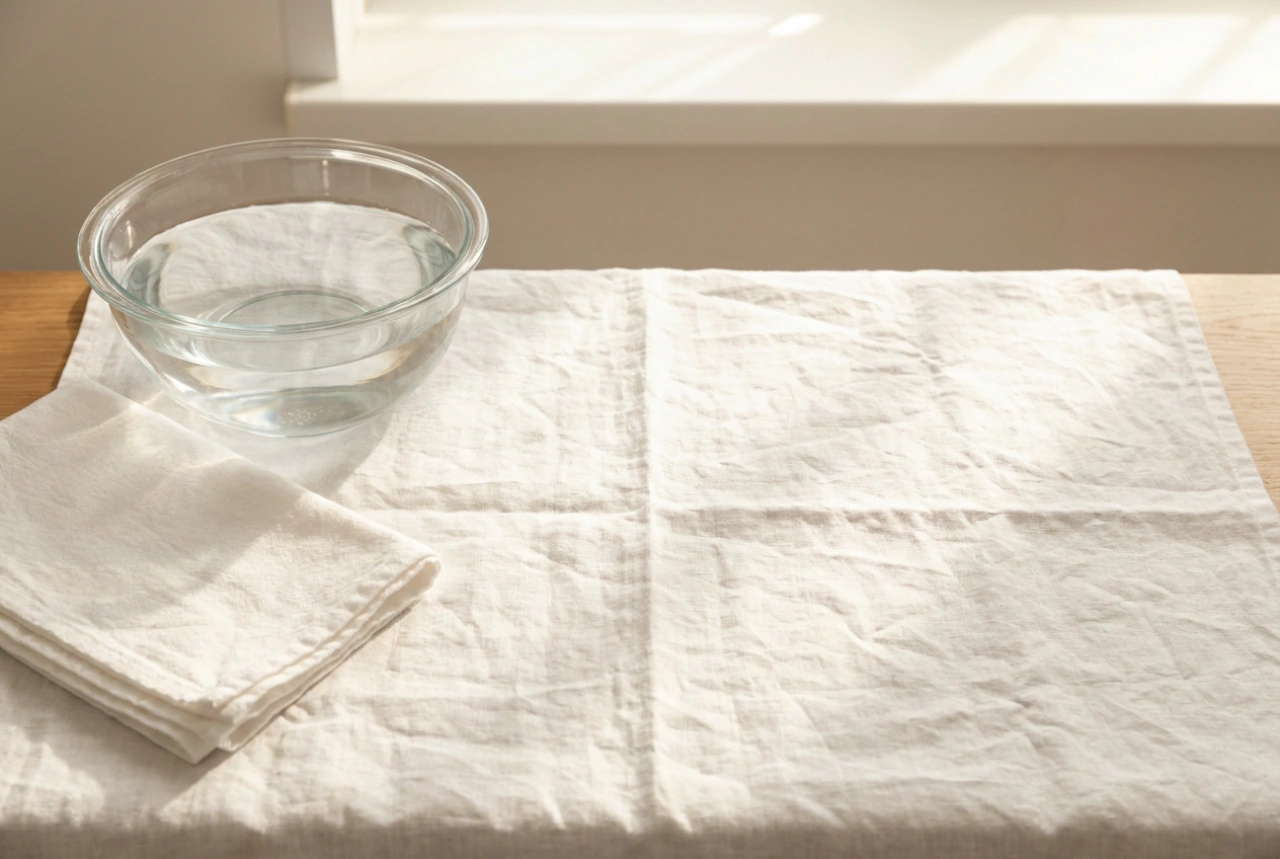
For a fresh spill on a cotton or linen tablecloth, stretch the stained area over a large bowl or sink. Pour boiling water through the fabric from a height of about 50 cm. The kinetic energy of the falling water, combined with the heat, melts any milk fats and flushes the water-soluble tannins directly through the open weave of the cellulose fibers. This method should only be used on 100% natural, heat-resistant plant fibers.
Soaking in Active Oxygen
For older, dried-on coffee stains, prepare a soaking bath of warm water (approx. 40°C to 50°C) and sodium percarbonate. Soak the tablecloth for at least two hours. The warm temperature slowly activates the oxygen-releasing compounds, gently lifting the embedded organic residue without degrading the structural integrity of the linen or cotton threads.
Treating Coffee Stains on Upholstery
Upholstery presents a unique challenge: you cannot flush water through the fabric because the underlying foam or batting will absorb the moisture, leading to mold growth and deep-set water rings. Therefore, you must rely on localized chemical extraction.
The Dry-Foam Method
To treat upholstery, mix a few drops of a neutral, color-free liquid surfactant (such as a basic dishwashing liquid) with warm water and whip it into a thick, dry foam. Apply only the foam to the stain using a soft brush or microfiber cloth. The surfactants in the foam lower the surface tension of the water, allowing it to emulsify the lipids and suspend the coffee pigments within the foam structure. Blot the foam away with a clean, damp cloth, pressing firmly to extract the liquid without saturating the backing.
Capillary Extraction with Powders
Once you have blotted the area, immediately sprinkle a layer of highly absorbent powder, such as cornstarch or baking soda, over the damp spot. As the fabric dries, the capillary action draws the remaining moisture—and any dissolved coffee pigments suspended in it—upward into the powder. Once completely dry, vacuum the powder away to reveal a clean surface.