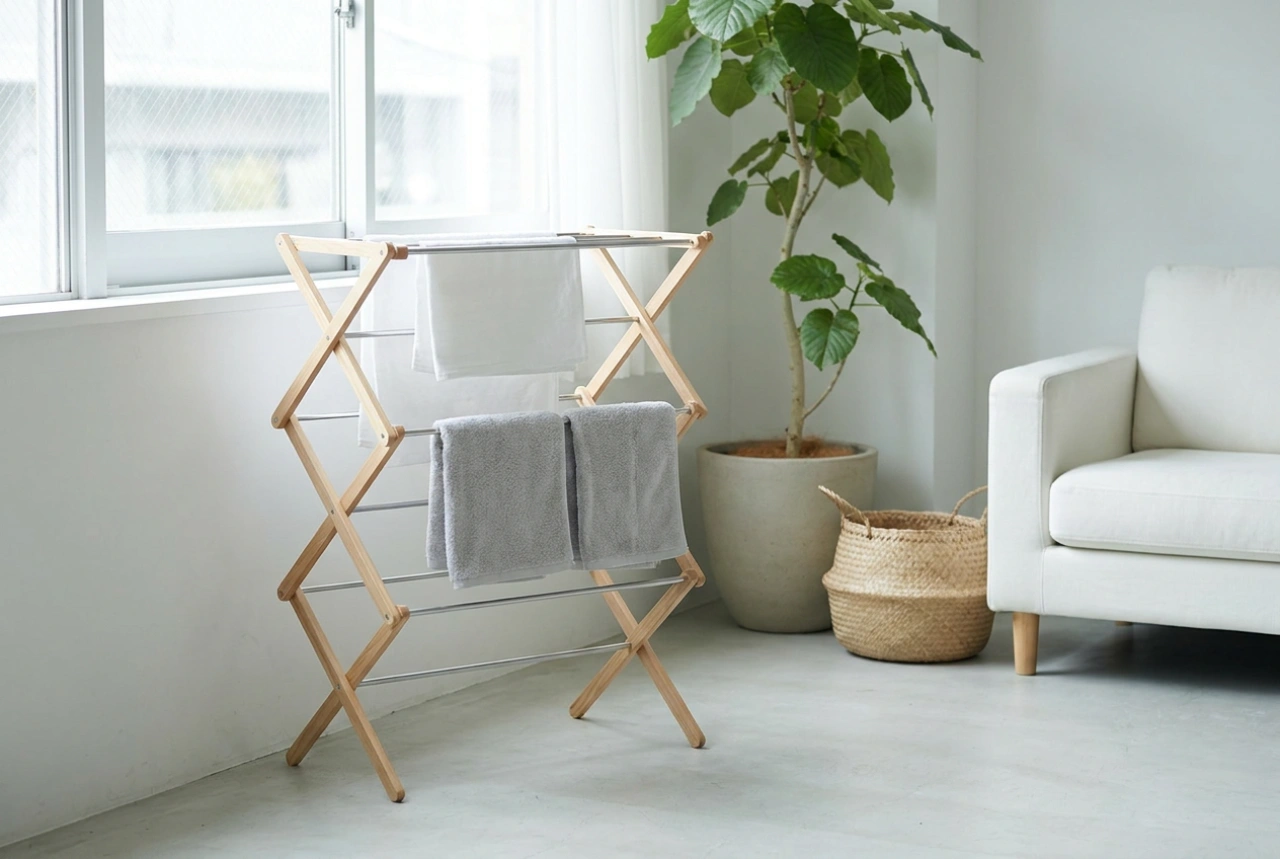


Maximizing the efficiency of a small standing drying rack requires understanding the physics of evaporation, airflow, and textile behavior. By applying targeted hanging techniques and managing indoor humidity, you can dry everyday laundry rapidly while preserving fabric structure and preventing musty odors.
The Physics of Indoor Drying: Airflow and the Boundary Layer
Drying is not merely about warmth; it is a thermodynamic process governed by evaporation and air movement. When a wet garment hangs, a thin boundary layer of highly saturated, cool air forms immediately around the fabric. If this stagnant air layer is not disrupted, the rate of evaporation drops significantly, stalling the drying process.
To accelerate drying on a compact rack, you must break this boundary layer. Positioning the rack in a location with natural micro-currents of air—such as near a hallway or in the path of cross-ventilation—is far more effective than placing it next to a static heat source. Air movement continuously replaces the saturated boundary layer with drier ambient air, maintaining a steep moisture gradient that coaxes water out of the fibers.
Strategic Geometry: The Chimney Effect for Compact Racks
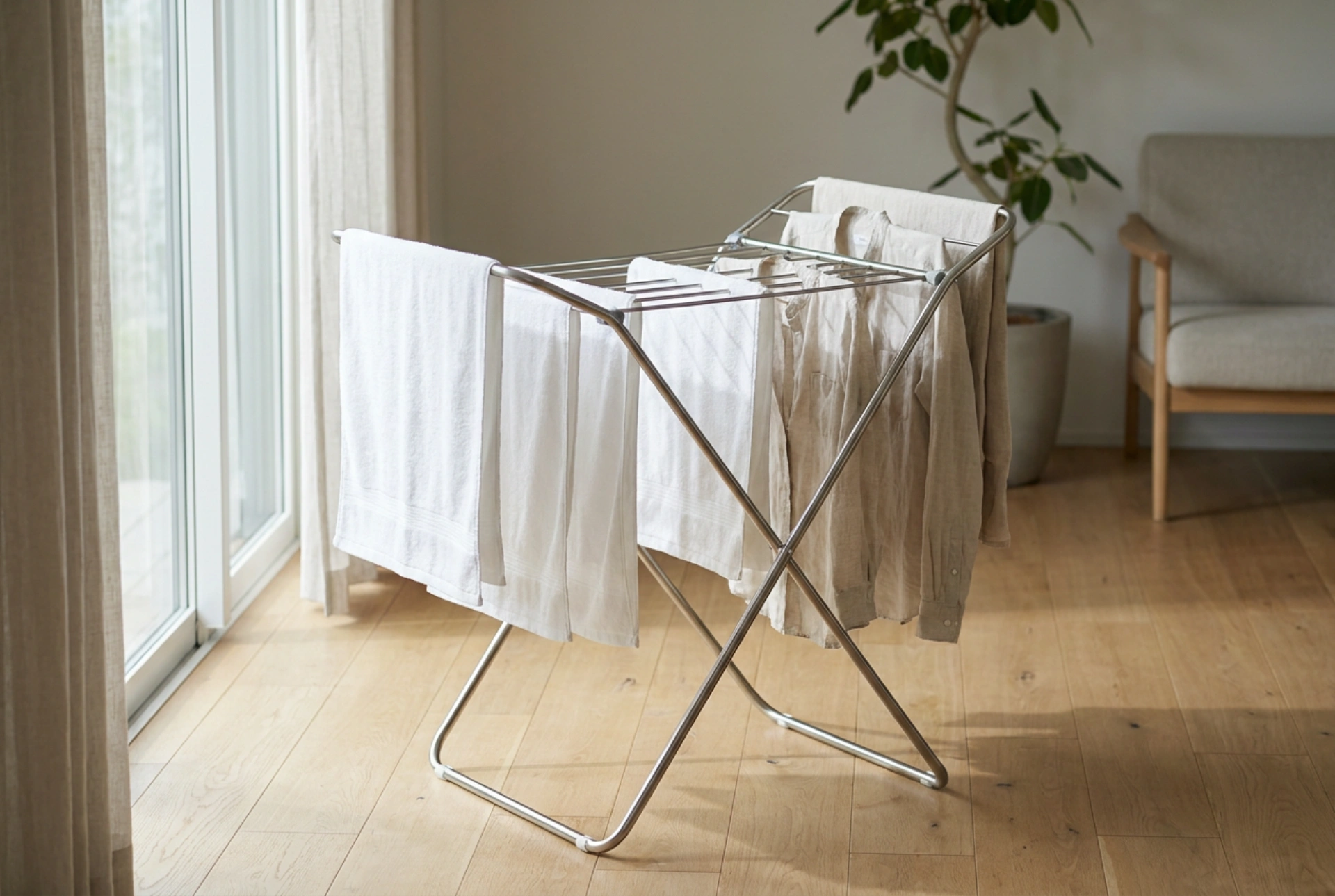
When space on a small drying rack is limited, the temptation is to pack garments tightly. However, crowding restricts airflow and traps moisture. To optimize a small footprint, utilize the "chimney effect" arrangement.
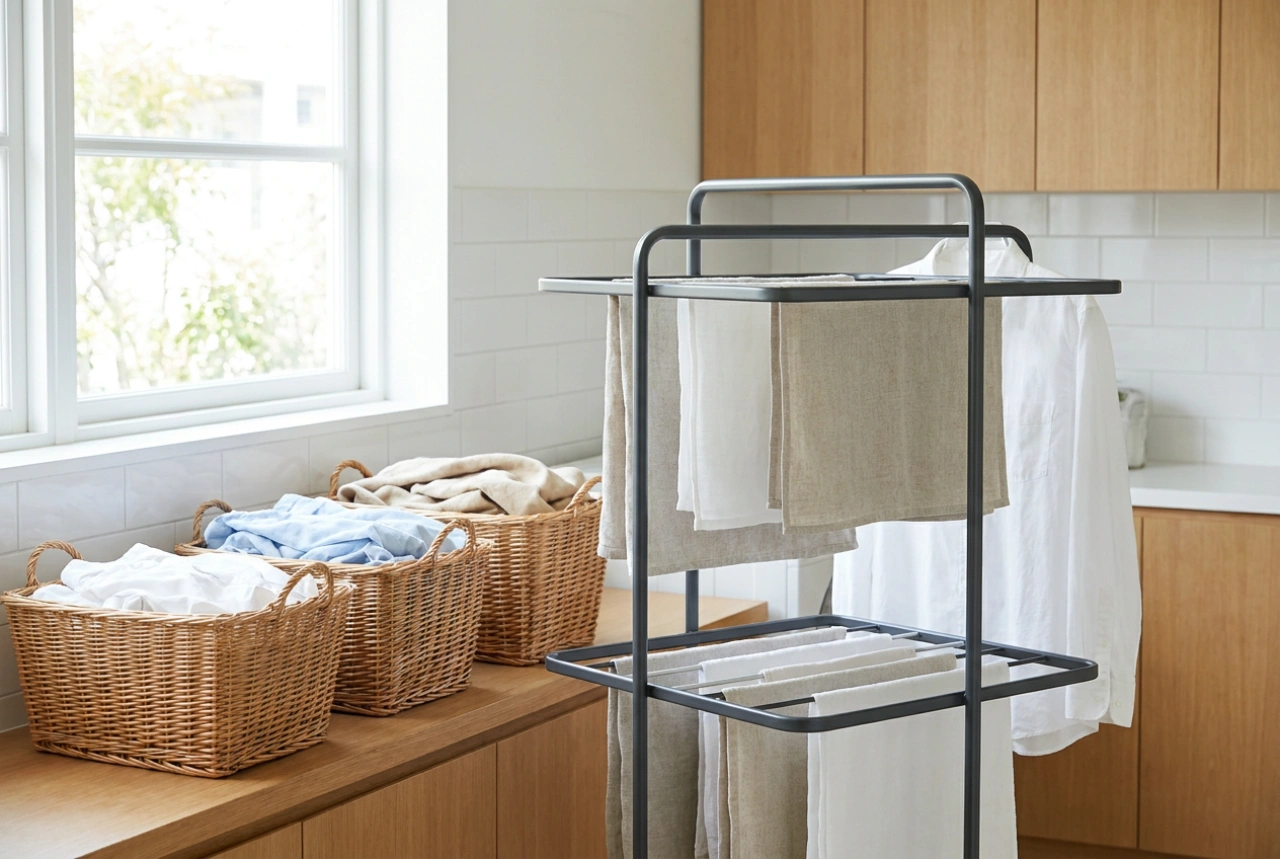
- The V-Shape Configuration: Hang longer, heavier garments (like trousers or cotton sweaters) on the outermost rails of the rack. Place shorter, lighter items (like underwear or socks) on the inner, lower rungs. This creates an open inverted pyramid shape underneath the rack, allowing warmer, lighter air to rise naturally through the center and carry moisture away.
- Double-Rail Draping: For heavy cotton items, drape them over two parallel rails instead of one. This doubles the surface area exposed to air, reduces the fabric-to-fabric contact, and prevents the sharp creasing that damages delicate fibers over time.
- Alternating Directions: Avoid aligning garments parallel to each other if they are thick. Alternating horizontal and vertical alignments on multi-tier racks creates turbulence in the airflow, preventing stagnant air pockets.
Material Science: How Different Fibers Respond to Wet Tension
Different textiles require specific drying postures to maintain their physical structure and elasticity. Water weight adds significant gravitational pull, which can deform fibers when wet.
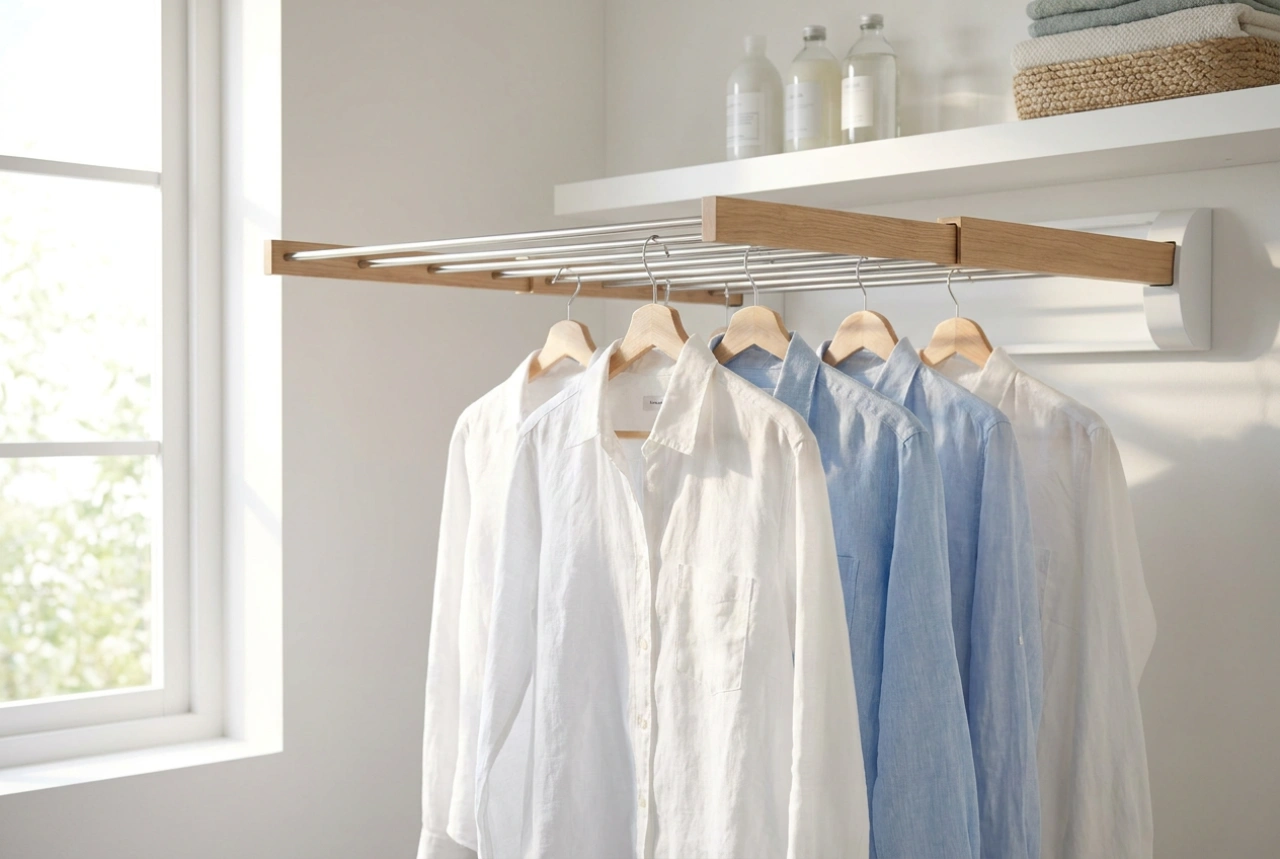
Cellulose Fibers (Cotton, Linen): These fibers absorb up to 25% of their weight in water and become highly plastic when wet. Hanging them by their weakest points (such as the shoulders of a heavy shirt) can permanently distort the garment. Use wide plastic hangers or drape them evenly over the widest rails to distribute the weight. Use the natural fold lines of the garments to avoid creating hard creases that require high-heat ironing later.
Protein Fibers (Wool, Silk): Wool fibers lose their elasticity when wet and are prone to irreversible stretching. Never hang wet wool vertically on a standing rack. Instead, lay them flat across the top horizontal surface of the rack, using a dry towel underneath to absorb excess water without putting mechanical stress on the structural knit.
Synthetic Fibers (Polyester, Nylon): Synthetics are hydrophobic, meaning they absorb very little water within the fiber itself; moisture is held merely between the threads. These garments dry exceptionally fast and can be hung vertically using minimalist hanging points without risk of stretching.
Managing Indoor Humidity and Air Saturation
A single load of wet laundry can release up to two to three liters of water vapor into your living space. If this moisture is not managed, the relative humidity in the room will rapidly climb past 70%, stalling the drying process and risking mold proliferation.
To prevent this, implement active moisture management. Open windows on opposite sides of the room for just five to ten minutes to initiate cross-ventilation. This replaces the highly humid indoor air with drier outdoor air. This simple physical exchange is far more effective than heating a closed room, as cold dry air from outside expands when warmed indoors, dropping its relative humidity and vastly increasing its capacity to absorb moisture from your drying clothes.