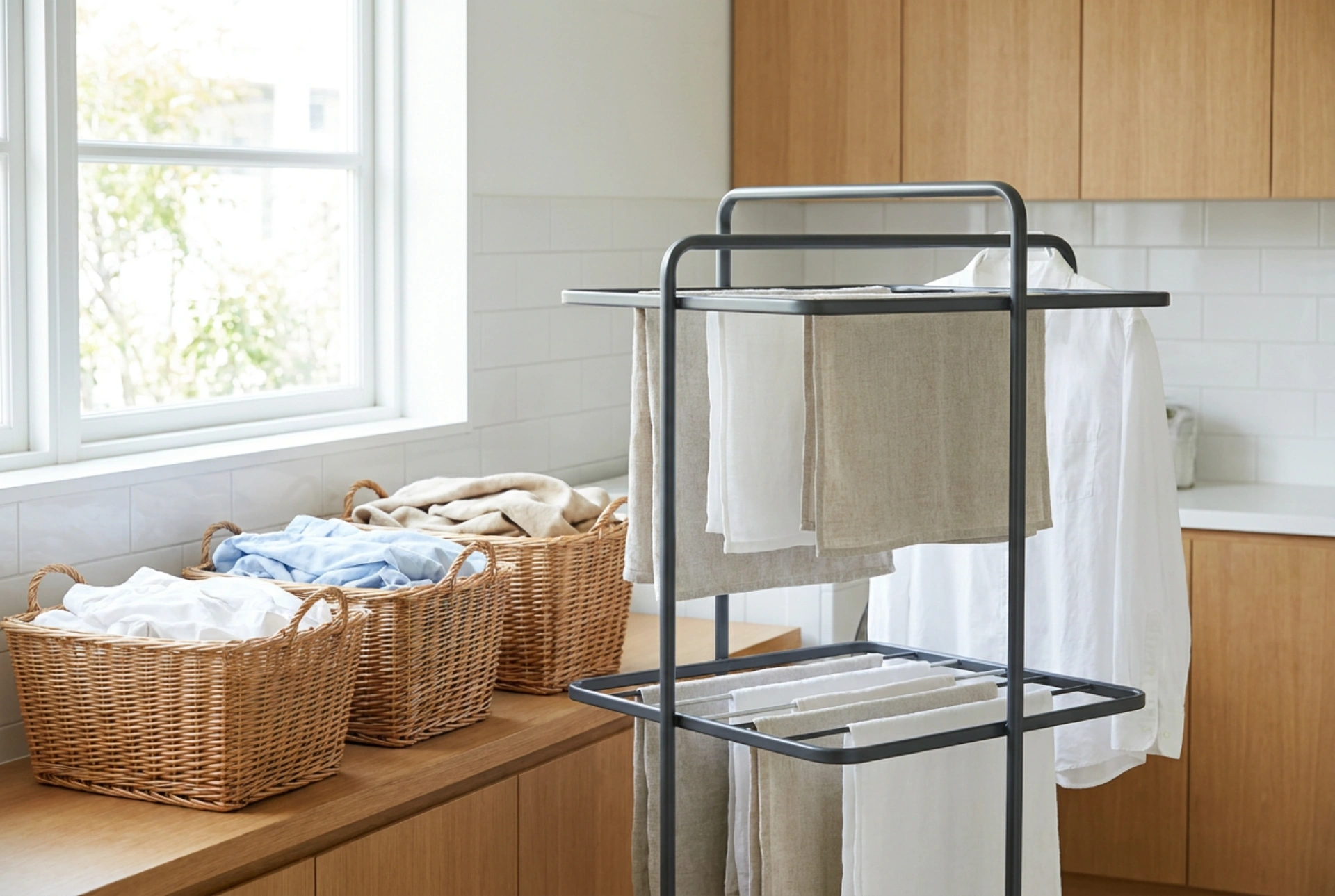


Maximising indoor drying efficiency relies on understanding thermodynamic airflow and fabric moisture retention rather than simply hanging clothes at random. Utilising a two-tier drying rack correctly allows you to exploit natural convection currents and speed up drying times while protecting delicate fibres from damage.
The Physics of Vertical Airflow
In any indoor environment, air circulation is driven by temperature differentials. Warm air is less dense and naturally rises, carrying evaporated moisture away from wet fabrics. When using a two-tier drying rack, this vertical movement of air creates a distinct microclimate around each level. The upper tier benefits from the warmest air in the room, making it ideal for items that retain the most water. However, as moisture evaporates from the lower tier, it rises through the upper rack. To prevent this humid air from stalling and re-dampening the clothes above, you must create a clear path for air movement.
Leaving a central vertical gap on both levels—often referred to as the chimney effect—allows moist air to escape rapidly. Without this gap, humid air becomes trapped between the layers, raising local relative humidity to nearly 100 percent and stalling the evaporation process entirely. Placing the rack near an internal wall opposite an open door or window encourages a steady cross-breeze, carrying the saturated air away.
Sorting by Material Chemistry and Weight
Efficient drying begins before you even touch the rack. Different textile fibres have distinct physical properties that dictate how they hold and release water. Hydrophilic fibres, such as cotton, linen, and wool, absorb water deep within their cellular structures. Synthetic fibres, like polyester, nylon, and acrylic, are hydrophobic; they only hold water on their surfaces through capillary action. Sorting your laundry by these material properties ensures a balanced drying cycle.
- Hydrophobic Synthetics: These dry rapidly and should be placed on the lower tier. Because they release moisture quickly, they do not contribute to a sustained humid microclimate beneath the upper tier.
- Hydrophilic Cottons: Heavy cotton t-shirts, towels, and denim should be hung on the outer perimeters of the top tier. Hanging them on the outside ensures they receive maximum exposure to ambient room currents, while their height allows gravity to assist in pulling moisture down toward the tips of the fabric.
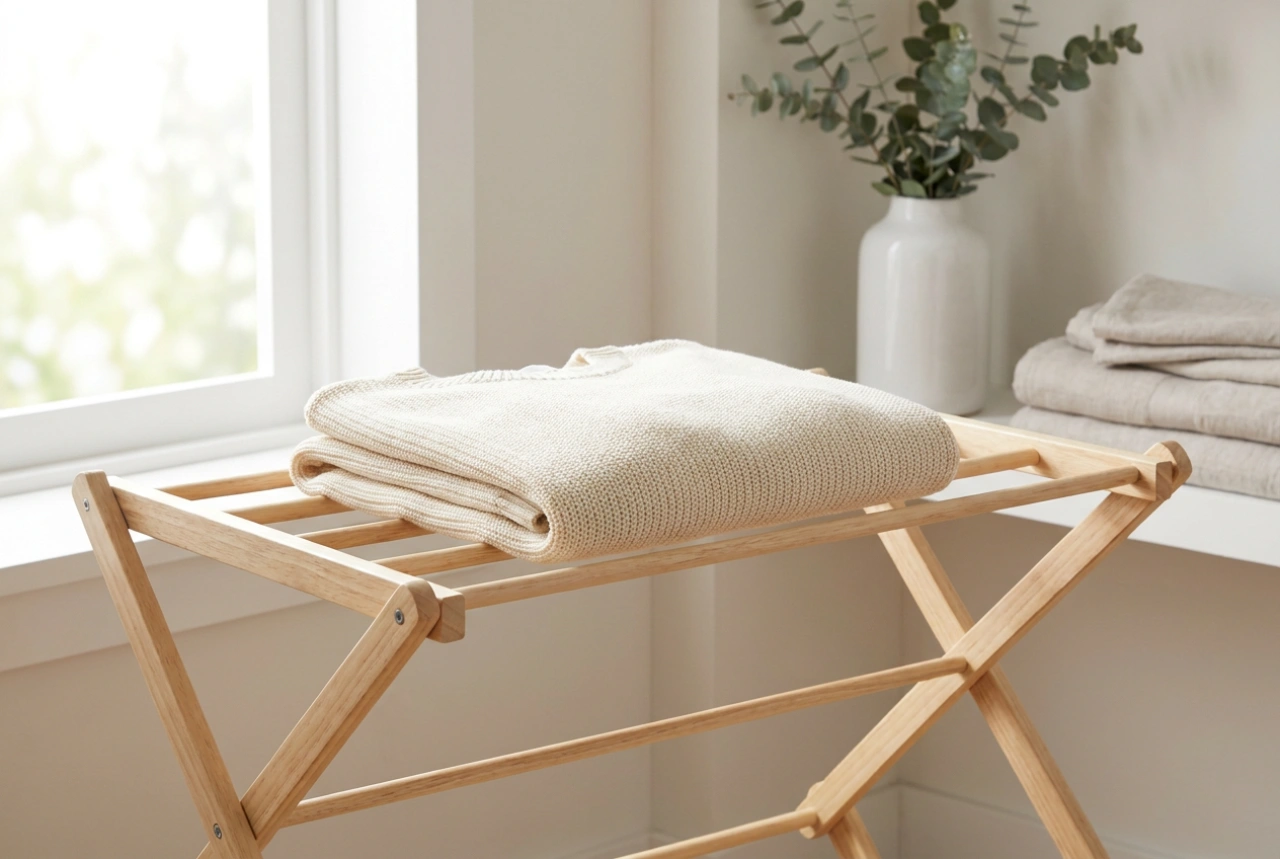
- Structurally Vulnerable Knits: Heavy knits should never be hung vertically when wet. The weight of the retained water pulls down on the fibres, permanently stretching the garment out of shape. Instead, utilize the flat horizontal surfaces or mesh shelves of a multi-tier rack to dry these items flat.
Optimising Space and Gravity on Two Levels
The mechanical arrangement of garments on a two-tier rack directly impacts drying speed. A common error is overloading the rack, which compresses the space between items and stops air movement. For optimal results, maintain a minimum of five centimetres of space between every hung garment. When hanging trousers or heavy fabrics, drape them across two parallel bars of the rack rather than a single one. This double-bar technique opens up the interior of the garment, allowing air to circulate inside the legs or torso, cutting drying times in half.
Furthermore, gravity plays a significant role in drying. Water naturally migrates downward through wet fabric. By hanging items upside down—for example, clipping trousers by the cuffs or skirts by the waistband—you position the thickest, slowest-drying sections (like waistbands and pockets) at the bottom where gravity pulls the excess moisture, allowing the lighter upper portions to dry first without restriction.
Preventing Microscopic Damp and Musty Odours
When wet clothes remain damp for more than twenty-four hours, opportunistic bacteria and fungi begin to multiply, producing the volatile organic compounds responsible for musty odours. To prevent this, you must accelerate the initial phase of evaporation. Running an extra spin cycle in your washing machine at the highest safe RPM for your fabrics is the most effective mechanical step to remove bulk water before hanging. Once on the rack, ensuring proper spacing and utilizing vertical convection will keep the drying window well under the critical twelve-hour mark, preserving fabric freshness naturally without the need for synthetic chemical additives.