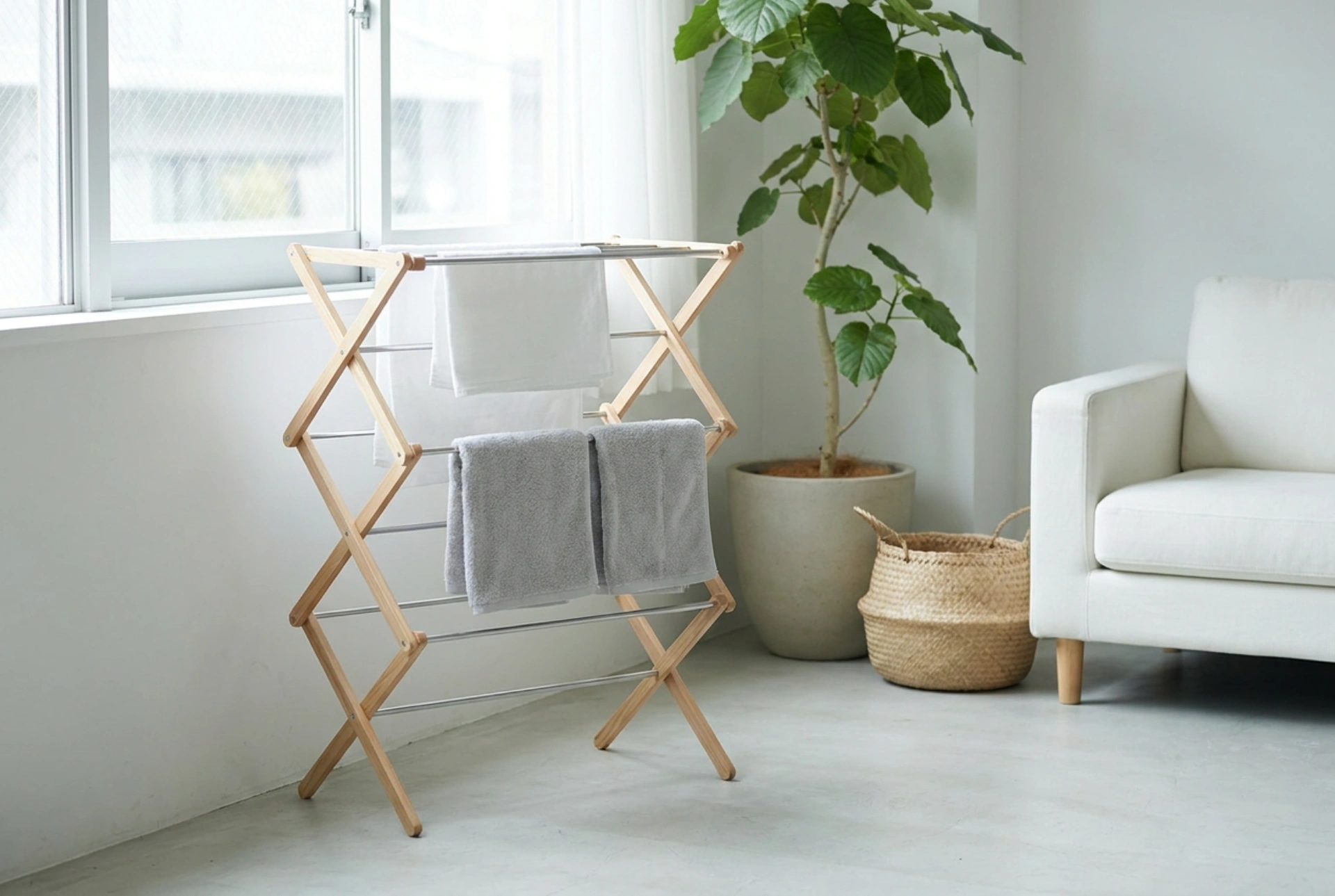


Drying laundry in a studio apartment requires balancing limited physical space with the thermodynamic laws of evaporation. By understanding airflow, relative humidity, and the mechanical properties of different drying rack designs, you can dry clothes rapidly without creating dampness or clutter.
The Physics of Drying in Confined Spaces
To dry wet textiles, liquid water must transition into water vapour and escape from the fabric fibres. This process is governed by temperature, relative humidity, and air movement. In a small apartment, the air can quickly become saturated with moisture, raising the relative humidity and slowing down evaporation. If the air surrounding the damp clothes remains stagnant, a microclimate of high humidity—known as the boundary layer—forms around the fabric, bringing the drying process to a near standstill. To break this boundary layer, continuous air circulation is essential. Increasing the room temperature slightly will also boost the air's moisture-holding capacity, allowing water to evaporate more rapidly from the textile fibres.
Choosing the Optimal Ultra-Compact Drying Rack
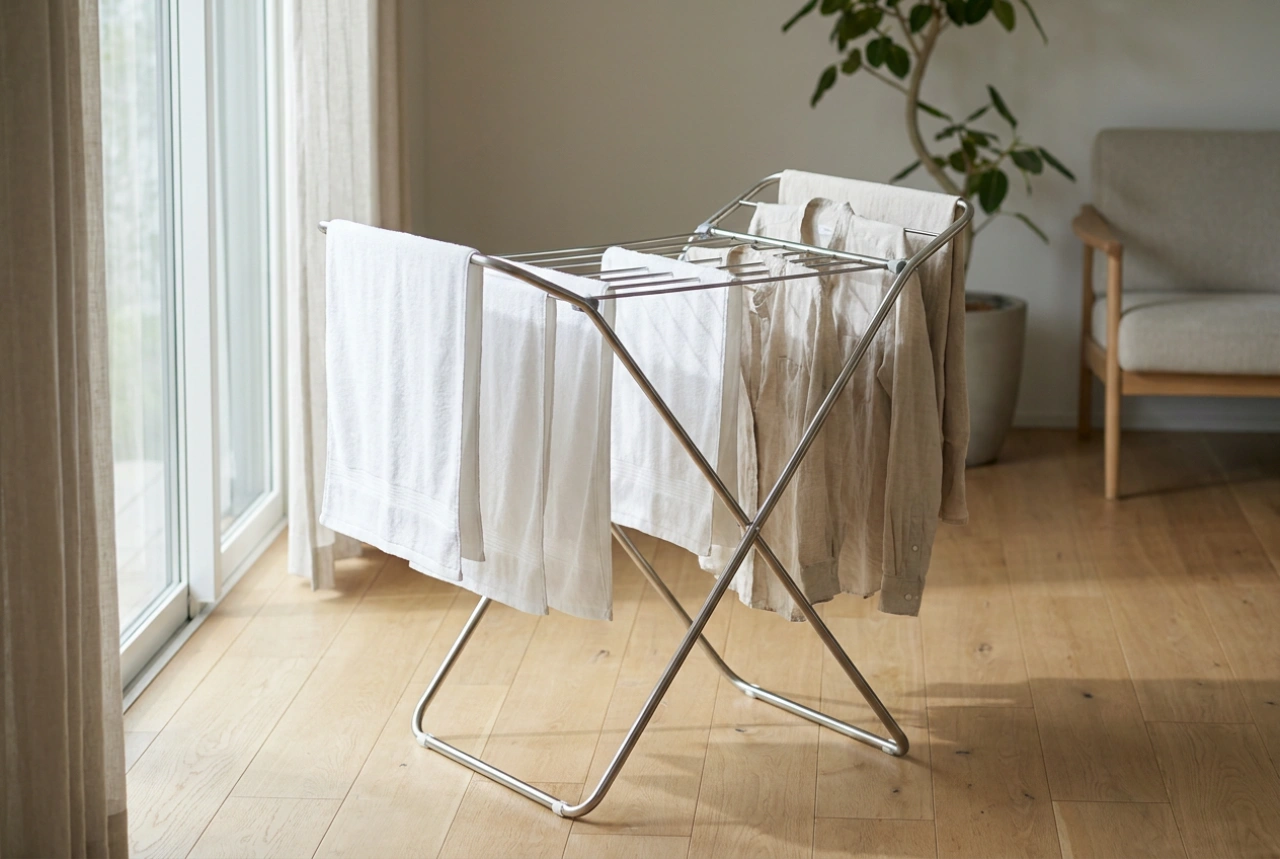
When floor space is at a premium, the physical design of your drying apparatus dictates its efficiency. Standard horizontal wing-style racks occupy too much footprint and restrict movement. Instead, consider these highly space-efficient alternatives engineered for compact living:
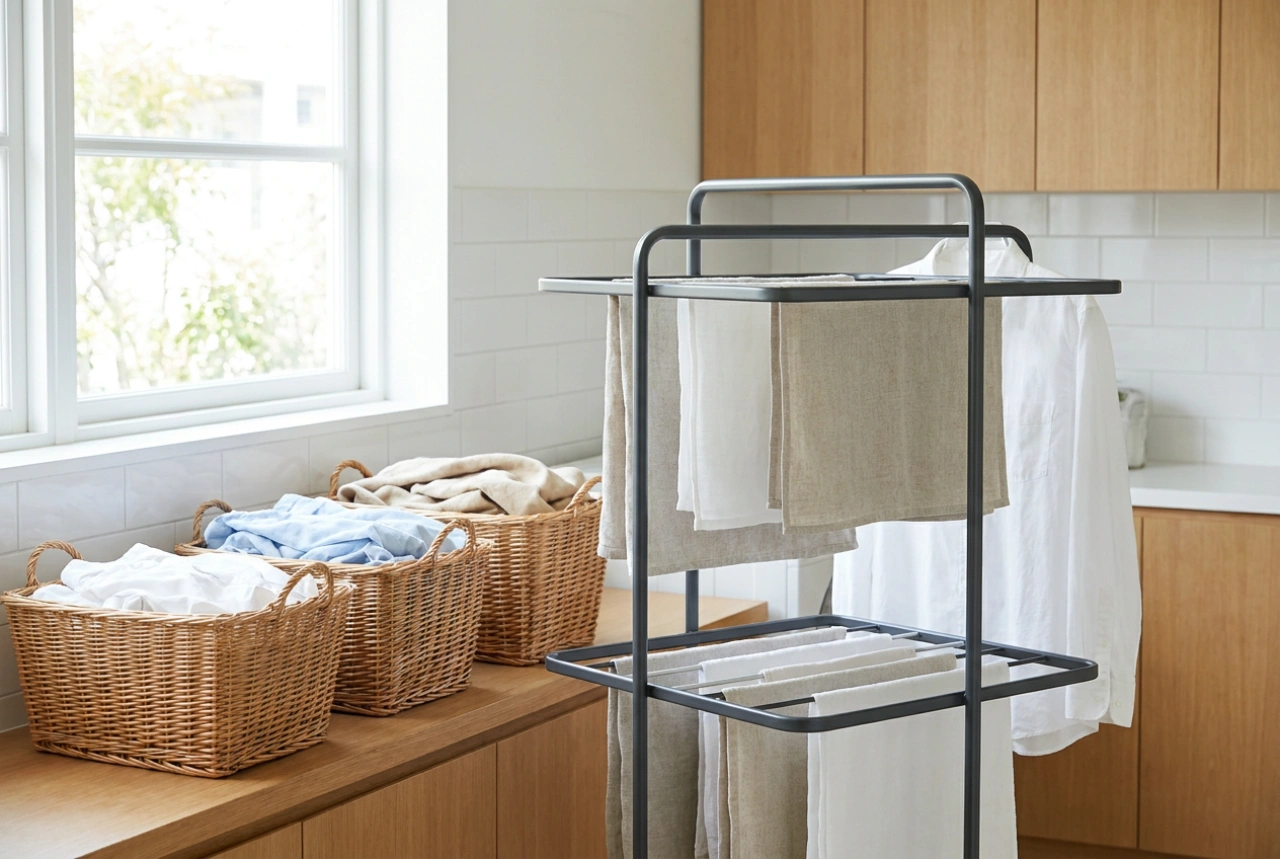
- Vertical Tower Racks: These utilise vertical airspace rather than horizontal floor area. By stacking drying tiers vertically, they maintain a small footprint while offering substantial linear drying length. Adjustable shelves allow you to configure the height based on garment lengths.
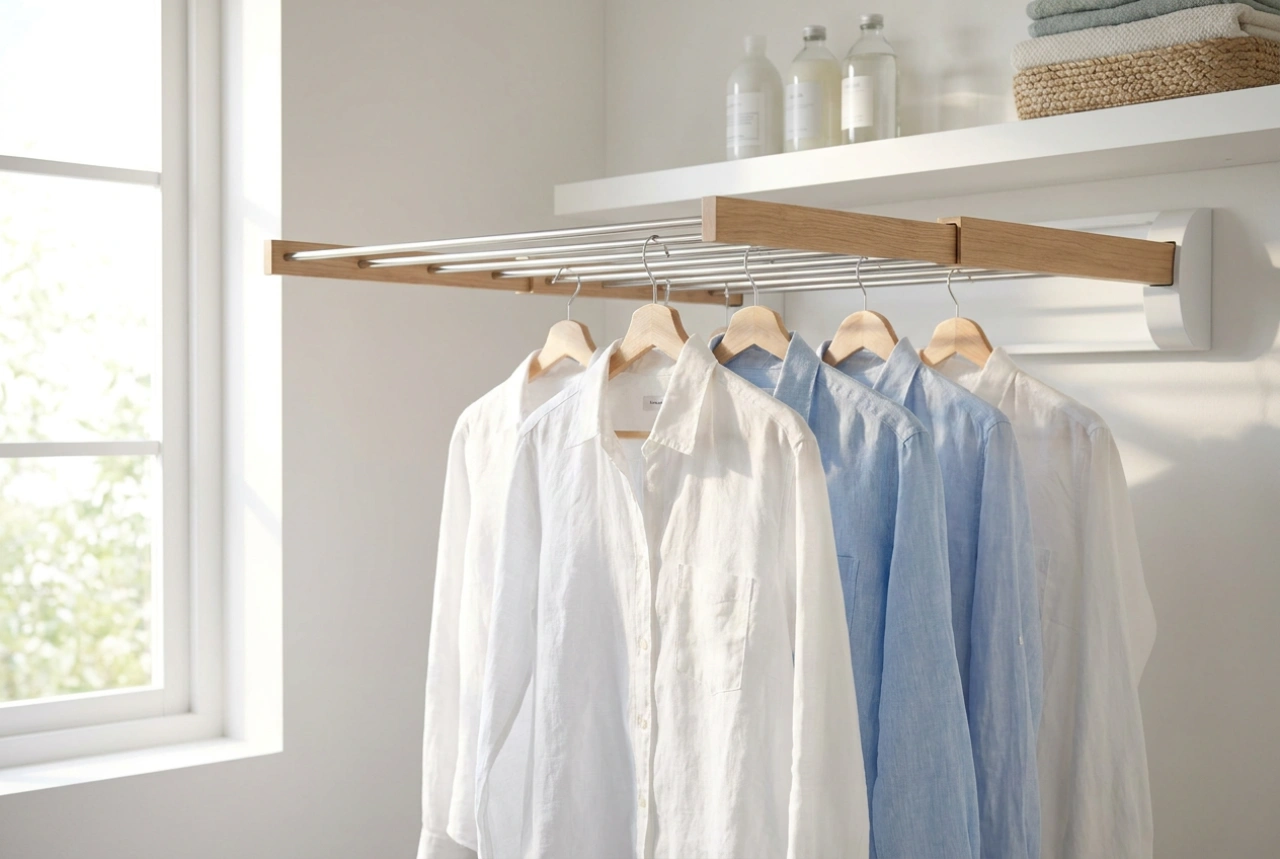
- Ceiling-Mounted and Wall-Retractable Systems: Capitalising on the physical principle that warm air rises, these systems suspend laundry near the ceiling. Pulley-driven ceiling racks can be lowered for loading and raised out of sight, keeping your living space completely unobstructed.
- Over-the-Door and Radiator Racks: Designed to hook onto existing structural elements, these brackets require zero floor space. Positioning a small rack over a radiator utilizes direct conductive and convective heat transfer to accelerate evaporation.
When selecting materials, opt for stainless steel or thick, powder-coated aluminium. Steel provides high structural rigidity to prevent sagging, while high-quality coatings prevent rust transfer to clean textiles.
Strategic Placement and Aerodynamics
Positioning your drying rack is not just about aesthetics; it is a matter of thermal physics. For maximum efficiency, place the rack in a location that facilitates natural convection currents. Positioning the rack near a ventilation exhaust or opposite an open window creates a pressure differential that forces fresh, dry air through the wet fibres. If possible, align the rack parallel to the direction of the airflow rather than perpendicular; this allows air to pass freely between the parallel hanging garments instead of being blocked by the first row of wet clothes. Avoid placing damp laundry in dark, unventilated corners, as this traps moisture and promotes the growth of mould spores and musty odours.
Advanced Techniques for Speeding Up the Drying Process
Maximising the efficiency of a compact drying setup relies heavily on your washing and hanging techniques. Implementing these physical adjustments can halve your overall drying time:
- Optimise the Spin Cycle: Increase the extraction of liquid water at the source. Running an extra high-speed spin cycle (1200 to 1400 RPM) in your washing machine uses mechanical centrifugal force to remove the vast majority of unbound water from the fibres before hanging.
- The Fiber-Opening Shake: Vigorous shaking of each garment before hanging aligns the warped wet fibres, increasing the exposed surface area and facilitating quicker moisture escape.
- Strategic Gap Allocation: Leave at least two to three centimetres of space between garments on the rack. Air must be able to circulate between the layers of fabric to prevent the local humidity from spiking.
- Rotational Hanging: Hang heavier, thicker fabrics (such as denim and heavy cottons) on the outermost edges of the rack where airflow is highest, while placing thin, synthetic fabrics in the centre. Synthetics have lower moisture retention and dry quickly even with less ventilation.