

Steam generator irons offer unmatched smoothing power, but incorrect technique can leave garments damp, leading to musty odours and fabric wrinkling. Understanding the thermodynamics of steam condensation and mastering the balance between moisture delivery and dry heat is the key to perfectly crisp results.
The Physics of Steam Condensation on Fabric
To understand why clothes get damp during ironing, we must look at the phase transition of water. A steam generator works by heating water under pressure inside a separate boiler, creating high-velocity gaseous water (steam). When this superheated steam is released, it travels through the hose and exits the soleplate, quickly penetrating the fabric to relax its molecular bonds. However, when this hot vapour encounters relatively cold fabric and an unheated ironing board, a rapid thermal exchange occurs. The steam cools down instantly below its boiling point, reverting from a gas back into liquid water. This condensation becomes trapped within the textile fibres or pools on the surface of the ironing board, leading to damp garments.
Pre-heating and the Critical Hose Purge
Preventing dampness begins before the iron even touches the fabric. When a steam generator sits idle, even for just a few minutes, the steam remaining inside the connection hose cools down and condenses into liquid water. If you press the steam trigger directly over your clothes, this pooled water will be ejected as droplets, soaking the fabric. To prevent this, always perform a hose purge. Hold the iron away from the board and press the steam trigger for five to ten seconds until a dry, consistent mist appears. Additionally, ensure the soleplate has reached its target temperature; a soleplate that is too cold cannot maintain the vapour state of the steam, causing immediate condensation upon contact.
The Two-Step Ironing Motion: Steam and Dry Cycles
Continuous steam application is the primary cause of oversaturation. Professional results require a structured, dual-phase movement pattern that balances moisture introduction with thermal drying.
- The Forward Pass (The Steam Phase): Move the iron forward while pressing the steam trigger. This introduces the high-pressure vapour needed to break the hydrogen bonds holding the creases in place, allowing the fibres to realign.
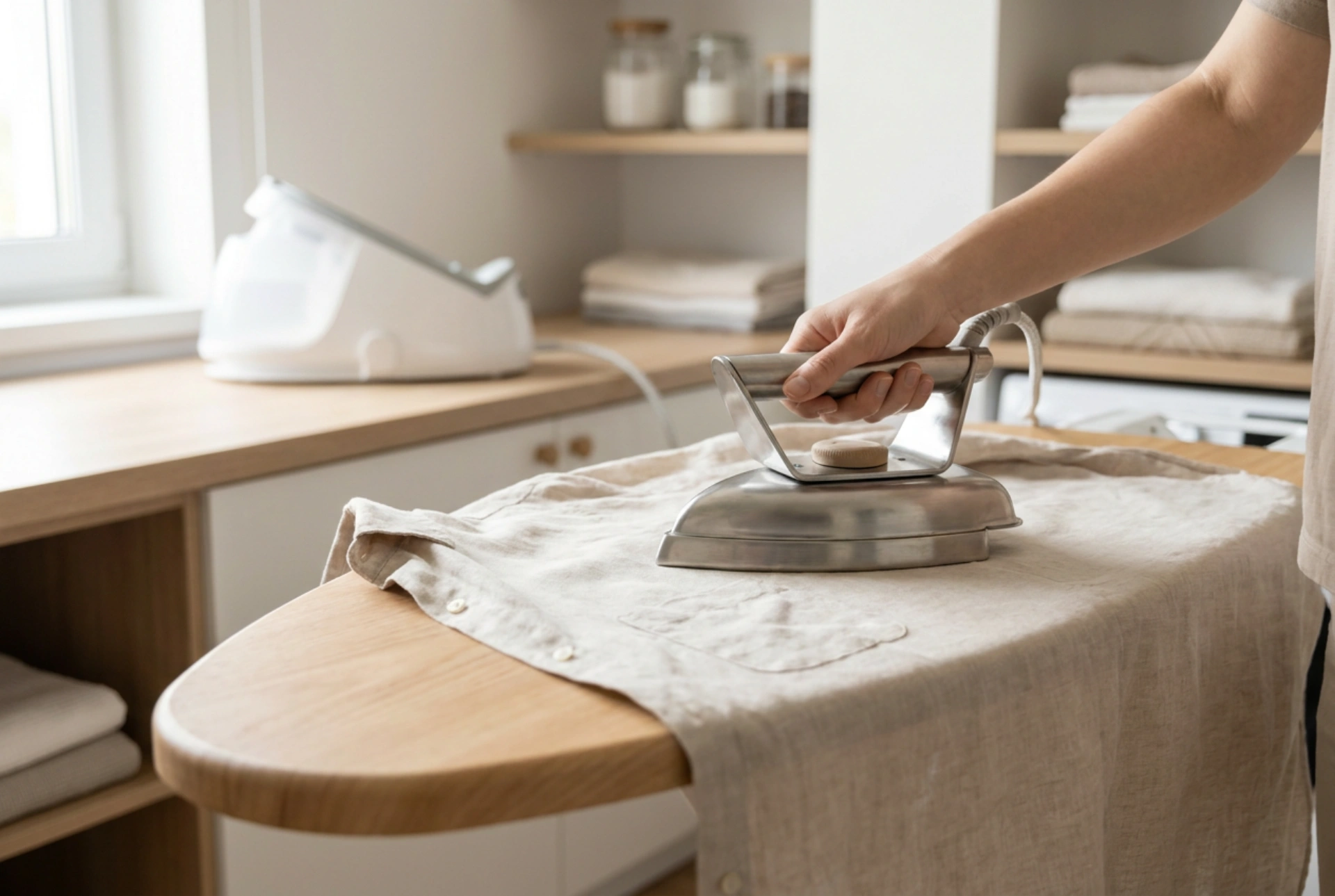
- The Backward Pass (The Drying Phase): Release the steam trigger completely on the return stroke. Gliding the hot, dry soleplate back over the wet fibres uses conductive heat transfer to evaporate the remaining moisture. This dry pass is essential to bake the fabric dry, locking the molecules into their new, flat alignment.
Maintaining this rhythm—steaming on the push, drying on the pull—ensures that no residual moisture remains trapped within the fabric structure.
Optimising the Ironing Surface for Vapour Dispersion
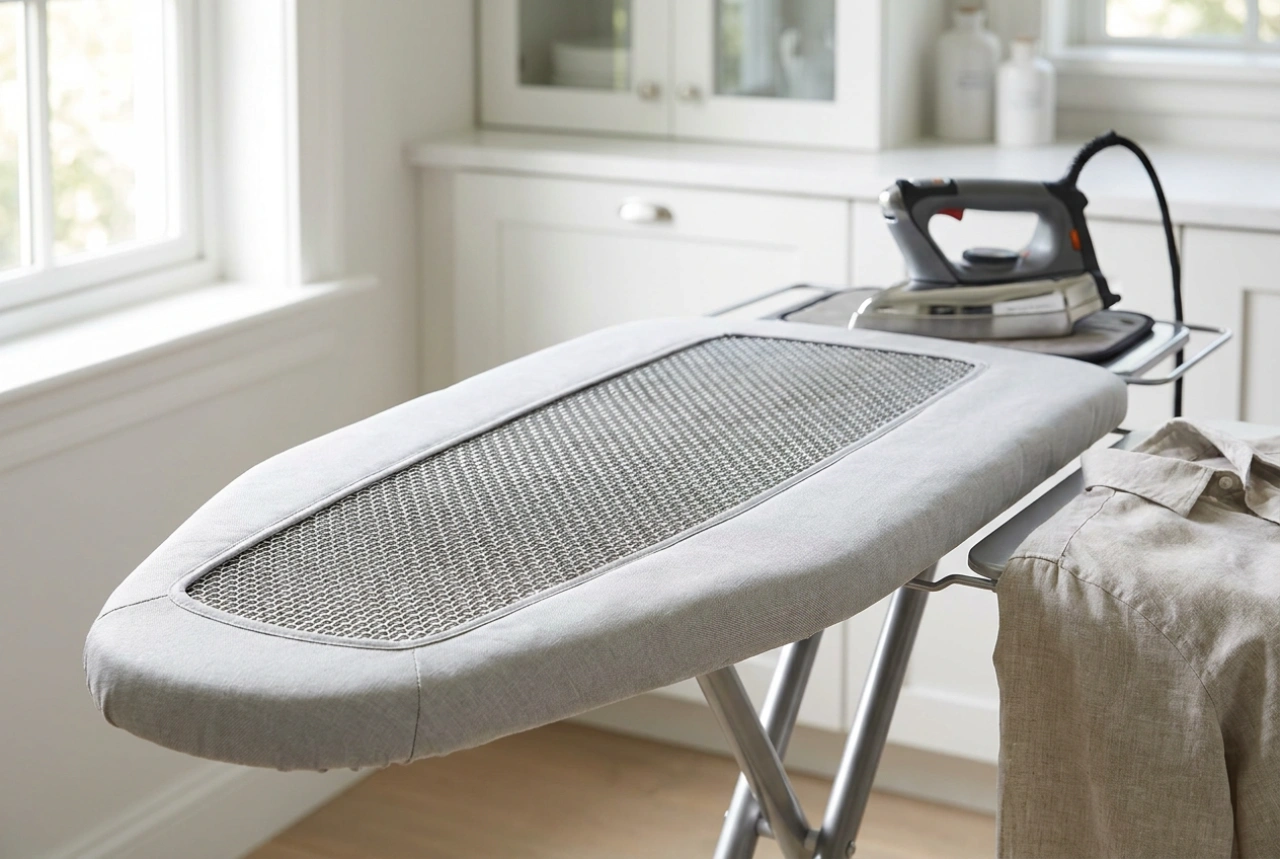
The design of your ironing board plays a crucial role in moisture management. Standard non-porous boards trap the steam beneath the fabric, forcing the vapour to turn back into water and rise back up into your clothes. To prevent this, use a board with a heavy-duty, perforated steel mesh base that allows steam to pass straight through. The choice of padding is equally critical. Avoid dense, non-breathable foam pads. Instead, opt for a thick needle-punch felt underlay. This material absorbs temporary moisture without becoming saturated, while a cotton or specialised heat-reflective cover helps distribute the heat evenly, accelerating the evaporation process from below.
Managing Different Fabric Densities
Different materials require adapted steaming strategies due to their varying hygroscopic properties. Lightweight fabrics, such as silk or polyester, have low moisture absorption capacity and require only minimal, brief bursts of steam. Heavy cottons and linens, however, have highly porous structures that absorb large amounts of water. For these dense natural fibres, increase the soleplate temperature to its maximum safe limit and double the number of dry passes. This ensures the heat penetrates deep into the core of the thick yarns, thoroughly drying the innermost fibres before you move to the next section.
Post-Ironing Cooling and Ventilation
Even with perfect technique, freshly ironed garments retain a small amount of residual warmth and microscopic moisture. If you immediately fold them or hang them closely together in a closed wardrobe, this warm, humid microclimate will cause the fibres to sag, creating fresh wrinkles and encouraging mildew growth. Always hang newly ironed garments on wide, structured hangers in a well-ventilated space for at least fifteen minutes. This cooling-off period allows the fabric to stabilise structurally, ensuring your crisp, professional finish remains locked in permanently.